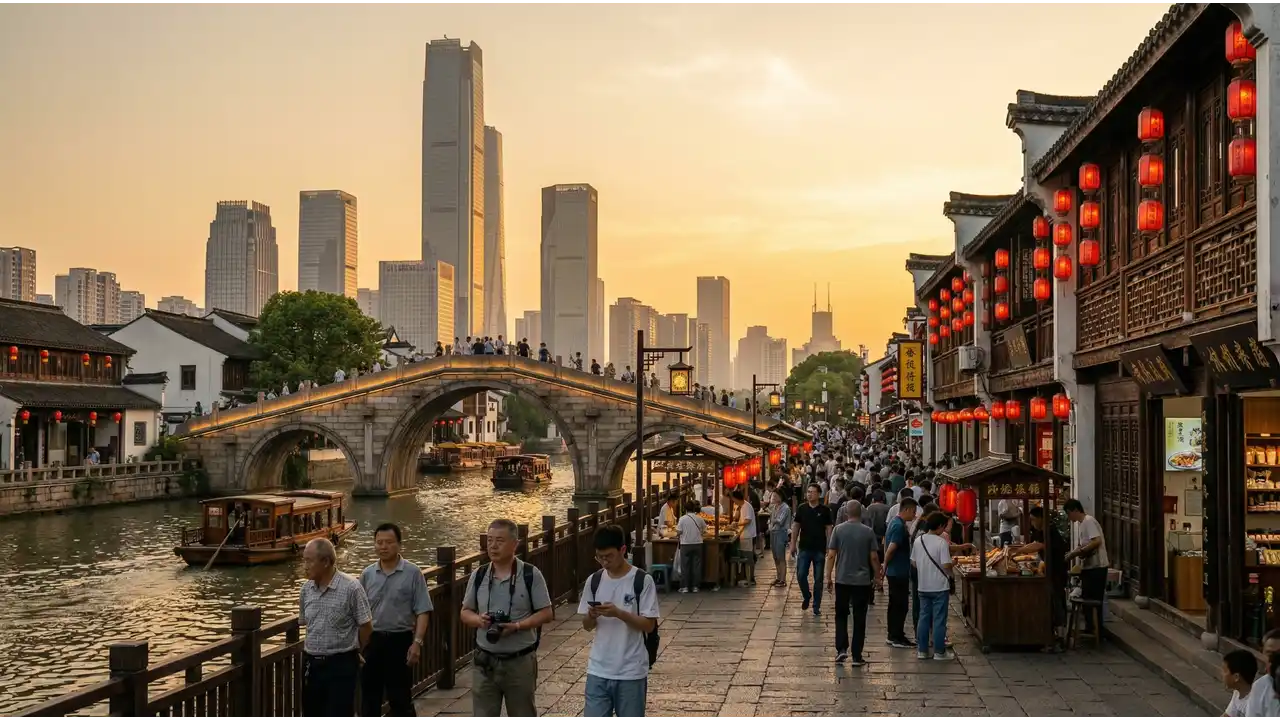
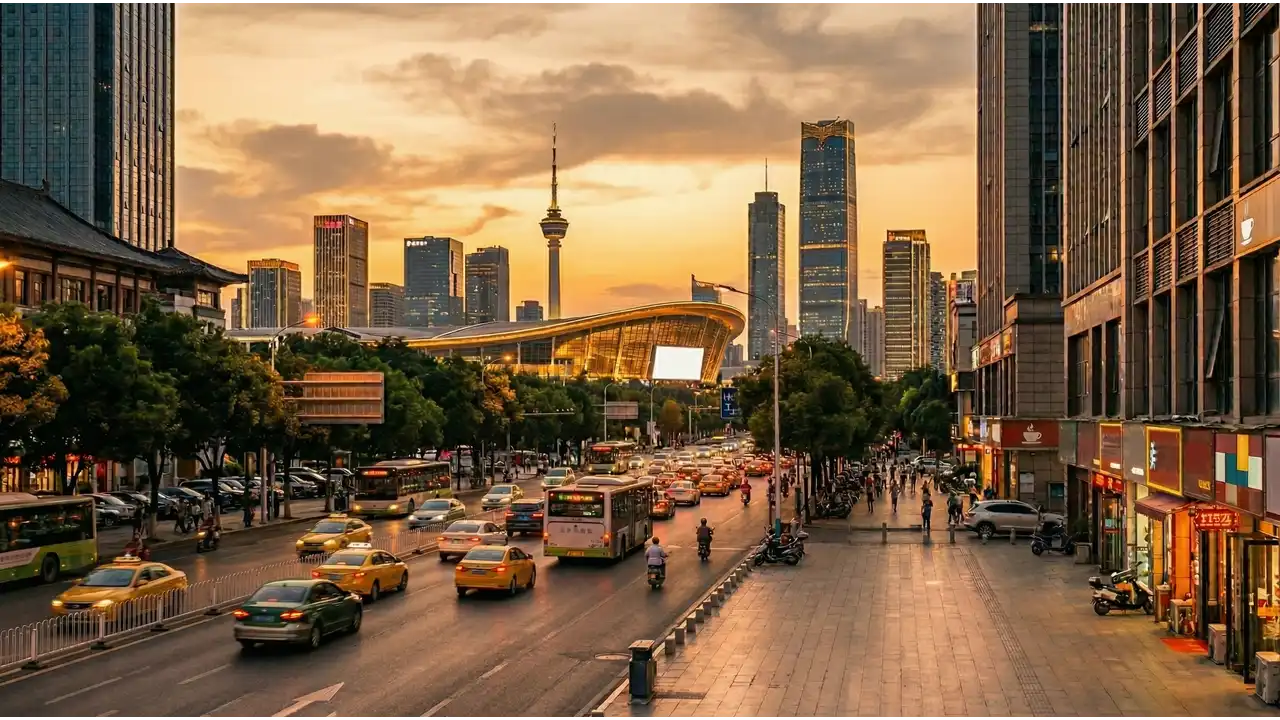
Shanghai is China's largest city and a major financial center, with 27 million residents spanning colonial architecture, modern high-rises, and dense residential neighborhoods. Daily life involves navigating extensive metro and bus networks, eating at street stalls and restaurants, and dealing with summer heat and humidity. The city attracts Chinese migrants, multinational workers, and expats. Air quality varies seasonally. English is spoken in international business areas but limited in residential neighborhoods. Most daily interactions require Mandarin or translation apps.
💡 Local Insights
Shanghai · 2026
Housing dominates the Shanghai budget at $886/month, but ranges widely by location and apartment condition. Inner-ring neighborhoods like Jing'an and Huangpu command premium prices; outer areas like Pudong's Lujiazui and Minhang offer lower rents. Furnished apartments marketed to expats cost 20-40% more than local listings. Food costs stay moderate at $206/month for groceries because staples, vegetables, and rice are inexpensive in local wet markets and supermarkets. Eating out is cheaper than groceries if you eat at street vendors or casual canteens. Transport is efficient and affordable: metro fares run $0.60-$1.20 per trip; monthly passes cost around $30-$40. Expats often pay premium rent but save on utilities and food. Utilities (electricity, water, internet) typically add $80-$120/month. The budget assumes local shopping habits; imported Western goods cost 2-3x more.
Frequently Asked Questions
How much does it cost to live in Shanghai per month?
A moderate lifestyle costs $1,525/month for a single person. This includes $886 for housing (rent and utilities), $206 for groceries, transport, and other expenses like phone service and entertainment. A tighter budget runs $915/month if you share housing and eat mainly at local eateries. A comfortable lifestyle costs $2,364/month with a better apartment, more dining out, and regular leisure spending. Costs vary significantly by neighborhood and personal habits.
What is the average rent in Shanghai?
Average rent is $886/month, but this varies sharply by location. In outer districts like Minhang and Pudong, a one-bedroom apartment rents for $600-$800/month. Central areas like Jing'an and Huangpu range from $900-$1,300/month. Expat-marketed furnished apartments in mixed neighborhoods cost $1,000-$1,500/month. Shared housing with roommates can cut individual rent to $400-$600/month. Utilities add $60-$100/month. Buildings range from older residential blocks to modern developments; condition and amenities affect price significantly.
Is Shanghai cheap to live in for expats?
Shanghai is moderately priced for expats compared to Tokyo, Singapore, or Hong Kong, but expensive relative to Southeast Asian cities. Rent for expat-friendly apartments runs higher than local rates because of furnished units and English-speaking landlords. Salaries for expat jobs often compensate for this, but freelancers or remote workers may find costs tight. Groceries and local food are cheap; imported goods and international schooling are expensive. The city rewards those who adopt local habits (eating at wet markets, using public transit, renting from local agents).
How much does food cost per month in Shanghai?
Groceries average $206/month, assuming shopping at wet markets and supermarkets. Rice, vegetables, tofu, and eggs are inexpensive; a kilogram of rice costs $1-$2, fresh vegetables $0.50-$1.50 per pound. Eating out is cheaper: a meal at a casual canteen or street stall costs $2-$4; mid-range restaurants charge $5-$10 per person. Imported goods (cheese, cereal, Western meats) cost 2-3x grocery store prices. Convenience stores and international supermarkets charge premiums. Most expats spend $250-$400/month on food by mixing local shopping with occasional dining out.
What salary do you need to live comfortably in Shanghai?
A comfortable lifestyle costs $2,364/month, suggesting a monthly gross income of $3,000-$3,500 depending on taxes and savings goals. This covers a nicer apartment ($1,000-$1,200/month), regular dining out, entertainment, and occasional travel. Expat jobs in finance, tech, and education typically offer $3,500-$6,000/month, which provides comfortable living with savings. Lower-paid roles or freelance work below $2,500/month require more careful budgeting. Housing consumes the largest portion; choosing an outer neighborhood or sharing reduces pressure on income significantly.
How does the cost of living in Shanghai compare to other places?
Shanghai sits in the middle tier among major Asian cities. A moderate lifestyle costs $1,525 per month here, with housing at $886 monthly.
Taipei is a direct peer, running $1,625 for a moderate lifestyle and $726 for housing, so marginally more expensive overall but with cheaper rent. Seoul pulls ahead as noticeably dearer at $1,950 monthly, though housing costs are similar at $841.
If you're looking for genuine savings, Amman costs $1,075 for the same moderate lifestyle with housing at $365, making it substantially cheaper. That said, Shanghai offers infrastructure and international amenities that those other cities deliver differently. The cost difference reflects that tradeoff. For most expats and remote workers, Shanghai's expense sits reasonable relative to what you get: extensive public transit, world-class hospitals, and deep international business networks.
Yes, but with real constraints. At $915/month (the budget tier), you need shared housing at $400-$500/month, $206 for groceries, and $100 for transport and basics. This leaves almost no buffer for dining out, entertainment, or unexpected costs. You must shop at wet markets, use public transit exclusively, and avoid expat-oriented areas. Medical emergencies, visa renewals, or travel become difficult. This budget works for students or those with employer housing, but not as a standalone independent budget for most expats. Aim for $1,200+ for genuine financial cushion.