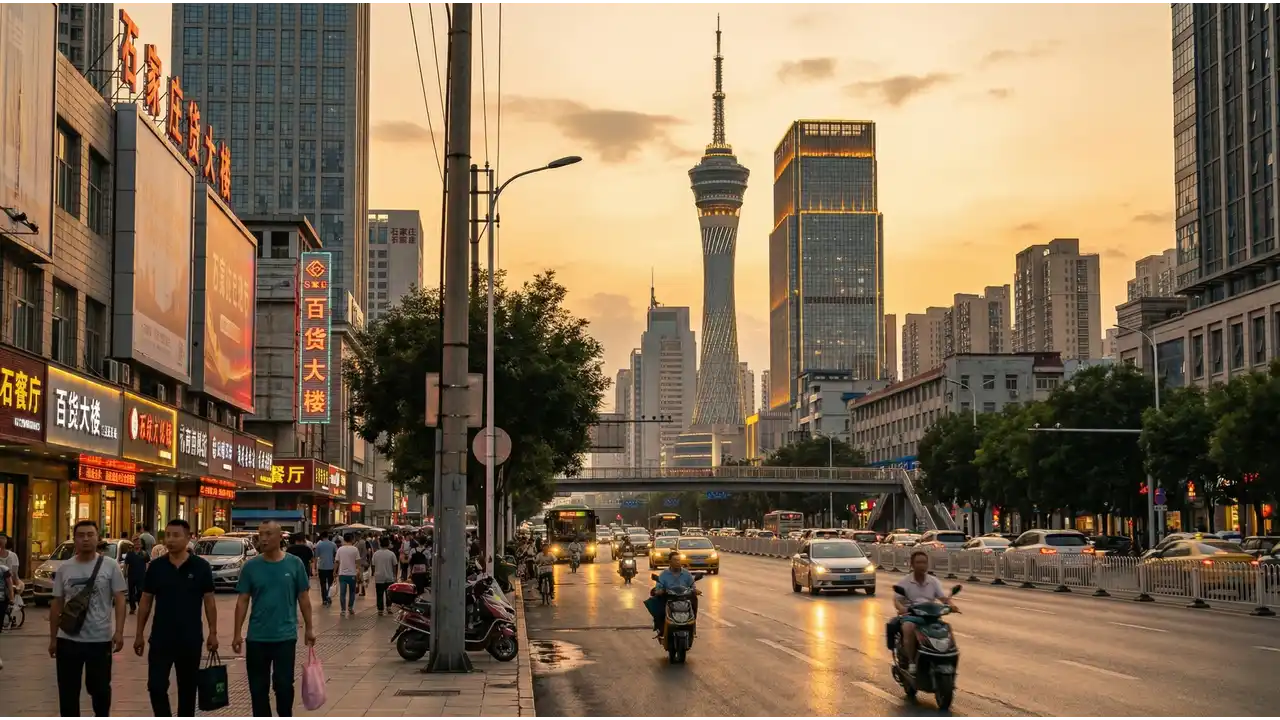
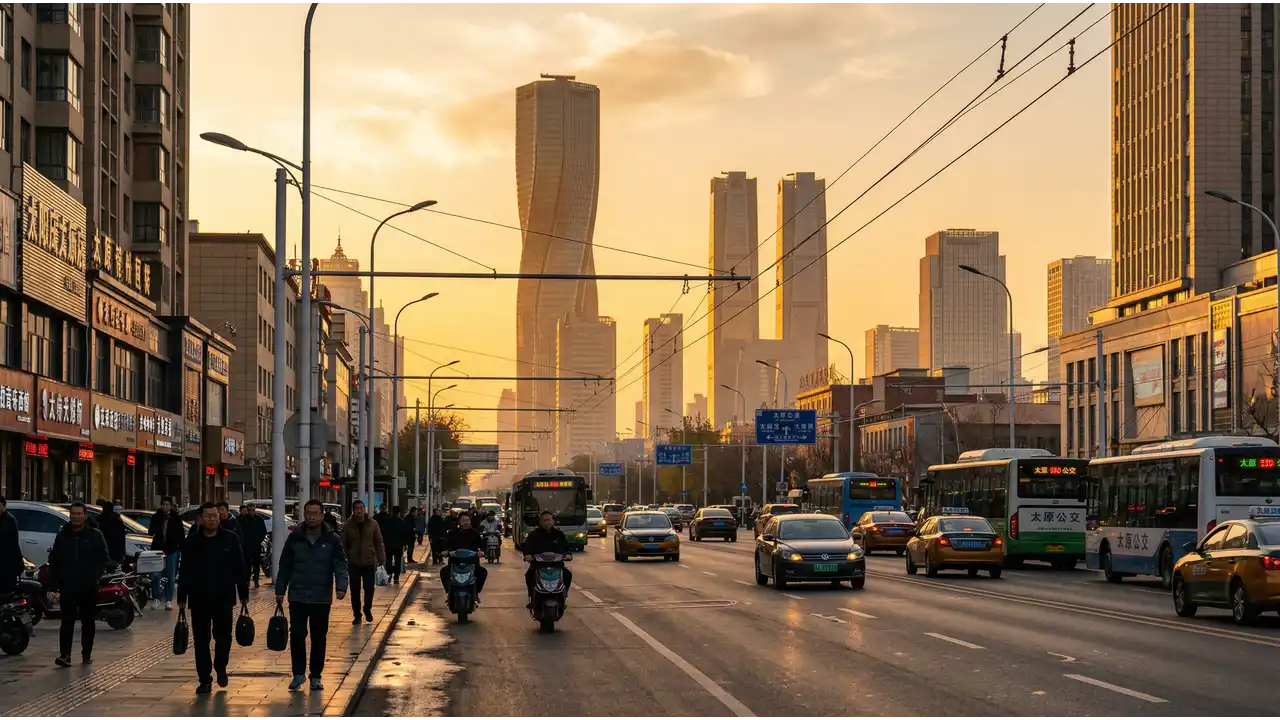
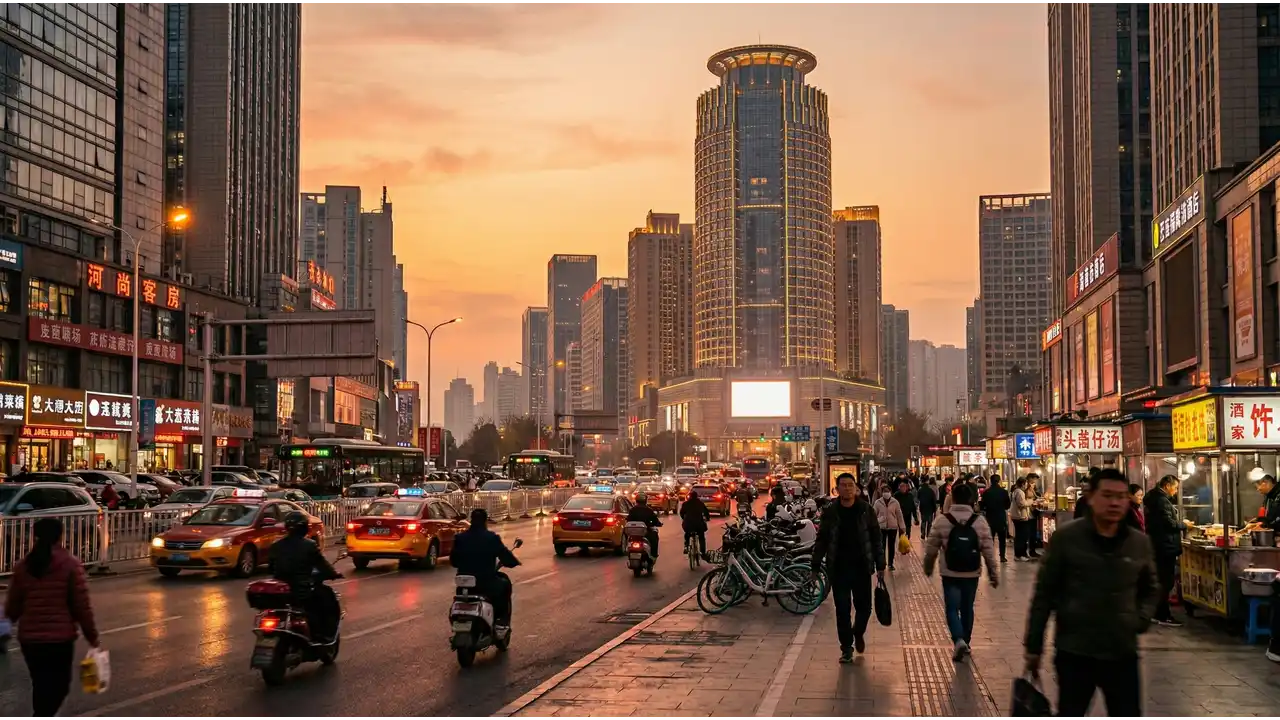
Shijiazhuang is Hebei province's capital and a major rail hub in North China. The city has roughly 11 million people and functions as a logistics and manufacturing center rather than a tourist destination. Winters are cold and dry, summers hot and occasionally polluted. Daily life revolves around work, cycling or buses, street-food lunches, and tight social networks. Most residents are Han Chinese migrants from rural areas or local families. The urban center has modern shopping malls and apartment blocks alongside older residential neighborhoods. Outside the center, industrial zones and worker housing dominate. Few expats live here compared to Beijing or Shanghai, so English is not widely spoken.
💡 Local Insights
Shijiazhuang · 2026
Shijiazhuang costs significantly less than China's tier-1 cities. The moderate monthly budget of $975 reflects lower rents and steady local food prices. Housing in Shijiazhuang is measured at the China level of $371/month because the city has no separate rental index. In practice, a modest one-bedroom apartment in central districts rents for roughly $250-400, and older apartments outside the center run $150-250. These are indicative; the $371 figure applies broadly across China. Groceries average $195/month for basic cooking: rice runs $0.40/kg, eggs $1.20/dozen, cabbage $0.30/kg, and local pork $4-6/kg. Eating from street vendors or small restaurants costs $2-4 per meal. Local buses cost $0.30-0.50 per ride. Expats pay Western prices at imported-goods shops but save money shopping at wet markets. Utilities (water, electricity, heating) add roughly $40-60/month. The city is affordable partly because it lacks tourist infrastructure and international amenities that drive up costs elsewhere.
Frequently Asked Questions
How much does it cost to live in Shijiazhuang per month?
A moderate budget in Shijiazhuang is $975/month. This breaks down roughly as: housing $371, groceries $195, utilities $50, local transport $40, and discretionary spending $320 (dining out, entertainment, clothes, personal care). A tighter budget of $585/month is possible by renting in outer areas, cooking all meals, and avoiding restaurants. A comfortable lifestyle at $1,511/month allows for better housing, regular dining out, taxis, and hobbies. Actual costs depend heavily on neighborhood choice and lifestyle habits.
What is the average rent in Shijiazhuang?
The $371/month housing figure shown is the standard China-level estimate that Shijiazhuang inherits, not a separate measurement for this city. In actual local rental markets, a one-bedroom apartment in central Shijiazhuang (near train station or administrative zones) typically rents for $250-400/month. Older or smaller units outside the city center run $150-250/month. A two-bedroom in a decent neighborhood costs $350-550/month. These prices include furnished or unfurnished options; furnished units trend higher. Long-term leases (one year or more) are standard. Expats and locals pay similar rates, though expats may encounter slightly higher quotes initially. Online platforms like 58.com and Lianjia list most available units.
Is Shijiazhuang cheap to live in for expats?
Yes, Shijiazhuang is considerably cheaper than Beijing, Shanghai, or Chengdu for expats. At $975/month moderate spending, you have significant discretionary room. Housing costs are roughly one-third to one-half what expats pay in tier-1 cities. The trade-off is limited English-language support, fewer expat social networks, and fewer Western amenities (restaurants, gyms, schools). Expats working locally (manufacturing, logistics, language teaching) or remote roles funded in strong currencies find living costs very manageable. Healthcare and groceries are affordable if you shop locally. However, imported goods, international schools, and Western dining carry premium markups. For cost-conscious expats, the city works well; for those prioritizing comfort and community, larger cities remain better choices despite higher costs.
How much does food cost per month in Shijiazhuang?
Groceries for one person average $195/month if you cook at home using local markets and wet markets. A typical weekly shop might include: rice ($2), eggs ($3), cabbage ($1), tofu ($2), local pork or chicken ($8-12), noodles ($1), and seasonal vegetables ($5). Street vendors and small restaurants offer meals for $2-4 each (noodle soup, steamed buns, fried rice). A sit-down restaurant meal costs $5-10. Convenience stores and supermarkets (Carrefour, local chains) charge 20-40 percent premiums. Eating out every lunch and dinner would push food spending to $300+ monthly. Alcohol and imported foods add cost; local beer is cheap ($1-2/bottle), but Western wines and spirits are expensive.
What salary do you need to live comfortably in Shijiazhuang?
A comfortable lifestyle in Shijiazhuang requires approximately $1,511/month. This allows for a better apartment (two-bedroom, newer building, $400-550/month), regular restaurant meals, occasional taxis, a gym membership or hobby spending ($50-100), and modest travel. Local salaries in manufacturing, logistics, and education typically range $500-1,200/month, so most employed residents operate below the comfortable tier. Expats on international assignments or remote work funded in strong currencies easily meet this threshold. The comfortable budget covers dining out 2-3 times weekly, private transportation occasionally, and entertainment without worry. For families or those prioritizing luxury (imported foods, private schools, frequent travel), $2,000+ monthly is more realistic.
How does the cost of living in Shijiazhuang compare to other places?
Shijiazhuang sits in the middle range for Chinese cities. A moderate lifestyle costs $975 per month, with housing at $371 per month. This makes it slightly more expensive than Penang, where a moderate lifestyle runs $900 per month and housing is $336 per month. You'll find Shijiazhuang considerably more affordable than Yerevan, which costs $1,350 per month overall with housing at $644 per month. If you're comparing to South Asian alternatives, Delhi is notably cheaper at $675 per month, though housing there is $299 per month. Shijiazhuang offers reasonable value for a major Hebei province city, with particular strength in housing affordability. Your actual costs will depend heavily on neighborhood choice, dining habits, and whether you use local or expat services.
Yes, but with strict discipline. A $585/month budget requires renting outside central areas ($150-200), cooking all meals from wet markets ($150-160), using only buses ($15), and minimal discretionary spending ($100-150). This works for students, remote workers with low expenses, or locals earning local salaries. You would skip restaurants, entertainment, taxis, and most imported goods. Utilities, phone, and internet must fit within $40-50. No buffer for travel, hobbies, or emergencies. It is feasible but leaves little margin and eliminates social spending. Most expats and comfort-seeking residents find this level isolating. A small increase to $750/month ($165 more) significantly improves quality of life by allowing occasional dining out and modest social activities. The budget tier is realistic for subsistence but not for quality-of-life comfort.