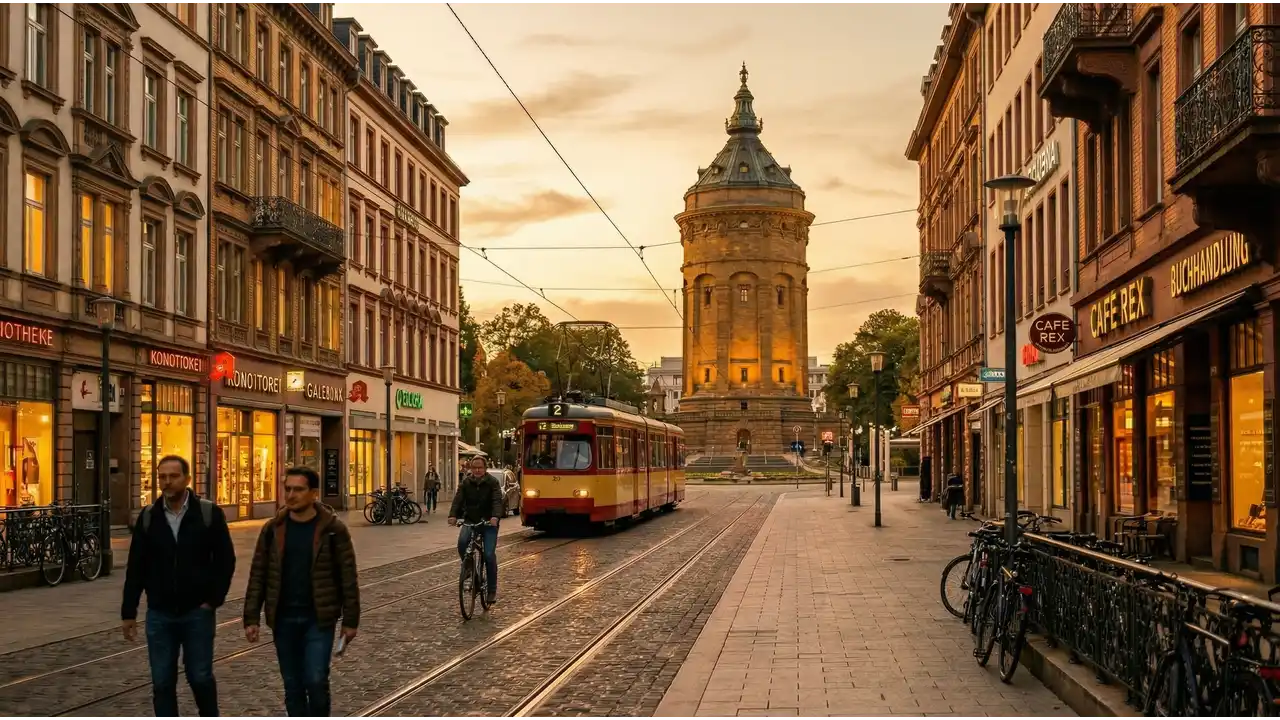
Stuttgart is an industrial and administrative hub in Baden-Württemberg, home to Daimler and Bosch headquarters. The city has around 625,000 residents and attracts both German professionals and international expats. Daily life revolves around efficient public transport, orderly neighborhoods, and strong work culture. Winters are mild by German standards (around 35-45 degrees Fahrenheit), summers moderate. The city lacks the tourism draw of Berlin or Munich, which keeps it relatively grounded. Most errands happen on foot or by S-Bahn. Shopping happens on Königstrasse and at local markets. The surrounding wine region and nearby hills offer weekend escapes.
💡 Local Insights
Stuttgart · 2026
Stuttgart's cost structure reflects a prosperous industrial city without major tourist inflation. Housing averages $1,001/month and forms the largest expense. Central neighborhoods like Mitte and Süd command $1,100-$1,300/month for a one-bedroom apartment, while outer districts like Zuffenhausen or Cannstatt run $850-$1,000. Groceries average $379/month, slightly above the German average, with prices at Rewe, Edeka, and Aldi running parallel to Frankfurt or Munich. Public transport is excellent and included in rent-subsidized company packages for many workers, cutting transport costs below $100/month for regular commuters. Eating out is moderate: a meal at a casual restaurant costs $12-$16. Expats and locals pay the same prices, though finding housing takes persistence. The city's strong job market in engineering and tech means higher local salaries offset living costs. Winter heating bills can add $50-$100/month.
Frequently Asked Questions
How much does it cost to live in Stuttgart per month?
A moderate lifestyle in Stuttgart costs $2,175/month. This breaks down roughly as: housing $1,001, groceries $379, utilities and transport $250-$300, dining and social $200-$250, and miscellaneous $300-$400. The budget tier runs $1,305/month for essentials only (shared housing, minimal dining out, no entertainment). A comfortable lifestyle with more space and flexibility costs $3,371/month. Most people's actual spend falls between the moderate and comfortable figures depending on neighborhood choice and lifestyle.
What is the average rent in Stuttgart?
Average rent in Stuttgart is $1,001/month for a one-bedroom apartment. Central locations like Mitte, Süd, and West range from $1,100-$1,300/month. Outer districts like Zuffenhausen, Cannstatt, or Feuerbach run $800-$1,000/month. Shared apartments (WG in German) drop to $500-$700/month per person. Furnished temporary rentals for expats are more expensive, starting at $1,200/month. Property listings move quickly, especially below $950/month. Most contracts require 2-3 months deposit and proof of income. The Makler (real estate agent) system adds 2-3 months rent to upfront costs, though direct rentals from owners bypass this.
Is Stuttgart cheap to live in for expats?
Stuttgart is moderately priced for expats but not cheap. It ranks below Berlin or Leipzig but above Munich or Hamburg. The city attracts expats with stable employment in tech and automotive, so salaries often exceed living costs. For independent expats without local income, $2,175/month is tight but doable if you accept shared housing or outer neighborhoods. Company relocations usually cover housing separately, making the actual personal cost much lower. Expats report that Stuttgart feels expensive after cities like Prague or Budapest but reasonable compared to London or Zurich. Local wages help offset costs more than cost-cutting does.
How much does food cost per month in Stuttgart?
Groceries cost approximately $379/month for one person eating a standard German diet. Aldi and Lidl baskets run $60-$80/week. A liter of milk costs $1.20, a kilogram of bread $3-$4, chicken breast $6-$8/kg. Farmer's markets at Markthalle offer better produce prices than supermarkets. Eating out is moderate: a casual lunch runs $12-$16, dinner at a mid-range restaurant $20-$30. Beer is cheap ($4-$6 for 0.5L at a bar). Weekly groceries for a household of two run $120-$150. Wine from the local region (Württemberg) is affordable at 6-12 euros per bottle retail.
What salary do you need to live comfortably in Stuttgart?
A comfortable lifestyle costs $3,371/month, suggesting a gross monthly income around $4,200-$4,500 (after German taxes and social contributions). For couples, combined gross income of $7,000-$8,000/month provides comfortable space, transport flexibility, regular dining out, and travel. Entry-level tech roles in Stuttgart start at $2,800-$3,200/month gross; mid-level positions $4,000-$5,500/month. Public sector and automotive roles follow similar scales. Freelancers need higher gross income to cover self-employment taxes and insurance. Most expats relocate with company packages that cover housing separately, effectively reducing personal cost requirements by 30-40%.
How does the cost of living in Stuttgart compare to other places?
Stuttgart sits in the middle of Europe's cost spectrum. A moderate lifestyle there runs $2,175 per month, with housing at $1,001 monthly. This makes it slightly pricier than Lyon, where the same lifestyle costs $2,075 with housing at $865. Sofia is notably cheaper at $1,500 for a moderate budget and $705 for housing. Paris, by contrast, is substantially more expensive at $2,925 monthly for a moderate lifestyle, with housing alone running $1,611. So if you're coming from Paris, Stuttgart will feel like genuine relief on your wallet. If you're comparing Stuttgart to other German cities or Swiss locations, expect it to be on the lower end of that regional range. For most people relocating within Europe, Stuttgart offers good value without sacrificing urban amenities or job opportunities.
Yes, but with significant constraints. The budget tier of $1,305/month requires: shared housing (WG) at $500-$600/month per person, groceries at $300/month (buying only budget brands), no regular dining out, minimal entertainment, and free transport via employer or student pass. This budget covers rent, utilities, food, and basic transport but cuts entertainment, travel, and discretionary spending almost entirely. Students using university housing and subsidies manage this regularly. Non-students on this budget need stable employment benefits (subsidized housing, transport pass). Single travelers or those without employer support will strain here. The moderate budget of $2,175/month provides meaningful breathing room for social life and unexpected costs.