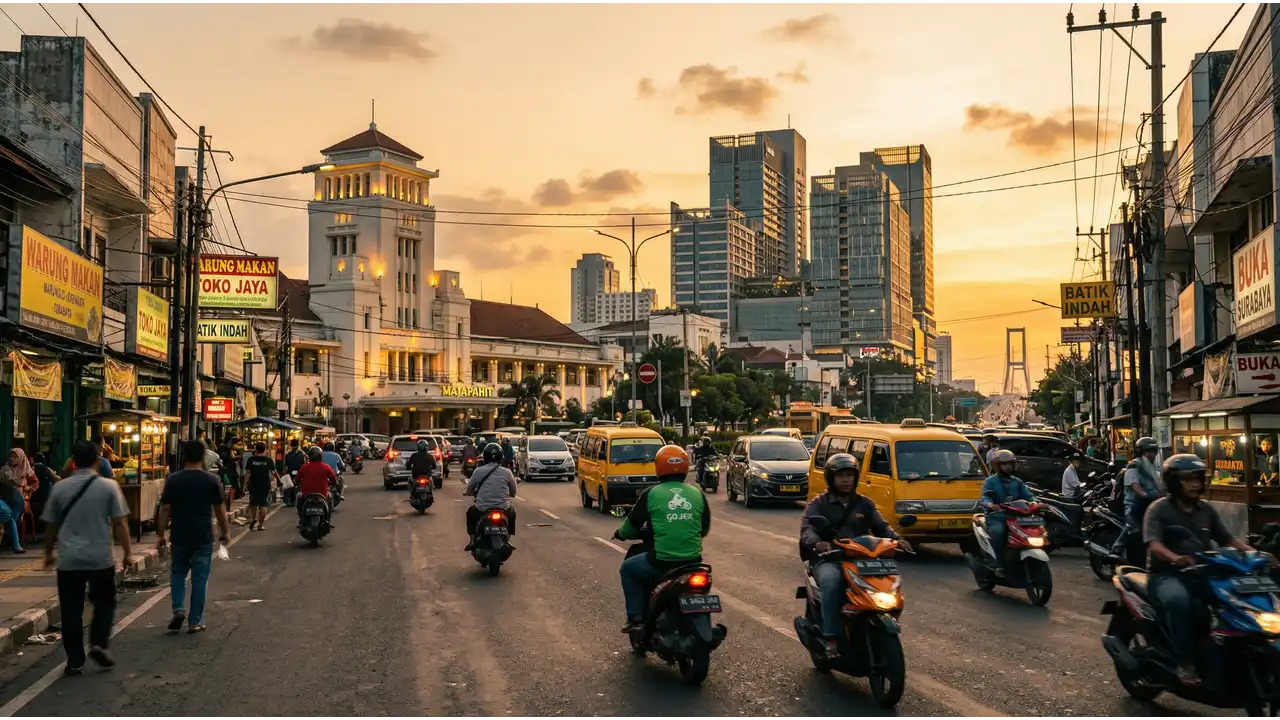
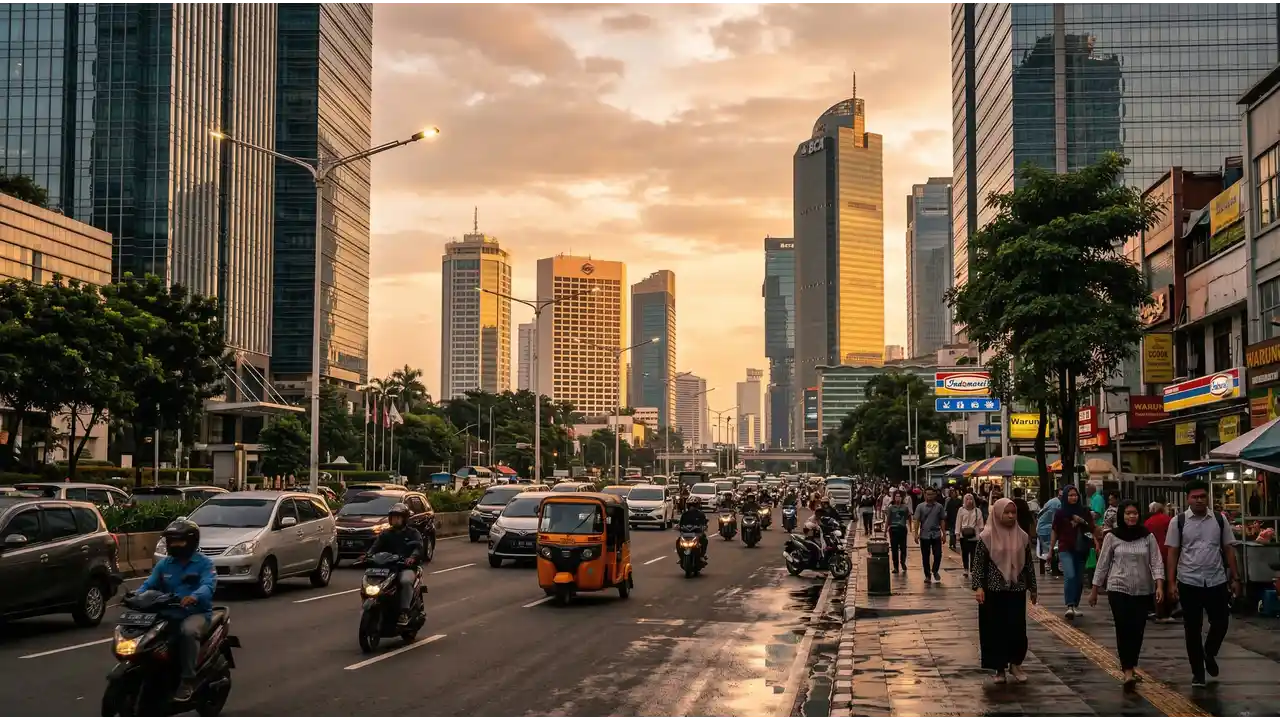
Surabaya is Indonesia's second-largest city and the economic hub of East Java. It sits on the Java Sea coast with a humid tropical climate, temperatures between 75-88°F year-round, and a monsoon season from November to March. The population is ethnically mixed, predominantly Javanese Muslim with significant Chinese-Indonesian and Arab communities. Daily life centers on motorbiking, street food, local warungs, and small shops. The city lacks the tourist infrastructure of Bali or Jakarta, so you'll navigate local systems directly. Infrastructure is basic but functional: potholed roads, frequent flooding in low areas during rainy season, unreliable power during peak hours in some districts. Most expats cluster in central areas like Darmo or Dupak; local Indonesians live throughout working-class neighborhoods.
💡 Local Insights
Surabaya · 2026
Surabaya's cost of living at $900/month for a moderate lifestyle reflects Southeast Asian pricing without the Bali or Bangkok premium. Housing runs $455/month and dominates your budget. A furnished one-bedroom apartment in central areas (Darmo, Diponegoro) rents for $350-$500; basic unfurnished units in local neighborhoods drop to $200-$300. Shared accommodation is cheaper but less common in expat networks. Food at $144/month assumes local warung dining and street markets. A meal at a warung costs $1-$2; imported groceries at hypermarkets (Carrefour, Hypermart) run 30-50% higher than local markets. Transport is cheap: motorcycle taxis (ojek) cost under $1 per ride; local buses are under $0.50. Expats often pay slightly more for rides through apps, but the difference is minor. Healthcare can surprise you; private clinics charge $30-$80 per visit, but quality varies. Utilities (electricity, water, internet) add $30-$50/month. Real estate agents and landlords rarely speak English, so negotiating requires Indonesian language basics or a local friend.
Frequently Asked Questions
How much does it cost to live in Surabaya per month?
A moderate lifestyle in Surabaya costs around $900/month. That breaks down to $455 for housing (rent, utilities), $144 for groceries, and the remainder for transport, dining out, and other expenses. A minimal budget of $540/month cuts housing and food to essentials only; a comfortable lifestyle at $1,395/month allows for better accommodation, frequent dining out, gym membership, and weekend activities. Exact costs depend on neighborhood choice and lifestyle. Most expats cluster spending between $700-$1,200/month.
What is the average rent in Surabaya?
Average rent is $455/month. Central neighborhoods like Darmo and Diponegoro typically rent furnished one-bedroom apartments for $350-$500/month. Unfurnished units or rooms in local residential areas cost $200-$350/month. Two-bedroom apartments in decent condition run $500-$700/month. Housing costs vary by location: near universities and local hubs prices are lower; near expat-friendly centers they're slightly higher. Lease terms are usually month-to-month or annual. Landlords rarely use formal contracts, so clarify water, electricity, and maintenance costs upfront. Expats without Indonesian language should use an intermediary or ask their employer for help negotiating.
Is Surabaya cheap to live in for expats?
Yes, Surabaya is genuinely affordable for expats, but with caveats. On $900/month you live comfortably by local standards but modestly compared to Western salaries. Your money stretches further on housing and local food than in Bangkok, Chiang Mai, or Bali. However, if you want expat social spaces, Western groceries, or frequent dining at upscale restaurants, costs rise. Surabaya lacks the expat infrastructure of larger cities: fewer English speakers, fewer international schools, less developed expatriate communities. That keeps prices low but means you'll navigate local systems directly. If you're comfortable with Indonesian life and don't need expat amenities, Surabaya offers exceptional value.
How much does food cost per month in Surabaya?
Groceries cost about $144/month for a local diet. A kilogram of rice is $0.50-$0.80; eggs $0.80/dozen; chicken $2.50/kg; vegetables $0.30-$0.80/kg at markets. Street warung meals (nasi goreng, soto ayam, noodle dishes) run $1-$2 each. Eating out at casual Indonesian restaurants costs $2-$4 per meal. Western groceries at Carrefour or Hypermart cost 30-50% more than local markets. Coffee at local warungs is $0.30-$0.50; cappuccino at a cafe $2-$3. Seafood is cheap and fresh near the coast. Most expats spend $100-$180/month on food if they cook at home and eat local warung meals regularly.
What salary do you need to live comfortably in Surabaya?
A comfortable lifestyle costs around $1,395/month. That budget allows for a decent one-bedroom apartment ($500-$600), regular dining at better local restaurants and occasional upscale meals, gym membership ($15-$30/month), weekend outings, and some leisure spending. If you have a family or want international schooling (which runs $4,000-$8,000/year), costs rise significantly. A single expat earning $1,500-$1,800/month lives well; families need $2,500+/month for comfort without financial stress. Remember that Indonesian minimum wages are $200-$300/month, so your spending power is substantial. For remote workers on Western salaries, Surabaya offers excellent affordability compared to home countries.
How does the cost of living in Surabaya compare to other places?
Surabaya at $900 per month for a moderate lifestyle sits in the middle tier for major Asian cities. It's notably cheaper than Manila, where a moderate lifestyle runs $1,250, and slightly less expensive than Xian at $975. You'll find significantly lower costs in Dhaka at $575, though that's a different scale of affordability.
Housing shows starker differences. Surabaya's moderate housing costs $455 monthly, well above Dhaka's $156 but substantially below Manila's $660. Xian offers comparable housing at $371, making it a close peer overall.
For most expats and middle-income earners, Surabaya delivers reasonable value without sacrificing urban amenities. Your money stretches further than in Southeast Asia's larger capitals but less dramatically than in South Asia's budget centers. The actual experience depends heavily on your lifestyle choices and whether you're renting or buying.
Yes, but with tight constraints. A $540/month budget covers basic housing ($300-$350 for a small room or unfurnished one-bedroom in a local neighborhood), $144 for groceries and local warung meals, and $50-$100 for utilities, transport, and emergencies. You'll live like a local: cooking at home, eating warung food, using ojek motorcycles, avoiding restaurants and entertainment. Internet, phone, and utilities might run $30-$50. No room for gym, regular café visits, or travel. This budget is livable for students, digital nomads willing to rough it, or long-term expats with minimal spending habits. Most people on this budget report it's doable but exhausting; $650-$700/month is a more sustainable minimum.