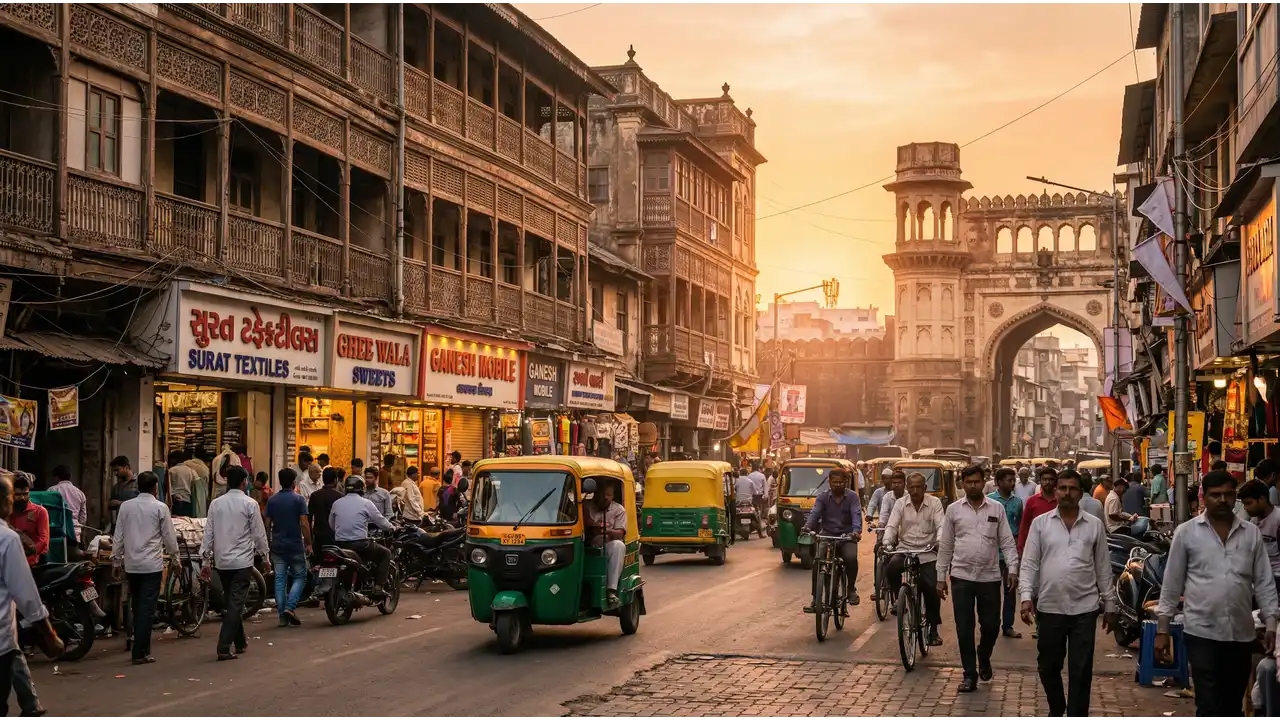
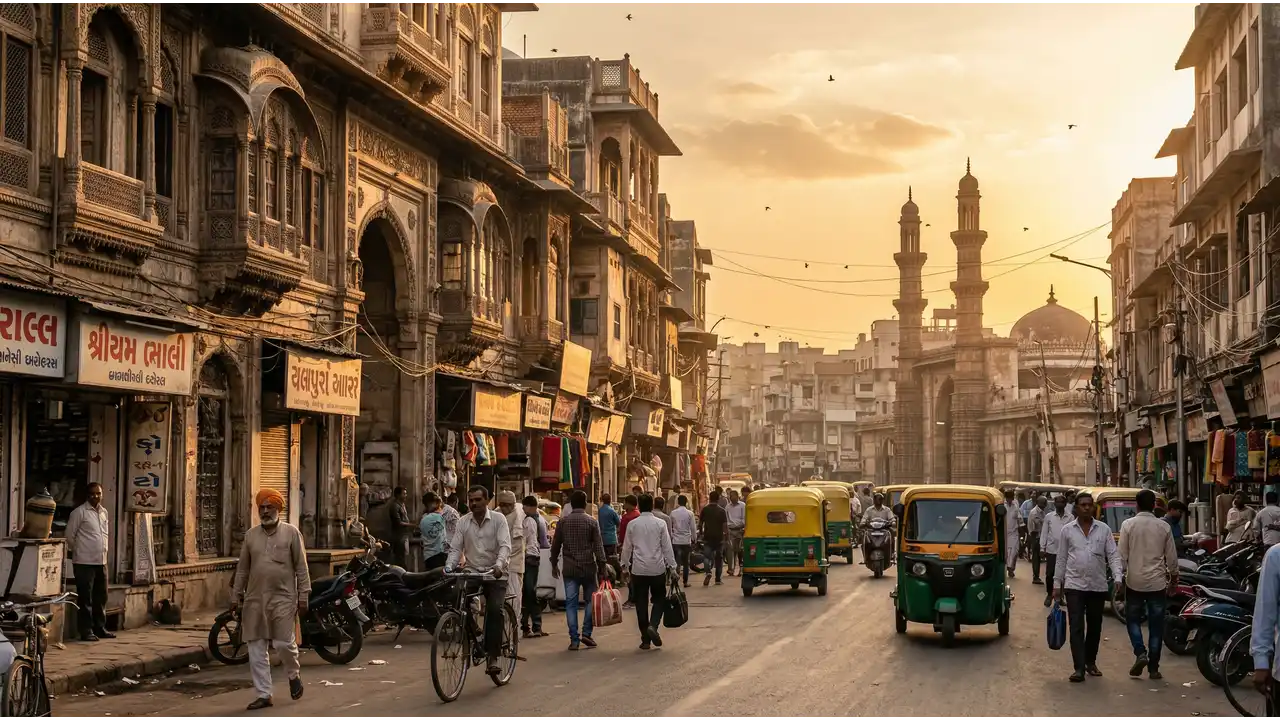
Surat is a major commercial and manufacturing hub in Gujarat, India, located along the Tapi River. The city has grown rapidly as a diamond-cutting center and textile producer, drawing workers from across India and abroad. Daily life centers on commercial districts like Athwalines and Ring Road, where traffic is heavy and businesses operate year-round. The climate is hot and humid, with monsoon rains June through September. The city lacks the tourist infrastructure of major metros but offers straightforward access to daily essentials, local transport, and affordable services. Most residents are Indian professionals, traders, and migrant workers; the expat population is small and concentrated in specific neighborhoods.
💡 Local Insights
Surat · 2026
Surat's low cost of living reflects its position as a working city rather than a major tourist or expat destination. Housing at $254/month covers a one-bedroom apartment in middle-income areas like Vesu, Pal, or Athwalines; smaller studios or shared accommodations run lower, while newer developments in South Surat cost more. Groceries at $95/month are inexpensive because local produce (rice, lentils, vegetables, milk) costs very little; eating at street stalls or small restaurants pushes food costs down further. Auto-rickshaws (three-wheelers) dominate local transport at roughly $0.30 per ride; BRTS buses cost even less. Expats sometimes pay 10-20% premiums for furnished flats or imported goods, but Surat rarely enforces expat pricing as aggressively as Mumbai or Delhi. The main cost driver is housing quality and location; basic utilities add $20-30/month. Bargaining is standard in markets and for services.
Frequently Asked Questions
How much does it cost to live in Surat per month?
A moderate lifestyle in Surat costs around $550/month. This breaks down roughly as: housing $254/month, groceries $95/month, transport $30/month, utilities $25/month, and dining out or miscellaneous expenses $150/month. A tight budget of $330/month is possible if you share housing, cook all meals, and use only public transport. A comfortable lifestyle with a private apartment, regular dining out, and flexibility runs closer to $850/month. Actual costs depend heavily on neighborhood choice and whether you buy local or imported goods.
What is the average rent in Surat?
Average rent in Surat is around $254/month for a one-bedroom apartment in established middle-income neighborhoods like Vesu, Pal, or Athwalines. A studio or shared accommodation can be $150-200/month. Newer developments or South Surat locations run $350-450/month. Furnished flats typically cost 20-30% more than unfurnished. Expats are occasionally quoted 10-15% higher; always negotiate and view multiple properties. Old City areas near the diamond market are cheaper but noisier. Most leases require a deposit equal to 1-2 months' rent and a one-year commitment.
Is Surat cheap to live in for expats?
Yes, but with caveats. Surat is substantially cheaper than Mumbai, Delhi, or Bangalore for housing and basic goods. An expat living on $550/month is feasible and leaves room for occasional travel or dining at higher-end restaurants. However, Surat lacks the restaurants, entertainment, and expat infrastructure of larger metros. Expats often find themselves either adapting to local living (which makes it very affordable) or paying premiums for comfort (furnished apartments, imported groceries, English-speaking services), which narrows the savings. The city attracts expat workers in diamonds, textiles, and engineering rather than tourists or remote workers.
How much does food cost per month in Surat?
Groceries cost roughly $95/month if you cook at home. Rice, wheat flour, lentils, seasonal vegetables, milk, and eggs are inexpensive; a week's produce runs $10-15. Street food and small dhabas (informal eateries) offer meals for $1-3 each. Mid-range restaurants charge $3-6 for lunch; higher-end or hotel restaurants $8-15. Imported goods (cheese, pasta, breakfast cereals) cost 2-3x Indian prices. Eating out regularly instead of cooking can double your food budget. Markets like Katargam and Mangal Pandey Road offer the cheapest produce; supermarkets charge more but offer consistency.
What salary do you need to live comfortably in Surat?
A comfortable lifestyle costs around $850/month, which translates to roughly $10,200/year or a monthly salary of $1,000+ to account for taxes and irregular expenses. This budget allows for a decent one-bedroom apartment, regular dining out at mid-range restaurants, occasional travel within Gujarat, and some entertainment. On $550/month you live modestly but adequately. Most salaried expat workers in textiles and diamonds earn $1,500-3,000/month, which provides substantial comfort and savings. Local professionals in IT, engineering, and business earn $600-1,500/month and live well by Surat standards.
How does the cost of living in Surat compare to other places?
Surat is significantly cheaper than Mumbai ($800-1,000/month for moderate living) and Delhi ($750-950/month). It is comparable to or slightly cheaper than Ahmedabad (the state capital, 150 km away), which also costs around $550/month. Surat is more expensive than smaller Indian towns but less pricey than established expat hubs. Unlike Bangalore ($700+/month), Surat has not experienced the cost inflation from a large IT sector. Southeast Asian cities like Da Nang or Chiang Mai offer similar prices but with more developed expat services; Surat prioritizes Indian nationals and business professionals.
Can you live in Surat on $330/month?
Yes, but it requires discipline. $330/month covers basic housing ($180-220 for a small flat or shared room), groceries ($80-90 for home-cooked meals), transport ($15-20), and utilities ($15). Eating out, entertainment, and personal care must be minimized. This budget works for Indian nationals or expats willing to live as locals do (shared housing, no imported goods, minimal socializing). Internet, phone, and occasional medical costs can strain it. Most expats find this too tight; it is sustainable only if you have very low personal spending and do not need Western-standard accommodation or regular dining out.