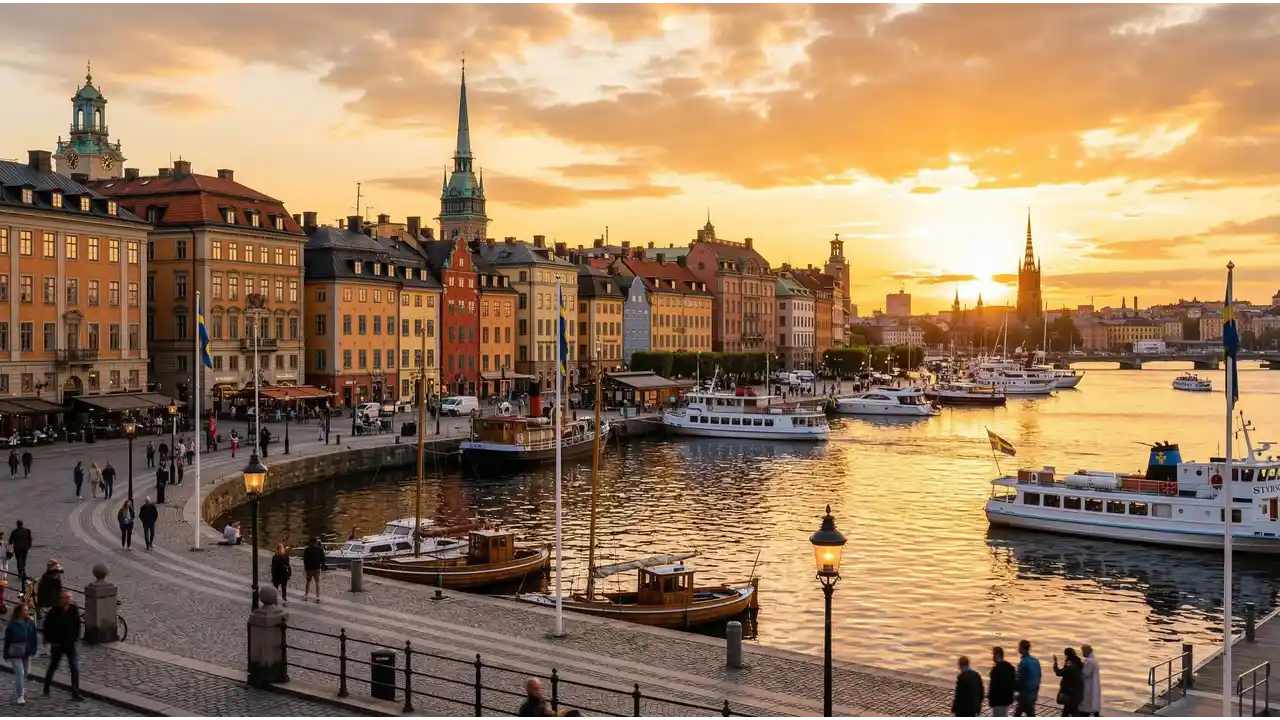
Sweden is a Nordic country of 10 million people spread across a long north-south geography. Stockholm, the capital, sits on islands in the east. Most of the population lives in the south and central regions; the north is sparse and forested. Winters are dark and cold, summers bright and mild. Daily life centers on work, family, and outdoor activity. Sweden has strong social systems, high taxes, and an efficient public sector. Swedish and English are both used in cities, though English proficiency varies outside major centers. The culture emphasizes equality, punctuality, and privacy. Cost of living is high by global standards but lower than London or Geneva.
💡 Local Insights
Sweden · 2026
Sweden's cost structure reflects high labor costs, strong unions, and extensive social benefits funded by tax. Housing drives the largest expense at $927 per month, covering rent in urban areas and smaller spaces outside city centers. Groceries run $403 monthly for a moderate diet, higher than southern Europe but prices stabilize if you cook at home and avoid prepared foods. Imported goods cost more; local produce and dairy are cheaper. Transportation is efficient and relatively affordable: Stockholm's public transit pass costs around $90 monthly; most cities have integrated bus and train networks. Eating out is expensive (a lunch typically $15-20), so locals eat at home or use subsidized workplace canteens. Utilities add $100-150 monthly in winter. Childcare and healthcare are subsidized for residents with Swedish tax status, significantly lowering family costs. Expats without permanent residence pay market rates for everything. Regional variation is meaningful: Gothenburg and Malmö cost 10-15% less than Stockholm; rural areas much less. Banking, phones, and internet are inexpensive by Nordic standards. Alcohol and tobacco carry high taxes.
Frequently Asked Questions
How much does it cost to live in Sweden per month?
A moderate lifestyle in Sweden costs $2,175 per month. This covers rent at $927, groceries at $403, transport, utilities, and discretionary spending. The budget tier runs $1,305 monthly (limited to essentials, shared housing, no eating out). A comfortable lifestyle with more space, dining out regularly, and travel costs $3,371 per month. Actual expenses depend heavily on location (Stockholm costs more than Malmö or outside cities), whether you qualify for residency benefits, and personal spending habits.
What is the average rent in Sweden?
Housing in Sweden averages $927 per month as part of the moderate budget. In Stockholm, a one-bedroom apartment in central neighborhoods (Södermalm, Norrmalm) rents for $1,000-1,300; outer districts drop to $800-1,000. Gothenburg and Malmö offer one-bedroom rentals at $700-900. Outside major cities, expect $500-700. A two-bedroom apartment in Stockholm runs $1,200-1,600 depending on location. Rental prices are driven by high demand and limited supply in urban areas. Many people rent rooms in shared apartments, which cost $400-700. Purchasing property is expensive; prices in Stockholm exceed $8,000 per square meter in desirable areas.
Is Sweden cheap to live in for expats?
No. Sweden ranks among Europe's most expensive countries for housing and dining out. Expats without Swedish residency status pay full market prices for everything and receive no subsidies for childcare or healthcare. If you earn in strong currencies (USD, GBP) or have remote work paying Western rates, Sweden is manageable. If you earn in local Swedish kronor without high salary, costs are tight. Stockholm particularly strains expat budgets. Gothenburg, Malmö, and smaller cities are notably cheaper. Expats benefit from efficient public systems and low crime but should budget $2,500-3,000 monthly to live comfortably without financial stress.
How much does food cost per month in Sweden?
Groceries for one person cost around $403 monthly on a moderate budget. Staples: bread ($1.50), milk ($1.20 per liter), eggs ($2 per dozen), chicken ($8 per kilogram), cheese ($15 per kilogram), apples ($2 per kilogram). Eating out is expensive: a sandwich lunch costs $12-15, dinner at a casual restaurant $18-30 per person. Swedish supermarkets (ICA, Coop, Willys) offer competitive prices if you buy their house brands. Alcohol carries high taxes (beer $2-3 per can, wine $10-15 per bottle). Farmers markets in summer offer slightly cheaper produce. Meal prep and home cooking are essential to staying within budget.
What salary do you need to live comfortably in Sweden?
A comfortable lifestyle costs $3,371 per month, roughly $40,000 annually pre-tax. In Sweden, gross salaries are heavily taxed (national tax around 20%, municipal tax 19-22%, depending on region). To net $3,371 monthly, you need a gross income of approximately $58,000-62,000 per year, or roughly $4,800-5,200 monthly gross. This assumes you are a tax resident and receive standard deductions. Expats on posted worker visas may have different tax treatment. For families, add $1,500-2,500 monthly per child unless subsidized through Swedish residency. Remote workers from outside Sweden can negotiate salary based on home country standards, making costs more manageable.
How does the cost of living in Sweden compare to other places?
Sweden sits in the middle range for European costs. A moderate lifestyle in Sweden runs $2,175 per month, with housing at $927 per month. Austria, a direct peer economy, costs slightly more at $2,275 monthly overall and $1,029 for housing. If you're coming from Western Europe's pricier markets, Ireland at $3,100 per month will feel familiar in expense, though substantially steeper than Sweden across the board. On the lower end, Montenegro offers genuine savings at $1,450 per month, with housing at $681. The real difference between Sweden and cheaper alternatives often comes down to dining and transportation costs rather than rent, which tends to be broadly comparable in Nordic and Alpine regions. Your money stretches furthest in the Balkans, moderate in Scandinavia, and tightest in Ireland.
Yes, but with tight constraints. The budget tier of $1,305 covers shared housing ($500-600), groceries ($300-350), transport ($80-100), and minimal discretionary spending. This requires: living outside Stockholm (Malmö, Gothenburg, or smaller towns), sharing an apartment or renting a small room, cooking almost all meals at home, using public transit exclusively, and eliminating eating out and entertainment. No buffer for emergencies or travel. Residents with Swedish tax status access subsidized childcare and healthcare, stretching the budget. Students and young people use this budget by living in university housing. For anyone with dependents, healthcare costs, or in Stockholm, $1,305 is insufficient.