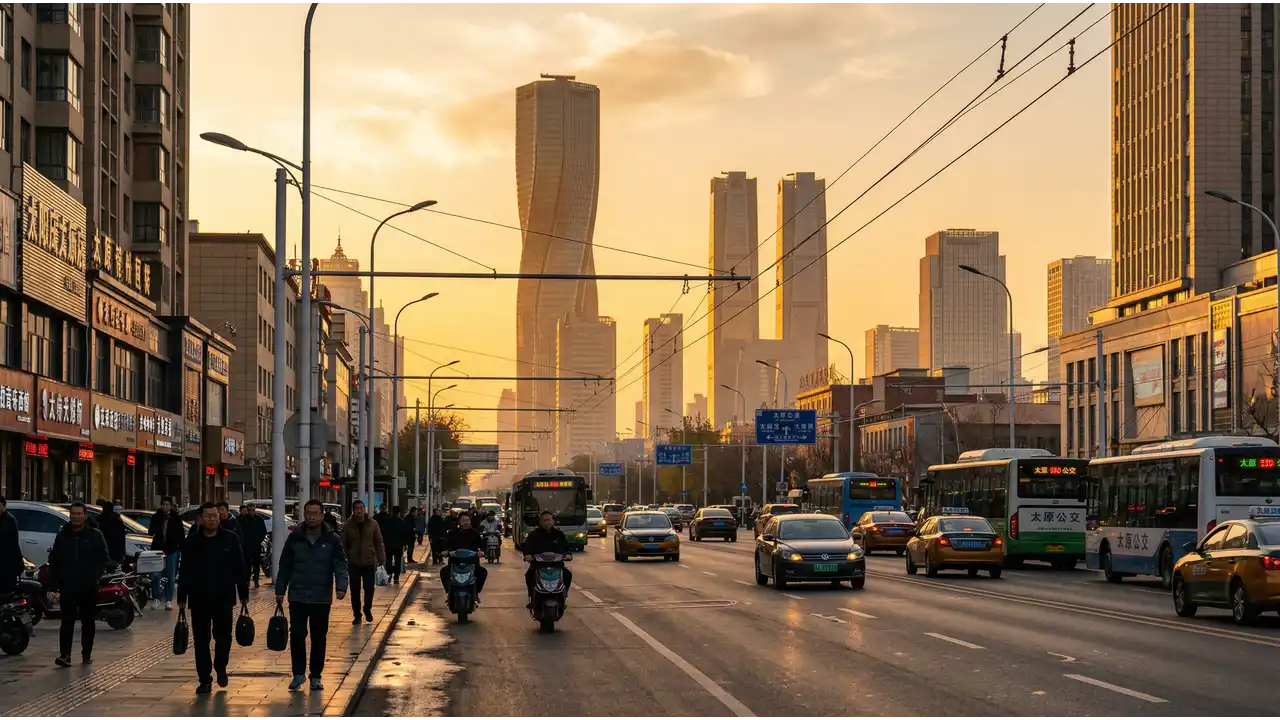
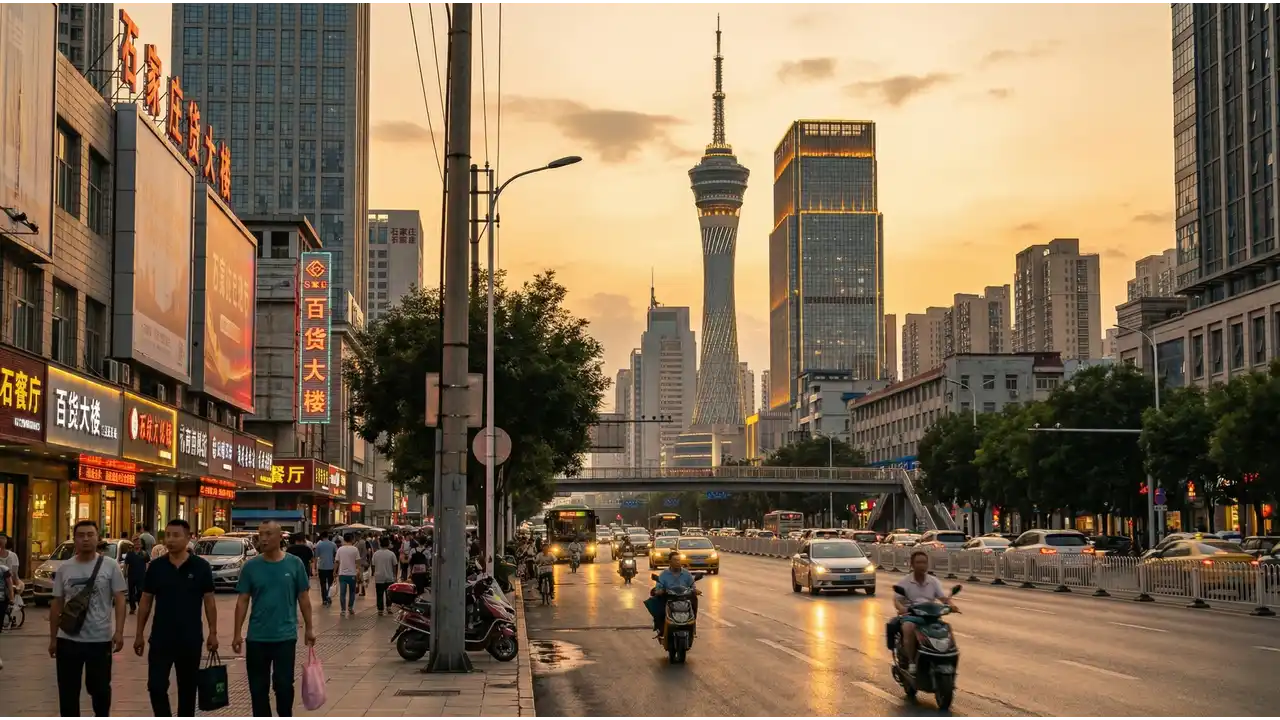
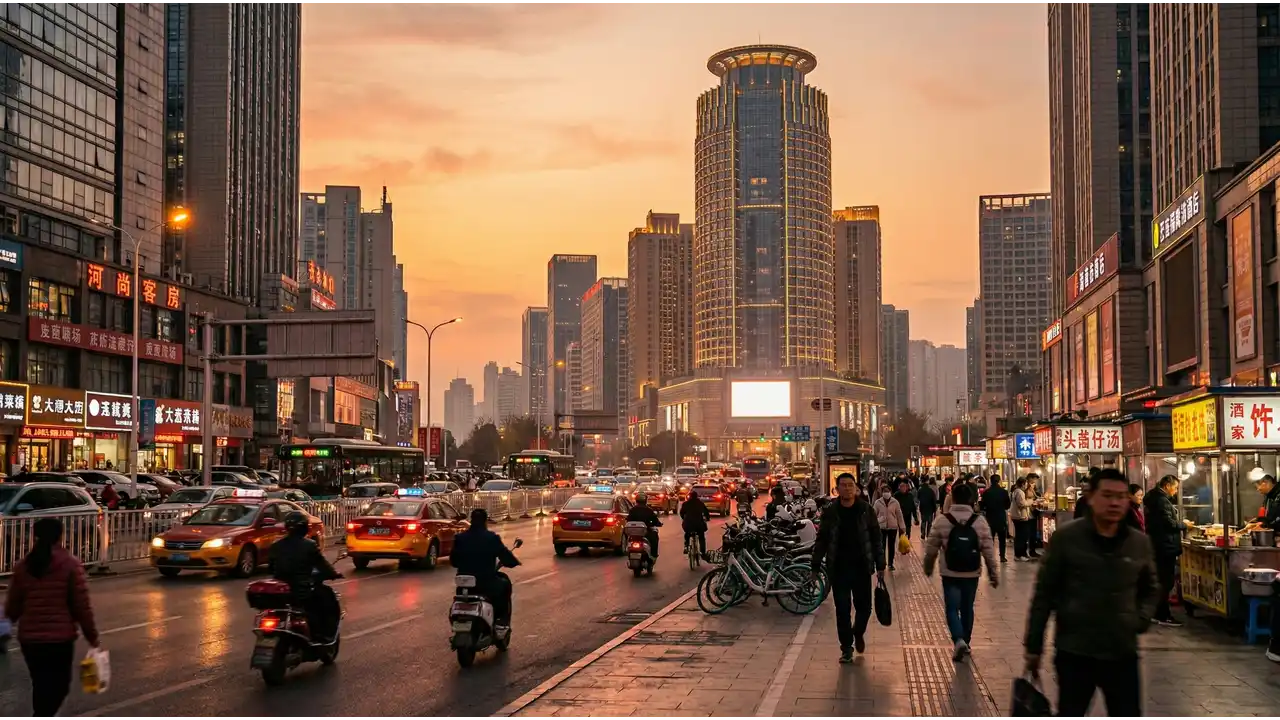
Taiyuan is the capital of Shanxi Province in north-central China, a city of roughly 4 million people built on coal and heavy industry. Winters are cold and dry, summers warm. The city center clusters around Yingze Avenue and the Fen River; residential neighborhoods spread outward with a mix of high-rise apartments and older compounds. Daily life involves local buses, electric bikes, and taxis. Supermarkets stock both Chinese staples and imported goods. Expats and Chinese professionals live side by side; Taiyuan has smaller expat communities than Beijing or Shanghai but growing ones tied to manufacturing and education. The city moves at a practical pace, less touristy than provincial capitals to the south.
💡 Local Insights
Taiyuan · 2026
Taiyuan's cost structure reflects a second-tier Chinese city where rents and food stay relatively low compared to coastal metros. The housing figure of $371/month is the national China baseline that Taiyuan inherits, not a separately measured local rate. In practice, expats report finding furnished one-bedroom apartments in decent neighborhoods for $300-$500 per month, though housing quality and location vary widely. Groceries run approximately $195/month for a moderate diet mixing local markets and supermarkets. A kilogram of rice costs around $1-$1.50, eggs $1.50-$2 per dozen. Eating out remains cheap: noodle bowls cost $1.50-$3, restaurant meals $3-$6. Local buses cost $0.30-$0.50 per trip; taxis start at $1.50. Expats sometimes pay slightly more for imported goods and residential compound rents, but the gap narrows outside central districts. Mobile internet and utilities add $15-$30 monthly. The $975/month moderate lifestyle budget is realistic for someone mixing Chinese and occasional Western food, using public transport, and living in a standard local apartment.
Frequently Asked Questions
How much does it cost to live in Taiyuan per month?
A moderate lifestyle in Taiyuan costs around $975/month. This breaks down roughly as: housing $371/month (the China figure inherited by Taiyuan), food and groceries $195/month, utilities and internet $20-$30, transport $30-$50, and discretionary spending $300-$350 on dining out, entertainment, and personal items. A tighter budget of $585/month is possible if you share housing, cook all meals, and use only buses. Those wanting a more comfortable lifestyle with better housing, frequent dining out, and travel might spend $1,511/month or more.
What is the average rent in Taiyuan?
The housing figure shown for Taiyuan is $371/month, which is the China-level baseline that Taiyuan inherits rather than a separate measurement of Taiyuan's rental market. Actual rents for expats and middle-income residents in Taiyuan tend to range from $300-$600/month for a one-bedroom apartment in decent neighborhoods, depending on location and amenities. Older compounds and outer districts run cheaper; newer developments and central locations cost more. Shared housing drops below $300. Local Chinese renters often pay less than expats for identical units. Real estate platforms like Lianjia and 58.com show current listings.
Is Taiyuan cheap to live in for expats?
Yes, compared to Beijing, Shanghai, Guangzhou, or Western cities. Taiyuan is noticeably cheaper than China's tier-one metros but not as inexpensive as smaller county towns. Expats accustomed to North America or Western Europe find rents, food, and transport surprisingly affordable, though salaries are typically lower than coastal postings. The trade-off is less expat infrastructure, fewer English speakers, and fewer international amenities. Your purchasing power here is high if you earn in USD or EUR, but considerably lower if your income is local. For teaching or manufacturing positions, Taiyuan salaries may not stretch as far as they did 10 years ago as the city develops.
How much does food cost per month in Taiyuan?
Groceries average $195/month for a moderate diet. Local wet markets and supermarkets sell rice for $1-$1.50/kg, vegetables $0.50-$2/kg, eggs $1.50-$2/dozen, and chicken around $3-$4/kg. Staple oils, tofu, and noodles are inexpensive. Imported Western items (cheese, chocolate, certain sauces) cost double or triple. Eating out is very cheap: street noodles and casual restaurants charge $1.50-$3 per meal, sit-down restaurants $4-$8. A mix of cooking at home and occasional dining out easily stays under $195/month. Coffee shops and Western chains run $3-$5, so daily cafe habits add up. Cooking reduces costs significantly.
What salary do you need to live comfortably in Taiyuan?
A comfortable lifestyle runs approximately $1,511/month. This budget allows for better apartment quality or location ($500-$700/month), regular dining out and social meals, imported groceries alongside local food, hobby spending, occasional short trips, and a cushion for unexpected expenses. For expats working locally, this translates to roughly $18,000-$20,000 annually before tax, depending on whether your employer covers housing. Teaching positions and manufacturing roles sometimes include housing, which significantly reduces personal outlay. Chinese professionals earning $1,500-$2,500/month locally find $1,511/month moderately comfortable but not luxurious. Salaries vary widely by sector and experience.
How does the cost of living in Taiyuan compare to other places?
Taiyuan sits in the middle tier for China's major cities. A moderate lifestyle here costs $975 per month, with housing at $371 per month. That puts it slightly more expensive than Hanoi, where a moderate lifestyle runs $875 monthly, though Taiyuan's housing is actually cheaper (Hanoi's averages $406). If you're comparing to South Asia, Pune is considerably less costly at $650 for a moderate lifestyle and $271 for housing. On the other end, Bangkok is noticeably pricier at $1,425 monthly with housing around $722. Taiyuan's strength is affordability relative to other Chinese provincial capitals, especially for housing. The trade-off is fewer international amenities than you'd find in Bangkok or even Hanoi, though the city has expanded its services significantly in recent years.
Yes, but with significant constraints. A $585/month budget means shared housing or a room in an older compound ($150-$250), cooking nearly all meals at home using local markets ($100-$150), minimal dining out, public transport only ($20), no car, and very little discretionary spending. Utilities and internet run $20-$30. This leaves virtually nothing for entertainment, travel, clothing, or emergencies. Chinese students and lower-income residents live this way routinely. For expats, it is feasible short-term if housing is provided or heavily subsidized, but mentally and socially isolating without strong local networks. Most expats report needing $800-$1,000 to feel comfortable and maintain basic social activities.