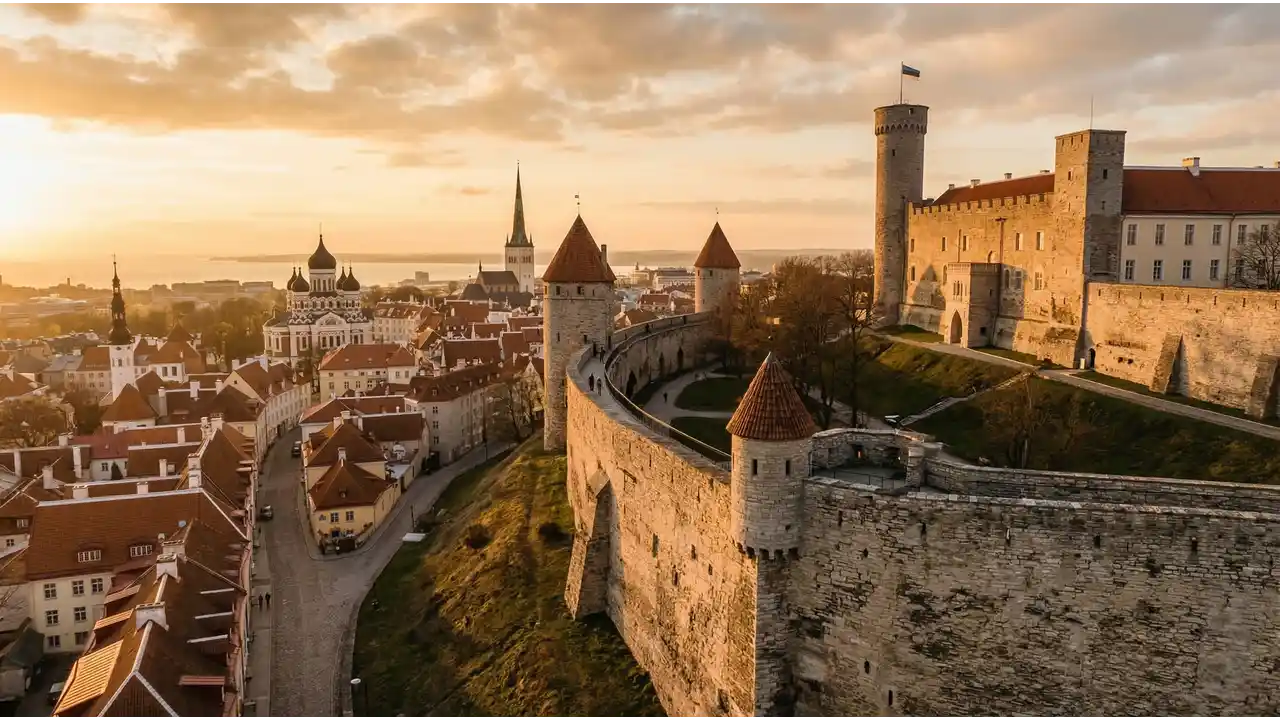
Tallinn is Estonia's capital and only major city, with 400,000 residents spread across a medieval old town and modern districts. The climate is Nordic: winters are cold and dark, summers brief and cool. Daily life centers on Estonian and Russian speakers, though English is common among younger people and in business. Architecture ranges from 13th-century walls to Soviet-era panel housing to new tech district developments. The city is compact enough to navigate by foot or tram. Food culture mixes Nordic minimalism with Russian influences. It functions as a tech hub, not a tourist theme park.
💡 Local Insights
Tallinn · 2026
Tallinn costs roughly 30-35% less than Helsinki or Stockholm, making it genuinely affordable for Northern Europe. However, prices have risen noticeably since 2015 as the city attracted expats and remote workers. Housing dominates your budget at $746/month. A studio apartment in the city center or inner neighborhoods (Kesklinn, Kalamaja) typically runs $650-900; outer neighborhoods like Mustamae or Lasnamae drop to $500-700. Shared housing is common and cheaper. Groceries average $348/month for self-catering. Local shops (Selver, Kaubamaja) are cheaper than Western chains; a loaf of bread costs $1-2, milk $1, chicken breast $4-6 per kilogram. Eating out ranges from $6-12 for casual lunch to $20-40 for dinner. Public transport (trams, buses) costs about $70/month unlimited or $2 per trip. Locals and expats pay identical prices in stores, though some service businesses quote higher rates to obvious foreigners. Mobile plans and utilities are exceptionally cheap by Western standards.
Frequently Asked Questions
How much does it cost to live in Tallinn per month?
A moderate lifestyle costs $1,825/month. This covers housing at $746/month, groceries at $348/month, transport, utilities, and dining out occasionally. The budget tier is $1,095/month if you rent cheaply in outer neighborhoods, buy only local groceries, and avoid dining out. The comfortable tier is $2,829/month, which allows for a larger apartment, more frequent restaurants, travel, and hobbies. These figures assume you handle your own visa, healthcare (EU residents), or expat insurance costs separately.
What is the average rent in Tallinn?
Average housing is $746/month. Studio apartments and one-bedroom flats in central areas (Kesklinn, Kalamaja, Põlva) rent for $700-950. Outer neighborhoods like Mustamae, Lasnamae, or Pirrita range from $500-700 for comparable space. Shared apartments drop to $400-600 per room. Tallinn's rental market is tight; properties lease quickly, especially in summer. Most landlords ask for a deposit equal to one month's rent and prefer long-term tenants. Online platforms like Kv.ee and City24 list most rentals. Utilities (heating, water, electricity) add $80-120/month depending on season and apartment size.
Is Tallinn cheap to live in for expats?
Yes, compared to other Northern European capitals. At $1,825/month for a moderate lifestyle, it is notably cheaper than Helsinki ($2,600+), Stockholm ($2,700+), or Copenhagen ($2,900+). For Western expats accustomed to those cities, Tallinn feels affordable. However, it is not cheap by Eastern European standards, having risen significantly since 2015. Estonian salaries average $1,400/month, so locals live tightly. Remote workers with Western incomes find Tallinn very comfortable; those depending on local wages should expect tight budgeting even at the $1,095/month level.
How much does food cost per month in Tallinn?
Groceries average $348/month for one person eating at home. Milk costs $1-1.50 per liter, bread $1-2, chicken breast $4-6/kg, eggs $1.50/dozen, local vegetables $1-3/kg depending on season. Winter forces reliance on imports and storage crops; summer farmers markets are cheaper. Eating out costs $6-12 for lunch (sandwich, soup, main), $15-30 for dinner at casual restaurants. Higher-end dining runs $35-60. Supermarkets like Selver and Prisma stock both local and imported goods. Russian shops offer cheaper bulk items. Alcohol is taxed heavily; beer costs $2-4 per 500ml in stores, wine $8-20.
What salary do you need to live comfortably in Tallinn?
A comfortable lifestyle costs $2,829/month. This translates to roughly $3,200-3,400/month gross income depending on your tax situation (EU residents may pay less than non-residents). At this level you can afford a spacious one or two-bedroom apartment, eat out regularly, use taxis occasionally, travel within the region, and have hobbies. Remote workers earning $3,500+/month USD find Tallinn very comfortable. Those on $2,200-2,500/month can manage at the moderate level with careful budgeting. Local salaries are lower, so most Estonians live on the $1,095-1,400 range.
How does the cost of living in Tallinn compare to other places?
Tallinn sits in the middle range for European capitals. A moderate lifestyle costs $1,825 per month here, with housing at $746 monthly. That puts it ahead of Tbilisi, which runs $1,225 for the same lifestyle and $599 for housing, making the Georgian capital notably cheaper overall. Tallinn compares closely to Gdansk at $1,650 monthly, though Gdansk's housing is slightly pricier at $816. The real gap appears when you compare Tallinn to Western European centers. Munich costs $2,575 monthly with housing at $1,302, roughly 40 percent higher across the board. If you're coming from North America or Western Europe, Tallinn offers genuine savings. If you're relocating from cheaper regions like the Caucasus, expect your budget to stretch less far. The difference largely reflects Estonia's higher wages and EU integration versus its Eastern European peers.
Yes, but it requires discipline. The budget tier assumes shared housing ($400-500/month), careful grocery shopping at budget supermarkets ($280-300/month), no eating out, using public transport, and minimal discretionary spending. You cover rent, food, utilities, and transport. Anything beyond that (phone plans, clothing, haircuts, entertainment) eats the remainder quickly. This is sustainable if you are disciplined and comfortable with a minimal lifestyle. It matches what many Estonian students and service workers spend. Remote workers with savings can live comfortably this way; those depending entirely on this income should expect regular financial stress.