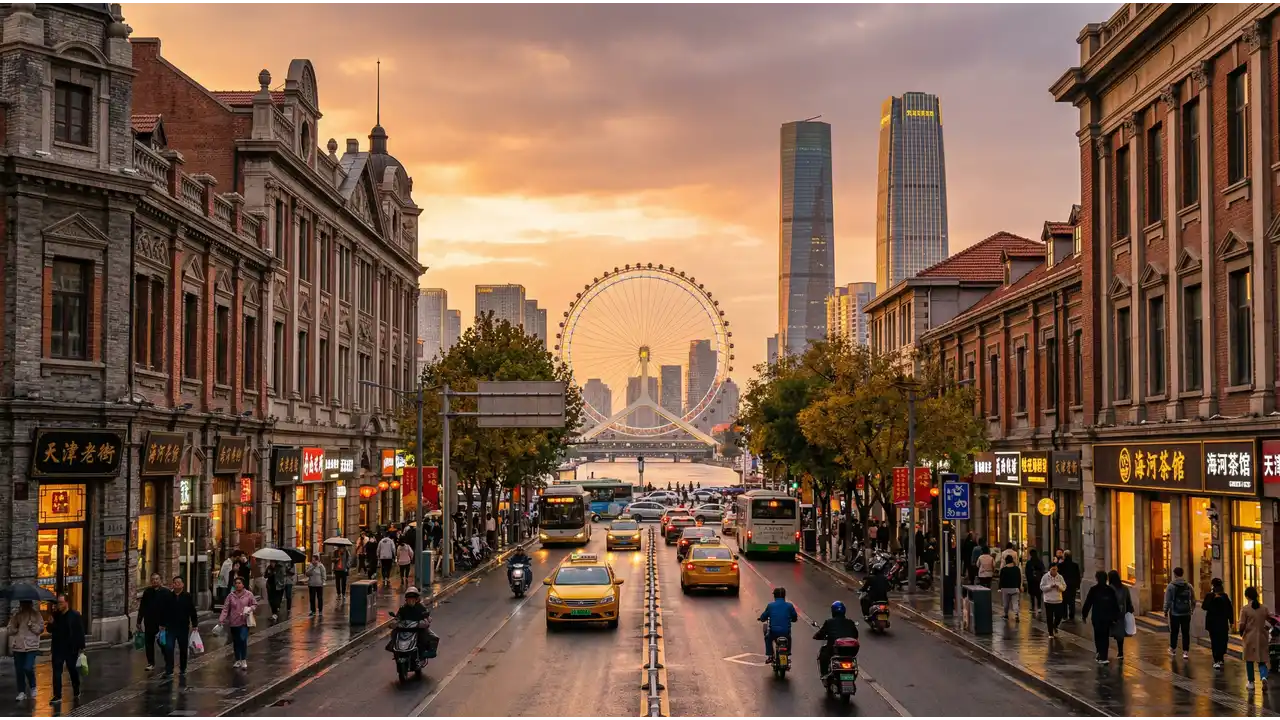
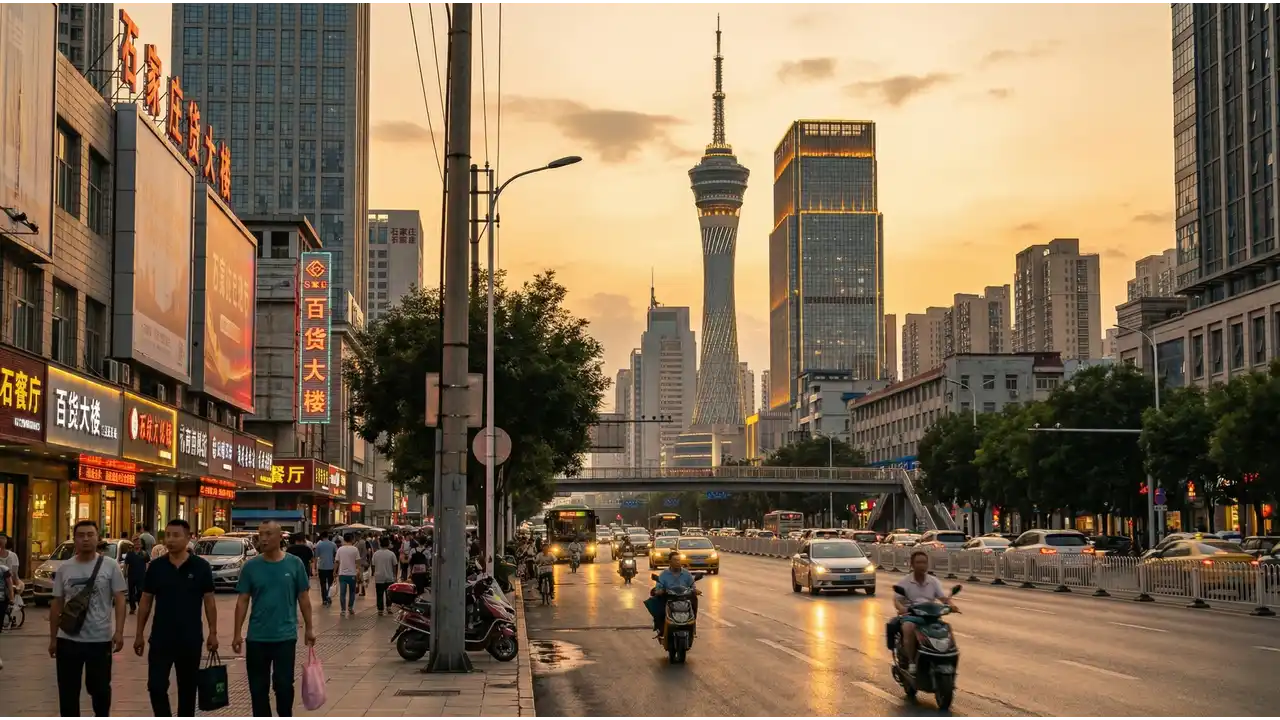
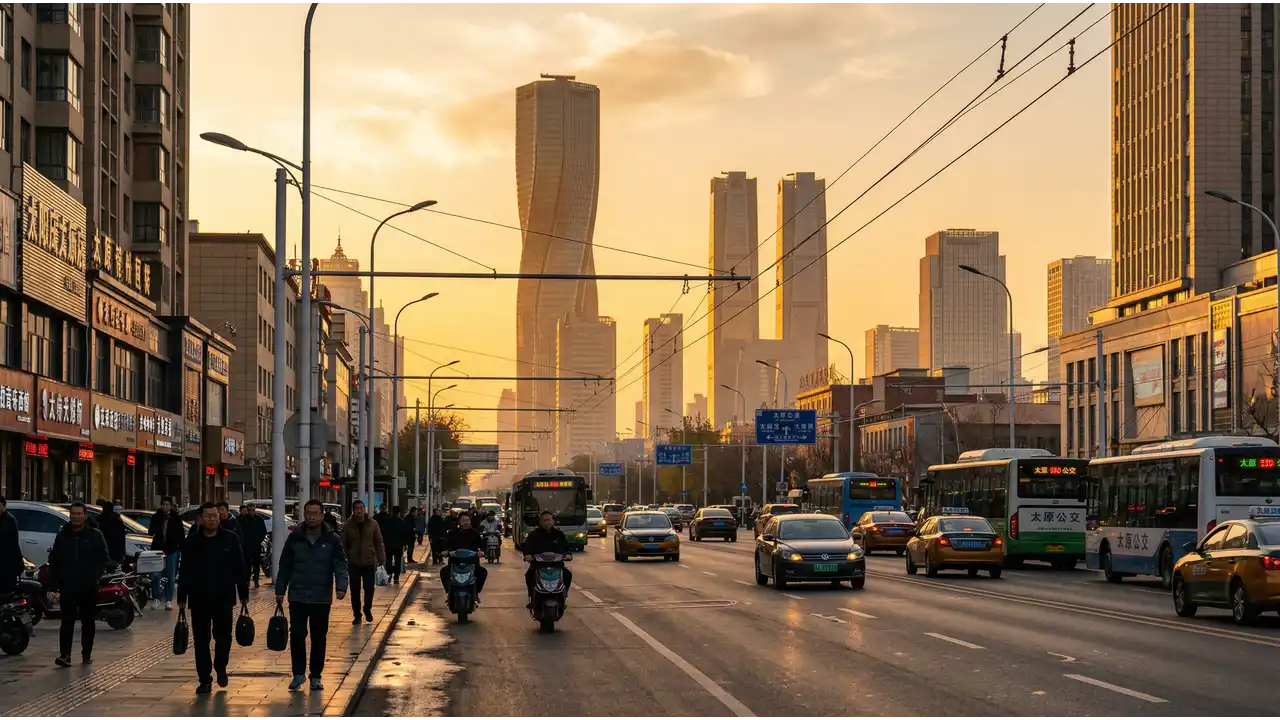
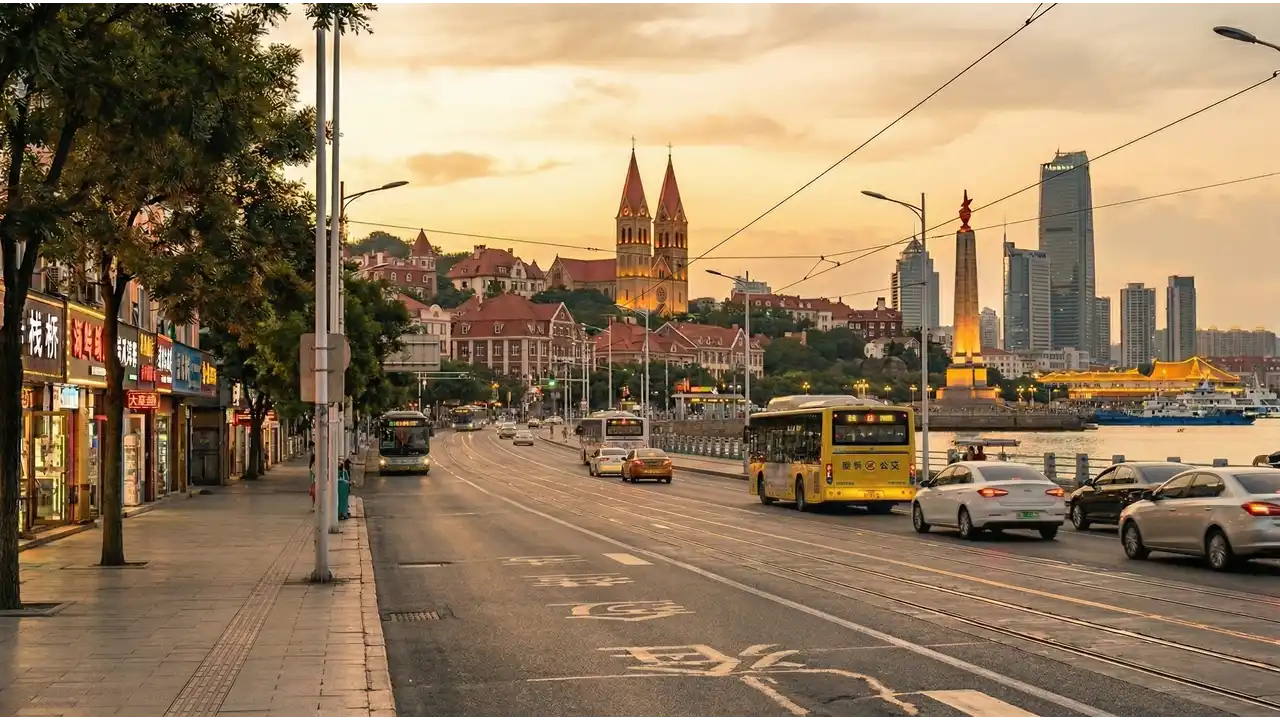
Tianjin is China's fourth-largest city, located 120 kilometers southeast of Beijing on the Bohai Sea. It functions as a major port, manufacturing hub, and financial center, with a population around 15 million. Daily life centers on efficient metro and bus networks, dense residential neighborhoods, and a mix of colonial-era waterfront districts and modern high-rises. The climate is continental, with cold, dry winters and warm summers. The city attracts domestic migrants, factory workers, and foreign professionals in finance, logistics, and education. Most residents live in apartment buildings rather than houses. Food culture emphasizes Tianjin-style noodles, jianbing (crepe wraps), and seafood. English outside business districts is limited.
💡 Local Insights
Tianjin · 2026
Tianjin's main cost driver is housing. The $371/month figure represents the national China average that Tianjin inherits; the city has no separate measured rent. In practice, renters pay widely depending on location and quality. Expat-oriented apartments in Hexi or Heping districts (close to metro, shopping, schools) typically run $500-800 per month for one-bedroom units, higher than the inherited average. Local renters and workers in suburban areas pay substantially less. Groceries at wet markets and supermarkets (Carrefour, Auchan) average $195/month for moderate consumption. Street food and restaurant meals are cheap: noodles cost $1-3, a decent dinner $3-6. Metro rides cost roughly 20-50 cents USD per journey. Private vehicle ownership requires license plate auctions, driving costs up for drivers. Expats with foreign employment contracts often pay premiums for serviced apartments and international grocers. Local wages and rental markets remain substantially below major expat hubs like Shanghai or Beijing.
Frequently Asked Questions
How much does it cost to live in Tianjin per month?
A moderate lifestyle in Tianjin costs around $975/month. This breaks down roughly as follows: housing (the national China figure) is $371/month; groceries run $195/month; transport, utilities, dining out, entertainment, and incidentals make up the remainder. The budget tier is $585/month (spartan housing, minimal eating out, basic transport), while a comfortable tier with more spacious housing and regular dining reaches $1,511/month. Actual costs vary sharply by neighborhood and whether you shop at local markets or expat-oriented supermarkets.
What is the average rent in Tianjin?
The $371/month housing figure shown is the China-level average that Tianjin inherits, not a separate Tianjin rent measurement. In reality, Tianjin's rental market is fragmented. Expats in central districts like Hexi or Heping pay $500-800/month for one-bedroom apartments with modern amenities, proximity to metro, and English-speaking landlords. Local renters and workers in suburban areas (Binhai, Dongli) typically pay $200-400/month. Studio or shared apartments run lower. Furnished serviced apartments marketed to expats cost $800-1,200/month. Prices reflect commute distance, building age, and amenities rather than a single local rate.
Is Tianjin cheap to live in for expats?
Tianjin is cheaper than Shanghai or Beijing, but not as low-cost as smaller Chinese cities. For expats willing to rent locally and eat at street stalls and small restaurants, it is genuinely affordable, especially if earning in foreign currency. However, expats often cluster in premium neighborhoods and prefer international schools, serviced apartments, and imported groceries, which push costs up significantly. Healthcare and international education are major expense spikes. On a typical expat salary, Tianjin feels inexpensive; on a backpacker or tight freelance budget, it is reasonable but not exceptional compared to Southeast Asia.
How much does food cost per month in Tianjin?
Groceries average $195/month for a moderate diet buying at wet markets and local supermarkets. Specific costs: eggs $2 per dozen, rice $0.30-0.50 per pound, vegetables $0.50-1 per pound, chicken $3-4 per pound. Eating out is very cheap: street noodles cost $1-2, a meal at a local restaurant $3-6, and a beer $1-2. Supermarkets (Carrefour, Auchan) carry imported goods at higher prices. Western chain restaurants or expat cafes charge $8-15 per meal. Most residents eat primarily at street vendors, small noodle shops, and family restaurants.
What salary do you need to live comfortably in Tianjin?
A comfortable lifestyle runs approximately $1,511/month. This typically covers a one or two-bedroom apartment in a decent central neighborhood, regular dining out, international school fees (if applicable), utilities, transport, and entertainment. For expats, comfort often requires $1,800-2,500/month to include private healthcare, occasional travel, and access to familiar food and services. A couple or small family aiming for comfort without children should budget at least $1,200-1,600/month. Higher education and international schooling substantially increase this. Local professionals earning in Chinese yuan may achieve comfort on lower nominal figures.
How does the cost of living in Tianjin compare to other places?
Tianjin sits in the middle range for Asian cities. A moderate lifestyle runs $975 per month, with housing at $371 per month. You'll find it comparable to Amman, where a moderate lifestyle costs $1,075 monthly. Both cities offer similar overall affordability, though Amman's housing runs slightly cheaper at $365 per month.
Tianjin is considerably more expensive than Mashhad, where you can live moderately for $650 monthly with housing at $247. If you're coming from a pricier market, though, Almaty will feel steeper. A moderate lifestyle in Almaty runs $1,300 per month, with housing alone at $664.
The key difference is what your money covers. Tianjin offers better infrastructure and international amenities than cheaper options like Mashhad, while staying well below the costs of larger, more developed Asian hubs.
Yes, but with tight constraints. This is the budget tier and requires: basic housing in a suburban or older neighborhood ($200-300/month, no premium location or modern finishes), minimal groceries and mostly street food ($150/month), basic metro transport ($30-40/month), and minimal entertainment. You will forgo dining out regularly, international grocers, healthcare insurance, and travel. This budget is achievable for long-term residents with local networks and comfort with basic standards, but difficult for newly arrived expats without established routines. Most expats find $800-1,000/month a more realistic minimum for comfort.