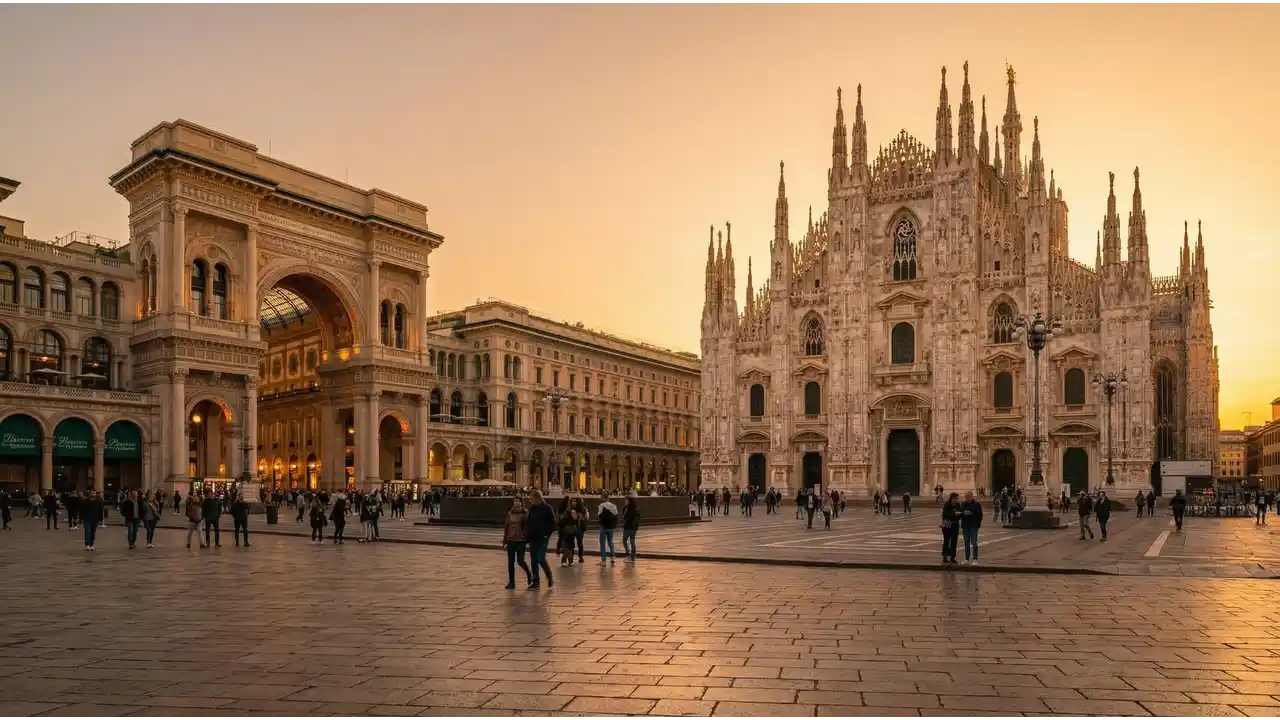
Turin is a working city in northern Italy, known for its automotive industry (Fiat headquarters) and manufacturing. The climate is continental: cold, sometimes snowy winters and warm summers. The center has elegant 18th-century grid streets and arcaded sidewalks. Much of the population is Italian, with smaller communities of Eastern Europeans and recent African migrants. Daily life centers on neighborhood bars, long lunches, and efficient public transport. It feels less touristy than Venice or Rome, more lived-in. The Po River runs through it. Outside the center, sprawling residential districts house factory workers and families.
💡 Local Insights
Turin · 2026
Turin's cost advantage versus other major Italian cities stems from lower tourist demand and a local economy driven by manufacturing rather than heritage tourism. Housing runs $772/month on average, with one-bedroom apartments in the center ranging $650-$900/month, outer districts $550-$750/month. Shared flats (common for students and younger expats) typically run $350-$500/month per person. Groceries average $324/month for one person eating basic Italian staples: pasta, canned tomatoes, seasonal vegetables cost less than Northern Europe. Eating out remains cheaper than northern cities (a meal $8-$12, coffee $1.50). Public transport (GTT buses and metro) costs about $50/month for a pass. The major cost variable is whether you rent alone or share; utilities add $80-$120/month. Expats pay roughly the same as locals for housing, though some landlords prefer long-term Italian tenants. The city has no significant expat pricing premium.
Frequently Asked Questions
How much does it cost to live in Turin per month?
A moderate lifestyle in Turin runs about $1,775/month. This covers rent ($772/month), groceries ($324/month), utilities ($100/month), public transport ($50/month), and discretionary spending (dining, entertainment, personal goods). A tighter budget works at $1,065/month if you share housing and cook most meals. A comfortable lifestyle allowing frequent eating out, private transport, or a larger apartment runs closer to $2,751/month. Individual circumstances vary significantly based on housing choices and whether you live alone or share.
What is the average rent in Turin?
Average rent is $772/month. One-bedroom apartments in central neighborhoods (Crocetta, Santo Stefano) rent for $650-$900/month. Outer residential areas (San Salvario, Lingotto) run $550-$750/month. Smaller studios or rooms in shared flats average $350-$500/month per person. Furnished rentals cost 10-15% more than unfurnished. Most landlords require proof of income and a guarantor, though foreign workers can use employment contracts as proof. Websites like Immobiliare.it, Subito.it, and Facebook housing groups list most available properties. Competition is lower than in Milan, so finding a place typically takes 2-4 weeks.
Is Turin cheap to live in for expats?
Turin is genuinely affordable compared to most Western European cities and other major Italian metros. Rent is 20-30% lower than Milan or central Rome. For expats from London, Paris, or Scandinavia, daily costs will feel notably lower. However, it is not a budget destination like some Eastern European capitals. Expats report that a comfortable single life costs around $1,775/month without major sacrifices. The city offers real value if you're willing to adopt local habits: shop at neighborhood markets, use public transport, eat lunch as the main meal. Expats from the US often find it cheaper than mid-size American cities.
How much does food cost per month in Turin?
Groceries run about $324/month for one person on a standard Italian diet. A liter of milk costs $0.90, a kilogram of pasta $1.20, eggs $2.50 per dozen, seasonal vegetables $1-$2 per kilogram. Shopping at COOP or Carrefour (main chains) is cheaper than smaller neighborhood shops. Markets in Porta Palazzo offer lower prices on fresh produce. Eating out is affordable: a meal at a casual trattoria runs $8-$12, pizza from a traditional pizzeria $5-$8, coffee $1.50. A monthly transit pass costs $50. Food inflation has slowed compared to 2022-2023, but prices remain slightly higher than pre-pandemic levels.
What salary do you need to live comfortably in Turin?
A comfortable lifestyle costs around $2,751/month, suggesting a gross monthly income of roughly $3,500-$4,000 (accounting for Italian income tax at 23-27% for mid-range earners). This allows a one-bedroom apartment alone, regular restaurant meals, occasional travel, and hobbies without stress. For couples, a combined income of $5,500-$6,500/month provides genuine comfort. On $1,775/month (the moderate baseline), you live well but watch discretionary spending; it requires cooking most meals and using public transport. Most skilled professionals in Turin earn $2,000-$3,500/month gross. Lower salaries are common in retail, hospitality, and entry-level roles.
How does the cost of living in Turin compare to other places?
Turin sits in the middle of the European cost spectrum. A moderate lifestyle runs $1,775 per month, with housing at $772 monthly.
This puts Turin slightly above Wroclaw, where a moderate lifestyle costs $1,650 per month and housing is $812. If you're coming from Western Europe, Turin is notably cheaper. Nice, for comparison, runs $2,400 monthly for the same moderate tier, with housing at $1,132.
You'll find Turin considerably more expensive than Eastern European alternatives. Yekaterinburg costs $1,250 per month for a moderate lifestyle, though that's a different regional context entirely.
Within Italy, Turin offers better value than Milan or Rome. For Central European cities of similar size and amenities, Turin's pricing is competitive but not the lowest option available.
Yes, but with clear trade-offs. You must share a flat (average $350-$450/month per person) and cook nearly all meals from groceries. Public transport and utilities consume the remainder ($130/month combined). Dining out becomes rare, entertainment is free (parks, galleries, street life). Students and young professionals do this regularly through shared housing websites and university housing offices. It is sustainable long-term if you are not supporting dependents and earn the income reliably. However, there is no buffer for emergencies, medical costs, or travel. Many expats at this level combine it with part-time remote work or savings from their home country. Shared housing is culturally normal in Turin, not a hardship.