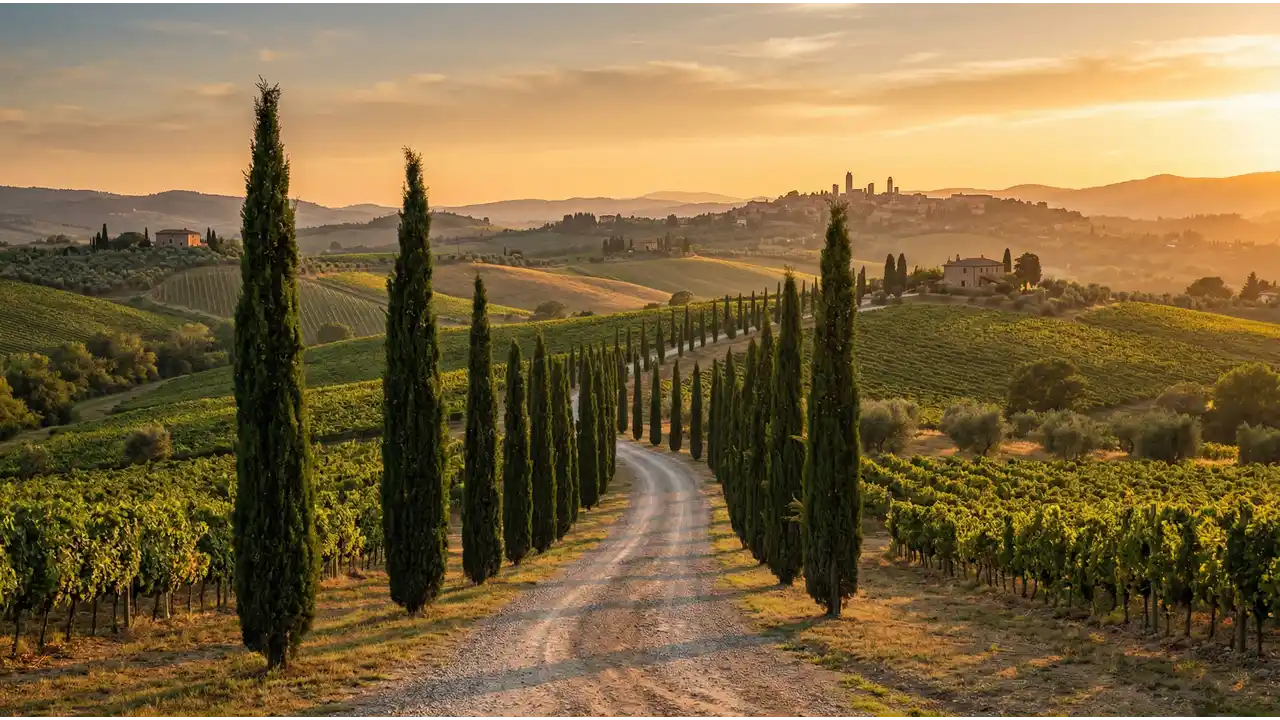
Tuscany is a rural and small-city region in central Italy, not a single urban center. Most residents live in towns of 5,000 to 50,000 people spread across rolling countryside. The climate is Mediterranean: hot, dry summers and mild winters. Agriculture, tourism, and small manufacturing drive the local economy. Daily life centers on family, seasonal markets, and local bars and restaurants. Italian is the working language; English proficiency varies by town and age. The region draws retirees, remote workers, and people seeking lower costs than northern Europe. Summers attract tourists; winters are quieter. Infrastructure is adequate but car-dependent outside major towns.
💡 Local Insights
Tuscany · 2026
Tuscany's cost advantage comes from lower wages and property values compared to northern Europe and US cities, not from being exceptionally cheap globally. Rent of $875/month covers a one-bedroom apartment in a small town or the outskirts of larger centers like Siena or Arezzo. Central locations and renovated properties cost more. Groceries run $363/month if you shop local markets and cook at home. Eating out regularly adds $200-400/month per person. Transport costs are low if you have a car (fuel roughly $1.50/liter), but public buses between towns are infrequent. Healthcare is excellent and heavily subsidized for residents. Utilities average $120-180/month depending on heating needs. Internet and phone are cheap, around $40/month combined. Expats often encounter higher prices from landlords unfamiliar with local market rates; building relationships and using Italian-language platforms like Immobiliare.it yield better deals than international expat sites.
Frequently Asked Questions
How much does it cost to live in Tuscany per month?
A moderate lifestyle costs $2,000/month. This covers rent ($875), groceries ($363), utilities ($150), transport ($80), and dining out or recreation ($400-500). The budget tier is $1,200/month if you live outside town centers, cook nearly all meals, and minimize discretionary spending. A comfortable lifestyle costs $3,100/month, allowing for regular dining out, travel within Italy, and more spacious housing. Costs vary significantly by town; Siena and Florence suburbs are pricier than rural villages or smaller cities like Volterra or Montepulciano.
What is the average rent in Tuscany?
Average rent is $875/month for a one-bedroom apartment in a typical town or small city. A two-bedroom runs $1,100-1,400/month. Prices vary by location: rural villages and smaller towns like San Gimignano or Chiusi average $700-900/month, while Siena or Arezzo city centers reach $1,000-1,300. Furnished rentals for expats often cost 15-25% more than unfurnished local rates. Seasonal tourist towns inflate prices May through September. Long-term contracts (12+ months) with local landlords offer better rates than short-term expat platforms. Property condition matters more than size; a restored stone farmhouse commands premiums.
Is Tuscany cheap to live in for expats?
Tuscany is moderately priced for expats, not cheap. It costs significantly less than London, Paris, or New York, but more than Spain, Portugal, or Greece at similar quality levels. The real advantage is lifestyle: good healthcare, safe neighborhoods, and slower pace at a reasonable cost. Hidden expenses catch many expats: higher prices from landlords unfamiliar with local rates, underestimating utility heating costs in winter, and restaurant dining adding up quickly. Success requires speaking some Italian, using local rental platforms, and committing to local market shopping. Expats expecting bargain-basement costs often find themselves living well above their intended budget.
How much does food cost per month in Tuscany?
Grocery shopping costs $363/month for one person eating basic, unprocessed Italian food: pasta ($1-2/box), olive oil ($4-6/liter), tomatoes ($2-3/kg seasonal), cheese ($8-12/kg), bread ($1-1.50/loaf). Markets are cheapest; supermarkets like Conad or Coop cost 10-20% more. Eating out is significant: a pizza or pasta lunch runs $8-12; dinner at a casual trattoria costs $15-25 per person. Wine from local shops is $4-10/bottle for quality table wine. Coffee at a bar is $1.50-2. For a $2,000/month budget, allocate $363 for groceries and $200-300 for occasional dining out. Regular restaurant dining substantially exceeds the moderate budget.
What salary do you need to live comfortably in Tuscany?
A comfortable lifestyle requires $3,100/month. This supports rent of $875-1,100, groceries and dining out around $550-650, utilities and transport $250, and discretionary spending on travel, entertainment, and hobbies $600-800. For a couple, $4,500-5,000/month removes financial stress. Remote workers with income in strong currencies (USD, GBP, CHF) live well on these figures. Local Italian salaries are substantially lower (median around $1,400-1,600/month), so expat income is required to sustain a comfortable standard. Consider visa requirements: Italy has no official digital nomad visa, though some expats use tourist or freelancer visas.
How does the cost of living in Tuscany compare to other places?
Tuscany runs $2,000 per month for a moderate lifestyle, with housing at $875 monthly. This puts it solidly in the mid-range for Western Europe. Germany costs about the same at $2,175 monthly, though housing there runs higher at $1,009. The Netherlands is noticeably pricier at $2,775 per month overall, with rental costs of $1,587. If you're coming from Central Europe, Hungary is considerably cheaper at $1,375 monthly with housing around $578. Tuscany's real advantage isn't rock-bottom pricing, but rather what your money buys. You get medieval towns, regional wine and food, and moderate rents without the premium you'd pay in major cities like Amsterdam or Berlin. For most Western Europeans, it feels like a genuine cost reduction while maintaining quality of life.
Yes, but with significant constraints. A budget of $1,200/month requires living in a small village outside tourist areas, renting a modest one-bedroom for $700-800, and spending $300-350 on groceries by shopping markets and cooking nearly all meals. This leaves roughly $150 for utilities, transport, and emergencies. Eating out, travel, and unexpected costs quickly exceed the budget. Healthcare through Italian residency is free once registered, which helps. Most people on this budget are retirees with subsidized pensions or remote workers supplementing with occasional freelance income. It is possible but leaves little margin for error and requires fluency with local systems and language to navigate housing markets effectively.