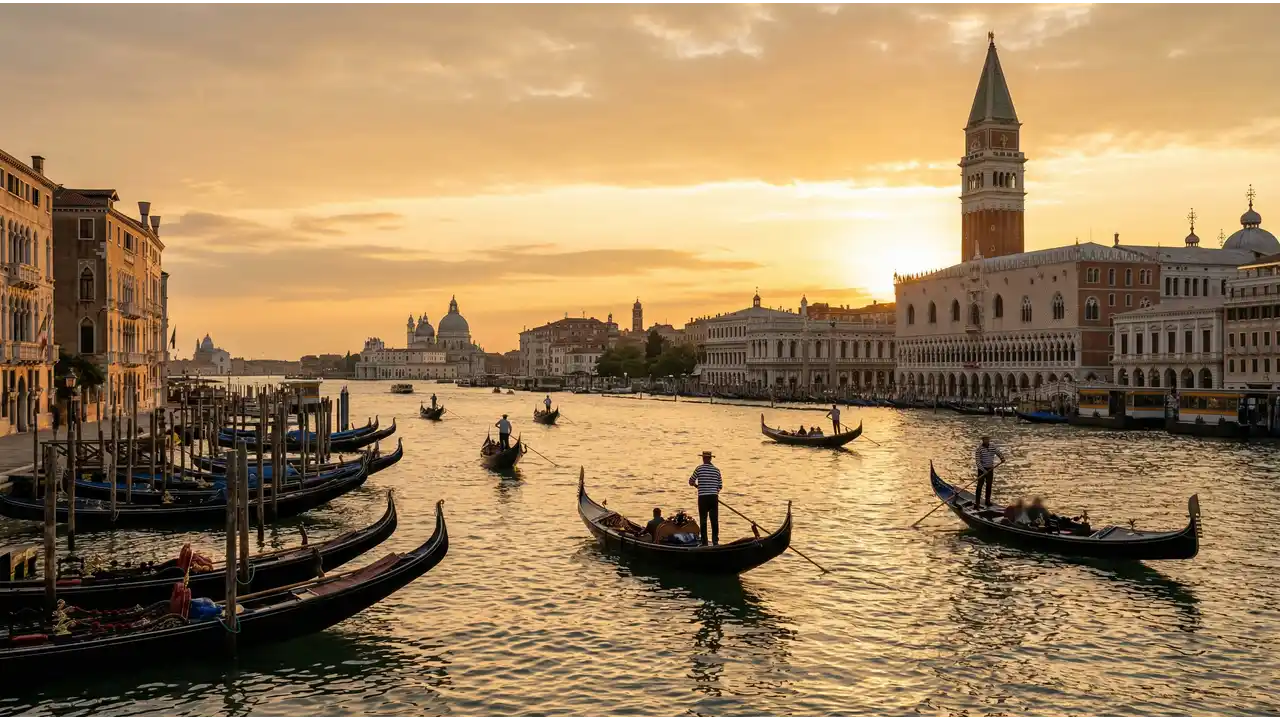
Venice is a car-free island city of about 260,000 people built on a lagoon. Daily life revolves around water: ferries, water taxis, and walking across 400+ bridges. The historic center is dense, medieval, and perpetually crowded with tourists. Locals live alongside visitors year-round. Winters are cold and damp; summers are hot and humid. Most expats cluster in the Cannaregio and Dorsoduro neighborhoods. Work is limited; many residents commute to mainland Mestre or work remotely. The pace is slow and rules-bound: trash disposal, water taxi schedules, and maintenance all follow strict rhythms.
💡 Local Insights
Venice · 2026
Venice's costs are driven by isolation and tourism. Everything arrives by boat or through a single causeway, raising import costs. Housing runs $1,184/month on average for a one-bedroom apartment in residential areas like Cannaregio or the outer islands, though central locations command premiums. Renovated apartments in prime zones can reach $1,400 to $1,600/month; older, less desirable units may run $950 to $1,100/month. Grocery costs are moderate at $360/month due to local produce markets and competitive supermarkets, though imported goods cost more than the mainland. Transport is included in daily life: a vaporetto (public water bus) pass runs about $100 per month. Eating out is expensive; a restaurant meal averages $15 to $25. Expats often find hidden costs: steep apartment turnover fees, mandatory residence registration, and seasonal tourism inflation. The budget figure of $2,300/month assumes shared housing or outer-island rentals and cooking at home. Winter brings lower tourism and better rental availability, though fewer work opportunities.
Frequently Asked Questions
How much does it cost to live in Venice per month?
A moderate lifestyle costs $2,300/month. Housing runs $1,184/month for a typical one-bedroom apartment in residential neighborhoods. Groceries average $360/month. Transport is roughly $100/month for a vaporetto pass. Utilities (electricity, water, heating) add $80 to $120/month. Eating out, insurance, and miscellaneous expenses fill the remainder. A budget tier lifestyle is possible at $1,380/month if you live on an outer island, cook almost entirely at home, and minimize social expenses. A comfortable lifestyle with dining out and travel runs $3,565/month.
What is the average rent in Venice?
Average rent is $1,184/month for a one-bedroom apartment in residential neighborhoods. Studio apartments in outer areas (Burano, Murano, Giudecca) run $900 to $1,050/month. One-bedrooms in Cannaregio or Dorsoduro, popular with expats, range from $1,100 to $1,350/month. Central locations near San Marco or high-demand tourist areas command $1,400 to $1,700/month or higher. Shared apartments are cheaper, typically $600 to $900/month per person. Utility deposits and turnover fees add 10 to 20 percent to initial costs. Winter rentals (November to March) are often discounted as tourism drops. Furnished apartments cost roughly 10 to 15 percent more than unfurnished.
Is Venice cheap to live in for expats?
Venice is not cheap compared to most European cities. At $2,300/month for moderate living, it exceeds Budapest, Lisbon, and even parts of Berlin. Rent alone at $1,184/month is high for the region. However, expats find value in free amenities: walking, canals, museums with reduced entry for residents. The trade-off is isolation and limited job market, which drives many expats to leave after one or two years. Expats on remote income or early retirement find it sustainable; those seeking local work should expect mainland commutes or tourism sector wages. Compared to London or Paris, Venice is cheaper but less cheaper than expected given its size and isolation.
How much does food cost per month in Venice?
Groceries cost $360/month for one person cooking at home. A loaf of bread runs $1.20 to $1.80. Milk (1 liter) costs $1.30 to $1.70. Eggs (a dozen) are $2.50 to $3.20. Pasta and rice are inexpensive at $0.80 to $1.50 per pound. Fresh produce is affordable at local markets: tomatoes $1.20/pound, zucchini $0.90/pound. Imported or organic items cost considerably more. Eating out is expensive: a simple pizza or pasta at a casual restaurant runs $10 to $15; tourist-zone meals near San Marco reach $25 to $40. Coffee at a bar costs $1.20 to $2.50. Shopping at Rialto Market or neighborhood supermarkets like Coop keeps costs down; tourist-area convenience stores charge double.
What salary do you need to live comfortably in Venice?
A comfortable lifestyle costs $3,565/month. This covers housing at $1,184/month, groceries at $360/month, regular dining out, utilities, transport, travel, and social activities. After-tax salary of $4,500 to $4,800/month provides breathing room for savings and unexpected costs. Remote workers and retirees with $50,000 to $60,000/year in stable income find comfort; those relying on local wages face challenges due to limited employment and lower salaries on the mainland. Couples sharing housing can live comfortably on combined income of $70,000 to $75,000/year. Without reserve savings or supplementary income, the comfortable tier is tight given unexpected repairs, seasonal income dips, and healthcare costs for non-EU residents.
How does the cost of living in Venice compare to other places?
Venice sits in the middle-to-upper tier of European city costs. A moderate lifestyle in Venice runs $2,300 per month, with housing at $1,184 per month.
You'll find it slightly more expensive than Cologne, where a moderate lifestyle costs $2,200 per month and housing runs $1,001 per month. Venice is considerably dearer than Alicante, which runs $1,650 per month overall with housing at $772 per month. If you're coming from Dublin, you'll notice Venice is actually cheaper. Dublin's moderate lifestyle costs $3,175 per month, with housing at $1,902 per month.
The main driver of Venice's cost is accommodation. Housing dominates your budget here because of limited space, tourist demand, and the city's unique geography. Everyday expenses like food and transport sit closer to other major European cities, but rent will be your largest line item.
Yes, but with significant restrictions. The budget tier of $1,380/month requires living on an outer island (Burano, Murano, or Giudecca) with rent around $850 to $950/month, or in a shared apartment at $600 to $750/month per person. Groceries at $360/month are tight but possible with disciplined shopping at supermarkets and markets, avoiding restaurants. Transport costs roughly $70 to $100/month. That leaves $70 to $200/month for utilities, phone, insurance, and personal items. No buffer for social events, travel, or emergency repairs. This budget works for long-term residents with free or low-cost housing arrangements, remote income, or strong support networks. Short-term expats or tourists find it insufficient. Any medical expense, visa renewal fee, or apartment maintenance issue forces difficult choices.