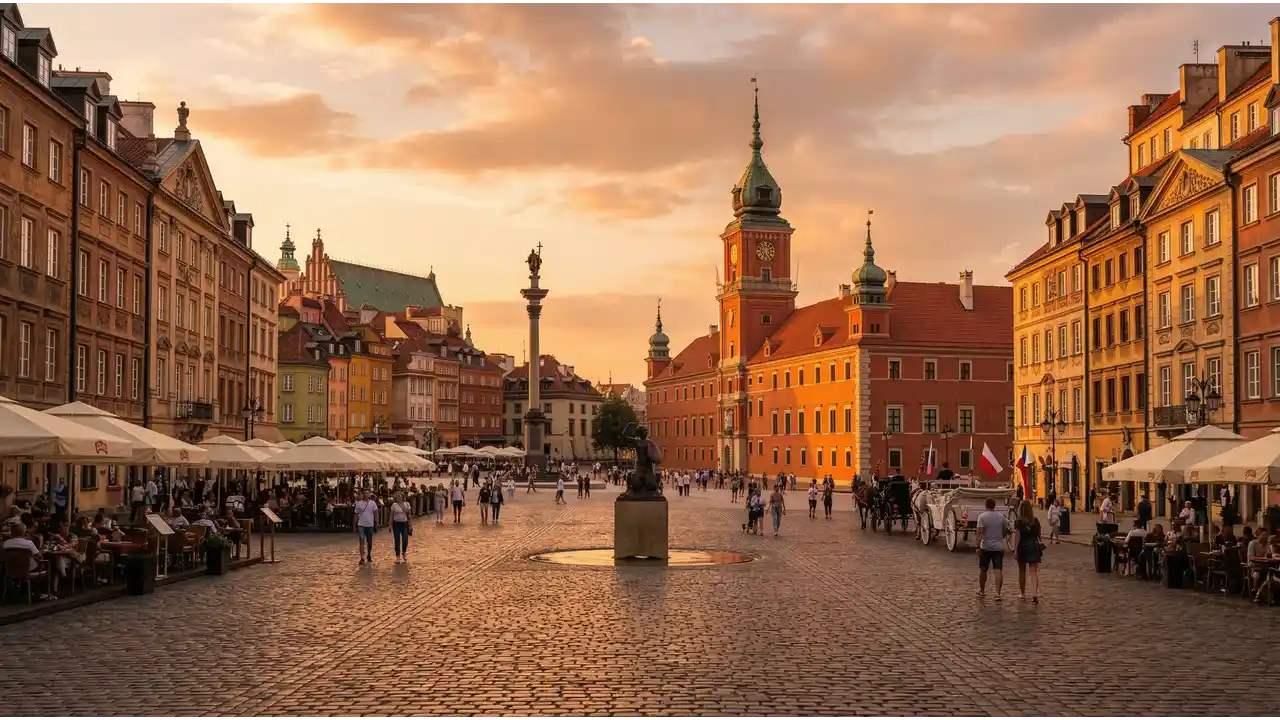
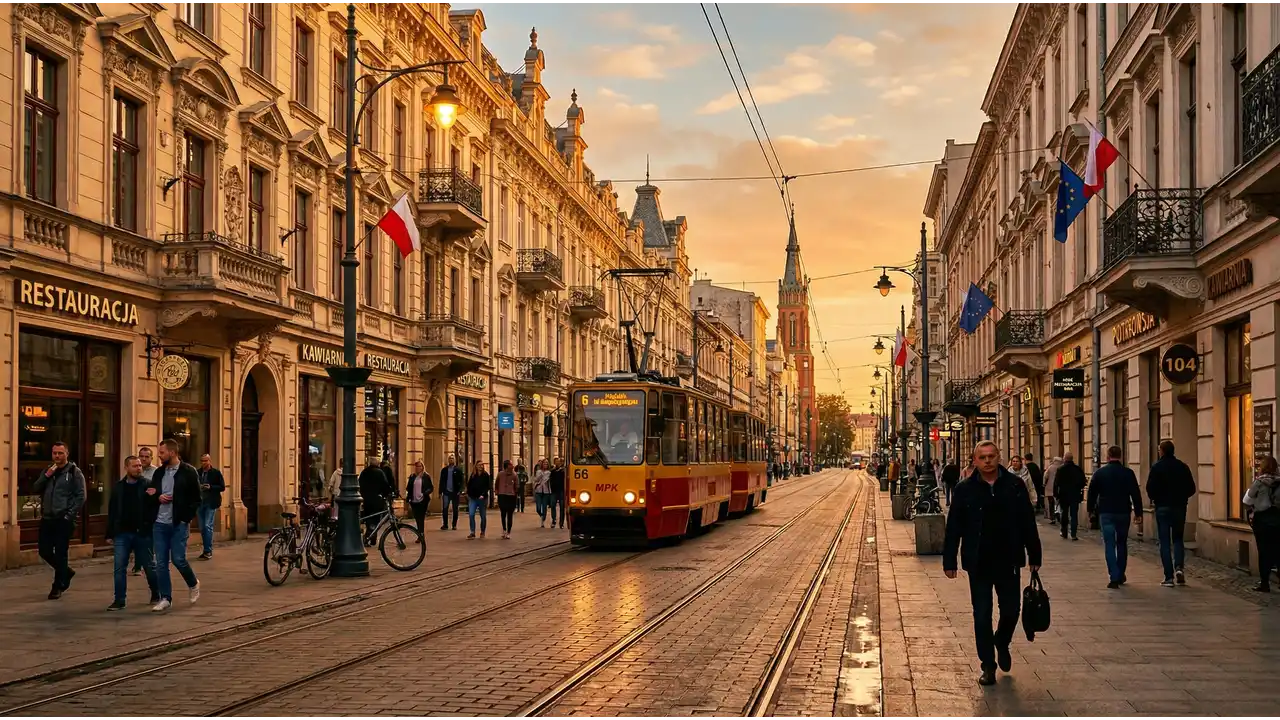
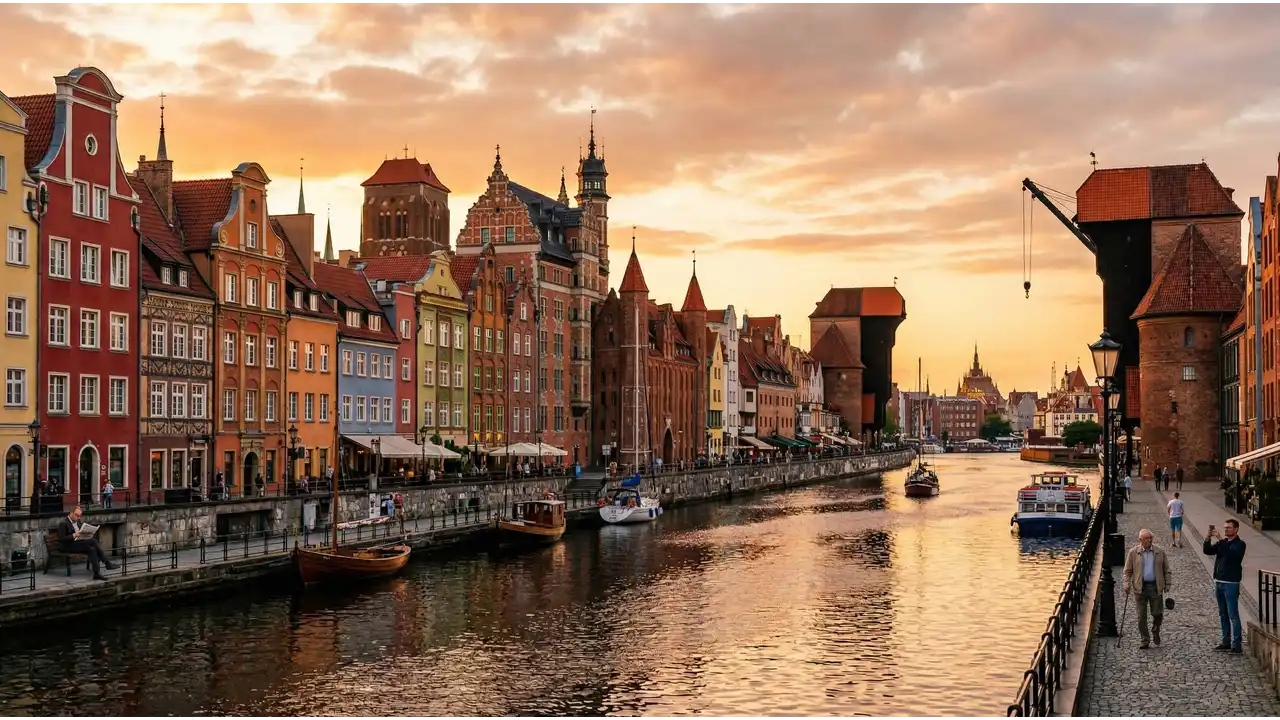
Warsaw is Poland's capital and largest city, home to 1.9 million people in the metropolitan area. The city sits on the Vistula River with a mix of rebuilt Old Town (reconstructed after WWII) and Soviet-era blocks alongside modern office districts. Winters are cold (around freezing), summers mild. Daily life centers on compact neighborhoods connected by efficient metro and tram systems. Polish is the main language, but English is widely spoken in central areas and among younger residents. The pace is less frantic than Western European capitals but noticeably faster than smaller Polish towns. Food culture emphasizes Eastern European staples: rye bread, barszcz, pierogi, fresh dairy.
💡 Local Insights
Warsaw · 2026
Warsaw offers genuine affordability compared to Western Europe, though costs have risen noticeably since 2015. Housing at $1,091 per month anchors the budget and varies significantly by neighborhood. Central districts like Srodmiescie command higher rents; outer areas like Mokotow or Praga offer better value. A one-bedroom apartment in central areas runs $800-1,200 per month, while outer neighborhoods drop to $600-900. Groceries at $285 monthly are substantially cheaper than North America or Western Europe. Local markets (Hala Mirowska, Bazarek na Kole) undercut supermarkets by 20-30 percent on produce. Public transport (metro, tram, bus) costs about $30 per month for unlimited access. Eating out remains affordable: a meal at a casual restaurant costs $6-10, though trendy central spots charge double. Expats report two-tier pricing is rare in Warsaw compared to Asian expat hubs. Polish salaries are lower than Western Europe, so local wages do not reflect expat purchasing power.
Frequently Asked Questions
How much does it cost to live in Warsaw per month?
A moderate lifestyle in Warsaw costs about $1,975 per month for a single person. This breaks down roughly as: housing $1,091, groceries $285, utilities and transport $250, and dining and entertainment $350. A budget approach (sharing accommodation, cooking daily, minimal outings) works at $1,185 per month. A comfortable lifestyle with private apartment, regular dining out, and leisure activities runs closer to $3,061 per month. Actual costs depend heavily on neighborhood choice and whether you seek local prices or expat-oriented services.
What is the average rent in Warsaw?
Average housing costs are $1,091 per month. This reflects a mix of neighborhoods and flat sizes. A one-bedroom apartment in central Srodmiescie or Nowe Miasto typically rents for $900-1,200 per month. Outer neighborhoods like Mokotow, Wilanow, or Praga offer one-bedroom flats for $600-900 per month. Two-bedroom apartments in central areas run $1,300-1,600; in outer areas $900-1,200. Shared apartments or rooms are cheaper, typically $400-700 per month per person. Prices have increased 15-20 percent over the past five years but remain well below Prague or Budapest for comparable spaces.
Is Warsaw cheap to live in for expats?
Yes, Warsaw is substantially cheaper than Western European capitals or major US cities, though the gap has narrowed. Rent, groceries, and dining cost roughly 40-50 percent less than London or Berlin. However, it is not as cheap as Southeast Asia or Latin America. Expats accustomed to London, Paris, or New York find Warsaw noticeably affordable. Those moving from Lisbon, Budapest, or Prague will find it comparable or slightly higher. The biggest savings come from housing and food; utilities, transport, and imported goods cost more. Local wages suggest Warsaw is expensive for Poles earning in zloty, creating a perception gap between expat experience and local reality.
How much does food cost per month in Warsaw?
Groceries average $285 per month, based on cooking at home with local produce and staples. A loaf of rye bread costs $0.90-1.20; a liter of milk $0.80-1.10; eggs (dozen) $1.30-1.70; chicken breast $4.50-6.50 per pound. Fresh vegetables from markets like Hala Mirowska run 30-40 percent cheaper than supermarket chains. Eating out costs $6-10 for a casual dinner, $12-18 at mid-range restaurants in central areas. A coffee in a casual cafe is $2-3; alcohol in bars $3-5 per drink. Shopping at Carrefour or Auchan (supermarket chains) is more expensive than open-air markets but offers consistency and convenience.
What salary do you need to live comfortably in Warsaw?
A comfortable lifestyle in Warsaw requires about $3,061 per month. This supports a private one or two-bedroom apartment, regular dining out 2-3 times weekly, fitness memberships, entertainment, and modest travel. Monthly breakdown for comfortable living: housing $1,400-1,600, groceries $400, utilities and transport $350, dining and entertainment $800. In local currency, this is roughly 12,000-13,000 PLN gross monthly income, accounting for Polish income tax. Expats on company relocation packages earning $3,500-4,500 monthly report comfortable lifestyles with savings. Remote workers earning in USD or EUR have considerably higher purchasing power.
How does the cost of living in Warsaw compare to other places?
Warsaw sits in the middle tier for European capitals. A moderate lifestyle costs $1,975 per month here, with housing running $1,091 of that. You'll find it slightly cheaper than Nantes, which runs $2,050 monthly, though Warsaw's housing is a bit pricier at $1,091 versus Nantes at $914. If you're comparing to other Polish cities, Warsaw is noticeably more expensive than Lodz, where a moderate lifestyle costs $1,350 monthly and housing just $570. Stockholm, by contrast, is considerably dearer at $2,650 for a moderate lifestyle and $1,314 for housing. For a capital city with strong job prospects and cultural amenities, Warsaw offers reasonable value. Your rent will take up a meaningful chunk of your budget, but overall costs remain well below premium European centers.
Yes, but with significant restrictions. At $1,185 monthly, you need to: share a flat or rent a room ($400-550), cook all meals at home ($180), use public transport exclusively ($30), and avoid dining out and entertainment. This is the lifestyle of a Polish student or junior professional. You would skip gym memberships, entertainment, cafes, alcohol, and most travel. Occasional dinners out become impossible. For expats, this requires discipline and fluency in Polish (or comfort navigating without English). It is feasible for someone earning in USD or EUR with low local expenses, but uncomfortable compared to Western wages. Most expats moving to Warsaw do so with $1,500-2,000 budgets to avoid constant constraint.