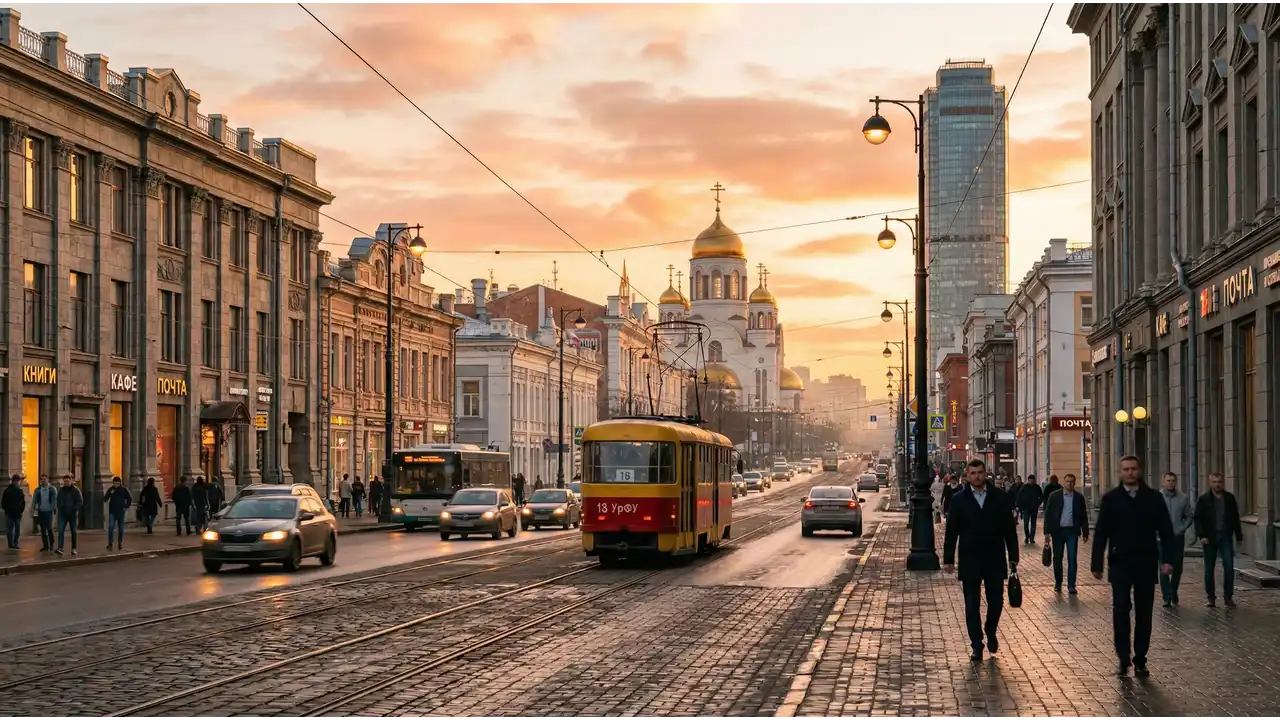
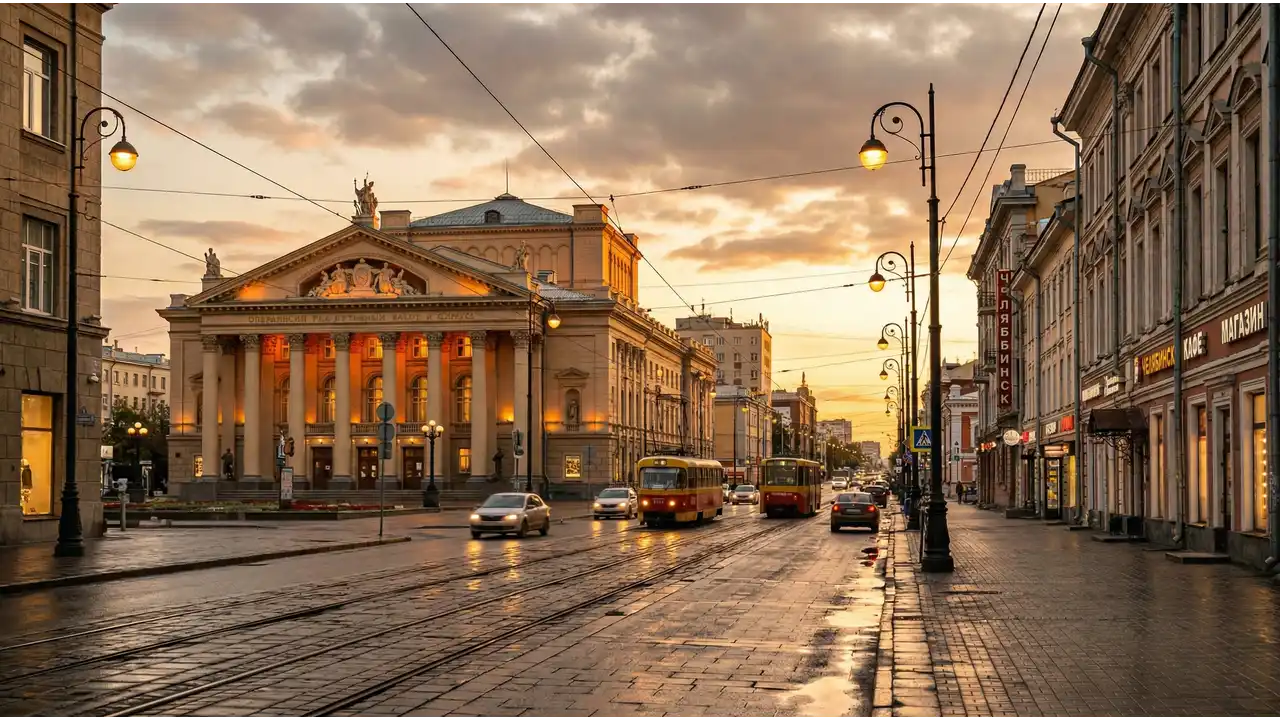
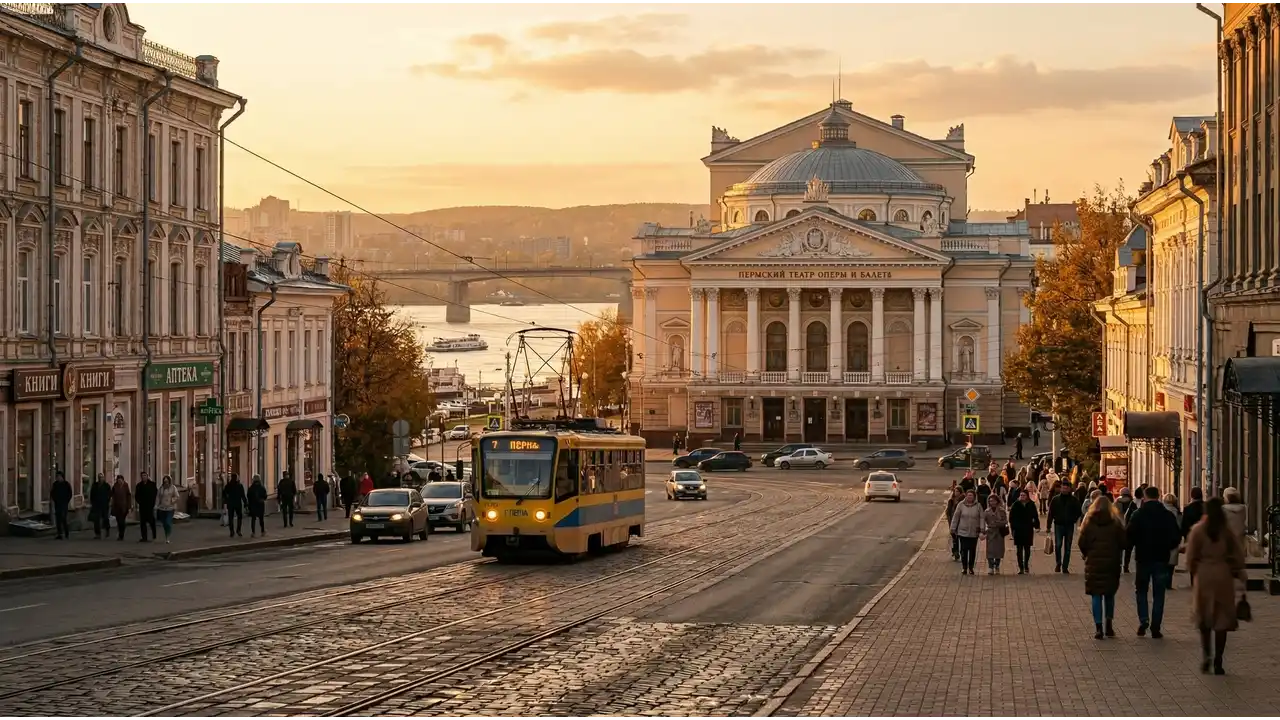
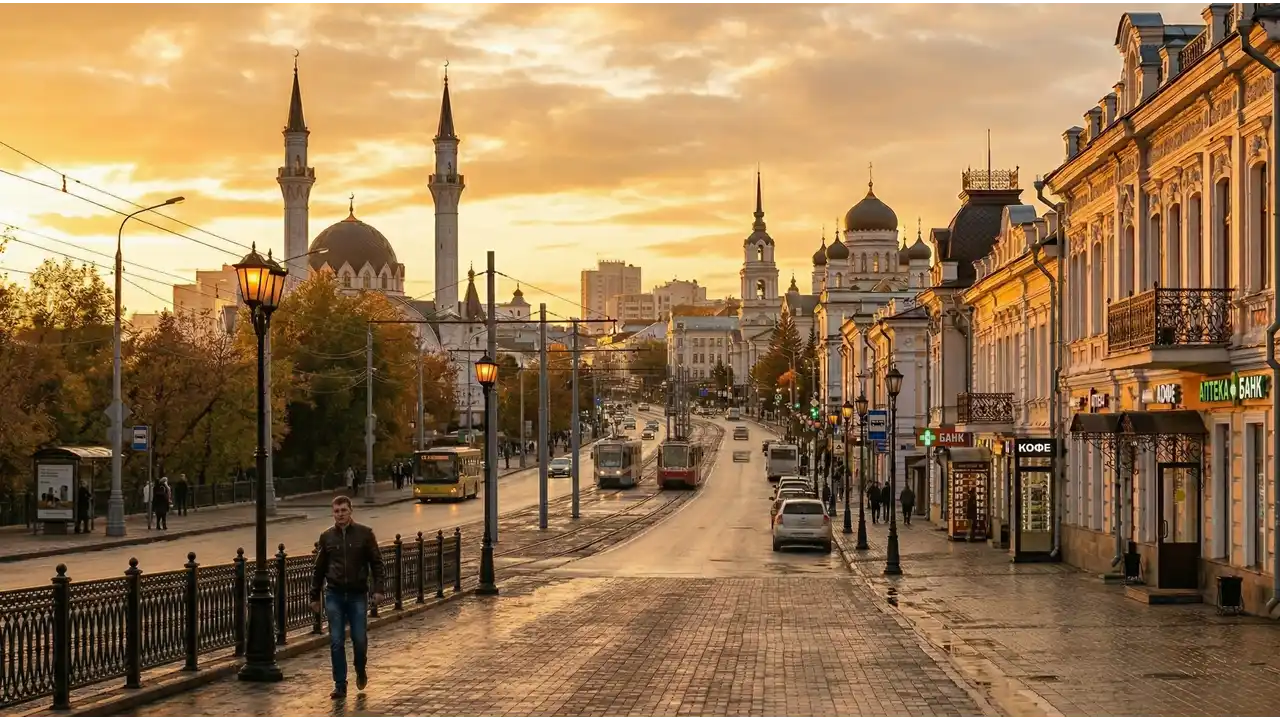
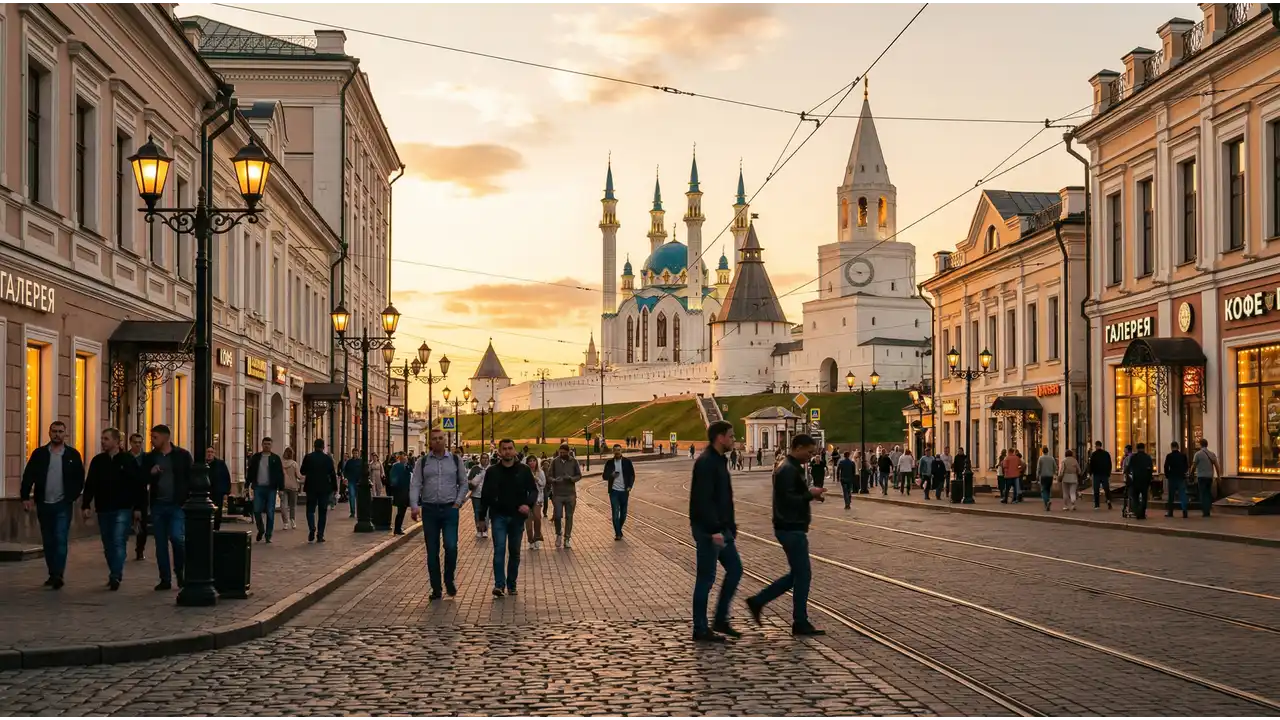
Yekaterinburg is Russia's fourth-largest city and the primary urban center east of the Urals. It has a continental climate with cold winters (down to minus 15 degrees Celsius) and warm summers. The city draws a mix of young professionals, manufacturing workers, and expat employees from oil and tech sectors. Daily life centers on metro commuting, Soviet-era apartment living, and a tight food supply chain tied to regional agriculture. Street markets sit alongside supermarket chains. Winter dominance shapes social rhythms: most outdoor activity compresses into brief summer months. The city has industrial character but functioning cultural institutions, theaters, and a growing cafe scene.
💡 Local Insights
Yekaterinburg · 2026
Yekaterinburg costs substantially less than Western Europe but more than rural Russia. Housing drives the budget: $615/month covers a one-bedroom apartment in central neighborhoods like Avtovozny or Ekaterinburg Center, or a two-bedroom further out toward Ural Machinery Works district. Utilities add $60-80 monthly. Groceries run $205/month for basic cooking: bread costs $0.50, chicken $4 per kilogram, local dairy $1-2 per liter. Eating out at casual cafes runs $3-6 per meal. Public transport (metro, tram, bus) costs $20-30 monthly with unlimited pass. Expat pricing exists for English lessons and international schools but not groceries or rent. Winter heating costs spike December through March. Visa support and residency registration add one-time costs of $300-500. Save money by shopping at Bazaar Kol-Khoz (central market) rather than supermarkets and living in Soviet-era apartments (cheaper, less amenity-heavy).
Frequently Asked Questions
How much does it cost to live in Yekaterinburg per month?
A moderate lifestyle costs $1,250/month. This includes $615/month for housing (one-bedroom apartment, central area), $205/month for groceries, $70/month for utilities, $25/month for public transport, $150/month for dining out and entertainment, and $185/month for phone, internet, and miscellaneous expenses. A budget lifestyle runs $750/month by cutting housing to $450/month (shared or periphery apartment), reducing dining out, and using free activities. A comfortable lifestyle with larger housing, regular dining out, and leisure activities costs $1,938/month.
What is the average rent in Yekaterinburg?
Average rent is $615/month for a one-bedroom apartment in central neighborhoods. In Avtovozny (near the main train station) or Ekaterinburg Center, expect $580-650/month. Two-bedroom apartments in the same areas run $750-900/month. Moving to outer districts like Ural Machinery Works or Chkalovsky drops one-bedrooms to $450-520/month. Furnished apartments cost 20-30 percent more. Soviet-era 'khrushchyovka' buildings are cheapest. Expats often pay slightly more (10-15 percent premium) through agencies, but direct landlord rentals carry no markup. Lease terms are typically one year. Registration (propiska) with local authorities costs $15-20 and is required for residency.
Is Yekaterinburg cheap to live in for expats?
Yes, Yekaterinburg is cheaper than most Western European or North American cities, but expectations matter. A $1,250/month budget is comfortable for a single person or couple sharing an apartment, but tight if you want a private two-bedroom, frequent dining out, and frequent travel. Expats from London, Berlin, or Toronto will find housing and food genuinely affordable. Those from Southeast Asia or Latin America will notice it's pricier. The main expat cost is language and visa support services, which add $300-600 upfront. Energy costs spike in winter. Healthcare and education for expat families add $500-2,000/month depending on school choice. The city attracts expats on corporate packages (oil, tech, manufacturing), whose employers usually cover housing separately.
How much does food cost per month in Yekaterinburg?
Groceries average $205/month for self-catering. Bread runs $0.40-0.60 per loaf, eggs $0.80 per dozen, chicken $3.50-4.50 per kilogram, potatoes $0.30 per kilogram, milk $0.90-1.20 per liter, cheese $2.50-4/100g, apples $1-1.50/kg (seasonal), and canned goods $0.50-2 each. Supermarkets (Magnit, Pyaterochka) are cheaper than neighborhood shops. Bazaar Kol-Khoz (central market) offers seasonal produce and dairy 15-20 percent cheaper. Eating out: plov or pasta at a casual canteen costs $2.50-4, coffee $1-2, beer $1.50-3 at bars. A sit-down dinner for two at a mid-range restaurant is $15-25. Budget-conscious expats spend $150-170/month on groceries; those who eat out regularly add another $100-150.
What salary do you need to live comfortably in Yekaterinburg?
A comfortable lifestyle requires $1,938/month. This allows a two-bedroom apartment ($800-900), regular dining out and entertainment ($300/month), regular taxis or occasional travel ($100/month), and a buffer for unexpected costs. For a single person or couple without children, this covers a good apartment, eating well, hobby spending, and a modest savings rate. Local salaries in professional roles (accounting, tech, English teaching) range from $600-1,500/month, so expats often rely on corporate packages, freelance income, or savings from home countries. If you have dependents or want international school and expat healthcare, budget $2,500-3,500/month. The comfortable figure assumes you manage housing separately or have negotiated corporate housing support.
How does the cost of living in Yekaterinburg compare to other places?
Yekaterinburg sits in the middle tier for Eastern European cities. A moderate lifestyle here costs $1,250 per month, with housing running $615 monthly. That puts it slightly above Lviv, where the same lifestyle runs $925 monthly and housing costs $414. Sarajevo is nearly identical to Yekaterinburg at $1,200 for moderate living, making them genuine peers for budgeting purposes. If you're comparing to Central Europe, Brno is noticeably more expensive at $1,750 monthly with housing at $865. The practical takeaway: Yekaterinburg is firmly cheaper than Western Europe but costs more than the cheapest cities in the region. For someone relocating from North America or Western Europe, you'll feel the difference immediately in your monthly expenses, though you won't find the rock-bottom prices of smaller Eastern European towns.
Yes, but with real constraints. A $750/month budget requires living in outer neighborhoods (Ural Machinery Works, Chkalovsky) in a one-bedroom Soviet apartment, around $450/month. Groceries stay at $205/month by cooking at home, shopping at markets, and avoiding western imports. Utilities are $60-80/month. Public transport is $25/month. That leaves $10-15 for phone, internet, and emergencies, which is insufficient. A realistic tight budget is $800-900/month: move housing to $480-520/month, keep groceries at $205/month, add $80 utilities, $25 transport, $50 phone/internet, $40-60 dining out, and $20-40 contingency. This works if you have savings for winter heating costs or unexpected repair. It excludes travel, hobbies, and most social spending. Suitable only if you have secondary income or an emergency fund.