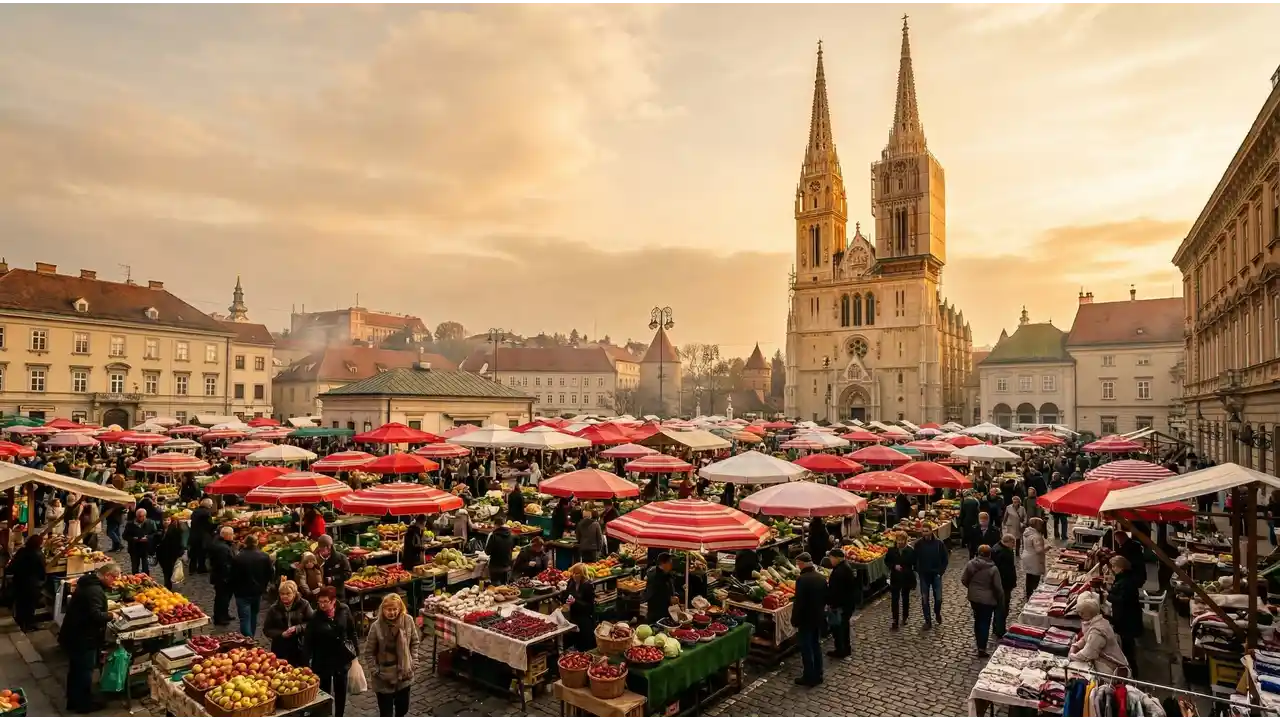
Zagreb is Croatia's capital and largest city, with a population around 770,000. The city spreads across two levels: the historic Upper Town (Gornji Grad) with narrow streets and baroque architecture, and the Lower Town (Donji Grad) with wide boulevards and 19th-century buildings. Most residents live in apartments rather than houses. Daily life involves walking, tram use, or cycling for transport within the center. Winters are mild (around 5 degrees Celsius), summers warm (25 degrees Celsius). The city has a significant expat community, though the local language is Croatian. Cafes and bakeries anchor neighborhood life. Most daily errands happen on foot or by tram.
💡 Local Insights
Zagreb · 2026
Zagreb is affordable compared to Western European capitals, but costs vary sharply by neighborhood and expat status. Housing averages $779/month and makes up most of the budget. A one-bedroom apartment in central areas like Voćni trg or Gradska Kuća runs $850 to $1,050; neighborhoods further out (Savski Gaj, Niemujevci) rent for $650 to $800. Utilities add $80 to $120 monthly. Groceries cost $289/month if you shop at local markets and supermarkets like Konzum or Lidl. Eating out remains cheap: a coffee is $1 to $2, a lunch menu $5 to $8. Local residents pay less than expats for some services. Public transport (trams, buses) costs $16/month for an unlimited pass. The moderate budget of $1,675/month assumes local pricing and careful spending on dining and entertainment. Expats often spend more, particularly on housing and imported goods. Winter heating costs can spike if your apartment has poor insulation.
Frequently Asked Questions
How much does it cost to live in Zagreb per month?
A moderate lifestyle in Zagreb costs $1,675/month. This breaks down as $779 for housing (rent and utilities), $289 for groceries, and the remainder for transport, dining out, entertainment, and miscellaneous expenses. A tight budget runs $1,005/month, usually achieved by renting outside the city center, cooking at home, and using public transport. A comfortable lifestyle costs $2,596/month, which includes a nicer apartment, frequent dining out, and more entertainment spending. Actual costs depend heavily on neighborhood choice and whether you shop local or buy imported goods.
What is the average rent in Zagreb?
Average rent in Zagreb is $779/month. One-bedroom apartments in central neighborhoods like Gornji Grad, Voćni trg, or Gradska Kuća range from $850 to $1,050/month. Outer neighborhoods such as Savski Gaj, Niemujevci, or Trešnjevka offer one-bedroom units for $650 to $800/month. Two-bedroom apartments in the center run $1,100 to $1,400/month. Utilities (heating, water, electricity) add another $80 to $120 monthly, depending on season and insulation. Expats typically pay 10 to 20 percent more than local residents for the same property. Summer rentals are higher.
Is Zagreb cheap to live in for expats?
Zagreb is inexpensive compared to London, Vienna, or Prague, but expats often pay more than locals for housing due to perceived ability to pay. A one-bedroom apartment that costs a local resident $700 may rent for $900 to $1,000 to an expat. Groceries and local transport are genuinely cheap. Dining out is affordable. Imported goods and some services (plumbing, mechanics) cost more for expats. Remote workers earning US or Western European salaries find Zagreb very comfortable. Those earning local salaries or transitioning to Croatian work should budget more carefully. Internet and utilities are reliable and inexpensive.
How much does food cost per month in Zagreb?
Groceries average $289/month per person if you shop at local markets and supermarkets like Konzum, Lidl, or Kaufland. A loaf of bread costs around $1, milk $1.20/liter, eggs $1.50/dozen, chicken breast $5/kilogram. Local markets in Dolac or Jelovčica offer produce cheaper than supermarkets. Eating out remains affordable: a coffee is $1 to $2, a beer $2 to $3, a lunch menu at a local konoba $5 to $8, a dinner at a mid-range restaurant $12 to $18. Fast food and international chains cost 20 to 30 percent more. Import foods (US brands, specialty items) are expensive. Cooking at home is the primary way to stay within the $289 grocery figure.
What salary do you need to live comfortably in Zagreb?
A comfortable lifestyle costs $2,596/month, suggesting a gross monthly salary of roughly $3,200 to $3,500 (accounting for local taxes around 20 to 25 percent). This budget allows for a nicer one-bedroom or two-bedroom apartment, frequent dining out, entertainment, travel, and imported goods. Remote workers earning $3,500 to $4,000/month live very well. Local salaries average $1,100 to $1,400/month gross, so most residents live on the moderate budget of $1,675/month or below. Professionals in tech, finance, and education often earn above-average salaries. Cost of living allows for quality of life on significantly lower income than Western Europe.
How does the cost of living in Zagreb compare to other places?
Zagreb is genuinely affordable compared to most Western European capitals. A moderate lifestyle costs $1,675 per month here, with housing running $779 monthly. That positions Zagreb between Eastern European peers and major Western cities. Brno, a comparable Czech city, runs nearly identical at $1,750 with housing at $865 monthly. If you're coming from Berlin, you'll notice the difference immediately: Berlin costs $2,375 for the same moderate lifestyle, with housing alone at $1,201. On the other end, Chisinau is cheaper at $1,225 overall and $603 for housing, but Zagreb offers better infrastructure and more job opportunities in return. For most expats and relocating professionals, Zagreb delivers solid value without the sacrifice of amenities or accessibility you'd face in cheaper alternatives.
Yes, but with significant tradeoffs. The budget tier of $1,005/month requires living outside the center (Voćni Kuća, Trešnjevka, or Savski Gaj), renting a small one-bedroom or shared apartment for $600 to $700/month. You cook almost all meals at home, shop at Lidl and local markets, and rarely eat out. Public transport covers all movement. Entertainment is free or low-cost (parks, events, museums with free hours). Utilities run $90 to $120. This budget is tight and leaves little room for emergencies, medical expenses, or travel. Local Croatian residents do this regularly. Expats find it challenging without significant sacrifice to social life or comfort.