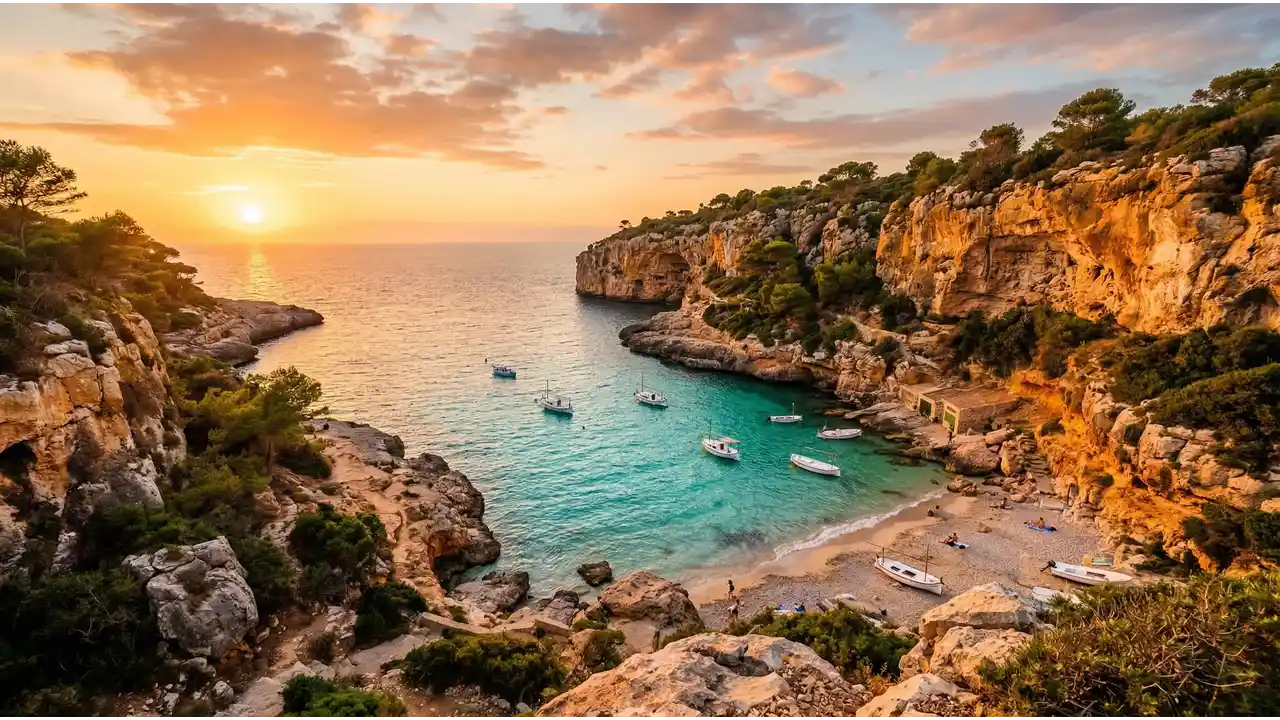
The Azores are a Portuguese autonomous region spread across nine volcanic islands in the Atlantic, roughly 900 miles west of mainland Portugal. The population is around 250,000, with Ponta Delgada on São Miguel island serving as the de facto capital. Daily life centers on fishing, agriculture, tourism, and increasingly remote work. The climate is mild year-round, with frequent rain and strong winds. Locals speak Portuguese; English is less common outside tourist areas and among younger residents. The pace is noticeably slower than mainland Europe. Grocery shopping happens at local markets and supermarkets like Continente and Pingo Doce. Internet infrastructure has improved significantly and supports remote work, though reliability varies by island. Most residents rely on scooters, cars, or taxis rather than public transit.
💡 Local Insights
Azores · 2026
The Azores occupy an odd middle ground in European cost calculations. They are part of Portugal but isolated by geography, which drives up prices for imported goods and housing materials. A moderate lifestyle runs $1,675/month, with housing at $669/month and groceries at $325/month. Rent varies significantly by island and distance from Ponta Delgada. Smaller islands and rural areas tend toward the lower end of ranges, while central Ponta Delgada commands higher prices. Groceries cost more than mainland Portugal due to transport; staples like bread and dairy are 15-25 percent pricier. Local produce (passion fruit, pineapples, fish) is cheaper and fresher. Eating out at casual restaurants runs $8-15 per meal. Inter-island transport uses ferries (around $40-80 per journey) or small aircraft (expensive). Fuel prices track European levels. The resident expat community is growing but still small, so prices do not differentiate sharply between locals and outsiders. Remote work income from high-wage countries stretches significantly here.
Frequently Asked Questions
How much does it cost to live in Azores per month?
A moderate lifestyle costs around $1,675/month. This covers housing at $669/month, groceries at $325/month, utilities around $120-150, transport roughly $40-60, and dining and entertainment around $300-350. The budget tier at $1,005/month cuts dining out, limits transport, and assumes shared housing. The comfortable tier at $2,596/month allows for dining out regularly, car rental or ownership, and more leisure activities. Costs vary between islands; São Miguel and Terceira are pricier, while Graciosa and Pico are cheaper.
What is the average rent in Azores?
Rent averages $669/month based on regional data. In Ponta Delgada's central areas, a one-bedroom apartment rents for $550-750/month. Outer neighborhoods and smaller towns on São Miguel drop to $450-600/month. Pico and Graciosa islands see lower rates, around $400-550/month for equivalent space. Two-bedroom apartments typically run $750-1,000/month in town centers, $600-800/month outside. Furnished short-term rentals cost more, often $800-1,200/month. Long-term leases are negotiable. Most listings appear on Imovirtual.com and Facebook local groups rather than international platforms.
Is Azores cheap to live in for expats?
Relative to Western Europe, yes. Rent and food cost less than Portugal's major cities (Lisbon, Porto) and significantly less than Scandinavia or Switzerland. However, isolation adds cost. Imported goods, inter-island travel, and flights to the mainland are expensive. If you earn a Western European or North American salary and work remotely, the Azores offer good value. If you depend on local wages (typically €900-1,400/month), stretching a budget is difficult. Expats tend to cluster in Ponta Delgada and benefit from growing digital nomad infrastructure, though the community remains small. Visa options through Portugal's residence programs are accessible.
How much does food cost per month in Azores?
Groceries average $325/month for a moderate diet. A weekly shopping trip at Continente or Pingo Doce yields basics: bread $1-2, milk $1.50, cheese $5-8/kg, eggs $2.50 per dozen, chicken $6-8/kg, fish $8-15/kg, rice/pasta $1-2/kg. Seasonal local fruit (passion fruit, pineapples, bananas) costs less than imports. Coffee and dairy products run higher than mainland Portugal. Eating out at casual restaurants costs $8-15/meal. Pizza or sandwich spots run $6-10. Supermarkets stock a mix of Portuguese, Spanish, and imported goods. Farmers' markets in Ponta Delgada offer cheaper produce on weekends but require Portuguese language skills.
What salary do you need to live comfortably in Azores?
Comfortable living runs around $2,596/month. This allows for a one-bedroom apartment renting $700-800/month, regular dining out, car rental or scooter use, and leisure travel between islands. Converting to annual income, expect to earn roughly $31,000-35,000/year to live comfortably without financial stress. Remote workers earning Western salaries ($3,000-5,000/month) find themselves well-positioned. Local salaries are lower, averaging €1,200-1,800/month gross for skilled work, making comfortable living harder on local income alone. If supporting dependents or maintaining connections to expensive cities, budget higher. The comfortable tier assumes no major savings goals or family support.
How does the cost of living in Azores compare to other places?
The Azores sits in the middle range for European cost of living. A moderate lifestyle runs $1,675 per month, with housing at $669 per month. That puts it slightly above Lithuania, where a moderate lifestyle costs $1,600 per month and housing runs $640 per month. Both regions are genuinely affordable compared to Austria, where a moderate lifestyle reaches $2,275 per month with housing at $1,029 per month. If you're comparing beyond Europe, Turkey offers lower costs overall at $1,175 per month for a moderate lifestyle and $447 per month for housing. The Azores' advantage lies in its European infrastructure, Portuguese services, and EU access, which you won't find at Turkey's price point. For EU-based expats, the Azores represents solid value without the isolation of more remote European options.
Yes, but with serious constraints. Budget rent at $450-500/month in outlying areas or smaller islands, groceries at $200/month (basic cooking, no dining out), utilities $80-100, transport $30-40, leaving $95-155 for everything else. This requires shared housing or remote islands, cooking all meals, minimal entertainment, and no car ownership. It works for extremely frugal travelers or those with additional income streams. Most people on this budget eat simply, skip restaurant meals, and walk or bike. Healthcare is affordable under Portugal's system. Emergencies, travel, or unexpected costs quickly break this budget. This tier suits committed minimalists or temporary stays, not sustainable long-term living for most people.