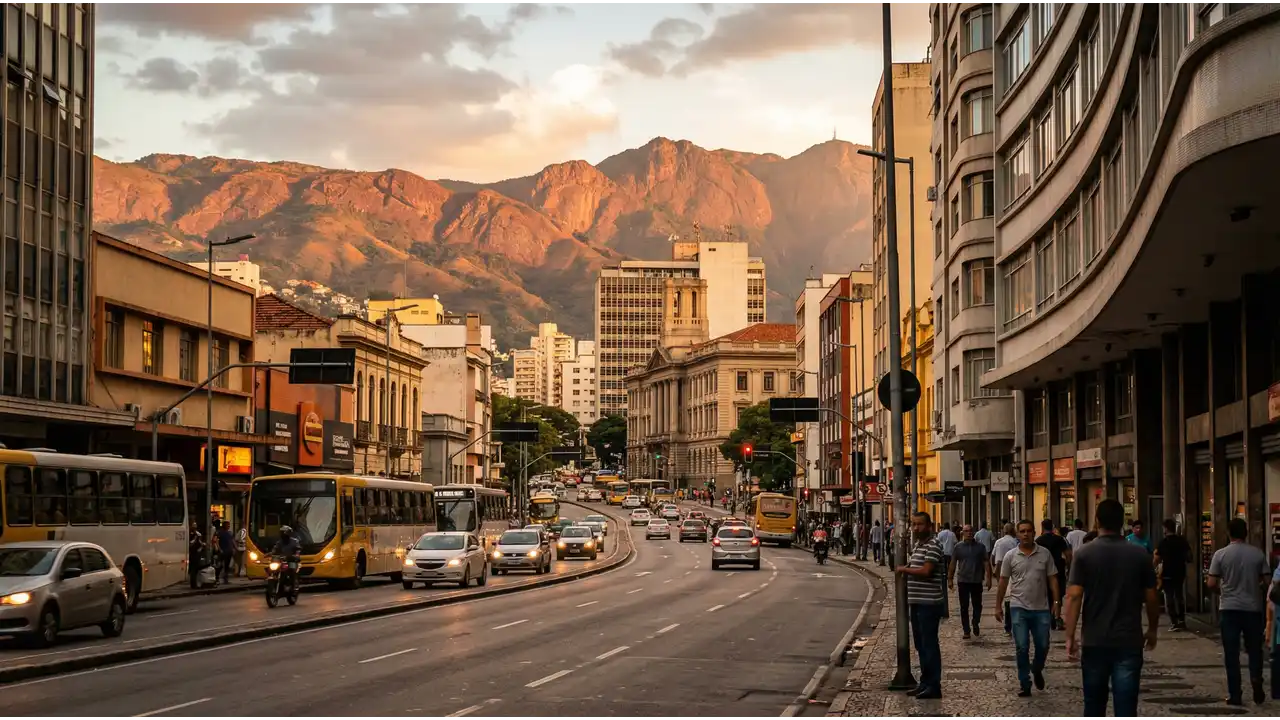
Belo Horizonte is Brazil's third-largest metro area, located in the highlands of Minas Gerais state. The city has a mild climate year-round (roughly 60-75 degrees Fahrenheit). It attracts a mix of Brazilian professionals, remote workers, and expats seeking lower costs than São Paulo or Rio. Daily life centers on neighborhoods like Savassi (upscale, walkable), Funcionários (central, mixed-income), and Lourdes (quieter, residential). The city has decent public transit via bus, though infrastructure lags major capitals. Most residents use motorcycles or cars for longer distances. Street food and casual dining dominate; formal nightlife exists but is less prominent than expat hubs further south.
💡 Local Insights
Belo Horizonte · 2026
Belo Horizonte's moderate lifestyle runs $950/month, with housing at $398/month and groceries at $178/month. Rent varies sharply by neighborhood. Savassi apartments (one-bedroom, central) rent for $400-550/month; Funcionários and Lourdes offer similar quality for $300-450/month. Older or smaller units in outer neighborhoods run $200-300/month. Utilities add $40-60/month. Groceries at local markets and supermarkets cost $178/month for a single person eating basic Brazilian staples (rice, beans, eggs, chicken). Eating out at casual restaurants runs $4-8 per meal. Public transit is cheap (roughly $0.80 per bus ride), but most expats rely on ride-sharing apps (Uber, Lyft) for convenience. Local Brazilians often negotiate better prices on rent and services; expats unfamiliar with Portuguese may pay premium rates initially. Internet (high-speed fiber) costs $30-50/month in most areas.
Frequently Asked Questions
How much does it cost to live in Belo Horizonte per month?
A moderate lifestyle costs $950/month for a single person or couple. This breaks down roughly as: housing $398/month, food (groceries) $178/month, utilities and internet $50-70/month, transport $50-80/month, and entertainment and dining out $150-250/month. Budget-conscious residents (primarily Brazilians or long-term expats) can live on $570/month by sharing housing, cooking exclusively at home, and using public transit. A more comfortable lifestyle, including private transit, eating out weekly, and activities, runs closer to $1,473/month.
What is the average rent in Belo Horizonte?
Average rent is $398/month. One-bedroom apartments in central neighborhoods like Savassi or Funcionários rent for $400-550/month. Quieter areas like Lourdes or Santa Efigênia offer similar-sized units for $300-450/month. Studio apartments or shared housing can run $200-350/month. Prices depend on proximity to the city center, amenities (gym, pool), and unit condition. Expats should budget for a furnished short-term rental at $500-700/month initially, then negotiate longer-term leases (6+ months) for better rates. Utilities (water, electricity, gas) add $40-60/month.
Is Belo Horizonte cheap to live in for expats?
Yes, relative to North America and Western Europe. Rent and groceries are roughly 60-70% cheaper than major U.S. cities. However, Belo Horizonte is more expensive than smaller Brazilian cities like Recife or Manaus, and comparable to other major regional capitals in Latin America. Expats with remote salaries in USD or EUR find it genuinely affordable. Those working locally in Brazilian reais face tighter budgets unless earning professional-level wages ($2,000+ monthly). Initial costs (furniture, deposits, flights) and occasional inefficiencies with expat-unfamiliar service providers (plumbers, landlords) mean real expenses often exceed guidebook figures by 10-20%.
How much does food cost per month in Belo Horizonte?
Grocery shopping costs $178/month for a single person buying staples. A weekly market basket: rice ($2), beans ($3), chicken ($8), eggs ($3), vegetables ($15-20), bread ($2), and pantry items runs $40-50/week. Eating out is cheap: a casual lunch plate (prato feito) is $4-6; coffee and pastry, $1-2. Supermarkets like Carrefour and local chains offer competitive prices, but neighborhood markets and street vendors are 10-20% cheaper if you know where to shop. Alcohol (beer) is affordable ($1-2 per bottle at stores). Imported goods (cheese, specialty items) cost 30-50% more than local equivalents.
What salary do you need to live comfortably in Belo Horizonte?
Comfortable living costs $1,473/month, roughly double the moderate budget. This covers housing at $398/month, eating out 2-3 times weekly, personal care and entertainment, occasional travel, and a modest cushion. For expats, a monthly income of $1,500-2,000 (USD or EUR) provides genuine comfort, including occasional flights home, healthcare top-ups, and hobbies. Brazilian residents earning this locally (roughly 4-5 times the minimum wage) live well by local standards but have less savings capacity. Families should budget $2,200-3,000/month depending on children's schooling and lifestyle choices.
How does the cost of living in Belo Horizonte compare to other places?
Belo Horizonte sits comfortably in the middle tier of cost-of-living destinations in the region. A moderate lifestyle costs $950 per month here, with housing running $398 per month. That puts it slightly above La Paz, which runs $875 monthly, though both cities offer comparable affordability. You'll spend noticeably more in São Paulo at $1,325 per month, where housing alone reaches $660 monthly. If you're coming from Delhi, you'll find Belo Horizonte pricier, though still reasonable by Brazilian standards. The city's advantage lies in offering better infrastructure and services than cheaper alternatives while remaining far less expensive than Brazil's largest metro centers. Most expats find it strikes a workable balance between cost and quality of life.
Yes, but with constraints. The budget tier of $570/month requires: shared housing or small studio ($200-250/month), cooking at home ($100-120/month), using public transit ($30-40/month), and minimal entertainment ($50-70/month). This is realistic for Brazilian residents, students, or expats with no dependents and low lifestyle expectations. Emergencies (medical bills, broken appliances) strain this budget quickly. Utilities may not be included, adding $30-40/month. Eating out or traveling locally becomes rare. Most expats find this unsustainable long-term unless they also earn locally in reais or have zero-cost housing via family.