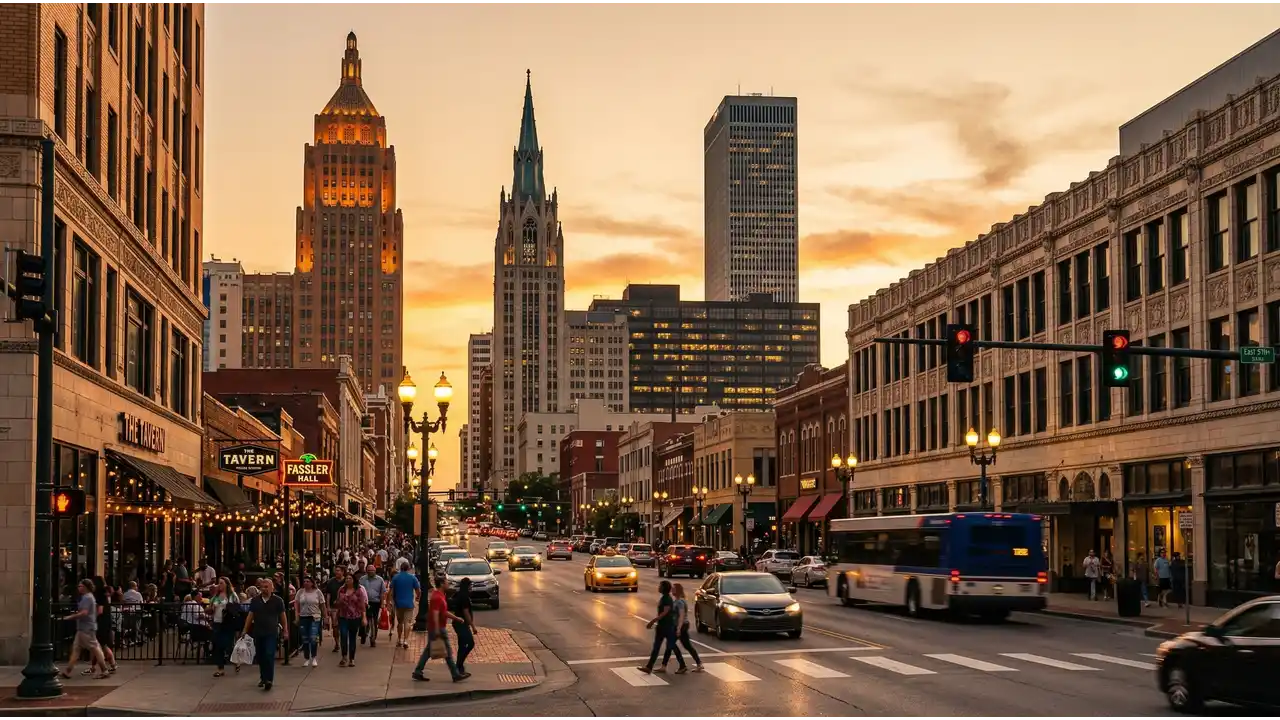
Bentonville is a northwest Arkansas city of about 50,000 people, best known as the home of Walmart's global headquarters. The town has transformed from a small farming community into a business hub with a downtown square, bike trails, and new development. Summers are hot and humid (90s are common), winters mild and short. The population includes corporate employees, families, and an increasing number of remote workers. Daily life centers on car commuting, though the downtown and Crystal Bridges Museum trail system offer walkable options. Schools perform well regionally, which draws families. Cost of living is substantially lower than most US metros.
💡 Local Insights
Bentonville AR · 2026
Bentonville costs $2,600 per month for a moderate lifestyle, driven largely by low housing and food prices relative to national averages. Housing runs around $1,108 per month, reflecting a mix of suburban single-family rentals ($900-$1,300) and some newer apartments ($1,100-$1,400). The Walmart effect keeps wages relatively competitive but also attracts transplants, which has pushed rents up over the past five years compared to rural Arkansas. Groceries average $481 monthly for one person eating at chain supermarkets (Walmart Supercenter, Harps, Sam's Club). Eating out costs less than coastal metros ($12-$16 for lunch, $20-$35 for dinner). No public transit exists; car ownership is essential. Utilities run $120-$160 monthly. Property taxes are low (around 0.62 percent of assessed value). Healthcare costs sit below national medians. The biggest financial edge is housing: a one-bedroom apartment rents for roughly $1,050-$1,200, substantially below comparable metros.
Frequently Asked Questions
How much does it cost to live in Bentonville AR per month?
A moderate lifestyle in Bentonville costs $2,600 per month for one person. That breaks down to roughly $1,108 for housing (rent, utilities, internet), $481 for groceries, $200 for transportation (gas, insurance, maintenance), $150 for phone and subscriptions, and $260 for dining out, entertainment, and miscellaneous expenses. A tight budget runs $1,560 monthly (housing around $900, groceries $360, transport $150). A comfortable lifestyle sits at $4,030 monthly, allowing for newer apartments, frequent dining out, and discretionary spending. These figures assume you own or have access to a car.
What is the average rent in Bentonville AR?
Average monthly rent in Bentonville is $1,108 for a moderate lifestyle. One-bedroom apartments typically rent for $1,050-$1,200 per month in central or downtown areas. Two-bedroom apartments or townhouses run $1,300-$1,600. Single-family home rentals range from $1,100-$1,500 depending on age and location. Newer construction and properties near downtown or the Crystal Bridges Museum command higher rates. Older units in peripheral areas may rent for $900-$1,050. The rental market has tightened since Walmart expanded operations, but Bentonville remains cheaper than comparable-sized metros in the South or Midwest.
Is Bentonville AR cheap to live in for expats?
Bentonville is genuinely affordable for expats accustomed to major US cities, Western Europe, or East Asia's expensive metros. At $1,108 per month for housing, it undercuts Austin, Denver, or Seattle by 30-50 percent. Compared to London, Paris, or Tokyo, it is dramatically cheaper overall. However, expats should expect one major cost: car ownership or rideshare dependence. Public transit does not exist. Walmart's presence means good salaries are available for corporate roles, which can offset living costs. Expats often find the pace slower and less cosmopolitan than larger cities, but the low cost and strong job market make it practical for remote workers or corporate transfers.
How much does food cost per month in Bentonville AR?
Groceries average $481 per month for one person shopping at mainstream supermarkets. A dozen eggs costs $3-$4, a pound of ground beef $5-$6, a gallon of milk $3-$4, and a pound of chicken breast $6-$7. Eating out is cheaper than coastal cities: lunch entrees run $12-$16, dinner $20-$35 before tip. Coffee is $3-$5. Farmers markets operate seasonally downtown but prices are comparable to supermarkets. Chain restaurants (Chick-fil-A, Chipotle, local BBQ) dominate. Walmart Supercenter and Sam's Club offer the lowest prices. International groceries are less available than in larger metros, and specialty foods cost more.
What salary do you need to live comfortably in Bentonville AR?
A comfortable lifestyle in Bentonville requires about $4,030 per month, or roughly $48,000 annually before taxes. That budget allows for a newer one-bedroom apartment or a small two-bedroom house ($1,300-$1,500), frequent dining out (3-4 times weekly), entertainment, travel, and some savings. For a household of two earning combined income, $60,000-$70,000 is comfortable. Walmart positions and tech roles often pay $50,000-$80,000 starting. Most professionals in Bentonville earn $45,000-$90,000. The lower $4,030 figure is feasible for individuals; households typically budget higher to account for shared expenses and lifestyle preferences.
How does the cost of living in Bentonville AR compare to other places?
Bentonville sits in the middle tier for U.S. cost of living. A moderate lifestyle costs $2,600 per month here, with housing at $1,108 monthly. That puts it slightly cheaper than Albuquerque, where a moderate lifestyle runs $2,725 and housing costs $1,182 per month. Sacramento is considerably more expensive, with a moderate lifestyle at $3,450 and housing at $1,537 per month. If you're comparing internationally, Bentonville is far pricier than Dortmund, where a moderate lifestyle costs $1,775 and housing runs $601 monthly. For a U.S. city of its size and amenities, Bentonville's costs remain reasonable, particularly for the Northwest Arkansas region. Housing affordability here outpaces many comparable metros, making it accessible for families and remote workers.
Yes, but with strict discipline. The budget tier of $1,560 monthly allocates roughly $900 for rent (older one-bedroom or studio), $360 for groceries (eating mostly at home), $150 for transport (gas, insurance), and $150 for utilities, phone, and basics. This requires avoiding dining out, entertainment, or unexpected expenses. You must own a reliable used car; rideshare is not feasible at this budget. Healthcare, car repairs, or dental work would strain finances quickly. Roommates would ease the squeeze significantly. Remote workers or retirees on fixed income might manage this; families or those with variable expenses will struggle. It is livable but leaves no margin for emergencies.