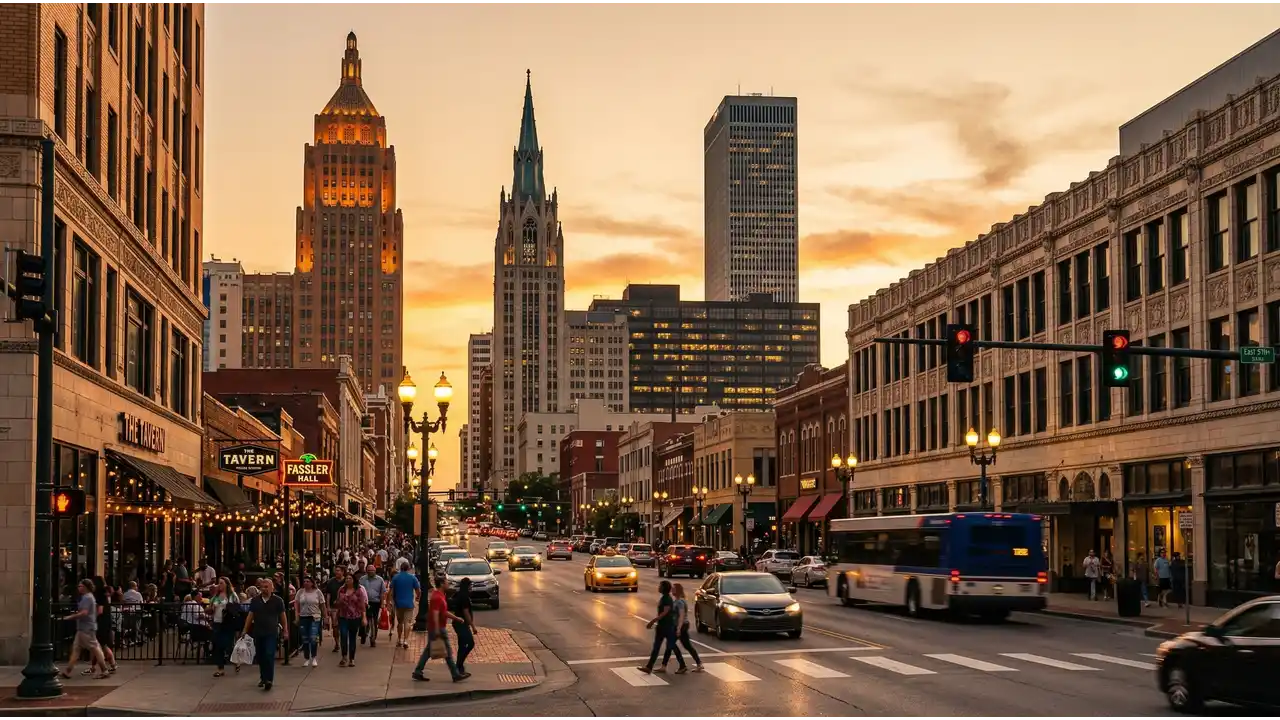
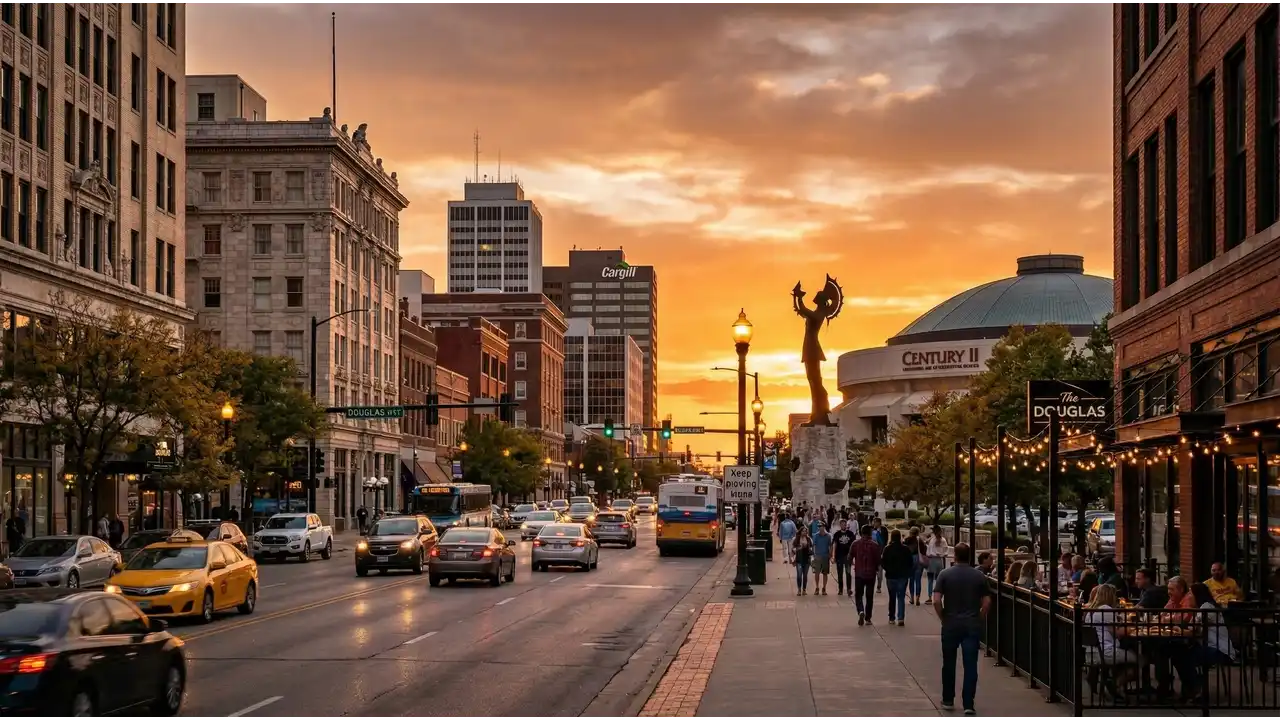
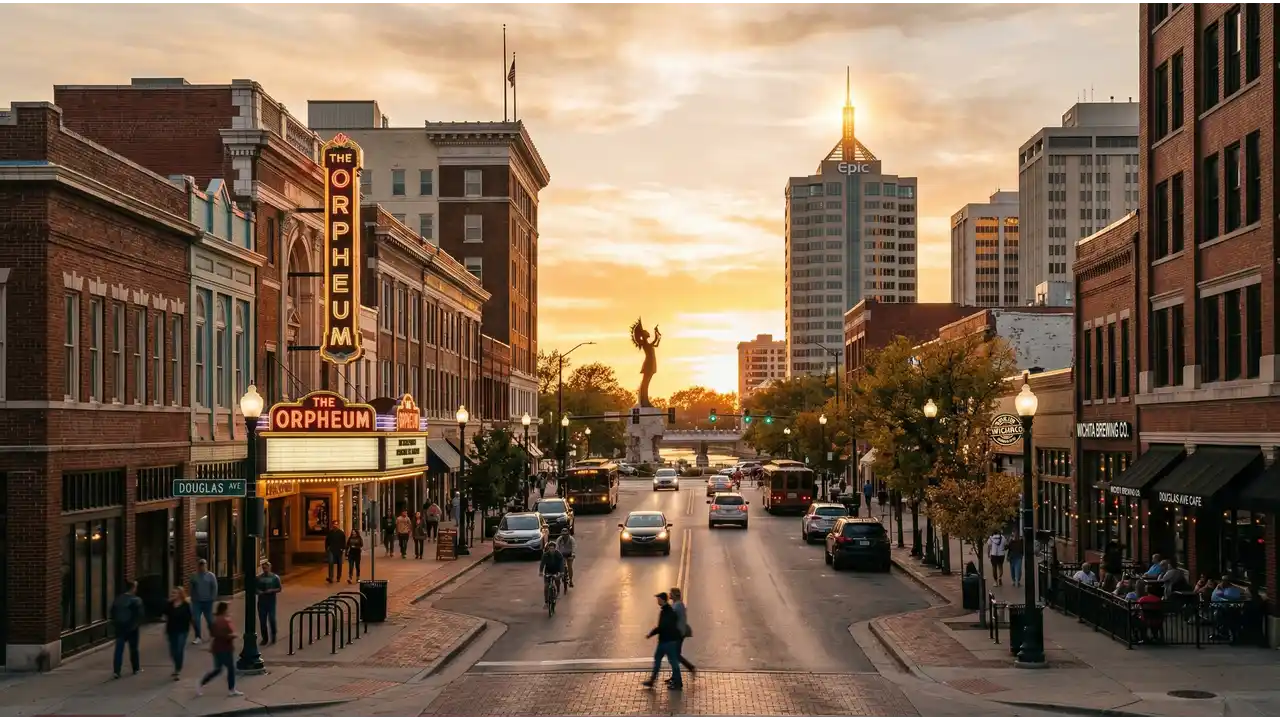
Tulsa is Oklahoma's second-largest city, sitting on the Arkansas River with a population around 400,000. The economy centers on energy, aerospace, and healthcare. Most neighborhoods are car-dependent, though the downtown core has walkable blocks. Summers are hot and humid, winters mild. The city has a working-class character, visible in its Art Deco downtown and industrial-era neighborhoods that have seen selective renovation. Daily life is straightforward: reasonable commutes, low traffic congestion, and access to both urban amenities and nearby outdoor recreation along the river and in the Ozark foothills.
💡 Local Insights
Tulsa · 2026
Tulsa's affordability rests on cheap housing and low food costs. Rent averages $831 per month, reflecting a city where a two-bedroom apartment in midtown or central neighborhoods runs $750 to $950, while further out you can find one-bedrooms for $600 to $700. Groceries are inexpensive at $482 monthly for a single person, roughly 15 percent below the US average according to MERIC C2ER data. Car ownership is essential; public transit (Tulsa Transit) exists but covers limited routes. Expats find no price premium for foreign goods or services here. Transportation costs are the next-largest expense after housing and food. The budget tiers reflect this reality: a tight $1,395 monthly budget requires roommates or a small studio and minimal dining out. Real spending jumps once you want your own place, a car, and social life. Neighborhoods like Midtown and Pearl District command slightly higher rents but offer walkability and nightlife. South Tulsa and Broken Arrow suburbs are cheaper but require driving everywhere.
Frequently Asked Questions
How much does it cost to live in Tulsa per month?
A moderate lifestyle in Tulsa costs $2,325 per month. This covers rent ($831), groceries ($482), utilities, transport, and dining out. A tight budget runs $1,395 monthly if you share housing or live in a studio and cook mostly at home. A comfortable lifestyle with your own place, regular dining out, and entertainment costs $3,604 per month. Real expenses vary by neighborhood, household size, and how often you eat restaurant meals or use paid services. Most single people report spending $1,800 to $2,200 monthly.
What is the average rent in Tulsa?
Average rent in Tulsa is $831 per month. One-bedroom apartments typically range from $650 to $850 depending on neighborhood and condition. Two-bedrooms run $800 to $1,100. Midtown and Pearl District, the walkable urban cores, command $900 to $1,200 for a one-bedroom. South Tulsa suburbs and Broken Arrow are cheaper, with one-bedrooms at $650 to $750. Utilities (electric, water, internet) add $150 to $200 monthly. Houses for rent start around $900 to $1,200. The rental market is tenant-friendly with low competition and frequent specials.
Is Tulsa cheap to live in for expats?
Yes, Tulsa is genuinely affordable compared to expat hubs like Austin, Denver, or coastal cities. Housing and food costs are 30 to 40 percent lower than major metros. There is no expat tax or premium pricing for foreign goods. The tradeoff is limited direct international flights (most connect through Dallas or Oklahoma City) and a smaller expat community than larger cities. Healthcare is affordable and of good quality. Expats from higher-cost regions often find the low housing costs ($831/month average) and cheap groceries ($482/month) significant advantages. English is universal. The main challenge is the car-dependent layout and smaller international business network.
How much does food cost per month in Tulsa?
Groceries average $482 per month for a single person. A week of groceries costs $80 to $110 at Whole Foods or Reasor's. Chicken breast runs $3 to $4 per pound, ground beef $4 to $5 per pound, milk $3 per gallon. Eating out is cheap: tacos or casual lunch $8 to $12, a sit-down dinner $18 to $30. Fast food is abundant and under $10. Farmers markets in summer and fall offer seasonal produce at low prices. Buying in bulk at Costco or Sam's Club reduces monthly costs further. Groceries are notably cheaper than Dallas or Kansas City.
What salary do you need to live comfortably in Tulsa?
A comfortable lifestyle in Tulsa requires $3,604 per month, or roughly $43,000 annually. This supports rent ($831), food, utilities, transport, and regular dining and entertainment without scrimping. For a household, $60,000 to $75,000 annual household income covers rent, a car, kids' activities, and modest savings. Tulsa's job market is strongest in energy, aerospace (BAE Systems, American Airlines maintenance), and healthcare. Median household income is around $50,000. Tech jobs and professional roles pay less than national averages but go further here. Remote workers on outside salaries find Tulsa very comfortable.
How does the cost of living in Tulsa compare to other places?
Tulsa is genuinely affordable compared to most major US cities. A moderate lifestyle here costs $2,325 per month, with housing at $831 monthly. That puts you well below peer markets like Las Vegas, which runs $2,825 overall with housing at $1,230. Portland is considerably dearer at $3,325 for a moderate lifestyle and $1,590 for housing alone. If you're comparing internationally, Kyoto is cheaper at $1,650 monthly, though that's a different country and lifestyle entirely. The real advantage Tulsa offers is stability in your budget. Your rent stays manageable while you can actually afford to eat, get around, and save money. For most American job markets and salaries, Tulsa delivers one of the better cost-to-earnings ratios available.
Yes, but with discipline. A $1,395 budget works if you share a two-bedroom (your share around $400 to $450), grocery-shop carefully ($482/month is workable), skip dining out, use transit or a cheap used car, and have no major emergencies. Utilities, phone, and insurance squeeze the remainder tight. Many students and early-career workers do this, cooking at home and socializing inexpensively. It leaves little for entertainment, travel, or savings. Once you want your own apartment ($700 to $900) and occasional social life, $1,395 becomes uncomfortable. A solo household more realistically needs $1,800 to $2,000 to avoid constant stress.