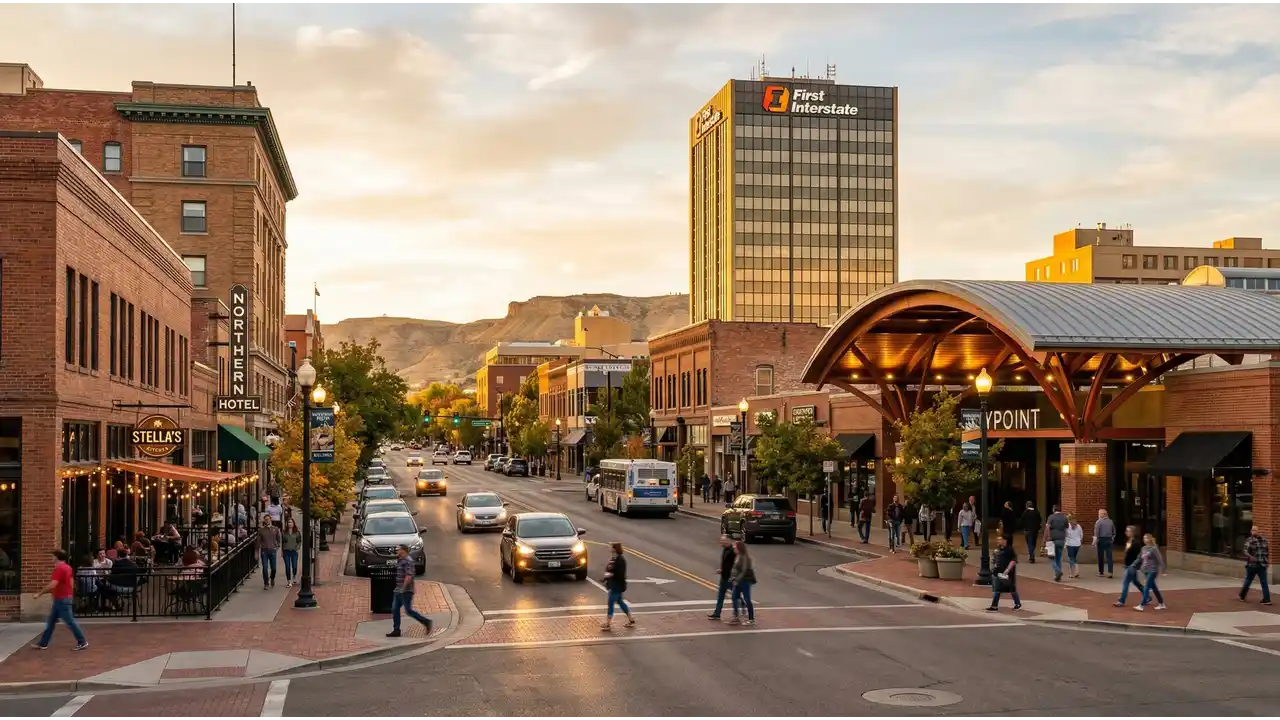
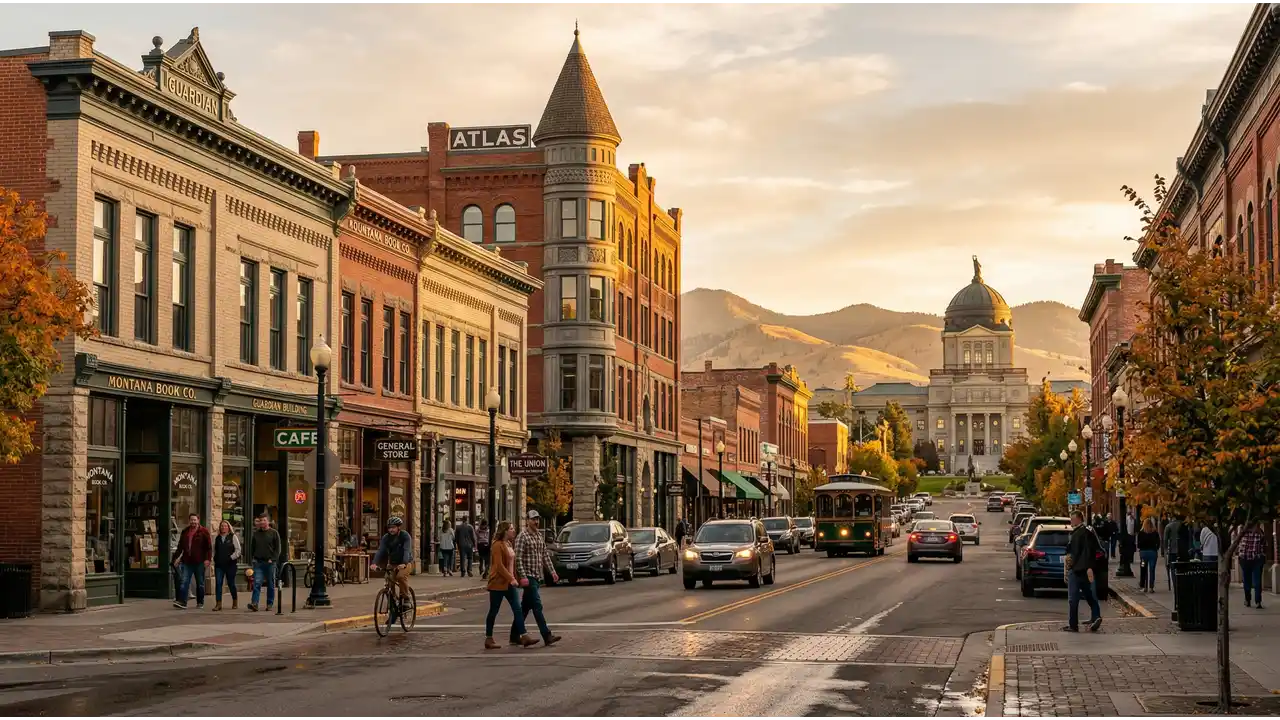
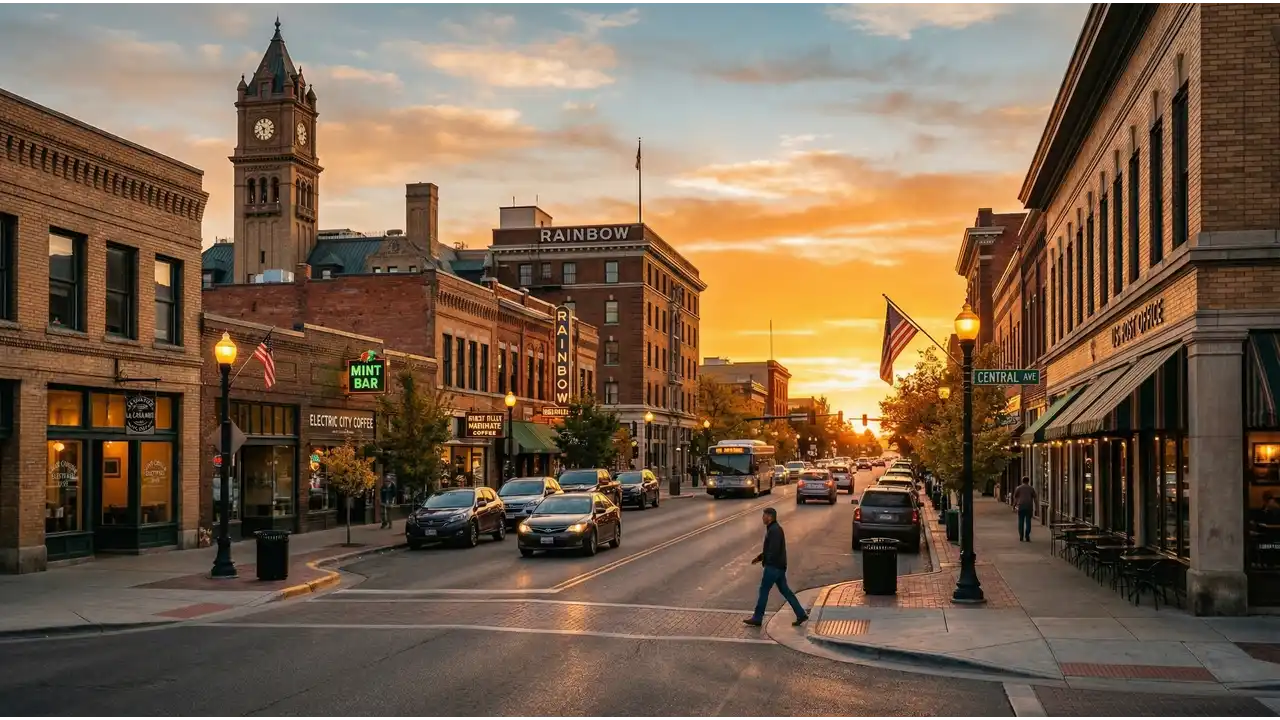
Billings is Montana's largest city, home to about 117,000 people in the south-central part of the state. It sits on the Yellowstone River in an arid, high-elevation landscape with hot summers and cold winters. The city functions as a regional hub for healthcare, education, and commerce, drawing retirees, young professionals, and families. Daily life centers on outdoor recreation (hiking, fishing, skiing within reach), local restaurants, and a slower pace than major metros. Traffic is manageable, and neighborhoods are spread across a growing but still-compact urban area. Most residents drive everywhere; public transit is minimal.
💡 Local Insights
Billings MT · 2026
Billings offers genuine affordability compared to Denver, Seattle, or Bozeman, but it is not cheap by national standards. Housing costs around $1,289 per month and dominates the budget. One-bedroom apartments in central areas rent for $900 to $1,100; family homes or newer two-bedroom rentals push toward $1,400 to $1,600. Buying land and building is common among residents staying long-term because property values remain moderate. Groceries average $512 per month, reflecting reasonable supermarket competition and lower-than-coastal produce markups. Eating out is affordable: casual lunch runs $12 to $15, dinner entrees $16 to $24. Utilities run high in winter (heating costs spike November through March), adding $150 to $200 monthly. Car ownership is essential; gas, insurance, and maintenance are standard U.S. rates. Montana has no sales tax, which slightly offsets other costs. Local expat communities exist but are small; most cost differences between locals and newcomers are pricing variations on rental markets, not separate economies.
Frequently Asked Questions
How much does it cost to live in Billings MT per month?
A moderate lifestyle in Billings costs around $2,875 per month. Housing runs $1,289 per month, groceries roughly $512, and utilities, transport, dining, and entertainment make up the remainder. A budget tier (cutting non-essentials and choosing modest housing) is possible at $1,725 per month. A comfortable lifestyle with a nicer home, dining out regularly, and discretionary spending reaches $4,456 per month. Costs vary with season (heating spikes in winter) and personal choices around car ownership and recreation.
What is the average rent in Billings MT?
Housing averages $1,289 per month. One-bedroom apartments in central Billings (near downtown or Montana Avenue) rent for $900 to $1,100 monthly. Two-bedroom apartments range $1,100 to $1,350. Family homes and newer townhouses rent for $1,400 to $1,600. Older or further-out rentals can be found below $900. Prices vary by neighborhood: central and north Billings command higher rents; south Billings and outlying areas are cheaper. Rental demand is steady but not acute; landlords often negotiate, especially on longer leases. Utilities are not included in most quotes and run $120 to $180 monthly during mild seasons, $200 to $250 in winter.
Is Billings MT cheap to live in for expats?
Billings is moderately affordable for expats, though not a bargain like some small rural U.S. towns. Housing at $1,289 per month is cheaper than Denver, Portland, or Salt Lake City, but higher than rural Montana or Wyoming. Groceries are reasonable if you shop local chains; imported goods carry typical U.S. markups. The trade-off is climate and isolation: winters are harsh, and you are 500+ miles from major cities. Expats often find the pace relaxing after crowded metros, though entertainment and cultural options are limited. Healthcare and utilities are standard U.S. rates. Cost advantage is modest compared to mid-size cities in the Midwest or South.
How much does food cost per month in Billings MT?
Groceries average $512 per month for a moderate budget. A week of staples (bread, milk, eggs, chicken, rice, seasonal vegetables) runs $90 to $110 for one person. Supermarkets like Town and Country, Albertsons, and Costco have competitive pricing. Specialty or organic items cost more; farmers markets (open June through October) offer seasonal produce at fair prices. Eating out is affordable: casual lunch $12 to $15, dinner entrees $16 to $24, coffee $3 to $5. Budget grocers like Aldi are absent, so chain pricing dominates. Alcohol is sold in regular stores (no state restrictions), with wine and beer at typical U.S. rates.
What salary do you need to live comfortably in Billings MT?
A comfortable lifestyle in Billings requires around $4,456 per month, or roughly $53,500 annually (pre-tax). This allows a well-maintained rental or modest home purchase, regular dining out, gym or recreation memberships, travel within the region, and vehicle ownership. A household with two working adults at $26,000 to $27,000 each can live comfortably. Single earners at $55,000 to $60,000 annual salary have good flexibility. The moderate budget of $2,875 per month ($34,500 annually) is viable on a single income if you accept a modest apartment, cook at home, and limit entertainment. Remote workers relocating with out-of-state salaries often find Billings very affordable.
How does the cost of living in Billings MT compare to other places?
Billings runs $2,875 per month for a moderate lifestyle, with housing at $1,289 per month. That positions it in the middle range for mid-sized American cities.
For context, Fort Worth comes in at $2,775 monthly, making it a near peer to Billings despite being a larger metro. Oklahoma City is notably cheaper at $2,400 per month overall and $891 for housing, reflecting the lower cost structure across much of the southern plains. On the other end, Alexandria runs $3,500 monthly with housing at $1,910, typical of the higher costs near major East Coast employment centers.
Billings' advantage over Oklahoma City stems partly from higher wages in Montana, while the gap with Alexandria reflects regional differences in real estate demand and service costs. For people relocating from the coasts, Billings offers genuine savings without sacrificing urban amenities.
Yes, but with discipline. The budget tier is $1,725 per month and requires careful choices. Housing takes up most of this: you would rent a one-bedroom apartment outside central Billings for $850 to $950, or share a two-bedroom for $700 to $800 split. Groceries at $400 to $450 per month mean cooking most meals, minimal eating out. Utilities, phone, and internet total $120 to $150. Transport via an older paid-off car or bus is essential. Entertainment and discretionary spending are minimal. This works for students, remote workers with low costs, or those willing to trade comfort for savings. Most households find $1,725 tight; adding $300 to $500 per month significantly eases stress.