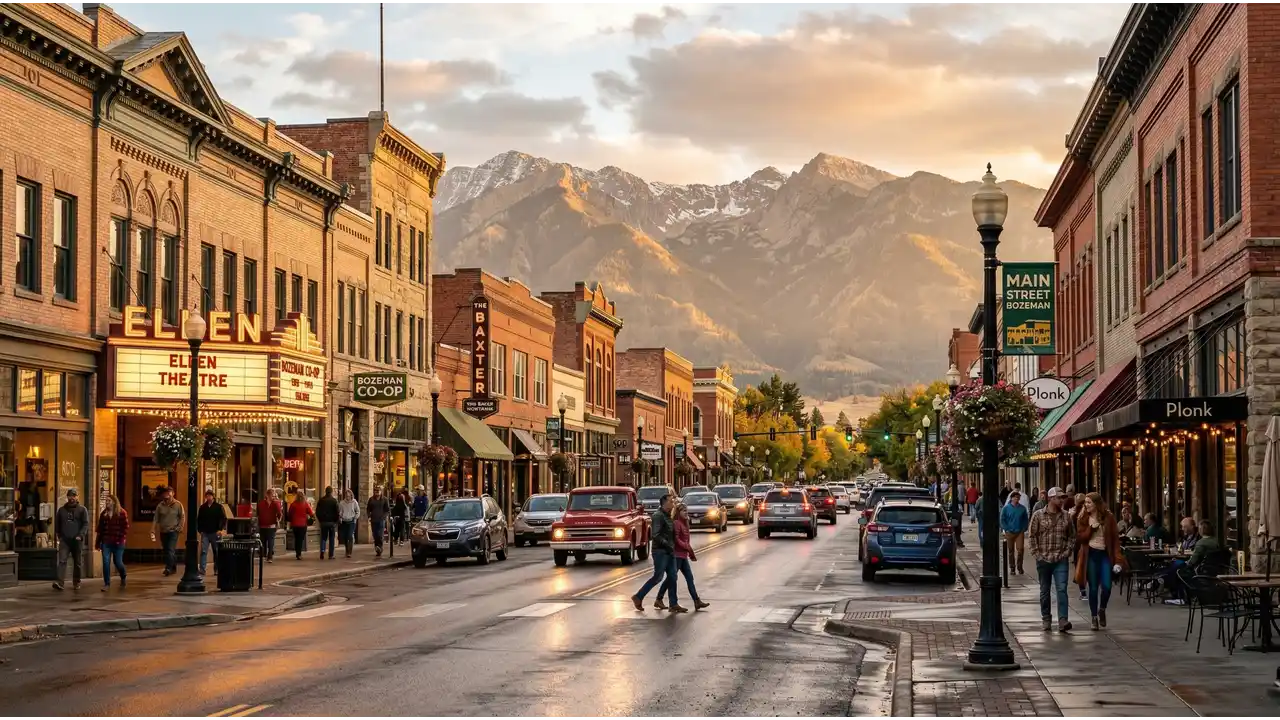
Helena is Montana's capital, a city of about 32,000 people set in a mountain valley at 4,100 feet elevation. The climate is continental: cold, snowy winters and mild summers. Most residents work in government, healthcare, education, or small business. Daily life centers on outdoor recreation (skiing, hiking, fishing are minutes away), a compact downtown with local restaurants and shops, and a strong sense of community. Traffic is minimal. The city has the feel of a small town with enough services and amenities to function as a real city.
💡 Local Insights
Helena MT · 2026
Housing anchors the budget at $1,496/month and reflects Helena's tight rental market. A one-bedroom apartment in downtown or near the historic neighborhoods (like the Mansion District) runs $1,300 to $1,600/month. Two-bedroom places range $1,600 to $1,900/month. Home ownership is possible but competitive. Groceries at $509/month are reasonable for a single person if you shop at local chains like Town and Country or Natural foods; eating out runs higher. Montana has no sales tax, which helps, but property taxes are moderate. Public transit is minimal (Helena Transit exists but is limited), so most residents own cars. Winter driving requires all-season or winter tires. Heating costs spike November through March. Expats often underestimate heating and vehicle costs. Local wages tend to be lower than the national average, so remote work or relocation from outside Montana is common among lower-income residents.
Frequently Asked Questions
How much does it cost to live in Helena MT per month?
A moderate lifestyle in Helena costs $3,075/month. Housing runs $1,496/month, groceries $509/month, and utilities, transport, and discretionary spending round out the remainder. A budget tier at $1,845/month cuts back on housing (shared rentals or cheaper neighborhoods), minimal dining out, and no car. A comfortable tier at $4,766/month allows for a nicer rental, regular dining, and leisure activities. Costs vary by personal choices around heating, vehicle ownership, and frequency of eating out.
What is the average rent in Helena MT?
Median rent aligns with the $1,496/month housing figure. One-bedroom apartments in central Helena (downtown, near Last Chance Gulch) range $1,300 to $1,600/month. Two-bedroom rentals run $1,600 to $1,900/month. Older historic neighborhoods like the Mansion District offer similar prices. Shared rentals or rooms outside downtown can drop to $800 to $1,100/month. Longer-term rentals (6 months or more) may negotiate lower rates. The market is tight; landlords can be selective. Turnover is seasonal, with more vacancies in fall. Buying is possible but requires capital; median home prices are in the mid-$400,000s, high relative to local incomes.
Is Helena MT cheap to live in for expats?
Helena is moderately priced for the US Mountain West. Compared to Denver or Bozeman, it is cheaper. Compared to rural areas or the Great Plains, it is pricier. European or Asian expats often find it affordable, but Canadian expats see little advantage. The real cost shock is heating (winters are harsh and long), vehicle necessity (public transit is weak), and limited job options outside government or healthcare. Remote work changes the calculus entirely, making Helena attractive. Visa and work permit requirements are the same as anywhere in the US, so expat status depends on US immigration rules, not local cost.
How much does food cost per month in Helena MT?
Groceries average $509/month for one person. A weekly shop at Town and Country or Natural foods costs $80 to $120. Staples are reasonable: milk about $3.50/gallon, chicken $8 to $11/pound, eggs $4 to $5/dozen, fresh produce $1 to $3/item depending on season. Eating out is pricier: casual lunch $12 to $16, dinner entree $16 to $26. Coffee is $3 to $5. Alcohol taxes are moderate (no sales tax helps). Farmers markets operate June through October with local vegetables and meat. Costco and a Walmart Supercenter offer bulk options but require membership or travel.
What salary do you need to live comfortably in Helena MT?
A comfortable lifestyle runs $4,766/month, or about $57,200/year gross before taxes. Factor in Montana income tax (roughly 6% to 8% on this income) and federal tax, so aim for $65,000 to $70,000/year gross salary to net $4,766/month comfortably. This covers a nice one or two-bedroom rental, regular dining out, reliable car ownership, heating, and discretionary spending. Remote workers moving to Helena often find their existing salary stretches significantly. Local salaries in government or nonprofit sectors typically start $40,000 to $50,000/year, making outside income common.
How does the cost of living in Helena MT compare to other places?
Helena sits in the middle of the US cost-of-living spectrum. A moderate lifestyle here costs $3,075 per month, with housing running $1,496 per month.
For comparison, Pittsburgh comes in as a direct peer at $3,200 monthly, though Pittsburgh's housing is slightly higher at $1,583. If you're coming from a cheaper market, Kansas City runs $2,600 monthly with housing at $1,097, so Helena will feel noticeably more expensive. On the other end, San Diego costs considerably more at $4,450 monthly, with housing alone at $2,533.
Helena's affordability relative to other mountain West cities and its proximity to outdoor recreation make it attractive for people leaving pricier coastal areas. It's genuinely cheaper than comparable midsize cities back East, though not a bargain destination by national standards.
Yes, but with careful planning. The budget tier of $1,845/month requires sharing housing (splitting $1,200 to $1,400/month rent brings your share to $600 to $700/month), strict grocery spending at $509/month (bulk buying, minimal eating out), and low discretionary spending. Utilities in winter can spike to $150 to $200/month for heat, squeezing other categories. Car ownership is difficult; you need reliable transit access, carpooling, or a very cheap used vehicle. Medical costs, vehicle repairs, or heating emergencies can break this budget. It works for young people, couples with dual income, or those with fully remote jobs paying more elsewhere. Long-term on this budget requires subsidized housing or roommates.