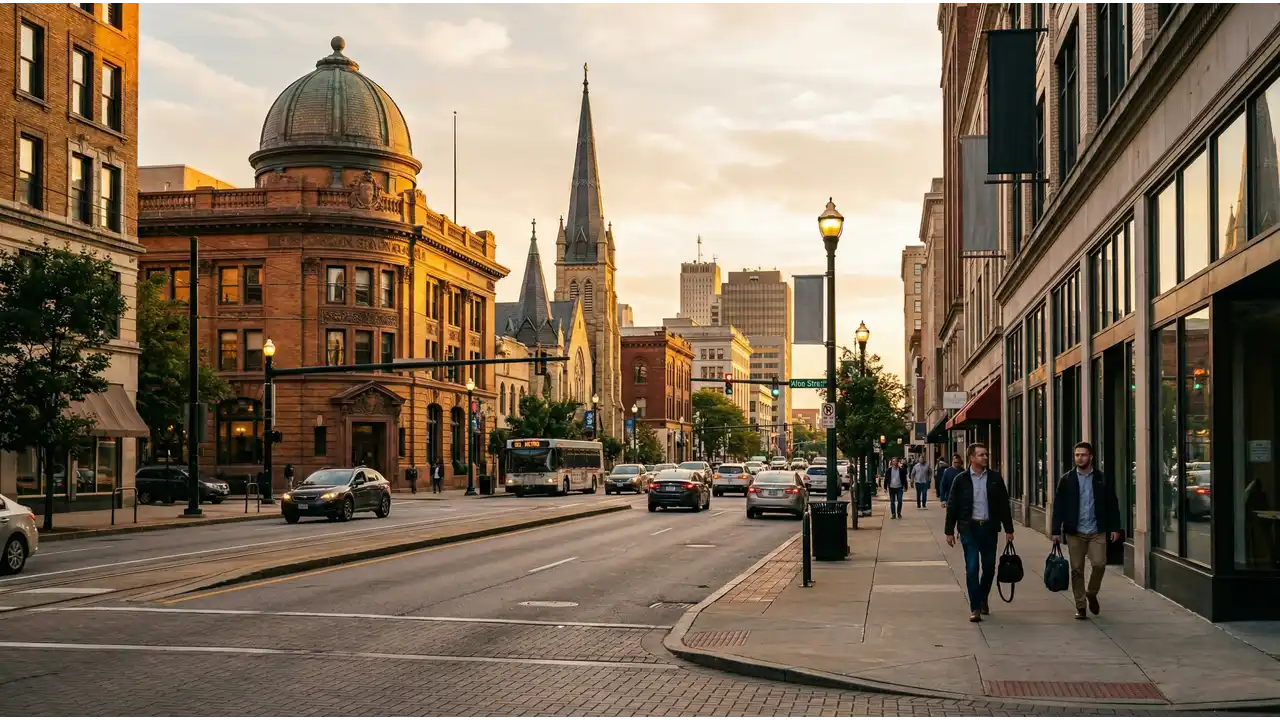
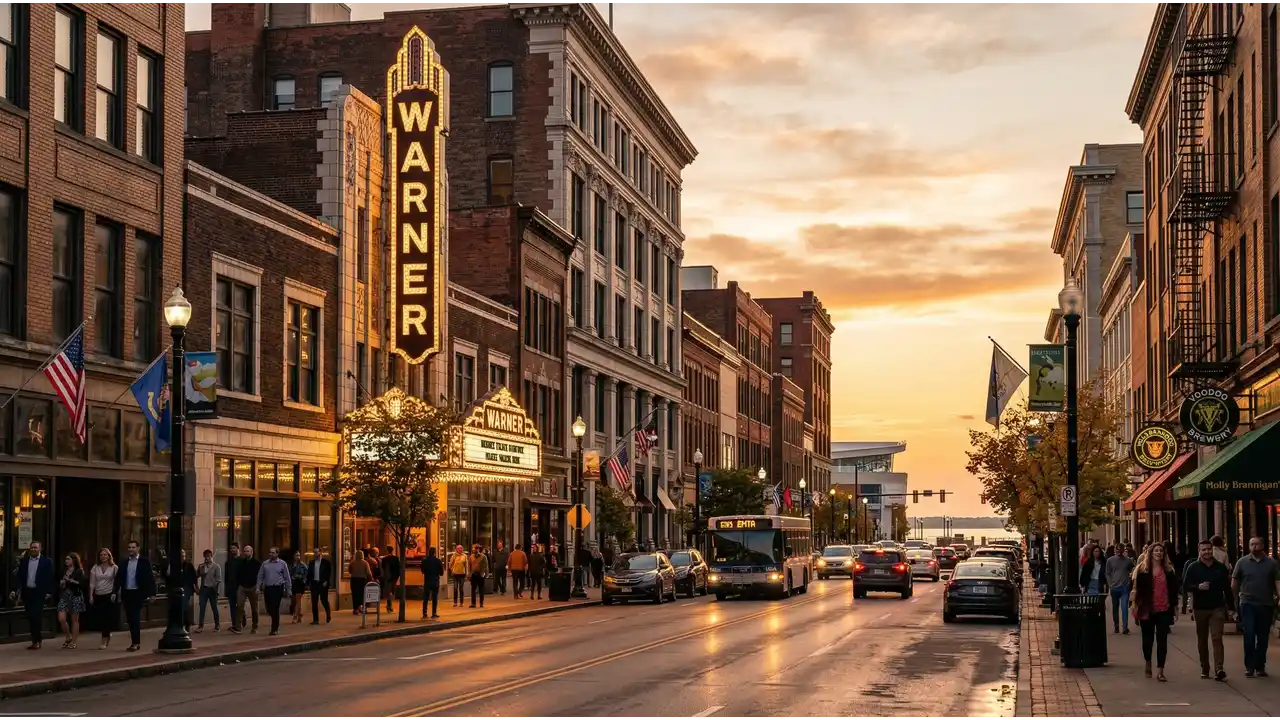
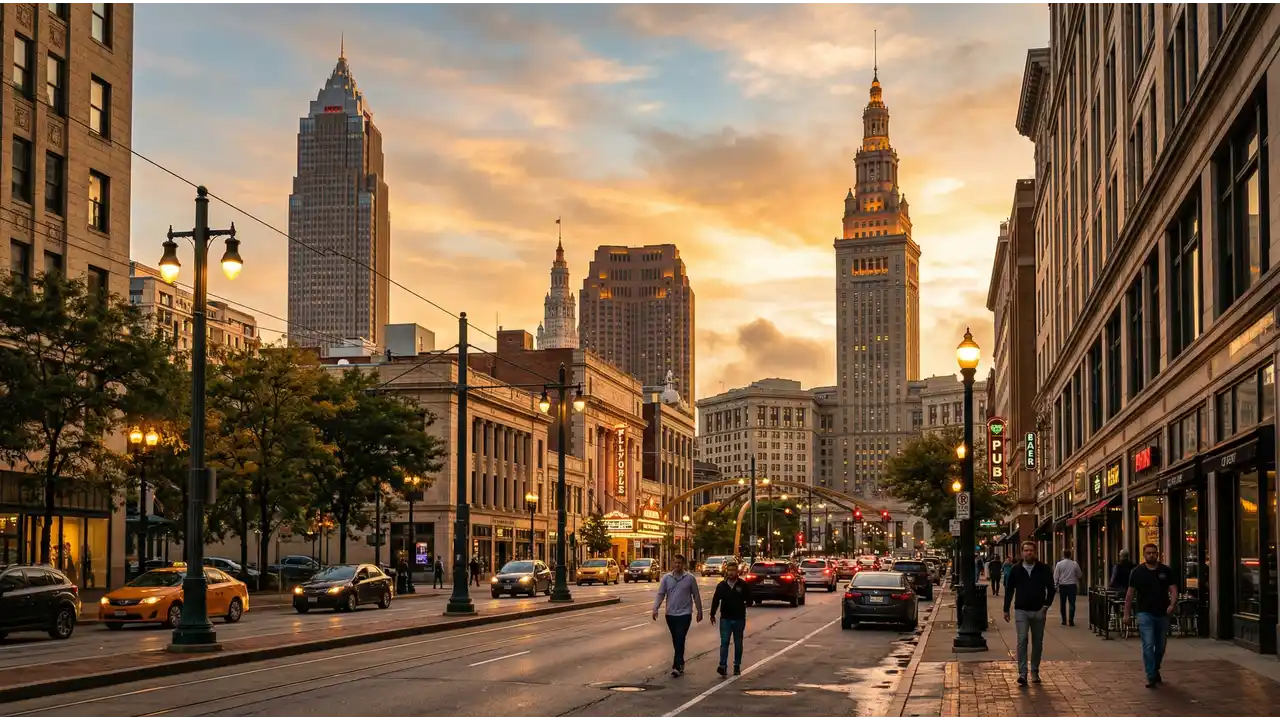
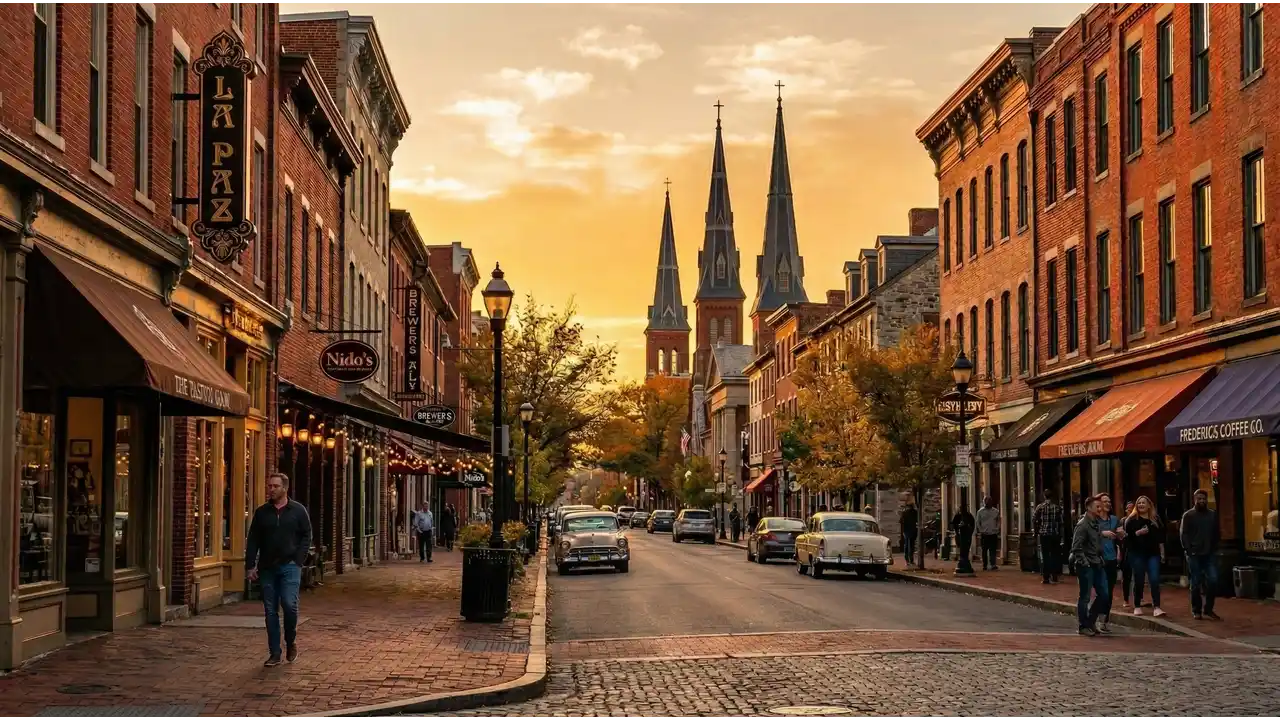
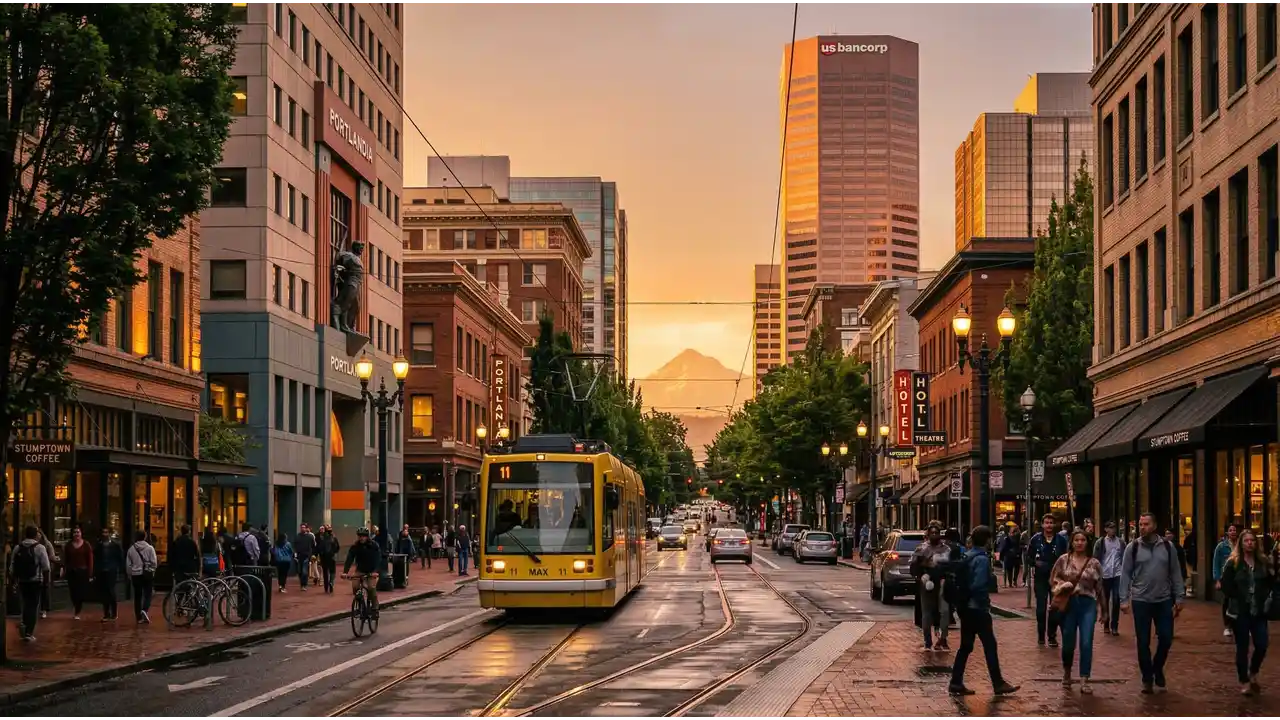
Pittsburgh is a post-industrial city in western Pennsylvania with a diversifying economy centered on healthcare, technology, and education. The Allegheny River cuts through downtown; steep neighborhoods rise on hillsides. Winters are cold and wet. The population is around 300,000 in the city proper, with a larger metro area. Daily life involves navigating compact, walkable neighborhoods like Lawrenceville and Shadyside, relying on the Port Authority transit system or a car, and accessing a food scene built on Eastern European heritage restaurants alongside newer spots. The city attracts young professionals, students, and established families seeking lower costs than coastal metros.
💡 Local Insights
Pittsburgh · 2026
Pittsburgh's affordability stems from lower property values and labor costs than comparable Rust Belt revival cities. Housing runs $1,583/month on average, with one-bedroom apartments in central neighborhoods (Lawrenceville, Shadyside, Highland Park) ranging from $1,200 to $1,800, and outer areas like Dormont or Mt. Washington lower. Groceries average $522/month, in line with national benchmarks; a loaf of bread costs around $3, milk $4 per gallon. Public transit is cheap (single ride $2.75), but most residents own cars; gas and insurance add $200 to $400 monthly. Expats find no price discrimination, though certain imported foods cost more. Utilities run $80 to $150 monthly depending on season. The moderate lifestyle budget of $3,200/month covers rent, food, transport, and modest dining out. Costs rise in walkable central neighborhoods and drop sharply 15 minutes from downtown. Tax burden is moderate: Pennsylvania income tax is 3.07 percent.
Frequently Asked Questions
How much does it cost to live in Pittsburgh per month?
A moderate lifestyle costs $3,200/month. This breaks down roughly as: housing $1,583, food (groceries) $522, utilities $120, public transit or car costs $150 to $300, and dining out, entertainment, and other expenses $400 to $600. A budget lifestyle runs around $1,920/month, cutting restaurant meals, entertainment, and minimizing transport. A comfortable lifestyle costs $4,960/month, allowing for a nicer apartment, frequent dining out, entertainment, and travel. These figures account for a single adult or couple without dependents.
What is the average rent in Pittsburgh?
Average rent is $1,583/month. One-bedroom apartments in central neighborhoods like Lawrenceville, Shadyside, and Squirrel Hill range from $1,200 to $1,800. Two-bedrooms run $1,500 to $2,200 in those areas. Outer neighborhoods (Dormont, Brookline, Beechview) offer one-bedrooms at $900 to $1,200. Downtown and near-downtown units are pricier, $1,400 to $2,000. Studio apartments rent for $800 to $1,100. Most leases require first month, last month, and a security deposit. Availability is good; turnover is steady. Landlords typically require proof of income (30 times monthly rent) and clean background.
Is Pittsburgh cheap to live in for expats?
Pittsburgh is genuinely affordable compared to major expat hubs. Rent of $1,583/month is 40 to 50 percent lower than Boston, San Francisco, or Toronto. Groceries and utilities cost less. However, expats should expect no premium for foreignness, no haggling, and standard lease terms. Public transit is limited outside downtown; most expats buy cars. Healthcare is accessible and often cheaper than home countries. The main cost shock is typically transportation and the absence of walkability in many areas. For expats from high-cost Western cities, Pittsburgh feels cheap. For those from lower-cost emerging markets, it is moderate to expensive.
How much does food cost per month in Pittsburgh?
Groceries average $522/month for one person eating at home. Specific prices: eggs $4 per dozen, chicken breast $8 per pound, milk $4 per gallon, bread $3 per loaf, bananas $0.60 per pound, canned beans $1 each. Eating out is affordable: casual lunch $12 to $16, dinner at an independent restaurant $18 to $35 per plate. Fast food is $8 to $12. Ethnic markets (Eastern European, Asian) offer cheaper produce and specialty items. Coffee at a cafe runs $3 to $5. Alcohol at bars is moderate (beer $5 to $7, cocktails $10 to $14). Groceries are cheaper at Giant Eagle and Save-A-Lot than specialty stores.
What salary do you need to live comfortably in Pittsburgh?
A comfortable lifestyle costs $4,960/month, suggesting an annual gross income of around $60,000 to $70,000 for a single person (accounting for taxes and some savings). This allows a nicer apartment ($1,800 to $2,200), regular dining out, entertainment, travel, and discretionary spending. Couples can share rent and live comfortably on a combined $90,000 to $100,000 gross. This assumes no major debt or medical expenses. Pennsylvania income tax is 3.07 percent plus local tax (1 to 3 percent depending on municipality). For above-average comfort (travel, hobbies, savings), $75,000 to $90,000 individual income is realistic. Entry-level professional jobs in tech and healthcare start around $45,000 to $55,000.
How does the cost of living in Pittsburgh compare to other places?
Pittsburgh's moderate lifestyle costs $3,200 per month, with housing running $1,583 per month. That puts it in the middle of the US market. Nashville runs $3,075 monthly overall and has nearly identical housing costs at $1,589 per month, making it effectively a peer city. If you're looking to spend less, Omaha comes in at $2,650 per month with housing at $1,111, offering real savings on both fronts. On the opposite end, Honolulu, Hawaii runs $4,475 monthly with housing at $2,214, making it substantially more expensive than Pittsburgh. So relative to comparable mid-sized American cities, Pittsburgh offers reasonable costs without the premium you'd pay on the coasts or in Hawaii.
Yes, but with discipline. The $1,920 budget tier requires: rent $1,000 to $1,100 (shared apartment or outer neighborhood), groceries $400 to $450 (cooking at home, budget brands, minimal dining out), utilities $80 to $100, transit $40 to $60 (relying on public transport), and $300 to $400 for phone, insurance, and emergencies. This eliminates regular restaurant meals, entertainment, travel, and personal care beyond basics. It works for students, early-career workers, or those with free housing. It requires living outside central neighborhoods or having roommates. Healthcare, car ownership, or unexpected expenses break this budget. Most single adults in Pittsburgh spend closer to $2,500 to $3,000 monthly for modest comfort.