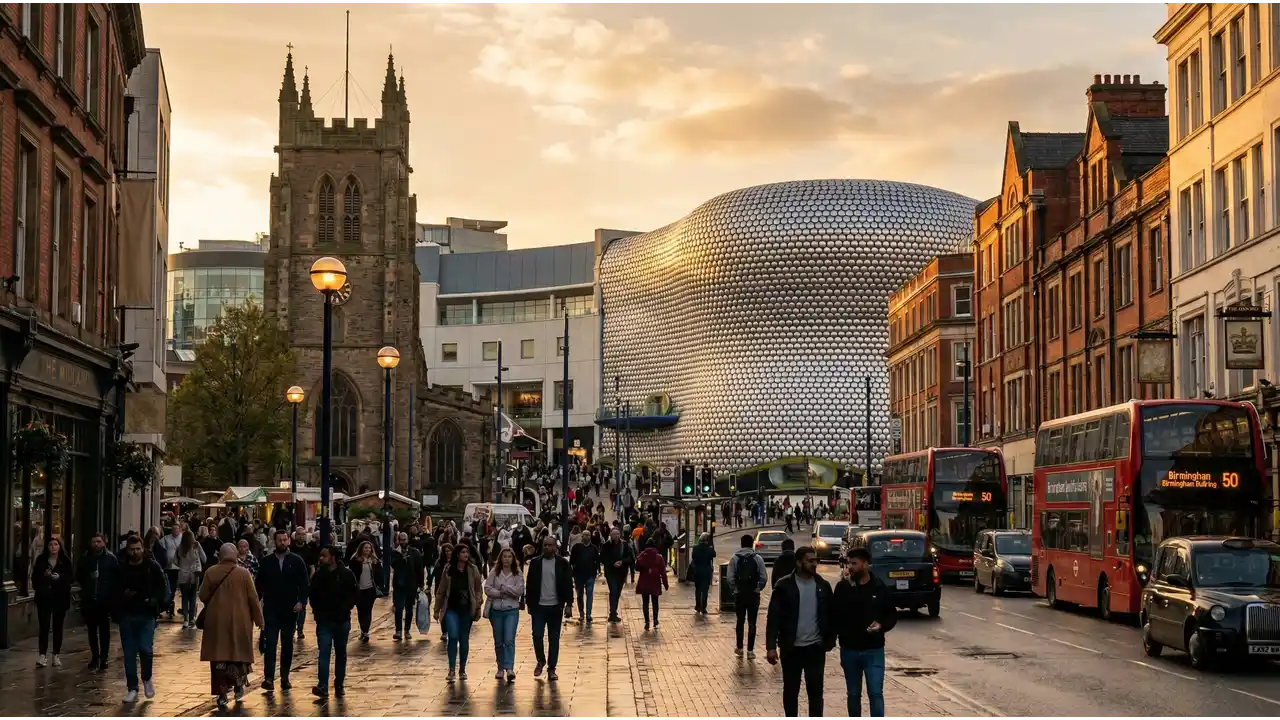
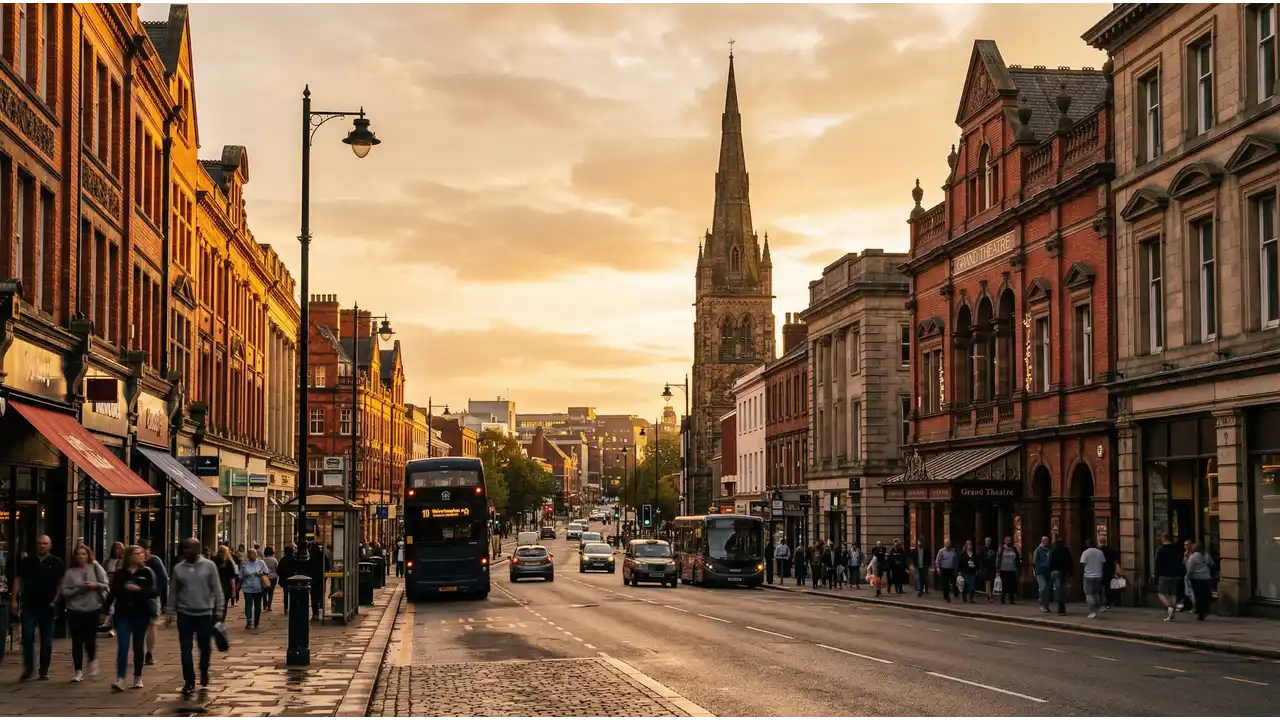
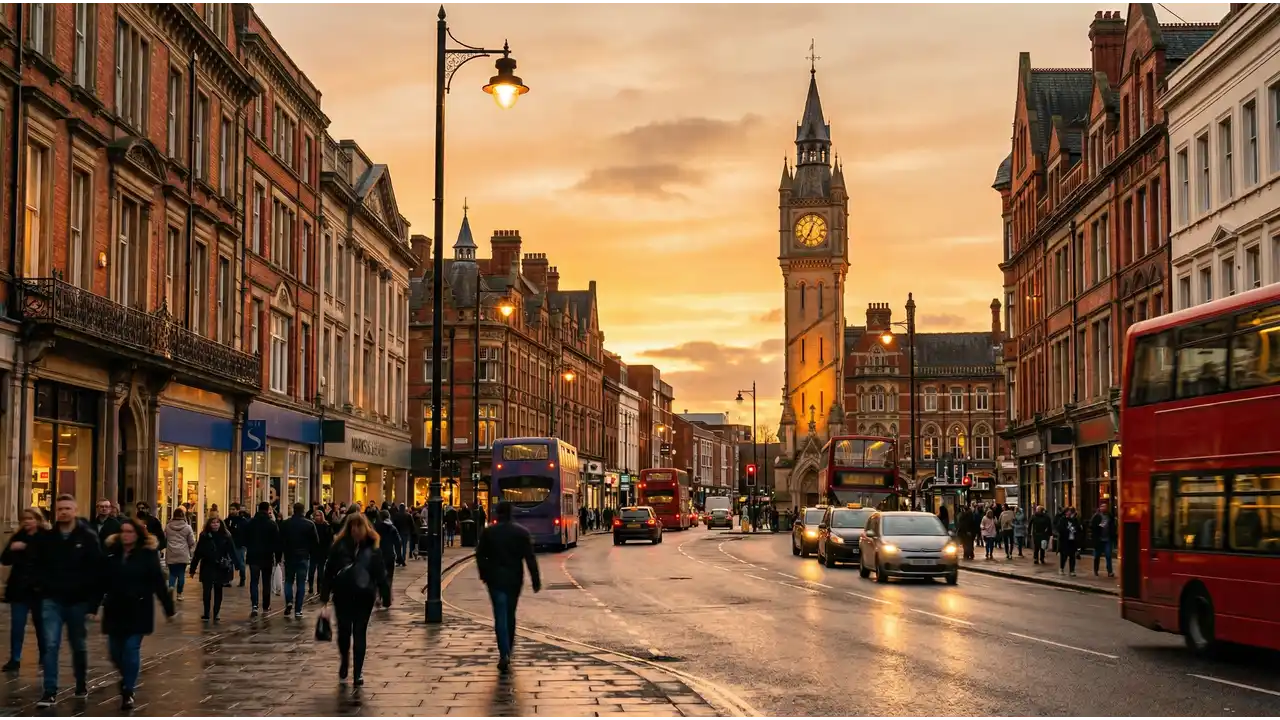
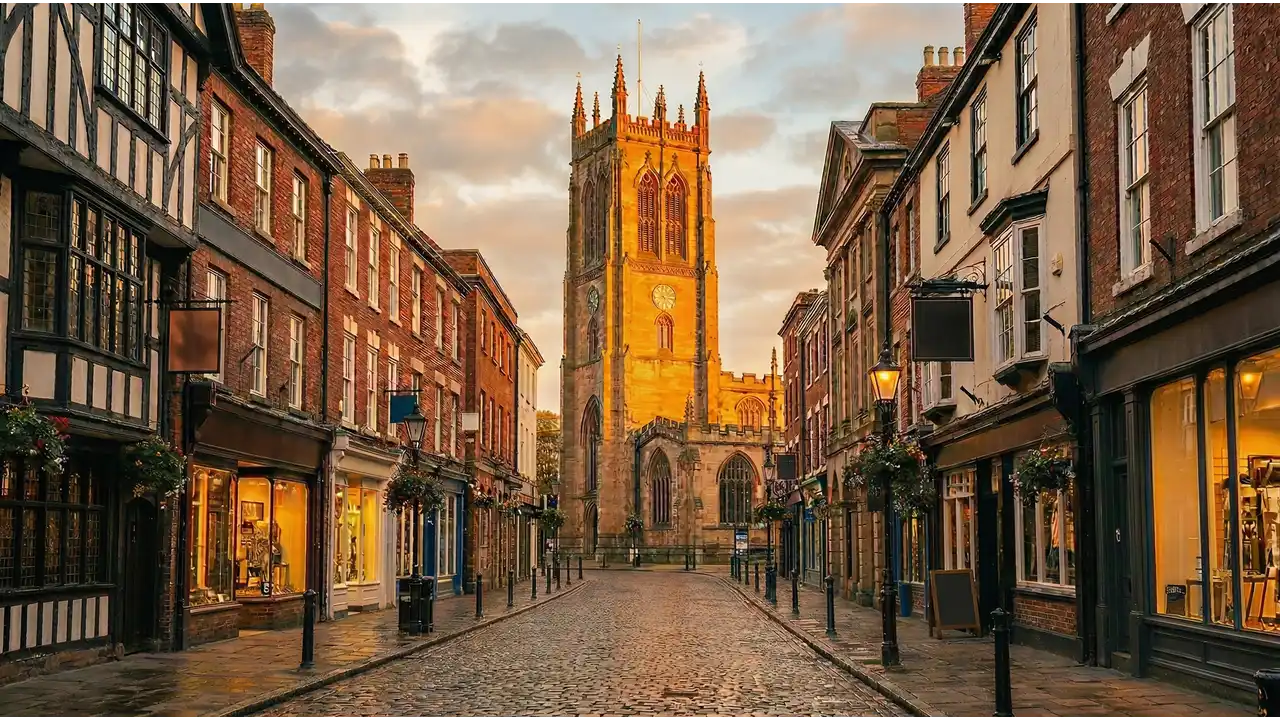
Birmingham is England's second-largest city, a post-industrial center that has rebuilt itself around tech, finance, and creative industries. The city sits in the West Midlands with a population of around 1.1 million in the metro area. Daily life revolves around the compact city center, older residential neighborhoods with Victorian terraces, and newer suburban developments. The climate is temperate British: cool, often gray, with rainfall spread throughout the year. Winters rarely drop below freezing; summers reach the mid-60s Fahrenheit. The population is diverse, with large South Asian, Caribbean, and Eastern European communities. Public transport is functional rather than extensive, built around buses and a limited metro system. Most residents rely on buses or personal transport for daily movement.
💡 Local Insights
Birmingham UK · 2026
Birmingham costs significantly less than London but more than smaller UK cities. Housing dominates the budget at $1,272/month and is the primary variable. City center apartments rent $800 to $1,400/month for a one-bedroom; suburbs like Edgbaston, Harborne, or Moseley run $700 to $1,100. Groceries at $372/month for one person reflect UK supermarket prices (Tesco, Sainsbury's, Asda are standard). Eating out is cheaper than London: a pub meal costs $8 to $12, a coffee $2.50 to $3.50. Transport is affordable; a monthly bus pass is around $50. Council tax (property tax) adds $100 to $180/month depending on property band and neighborhood. Utilities run $100 to $150/month. Expats and locals pay the same prices, though expats often overpay for central locations or newer builds. Neighborhoods matter: Jewellery Quarter and Five Ways are pricier; Selly Oak and Northfield are cheaper. The budget tightens quickly once you add childcare, car ownership, or frequent travel.
Frequently Asked Questions
How much does it cost to live in Birmingham UK per month?
A moderate lifestyle costs $2,425/month. This covers housing ($1,272), food and groceries ($372), utilities ($125), transport ($50), and discretionary spending ($606). A budget tier lifestyle runs $1,455/month, cutting housing to around $800/month and food to essentials only. A comfortable lifestyle costs $3,759/month, allowing larger accommodations, dining out regularly, and more leisure activities. These figures are for a single person; couples and families benefit from shared fixed costs like rent and utilities.
What is the average rent in Birmingham UK?
Average rent is $1,272/month. One-bedroom apartments in or near the city center typically rent $900 to $1,400/month depending on condition and exact location. Suburbs like Edgbaston, Harborne, and Moseley offer one-bedroom rentals at $700 to $1,100/month. Two-bedroom properties range $1,100 to $1,800/month city-center, $800 to $1,300 in outer areas. Prices vary by neighborhood reputation, transit access, and property age. Jewellery Quarter and Five Ways command premiums; Selly Oak and Northfield are more affordable. Most rentals are unfurnished or part-furnished. Deposits equal five weeks' rent under current UK law.
Is Birmingham UK cheap to live in for expats?
Birmingham is moderately priced for expats relocating from London, the southeast, or major US cities. At $2,425/month for a moderate lifestyle, it costs roughly 30 percent less than London. However, expats moving from smaller cities or lower cost-of-living countries will find it expensive. Housing eats $1,272/month, making neighborhood choice critical. Expats often cluster in Edgbaston, Harborne, or Jewellery Quarter, which are pricier than necessary. Budget-conscious expats save by living in Selly Oak, Northfield, or Acocks Green. Utilities, transport, and groceries are straightforward and transparent; no hidden expat markup exists.
How much does food cost per month in Birmingham UK?
Monthly groceries for one person cost around $372. Supermarket shopping at Tesco, Sainsbury's, or Asda supplies basics affordably: bread $0.80 to $1.20, eggs (dozen) $1.80 to $2.50, chicken breast per pound $2.00 to $3.00, milk (one liter) $0.60 to $1.00. Eating out is cheaper than London: a pub meal runs $8 to $12, a coffee $2.50 to $3.50, fish and chips $6 to $9. Ethnic groceries (Asian, Caribbean, Eastern European) are widely available and competitively priced. Markets like the Rag Market offer seasonal produce at discounts. Dining out for two at a mid-range restaurant costs $25 to $40.
What salary do you need to live comfortably in Birmingham UK?
A comfortable lifestyle costs $3,759/month, or roughly $45,000/year before tax for a single person. This allows a one-bedroom apartment in a desirable neighborhood, regular dining out, entertainment, and modest travel. In UK gross salary terms, that equates to roughly £28,000 to £32,000/year depending on tax brackets and allowances. Couples can live comfortably on a combined $5,500 to $6,000/month by sharing housing and utilities. The budget tier ($1,455/month) supports basic living; the moderate tier ($2,425/month) is realistic for independent adults; comfortable requires either a solid salary or dual income. London salaries typically run 20 to 30 percent higher for equivalent roles.
How does the cost of living in Birmingham UK compare to other places?
Birmingham UK sits in the middle of the UK cost-of-living spectrum. A moderate lifestyle here runs $2,425 per month, with housing at $1,272 per month.
You'll find it slightly more expensive than Glasgow, where a moderate lifestyle costs $2,350 monthly. Housing in Glasgow runs $1,211, so the difference is marginal. Dundee is noticeably cheaper, with a moderate lifestyle at $1,825 per month and housing at just $727.
The real jump comes when you compare Birmingham to London. A moderate lifestyle in London reaches $4,525 monthly, more than double Birmingham's cost, with housing alone at $3,027. If you're relocating within the UK, Birmingham offers genuine savings over the capital while maintaining good amenities and job prospects. Outside London, it's a solid middle ground between Scotland's lower costs and southern England's higher prices.
Yes, but with trade-offs. The budget tier covers housing around $800/month (shared flat or modest studio), groceries and essentials, basic utilities, and transport. It cuts discretionary spending almost entirely. You live outside central areas like Selly Oak, Northfield, or Acocks Green. Eating out is rare; social life centers on free or low-cost activities. No car ownership; public transport only. No savings cushion. This budget works for students, those with partner income, or anyone willing to live frugally. It requires discipline and comfort with visible scarcity. Most working adults find $1,455/month unsustainably tight; the moderate tier of $2,425/month is more realistic for independent living with occasional flexibility.