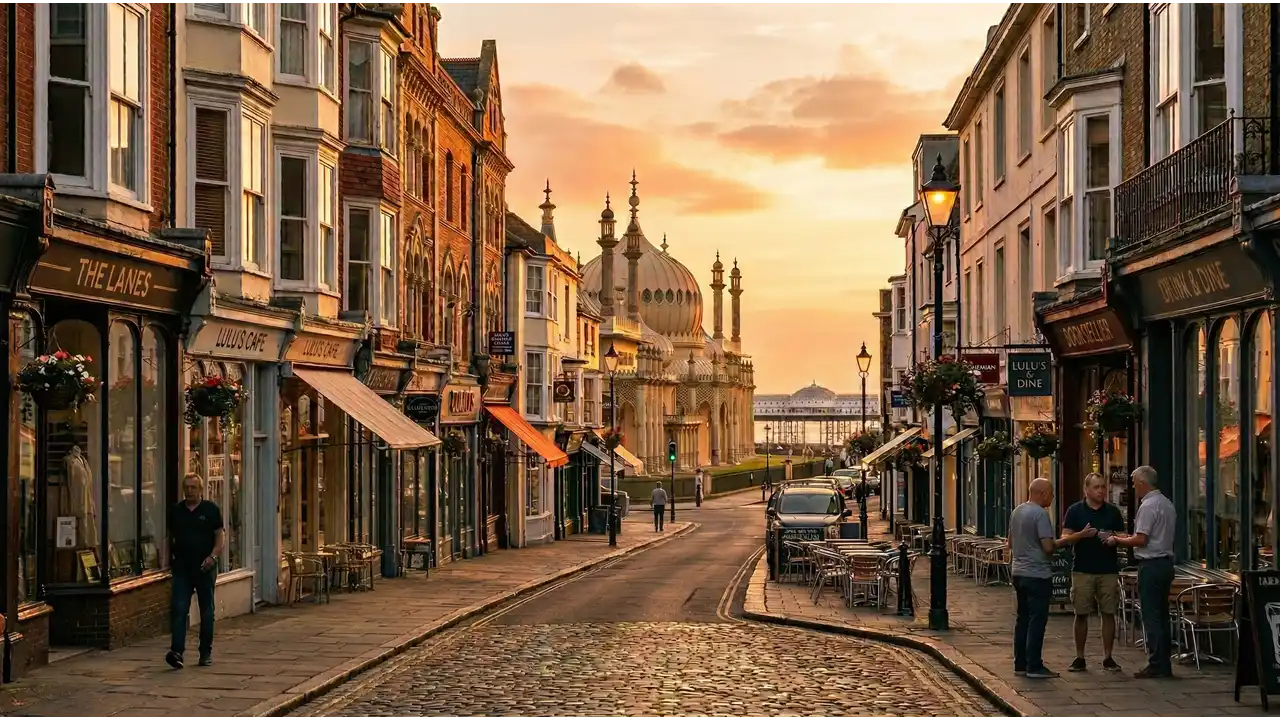
Brighton is a coastal city on England's south coast with a population around 290,000. It has a long pebble beach, a Victorian pier, and a working-class to middle-class residential character mixed with student areas. The weather is mild but often gray and rainy. The city attracts young professionals, LGBTQ+ residents, artists, and students. Daily life involves commuting by bus or train, walking seafront promenades, shopping on Church Street or the Lanes (narrow historic streets with independent shops), and eating out at casual cafes and restaurants. Property is older Victorian terraces and converted townhouses rather than modern builds. Tourism peaks in summer.
💡 Local Insights
Brighton · 2026
Brighton's cost of living runs $2,950 per month for a moderate lifestyle, driven primarily by housing. Rent averages $1,695 monthly, reflecting tight supply relative to demand from London overspill and students. Properties within walking distance of the seafront or city center command premiums; comparable space 10 minutes north costs less. Grocery spending sits around $405 monthly for one person buying from supermarkets like Tesco, Sainsbury's, and Lidl. Eating out is expensive relative to groceries, with casual lunch around $8-12 and dinner entrees $12-18. Transport is manageable via buses (unlimited monthly pass roughly $65) and the train to London (30 minutes, around $200-300 monthly if commuting). Council tax (local property tax) adds $100-200 monthly depending on band. Energy bills run high in winter. Expats should budget for higher casual dining and entertainment costs; local wages lag London but housing hasn't tracked downward accordingly.
Frequently Asked Questions
How much does it cost to live in Brighton per month?
A moderate lifestyle costs around $2,950 per month. Housing averages $1,695 monthly. Groceries run $405 per month for one person shopping at standard supermarkets. The remainder covers transport ($65-300 depending on commute), utilities ($120-200 in winter, less in summer), council tax ($100-200), and discretionary spending on eating out, entertainment, and goods. Budget tier living is possible at $1,770 monthly if you share housing, cook all meals, use only buses, and minimize entertainment. Comfortable tier reaches $4,573 if you live alone in a nicer area, eat out regularly, and have flexibility for travel and hobbies.
What is the average rent in Brighton?
Average rent is $1,695 monthly. A one-bedroom flat in central areas like The Lanes, Kemptown, or close to the seafront runs $1,600-1,900. The same flat 10-15 minutes north (Hanbury, Hollingdean, or upper levels of Kemp Town) drops to $1,400-1,700. Two-bedroom terraced houses range $1,900-2,400 depending on location and condition. Shared housing is common among young renters; a room in a three-bed house runs $700-950. Properties are typically Victorian or Edwardian conversions, not modern builds. Competition is high, especially near universities and the seafront. Council tax adds $100-200 monthly on top of rent.
Is Brighton cheap to live in for expats?
Not particularly. Brighton is one of the UK's pricier regional cities outside London, comparable to Oxford or Cambridge on housing but with lower wages. Expats often find housing shocks expensive relative to expectations. The moderate monthly cost of $2,950 reflects this. However, it's cheaper than central London (where comparable living costs $4,200-5,000), Manchester has slightly lower rent, and both cities offer better transport and job density. Brighton appeals for lifestyle reasons (beach, LGBTQ+ scene, cultural events) rather than affordability. Expats from North America or Western Europe often find it reasonable; those from Eastern Europe or Asia may find it steep. Quality of life and activities are strong enough to justify the cost for many.
How much does food cost per month in Brighton?
Grocery shopping averages $405 monthly for one person. A typical weekly shop at Tesco or Sainsbury's: bread $1.50, milk $1, eggs (dozen) $2.50, chicken breast per kg $8, pasta $0.80, canned tomatoes $0.60, rice $1.50, vegetables $15-20 weekly depending on season. Budget supermarkets like Lidl and Aldi run 10-15% cheaper. Eating out is substantially more expensive: casual lunch $8-12, dinner entree at a modest restaurant $12-18, coffee $2.50-3.50, pint of beer $5-6.50. The seafront tourist areas charge premiums. Cooking at home is the primary cost control for tight budgets.
What salary do you need to live comfortably in Brighton?
Comfortable living runs $4,573 monthly, suggesting a gross annual salary around $70,000-75,000 (accounting for UK tax and National Insurance). This allows for a one-bedroom flat in a good location, regular eating out, hobbies, and modest travel. With rent at $1,695 and utilities, council tax, and groceries covering another $700, the remainder funds transport, entertainment, and savings. Most skilled professionals (tech, healthcare, education, creative sectors) in Brighton earn $45,000-65,000 annually, which covers moderate living but requires budget discipline. London-based salaries are higher ($55,000-85,000+ for comparable roles) but offset by even higher living costs. A couple sharing housing can live comfortably on combined $65,000-70,000.
How does the cost of living in Brighton compare to other places?
Brighton sits in the middle tier of UK city costs. A moderate lifestyle runs $2,950 per month here, with housing at $1,695 per month.
Bristol, a peer city, costs slightly less at $2,750 monthly overall, though housing there is comparable at $1,574 per month. If you're looking for real savings, Sheffield is markedly cheaper at $2,175 per month, with housing at just $1,090 per month. The trade-off is that Sheffield lacks Brighton's seaside location and cultural intensity.
London, by contrast, is substantially dearer. A moderate lifestyle there costs $4,525 per month, and housing alone reaches $3,027 per month. Brighton offers a similar cultural draw and walkability to parts of London at a fraction of the cost, which is precisely why it appeals to people priced out of the capital.
Yes, but with constraints. Budget living at $1,770 requires sharing housing (a room in a shared flat around $700-800), strict grocery budgeting ($350-380 monthly), and minimal discretionary spending. Transport on buses only runs $60-65. This leaves roughly $400-500 for utilities, council tax, phone, internet, and emergencies. No eating out, limited entertainment, no holidays. It's sustainable for students, those with supplementary income, or people in temporary situations. Those relocating long-term should aim for moderate tier ($2,950) to avoid stress and financial fragility. Shared housing is normal and socially acceptable in Brighton for young professionals and expats, making budget living more realistic than in car-dependent cities.