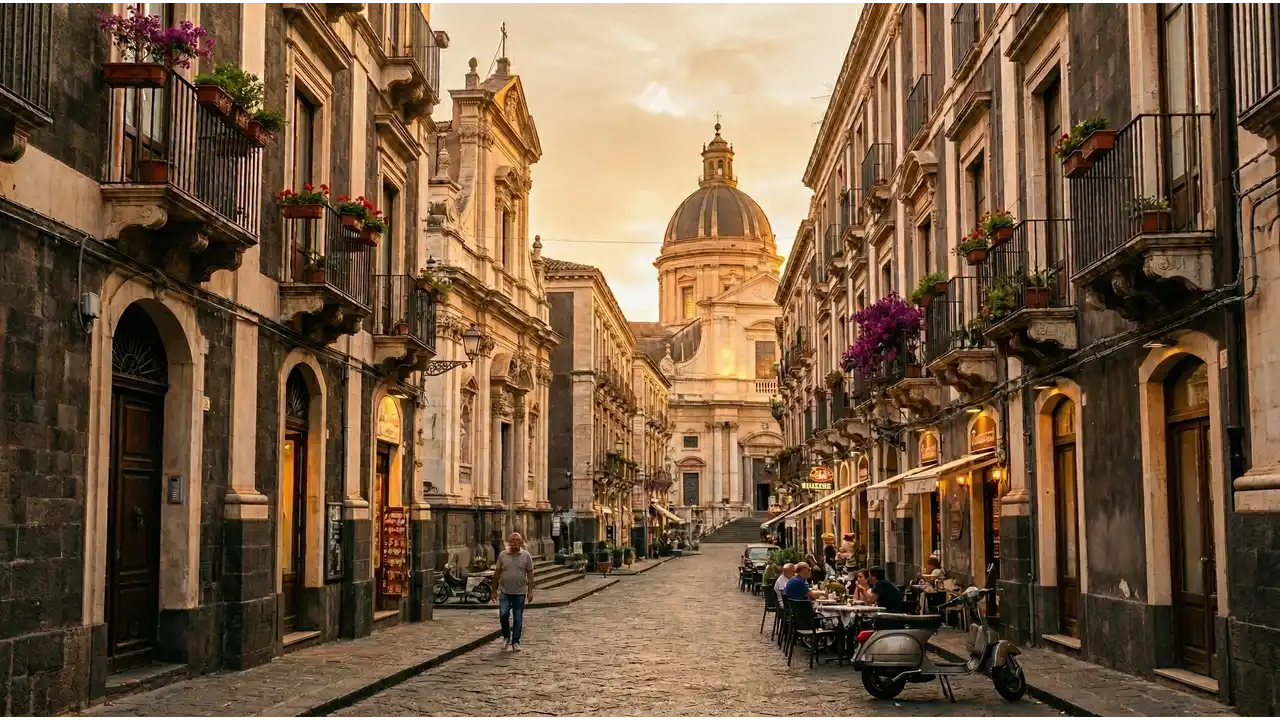
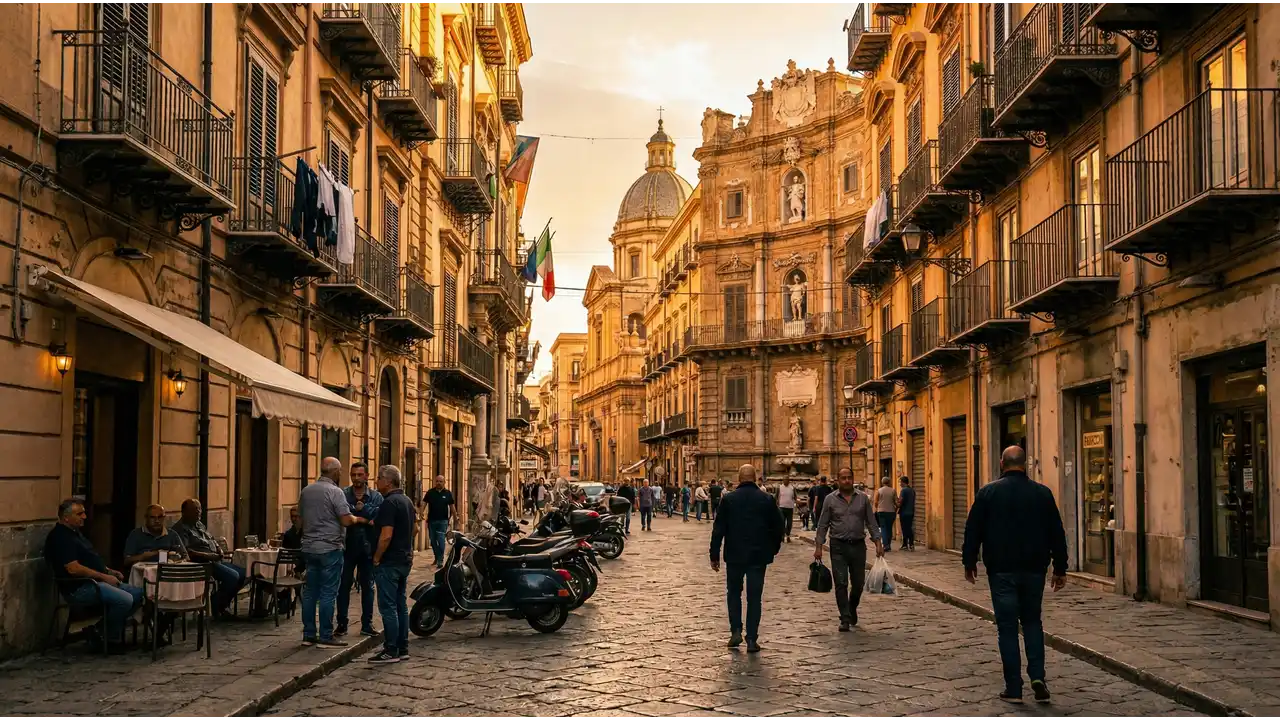
Catania is Sicily's second-largest city, built on the eastern coast beneath Mount Etna. It functions as a working Mediterranean port town, not a tourist resort. Daily life revolves around family businesses, street markets, and small neighborhood bars. The historic center has baroque architecture from 18th-century rebuilding after an earthquake. Summer temperatures reach 30C (86F) regularly; winters are mild. You'll find a mix of long-term residents, university students, and increasingly remote workers drawn by low costs. Public transport relies on buses and a small metro system. Most neighborhoods retain a distinctly Sicilian character with limited English spoken outside tourism zones.
💡 Local Insights
Catania · 2026
Catania's affordability comes from being outside major tourist circuits, though it is a real city with real economic activity. Housing at $566/month typically means a one-bedroom apartment in central neighborhoods like Vucciria or San Cristoforo, or larger space in outlying areas like Ognina. Furnished short-term rentals cost more. Grocery costs around $285/month reflect local market prices for pasta, vegetables, olive oil, and cheese. Eating at small trattorie runs $6-12 per meal. Transport is cheap (monthly bus pass under $30). Expats often find prices stable year-round, unlike coastal tourist towns. The main cost variable is whether you eat local (cheaper) or import habits from home (expensive). Utilities and internet add roughly $80-120/month. Banks, healthcare, and local services work in Italian; some neighborhoods have English speakers, many do not. Summer heat makes air conditioning common, raising electricity costs July through September.
Frequently Asked Questions
How much does it cost to live in Catania per month?
A moderate lifestyle costs $1,450/month. This includes housing at $566/month, groceries at $285/month, transport (roughly $30), utilities and internet ($80-120), dining out ($150-200), and personal expenses. The budget tier of $870/month is possible if you rent outside the center, cook exclusively, avoid dining out, and use minimal transport. The comfortable tier, $2,248/month, allows for larger housing, dining out regularly, travel, and entertainment. Most residents cluster in the moderate range.
What is the average rent in Catania?
Average rent is $566/month. A one-bedroom apartment in central neighborhoods like Vucciria or San Benedetto rents for $450-650/month unfurnished. Two-bedroom apartments run $550-800/month. Outside the center, in areas like Librino or Ognina, you find larger spaces for $400-500/month. Furnished short-term rentals cost 20-40 percent more. Utilities (electricity, water, gas, internet) add $80-120/month. The centro storico commands premium prices; residential neighborhoods south of the train station offer better value with the same amenities.
Is Catania cheap to live in for expats?
Yes, relative to Western Europe or major US cities. At $1,450/month, it is substantially cheaper than Barcelona, Berlin, or Rome. However, it is not a budget destination like some Southeast Asian cities. Real costs are consistent month to month, not artificially lowered by tourism discounting. Expats should expect bureaucracy (residency permits, banking) to require time and Italian language navigation. Job opportunities are limited; most expats work remotely. Community is small but growing. Healthcare is public and affordable; private care exists but not heavily marketed to foreigners.
How much does food cost per month in Catania?
Groceries average $285/month for one person cooking at home. Weekly produce from neighborhood markets (tomatoes, eggplant, olives, citrus) costs $1-3 per item. A kilogram of local pasta is $1-2. Cheese, bread, olive oil, and eggs are cheap. Imported goods (cereal, chocolate, non-Italian brands) are double the price. Eating out at small trattorie or pizzerias runs $6-12 per meal (pasta, bread, water). Espresso is $1-1.50. Street food like arancini (rice balls) costs $2-3. Markets in the Vucciria and Capo neighborhoods offer the best prices and are experience as much as shopping.
What salary do you need to live comfortably in Catania?
A comfortable lifestyle requires $2,248/month. This allows for a larger one or two-bedroom apartment ($700-900/month), regular dining out and entertainment ($300-400/month), travel within Sicily, gym membership, and discretionary spending. Remote work salaries of $2,500-3,500/month are common among expats and provide comfortable margin. Local employment pays far less (many jobs offer $800-1,200/month), making immigration from abroad the typical path to comfort. The comfortable figure assumes no major emergencies, ongoing education costs, or family support sent elsewhere.
How does the cost of living in Catania compare to other places?
Catania sits firmly in the affordable bracket for southern Europe. A moderate lifestyle runs $1,450 per month, with housing at $566 per month. That makes it comparable to Poznan, where a moderate lifestyle costs $1,500 per month and housing $726 per month. Both cities offer similar overall affordability, though Catania's housing is notably cheaper.
If you're coming from further north or east, the difference is even clearer. Minsk is cheaper overall at $1,025 per month, but that's an outlier in the broader European context. Moscow, by contrast, runs $2,050 per month with housing at $1,238 per month, making it substantially pricier. Within Italy itself, Catania remains one of the more affordable options, especially for rent. You'll find your money stretches furthest on food, transportation, and dining out, though utilities and imported goods carry typical European price tags.
Yes, but with real constraints. Rent must stay under $400/month, which means a small one-bedroom outside the center or a shared apartment. Groceries must come from markets and total roughly $200/month. Dining out is rare (once or twice weekly). Transport and utilities consume $80-100/month. Entertainment and personal spending drop to almost nothing. This budget works for disciplined people, students, or those with free housing. Most people at this level cook every meal, take the bus, and socialize in parks or homes rather than bars. It is sustainable but leaves no margin for emergencies, travel, or replacing broken items.