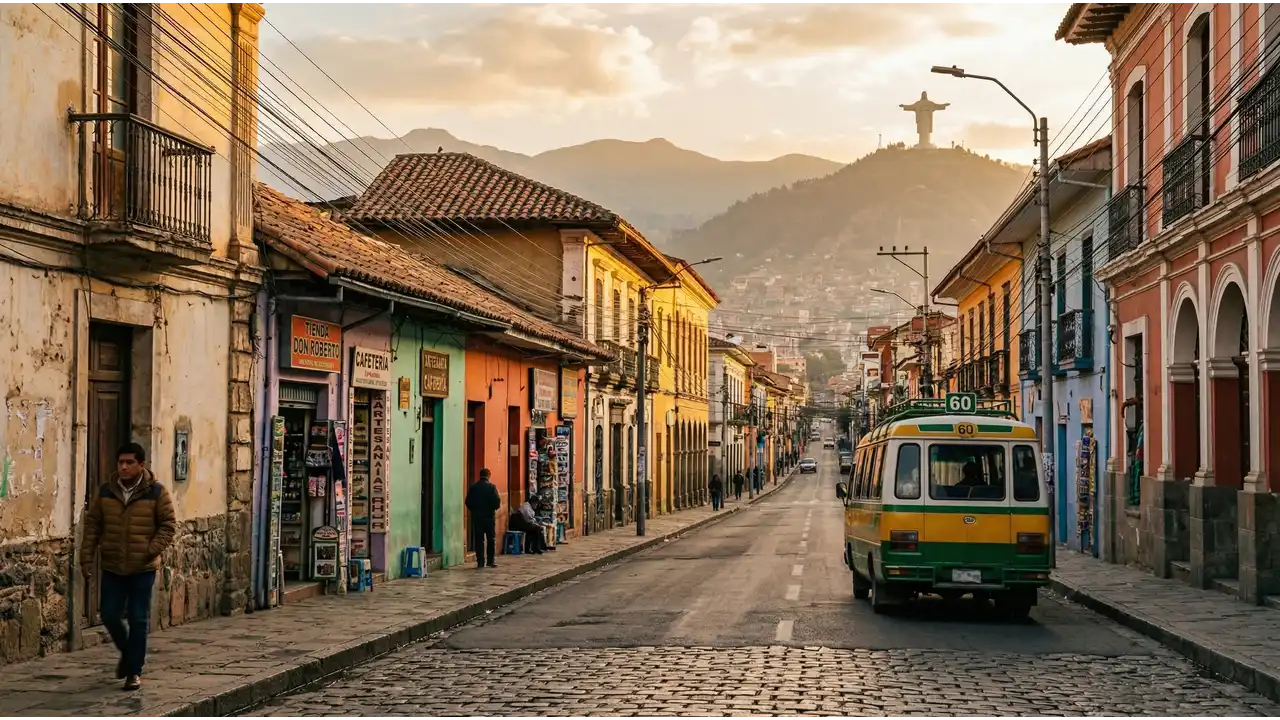
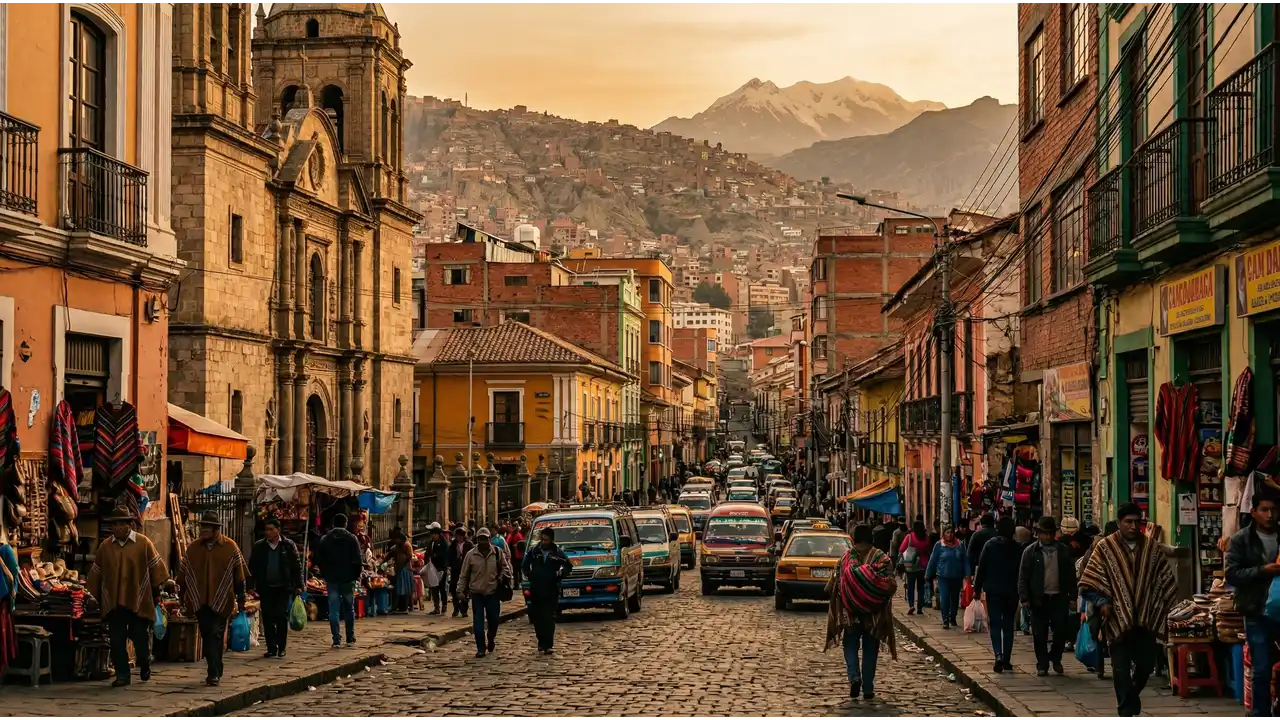
Cochabamba is Bolivia's third-largest city, set at 8,400 feet in a highland valley. It has a substantial university presence, mild year-round temperatures (50-70 degrees Fahrenheit), and a mixed population of students, working families, and expat residents. Daily life centers on the market district and central plazas. Spanish is the primary language; Quechua is also spoken. Public minibuses (micros) are the main transport. The city feels less polished than La Paz but more accessible to newcomers. Cost of living is genuinely low compared to most Latin American cities.
💡 Local Insights
Cochabamba · 2026
Cochabamba's affordability comes from low rents and cheap groceries, though prices are not uniform across neighborhoods. The $353/month housing figure shown is the Bolivia country level that Cochabamba inherits (no separate rent survey exists for the city), but actual rents vary. A basic one-bedroom in central areas runs $200-300/month, while expat-preferred neighborhoods like Queru Queru or near the university can reach $400-500/month. Furnished apartments typically cost 20-30 percent more. Groceries at local markets are inexpensive: chicken around $3/pound, potatoes under $0.50/pound, rice $1/pound. Eating out is cheap; a set lunch (almuerzo) costs $2-3, street food $1 or less. Transport via micro is pennies per ride. Utilities (electricity, water, gas) add $30-50/month. Internet runs $15-25/month for home broadband. Expats often pay slightly more for housing and imported goods, but less than in regional centers like La Paz or Lima.
Frequently Asked Questions
How much does it cost to live in Cochabamba per month?
A moderate lifestyle in Cochabamba costs around $875/month. This breaks down roughly as housing $353, groceries $168, utilities $35-50, transport $15-25, and discretionary spending on dining out, entertainment, and personal care. A budget tier lifestyle (cutting restaurant meals and entertainment) runs $525/month. Those seeking comfort and regular dining out, travel, or imported goods should budget $1,356/month or higher. Actual spending depends heavily on neighborhood, whether you eat at home or out, and consumption habits.
What is the average rent in Cochabamba?
The $353/month housing figure shown is the Bolivia country level that Cochabamba inherits rather than a separate rent survey for the city itself. In practice, renters in Cochabamba find one-bedroom apartments in central neighborhoods like Avenida Ballivian for $200-300/month. Furnished units and expat-oriented neighborhoods (Queru Queru, near UMSS university) run $400-500/month or higher. A basic unfurnished room in a shared house costs $150-200/month. Prices vary by proximity to the center, amenities, and landlord; expats typically pay 20-30 percent more than local residents for the same unit.
Is Cochabamba cheap to live in for expats?
Yes, Cochabamba is affordable for expats, though less tourist-oriented than some alternatives. A moderate lifestyle at $875/month is genuinely low. However, expat costs run higher than local costs for housing (20-30 percent premium), imported goods, and restaurant meals. Compared to Mexico City, Buenos Aires, or Lima, Cochabamba is markedly cheaper. Compared to rural Bolivia or smaller towns, it is slightly pricier but offers better services, reliable internet, expat community, and healthcare. The trade-off is that expats need Spanish fluency or serious language learning commitment; English is rare outside universities.
How much does food cost per month in Cochabamba?
Groceries for a moderate diet run around $168/month when shopping at local markets. Chicken costs roughly $3/pound, potatoes under $0.50/pound, rice $1/pound, eggs $1.50 per dozen, cooking oil $2/liter, and fresh produce is seasonal and cheap. Supermarkets (Hipermaxi, Walmart) stock the same items 20-40 percent higher. Eating out is inexpensive: a set lunch (almuerzo) with soup, main dish, and drink costs $2-3; street food tacos or empanadas $0.75-1. Imported goods (cheese, specialty items) are expensive. Monthly food costs stay low if you cook at home and buy at markets.
What salary do you need to live comfortably in Cochabamba?
Comfort in Cochabamba requires roughly $1,356/month. This allows regular restaurant meals, occasional travel within Bolivia, reliable internet and utilities, a furnished rental in a good neighborhood, occasional entertainment, and a modest cushion for healthcare or unexpected costs. In dollar terms, that is roughly $16,000/year, which is well below costs in most developed countries. Many expats on pensions or remote work earning $1,500-2,000/month live well, with money left to save or travel. Student budgets can dip to $525-700/month by cooking at home and using public transport.
How does the cost of living in Cochabamba compare to other places?
Cochabamba sits in the lower-middle range for Latin American cities. A moderate lifestyle costs $875 per month here, with housing at $353 per month. That puts it slightly cheaper than Curitiba, where a moderate lifestyle runs $925 with housing at $377 per month. You'll find Cochabamba noticeably more expensive than Cairo, which costs $575 monthly, though Cairo is a different region entirely. The real gap appears when comparing to Tegucigalpa, where a moderate lifestyle reaches $1,225 per month with housing at $496. For most expats and remote workers, Cochabamba offers genuine affordability without the extreme budget constraints of the cheapest options, or the expense of larger regional hubs.
Yes, but with strict discipline. The budget tier of $525/month requires cooking nearly all meals at home, using micros for transport (never taxis or Uber), a basic unfurnished room or shared housing, minimal dining out, and no travel. Utilities, internet, and phone would consume $50-60, leaving $465 for rent, food, and necessities. A $150-200/month room plus $140-160/month groceries fits within that envelope. Entertainment, healthcare beyond emergencies, or imported goods require cutting elsewhere. This budget is survivable for students or those with minimal expenses but leaves no margin for medical costs or emergencies. Most people find $700-800/month more sustainable.