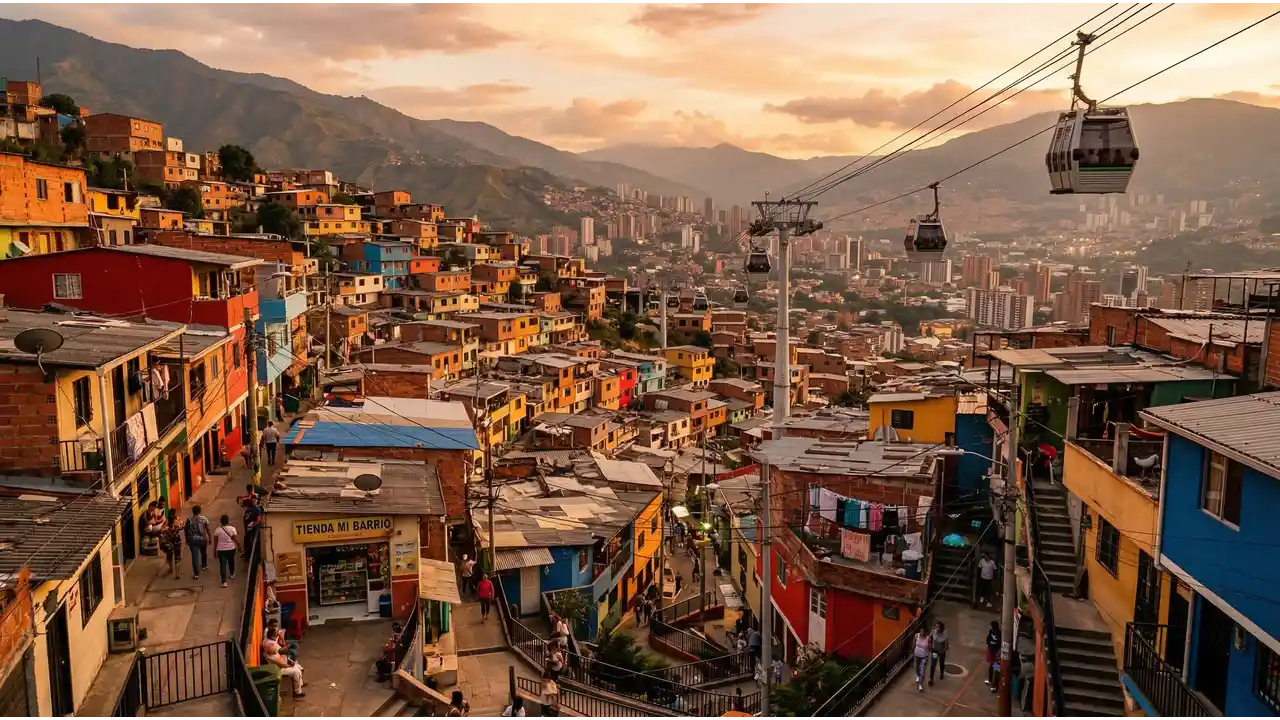
Ecuador is a small South American country on the Pacific coast with three distinct regions: the coastal lowlands, the Andean highlands, and the Amazon. The population is around 18 million, with a significant indigenous Quechua presence, especially in the highlands. Daily life varies sharply by geography and income. In highland cities like Quito and Cuenca, you navigate steep colonial streets and markets. Coastal cities like Guayaquil are hot and commercial. The climate ranges from tropical on the coast to cool and spring-like year-round in the highlands above 7,000 feet. Spanish is the main language. The US dollar is the official currency, which simplifies finances for American expats but ties purchasing power to USD strength.
💡 Local Insights
Ecuador · 2026
Ecuador's cost of living centers on housing and food. Rent for a one-bedroom apartment in urban centers like Quito or Cuenca runs $300 to $450 per month, averaging $357/month. Prices are lower in secondary cities and higher in expat-heavy neighborhoods in the capital. Grocery costs stay low because of local agriculture. A month of groceries for one person, including staples like rice, beans, eggs, and seasonal produce, totals around $215. Eating out is cheaper than groceries if you eat local food at markets and comedor restaurants, but costs rise in tourist zones. Transportation is inexpensive. Buses within cities cost $0.30 per ride; intercity buses are $1 to $5. Many expats use taxis or ride-apps, which adds up. Utilities (electricity, water, gas) are included in the $1,025 moderate budget but not specified separately. Healthcare is affordable if you use public or private clinics rather than private hospitals. Expats often negotiate lower rental rates by paying several months upfront or staying longer than three months.
Frequently Asked Questions
How much does it cost to live in Ecuador per month?
A moderate lifestyle costs $1,025 per month. This breaks down as follows: housing $357, groceries $215, and the remaining $453 covers utilities, transport, dining out, entertainment, and personal services. A budget lifestyle runs $615 per month, cutting groceries and going without regular dining out or entertainment. A comfortable lifestyle costs $1,589 per month, allowing for better housing, more dining out, private healthcare, and travel. Costs vary by region. Highland cities like Cuenca are often cheaper than Quito. The Amazon and coastal towns fall between the two.
What is the average rent in Ecuador?
Average rent is $357 per month. A one-bedroom apartment in a central neighborhood of Quito or Cuenca typically rents for $300 to $450. Unfurnished places are cheaper than furnished; older colonial apartments are cheaper than modern constructions. In less popular areas outside the center, you can find one-bedrooms for $250 to $350. Two-bedroom apartments range from $400 to $600. Expat-focused neighborhoods in Quito's north side command higher rates. Secondary cities like Ibarra or Ambato offer one-bedrooms for $200 to $300. Utilities (water, electricity, gas) average $40 to $70 per month and are usually paid separately. Most leases require a deposit equal to one month's rent.
Is Ecuador cheap to live in for expats?
Yes, but with caveats. Ecuador is cheaper than the US, Canada, or most of Europe for housing and food. However, the advantage narrows if you live like an expat rather than a local. Eating at restaurants catering to foreigners, renting in expat neighborhoods, or using private healthcare costs more than using local services. Healthcare is genuinely affordable if you use private doctors outside private hospitals. Internet and imported goods are more expensive than in the US. If you can adapt to the local pace and eat local food, you can live well on $1,025 per month. If you insist on North American conveniences and restaurants, costs approach those of mid-tier US cities.
How much does food cost per month in Ecuador?
Groceries average $215 per month for one person. Local markets offer produce, eggs, chicken, and staples (rice, beans, lentils) at low cost. A dozen eggs costs around $1.50, a pound of chicken $2 to $3, and seasonal vegetables $0.50 to $1 per pound. Imported foods (cheese, cereals, certain fruits) cost significantly more. Eating out at local comedores (small family-run restaurants) costs $3 to $5 for a set lunch. Street food like empanadas, humitas, and fresh juice cost under $2. Mid-range restaurants in city centers charge $8 to $15 per meal. Gringo restaurants in Quito's expat zones run $12 to $25. Alcohol is inexpensive; local beer costs $1 to $2 per bottle. Coffee and fresh fruit juices are nearly free.
What salary do you need to live comfortably in Ecuador?
A comfortable lifestyle costs $1,589 per month. This means better housing (a well-furnished one or two-bedroom apartment in a good neighborhood), dining out several times a week at mid-range restaurants, regular entertainment, private healthcare access, and the ability to travel within Ecuador monthly. In USD terms, if you earn $1,600 to $1,800 monthly, you can live comfortably with some savings. If you have dependents or want to travel internationally, budget higher. A household of two with $2,400 to $2,800 monthly has genuine comfort, including private school fees if needed. Remote workers earning in USD or EUR have substantial purchasing power. Keep in mind that inflation has risen in recent years, particularly for imported goods.
How does the cost of living in Ecuador compare to other places?
Ecuador sits in the middle range for Latin America. A moderate lifestyle costs $1,025 per month, with housing at $357 monthly. That makes it slightly more expensive than Colombia, where a moderate lifestyle runs $975 per month, though Ecuador's housing is cheaper (Colombia's is $447). You'll find Nicaragua considerably less costly overall at $825 per month with housing at $324, making it the budget option if you're comparing these three countries. If you're looking at somewhere pricier, Belize costs $1,425 monthly for a moderate lifestyle, with housing at $558. The practical difference usually comes down to your specific city and lifestyle choices. Ecuador's main cities like Quito and Cuenca tend to cluster around these figures, while smaller towns run noticeably lower.
Yes, but with restrictions. The $615 budget tier requires discipline. Rent takes $300 to $350, leaving $265 for groceries, utilities, and transport. You eat primarily local food from markets, skip restaurants, and use public buses. Utilities (water, electricity, gas) run $40 to $70. This leaves minimal money for phone, internet, or entertainment. The budget works if you live outside central Quito or Cuenca, share housing, or live in a smaller city like Latacunga or Riobamba. You cannot save, travel, or handle emergencies. Internet access is essential for remote work but costs $25 to $40 monthly. Most budget expats have external income or live on pensions that stretch further. This tier requires comfort with local living standards and willingness to avoid tourist areas entirely.