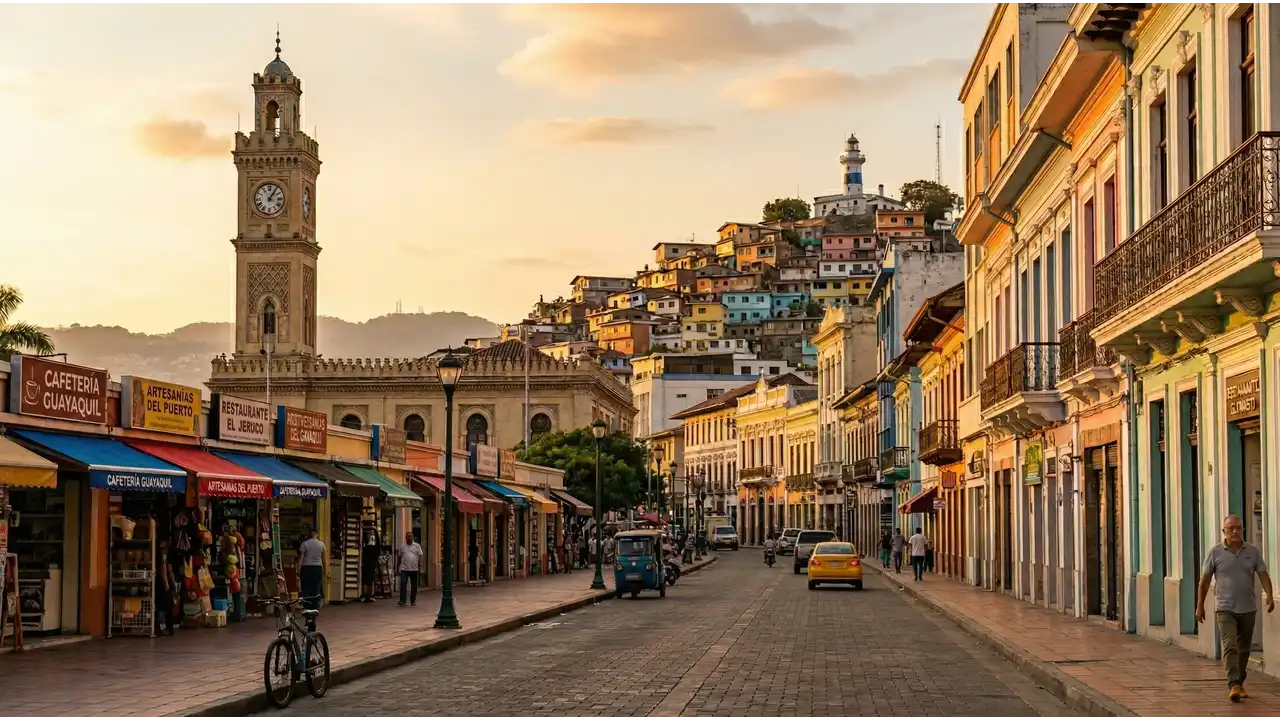
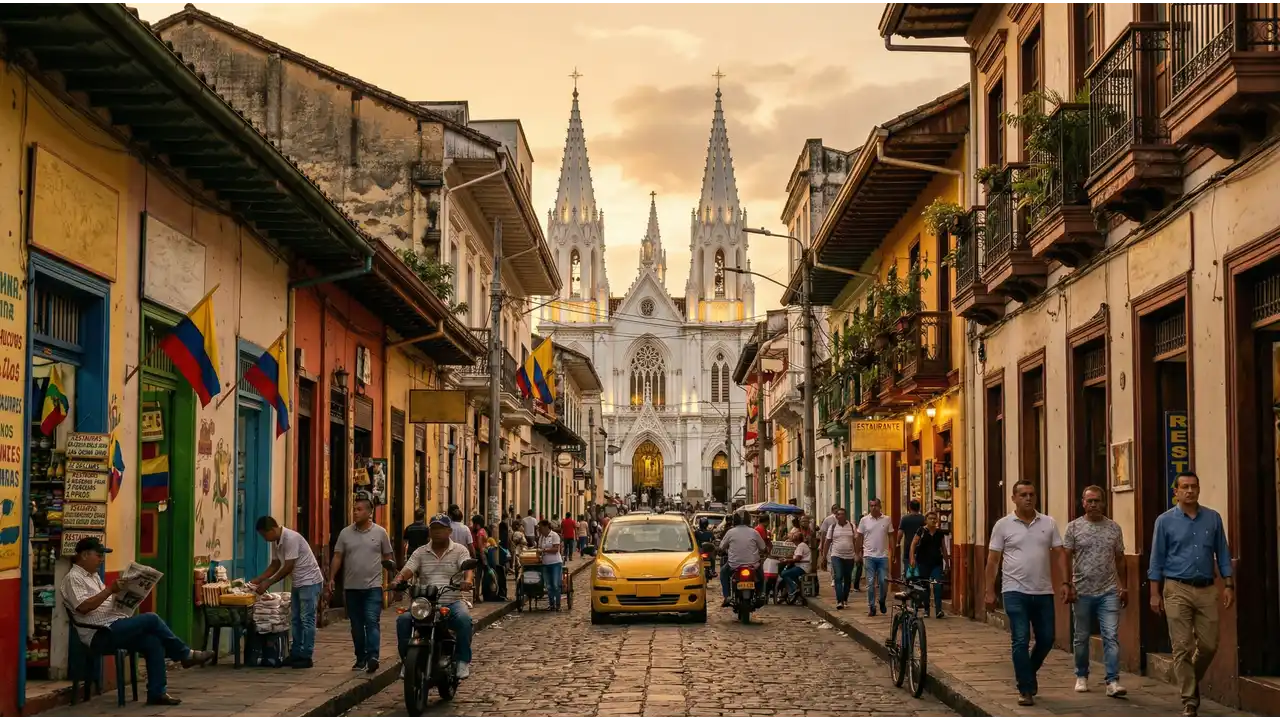
Guayaquil is Ecuador's largest city and main port, with roughly 2.4 million people in the metro area. It sits on the Pacific coast with a tropical climate, hot and humid year-round, rainy from December to May. The city is functionally divided into older, dense commercial neighborhoods near the riverfront and newer residential zones inland. Daily life centers on work, family, and informal commerce. Spanish is the working language. Infrastructure is uneven: some zones have reliable utilities and paved streets, others do not. Traffic is heavy. The city draws working-class Ecuadorians, migrants from poorer rural areas, and a smaller expat community, mostly retirees and remote workers.
💡 Local Insights
Guayaquil · 2026
Guayaquil's cost of living reflects Ecuador's economy and dollarization (the country uses US dollars). A moderate lifestyle costs $1,050/month. Housing averages $435/month and varies sharply by neighborhood. Safer, newer zones like Samborondón or Kennedy command $500 to $700 for a one-bedroom apartment. Older central areas like Centro or Las Peñas rent for $250 to $400, but security concerns deter many expats. Grocery costs average $198/month; local markets are cheaper than supermarkets. A kilogram of chicken runs $3 to $4, rice $0.50 to $1, and fresh produce varies seasonally. Eating at casual local restaurants costs $3 to $6 per meal. Transport is affordable: city buses cost $0.30 per ride, and taxis start at $1.50 to $2. Expats often pay slightly more for housing in perceived safe zones and imported goods at supermarkets. Utilities, internet, and mobile are modest. Healthcare is inexpensive if you use public or private local clinics; international-standard private hospitals cost more but less than US prices. Security and neighborhood choice matter more to monthly costs than raw inflation.
Frequently Asked Questions
How much does it cost to live in Guayaquil per month?
A moderate lifestyle in Guayaquil costs $1,050/month. This breaks down roughly as housing $435, groceries $198, transport $40 to $60, utilities and internet $50 to $70, and dining out or entertainment $200 to $250. Budget-conscious living costs around $630/month if you share housing, eat mostly at markets, and minimize going out. A more comfortable lifestyle runs $1,628/month, adding better housing, regular restaurant meals, and more discretionary spending. Individual costs vary by neighborhood, consumption habits, and whether you buy imported goods.
What is the average rent in Guayaquil?
Average rent in Guayaquil is around $435/month. In safer, newer neighborhoods like Samborondón or Kennedy, expect $500 to $700 for a one-bedroom apartment. In central or older zones like Centro, Las Peñas, or Urdesa, one-bedroom rentals range from $250 to $450. Two-bedroom apartments in middle-tier neighborhoods run $450 to $650. Furnished versus unfurnished makes little difference in local markets. Expats typically pay at the higher end of ranges for the same property. Security and proximity to services drive price more than square footage. Lease terms are negotiable, and landlords often require deposits equivalent to one month's rent.
Is Guayaquil cheap to live in for expats?
Yes, Guayaquil is cheap for expats, particularly those from North America or Western Europe. $1,050/month covers a stable moderate lifestyle, and $1,628/month provides real comfort. Housing at $435/month is substantially lower than rents in US cities. Food and transport are a fraction of North American costs. However, cheapness is conditional. Expats who want security often pay more for housing in gated neighborhoods or newer zones, eating into savings. Healthcare, if you want international-standard private clinics, costs more. Internet and imported goods cost extra. Compared to other Ecuador cities like Quito or Cuenca, Guayaquil is marginally more expensive but offers more job opportunities and services.
How much does food cost per month in Guayaquil?
Groceries average $198/month for one person. Local markets (markets and public mercados) are cheapest: chicken $3 to $4/kg, rice $0.50 to $1/kg, eggs $2 to $3/dozen, fresh produce (plantains, yuca, tomatoes) $0.50 to $1 each. Supermarkets like Carrefour or Fybeca cost 20 to 40 percent more. Eating out is affordable: casual local restaurants serve almuerzo (lunch set menu) for $3 to $5, and street food like empanadas or ceviche runs $1 to $3. Imported groceries at supermarkets double or triple local prices. Dining regularly at restaurants or buying imported goods can push food spending to $400 to $500/month; sticking to local markets and cooking at home keeps it under $200.
What salary do you need to live comfortably in Guayaquil?
A comfortable lifestyle costs $1,628/month, so a gross monthly income of roughly $1,900 to $2,100 (accounting for taxes and savings margin) is practical. This assumes you want housing in a safer neighborhood ($500 to $700), eat at better restaurants several times weekly, travel occasionally, and have discretionary spending. Remote workers earning USD earn far more relative to local costs: a $2,000/month remote income is solidly comfortable. On the other end, $1,050/month (moderate budget) requires gross income around $1,200 to $1,300. The very tight budget of $630/month requires discipline: shared housing, minimal eating out, and no imported goods. Most expats earning $1,500 to $2,500/month report comfortable living with savings.
How does the cost of living in Guayaquil compare to other places?
Guayaquil's moderate lifestyle costs $1,050 per month, with housing running $435 monthly. This makes it genuinely affordable compared to most major South American cities, though not the cheapest option available.
Rio de Janeiro is a near peer at $1,100 for a moderate lifestyle and $504 for housing, so expect similar overall costs if you're familiar with Brazil's largest beach city. Fortaleza is noticeably cheaper at $850 monthly and $287 for housing, offering real savings if you're willing to move further north along Brazil's coast. Montevideo, by contrast, runs substantially higher at $1,525 monthly with $586 in housing costs, making Uruguay's capital a significant step up in expenses.
For Ecuador specifically, Guayaquil offers better value than you'll find in Quito or other major regional centers, while still providing genuine urban infrastructure and services.
Yes, but with significant constraints. $630/month is the budget tier and requires careful planning. Housing must be shared (a room in a shared apartment runs $200 to $300) or in an older, less safe neighborhood. Groceries rely entirely on local markets; supermarkets are off-limits. Eating out is rare, maybe once or twice weekly at cheap local spots ($3 to $5). Transport is by bus ($0.30 per ride). No international healthcare, eating out frequently, or imported goods. Utilities, mobile, and basic internet fit within this budget. This lifestyle is feasible for long-term travelers or retirees with modest needs, but it leaves little margin for emergencies or comfort. Most expats find $1,050/month far more sustainable because it allows occasional restaurant meals, safer housing, and some flexibility.