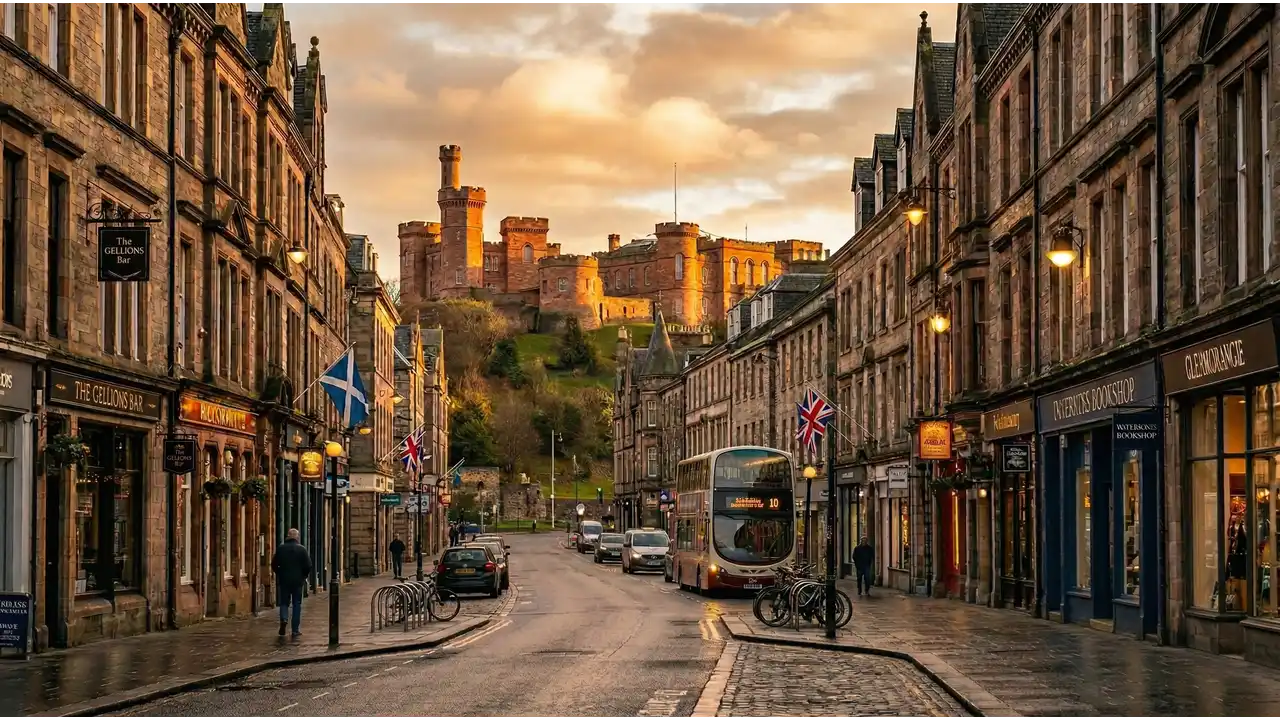
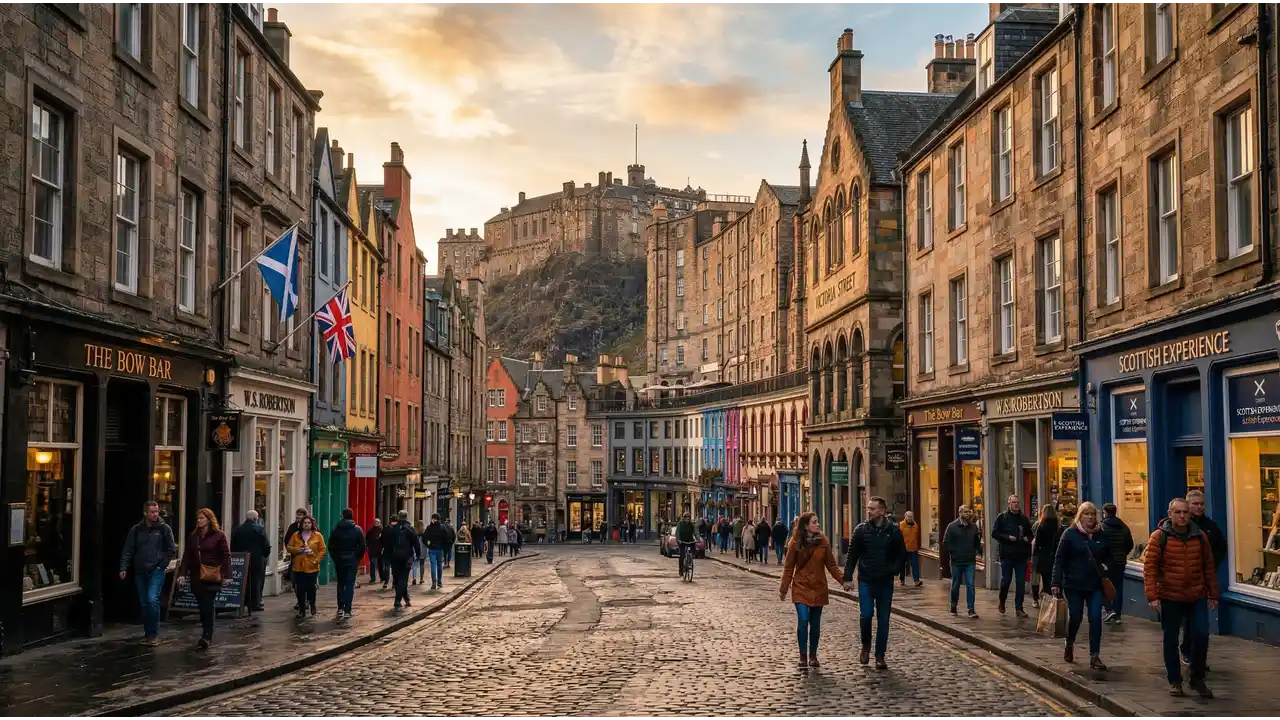
Inverness is Scotland's largest city north of Perth, with around 46,000 residents. It sits at the mouth of the River Ness on the edge of the Highlands. The city center is walkable, dominated by the castle and a modest high street. The climate is cool and wet, with frequent cloud cover and rainfall. Daily life revolves around the compact downtown, local employment in tourism and public sector work, and quick access to hiking and outdoor spaces. Housing ranges from Victorian flats to modern developments. Most residents have a car, though buses serve the city adequately. Inverness draws some expats working in healthcare or education, but it remains predominantly Scottish and local.
💡 Local Insights
Inverness · 2026
Inverness is substantially cheaper than Glasgow or Edinburgh but more expensive than smaller Highland towns. Housing averages $788/month and anchors the budget. A one-bedroom flat in the center runs $700-$850, while suburban options drop to $600-$750. Council tax (local government charge) adds $120-$200 per month depending on property band. Groceries average $423/month for an individual, consistent with UK supermarket pricing at Tesco, Sainsbury's, and Lidl. Eating out is cheaper than London: fish and chips costs $8-$12, pub meals $14-$18. Public transport is limited; most residents own cars. A car running budget (fuel, insurance, maintenance) adds $250-$400 monthly. Utilities run $80-$120/month. Expats report minimal price discrimination; locals and newcomers pay the same. The real economy driver is whether you need a car; without one, living costs drop noticeably. Winter heating bills spike October through March.
Frequently Asked Questions
How much does it cost to live in Inverness per month?
A moderate lifestyle in Inverness costs around $2,100/month. Housing runs $788/month, groceries $423/month, utilities $90-$120/month, and transport $250-$350/month if you own a car. Council tax adds $120-$180/month. This leaves $300-$400 for dining out, entertainment, and miscellaneous expenses. A budget lifestyle costs $1,260/month (no car ownership, shared housing, minimal dining out). A comfortable lifestyle with good housing, regular dining out, and travel runs $3,255/month. The gap between tiers is mainly driven by housing choice and car ownership.
What is the average rent in Inverness?
Average rent in Inverness is $788/month, which reflects the local market mix. A one-bedroom flat in the city center costs $700-$850/month; the same outside the center drops to $600-$750/month. Two-bedroom flats run $850-$1,100/month. Furnished short-term rentals (for expats or temporary stays) cost 15-20 percent more. Council housing waiting lists are long, and private rental dominates. Landlords rarely ask above $1,000/month for standard residential properties. Prices remain stable year-round, though summer tourism rental peaks push furnished short-term rates higher. Most leases are 12 months; deposit requirements equal four to six weeks' rent.
Is Inverness cheap to live in for expats?
Yes, Inverness is cheap for expats accustomed to London, Dublin, or Southeast England prices. Housing costs roughly 40 percent less than London's West End or central Edinburgh. Groceries and dining out are comparable to the rest of Scotland, with no expat premium. Your main savings come from avoiding major city rental markups and council tax relativities. However, Inverness is not cheap by global standards; it's pricier than Portugal, Poland, or Southeast Asia. For expats on UK salaries (typically $32,000-$45,000 gross for skilled work), Inverness offers strong purchasing power. The trade-off is fewer job opportunities and cultural institutions than larger cities. Expats working remote for US or EU employers find it excellent value.
How much does food cost per month in Inverness?
Groceries cost around $423/month per person for a moderate diet. Weekly shopping at Tesco or Sainsbury's runs $80-$95; budget chains like Lidl cost $65-$75 per week. Specific items: milk $1.20 per liter, chicken breast $8-$10 per kilogram, bread $1.50-$2, eggs $3.50 per dozen, cheese $6-$8 per pack. Eating out is cheaper than London: fish and chips $8-$12, curry $12-$16, pub lunch $12-$14. Coffee shops charge $2.50-$3.50. Alcohol in pubs costs $5-$7 per pint; supermarket wine $7-$12 per bottle. Farmer's markets operate weekends and offer seasonal produce at 10-15 percent discounts. Annual food inflation runs 2-3 percent, consistent with UK averages.
What salary do you need to live comfortably in Inverness?
A comfortable lifestyle in Inverness requires around $3,255/month, or roughly $39,000 annually gross. At this level, you can afford mid-range housing ($900-$1,000/month), eat out regularly, own and run a car, travel occasionally within Scotland, and have $400-$500 for hobbies and discretionary spending. Most skilled jobs in Inverness (healthcare, education, tech, public sector) pay $28,000-$42,000 gross, putting comfortable living within reach for professional workers. Partners in dual-income households easily reach this threshold. Self-employed and contract workers should budget conservatively; Inverness has fewer lucrative freelance opportunities than major cities. For single earners, the moderate budget of $2,100/month is more realistic.
How does the cost of living in Inverness compare to other places?
Inverness sits in the middle tier for Scottish cities. A moderate lifestyle costs $2,100 per month here, with housing running $788 monthly. That makes it notably cheaper than Edinburgh, where a moderate lifestyle reaches $2,775 per month and housing alone costs $1,574. Compared to English peers, Inverness is slightly less expensive than Nottingham, which runs $2,200 monthly for the same lifestyle, though Nottingham's housing is steeper at $1,090 per month. If you're coming from Southern Europe, expect to pay more. Thessaloniki costs $1,475 monthly with housing at $566, making it the least expensive of these comparisons. Inverness works well if you want Scottish character without Edinburgh's premium prices, or if you're relocating from London or the Southeast and looking to cut costs significantly.
Yes, but with significant constraints. On $1,260/month, you must share housing (reducing rent to $400-$500/month), rely entirely on public transport (saving $250+/month on car costs), buy only groceries, and eliminate dining out and entertainment. A shared two-bedroom flat costs $600-$700/month; your share is $300-$350. Groceries stay within $200/month (rice, beans, basic vegetables, no processed foods). Utilities split are $40-$50. Council tax (if applicable) is $50-$60. This leaves roughly $150-$200 for phone, internet, and emergencies. This budget works for students, full-time job seekers, or those with free accommodation. It does not include discretionary spending, travel, or buffer for irregular costs. Most people on $1,260/month are supplemented by family, unemployment benefits, or other income.