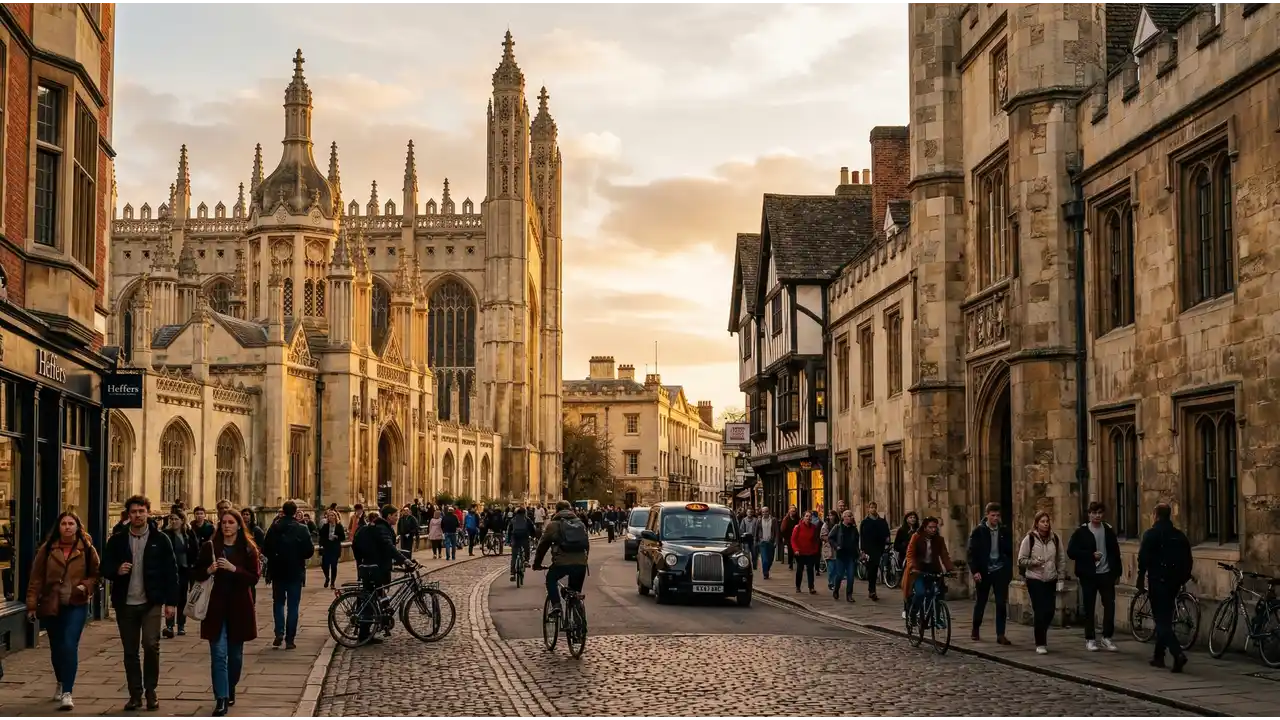
Luton is a working-class town in Bedfordshire, about 30 miles north of London. It's historically an industrial center, home to Vauxhall Motors and a major airport that drives both employment and transience. The population is diverse, with significant communities from South Asia, Eastern Europe, and West Africa. Daily life centers on practical necessities: commuting to London or local employment, shopping at chain supermarkets and discount retailers, using the train or local buses. Weather is typical English Midlands, cool and wet. The town itself is functional rather than scenic, with most leisure activity either local (shopping centers, pubs) or accessed via the frequent train service to London.
💡 Local Insights
Luton · 2026
Luton's cost of living sits well below London but slightly above the English Midlands average, making it attractive to London commuters seeking cheaper housing. The moderate lifestyle figure of $2,650/month reflects this position. Housing dominates the budget at $1,332/month. One-bedroom apartments in the town center rent for $750 to $950/month, while the same outside the center runs $650 to $850/month. Family homes with three bedrooms average $1,200 to $1,500/month. Grocery costs of $425/month assume supermarket shopping at Tesco, Sainsbury's, or Asda; prices are lowest at budget chains like Aldi and Lidl. Eating out is cheap (pub meals $8 to $12, curry house mains $10 to $14), but many residents cook at home. Transport adds $80 to $110/month via local buses or rail passes. Council tax (local property tax) runs $150 to $220/month depending on band. Expats often find Luton less charming than Bath or Cambridge but far more affordable. Rental demand fluctuates with airport and logistics employment, so timing matters.
Frequently Asked Questions
How much does it cost to live in Luton per month?
A moderate lifestyle costs $2,650/month. This breaks down as: housing $1,332, groceries $425, utilities and council tax $270, transport $100, entertainment and dining $230, and miscellaneous expenses $293. This assumes renting a one-bedroom apartment, shopping at standard supermarkets, and using public transport. A budget lifestyle runs $1,590/month (smaller place, minimal eating out, fewer activities), while a comfortable lifestyle with more space, dining out regularly, and discretionary spending reaches $4,108/month.
What is the average rent in Luton?
Average monthly rent is $1,332. One-bedroom apartments in central Luton rent for $800 to $950/month, while the same outside the center costs $700 to $850/month. Two-bedroom properties run $1,100 to $1,400/month in the center, $900 to $1,150/month outside. Three-bedroom family homes average $1,200 to $1,550/month. Prices vary by neighborhood; areas near the station or shopping centers command premiums. Furnished rentals cost 10 to 15 percent more. Most landlords require references and proof of income. The rental market is active year-round due to airport employment and London commuters.
Is Luton cheap to live in for expats?
Yes, Luton is significantly cheaper than London (roughly 35 to 40 percent less for housing) and competitive with other Midlands towns. For expats relocating from South Asia or Eastern Europe, costs feel high; for those from London or Southern England, Luton is affordable. The trade-off is less cultural amenities and a less polished environment. Transport to London is reliable and frequent (30 to 40 minutes by train, $60 to $80/month for a pass), making it viable for expats working in the capital. The diverse population means decent ethnic food shopping and some international communities, but expect fewer expat social networks than in larger cities.
How much does food cost per month in Luton?
Groceries cost approximately $425/month for one person on a moderate diet. Weekly shopping at Tesco or Sainsbury's runs $80 to $95; budget chains like Aldi or Lidl run $60 to $75 per week. Specific costs: milk $1.20 per liter, bread $1.50 to $2, chicken breast $7 to $9/kg, eggs $3 per dozen, rice $0.80/kg. Eating out is cheaper: curry house mains $10 to $14, fish and chips $8 to $10, pub meals $12 to $15. Most residents cook at home to manage costs; takeaway adds $100 to $150/month if done weekly.
What salary do you need to live comfortably in Luton?
A comfortable lifestyle costs $4,108/month, suggesting a gross annual salary of roughly $50,000 to $55,000 (accounting for UK income tax and national insurance). This allows for a larger or well-located apartment ($1,600 to $1,800/month), regular dining out, more entertainment spending, and financial buffer. For a couple, a combined household income of $65,000 to $70,000 provides comfort without stress. Lower salaries can work on the moderate budget of $2,650/month. Note that UK employers typically pay monthly, and mortgages (if buying) require 5 to 20 percent down and proof of stable income over 2 to 3 years.
How does the cost of living in Luton compare to other places?
Luton's moderate lifestyle costs $2,650 per month, making it genuinely affordable compared to major UK cities. Housing in Luton runs $1,332 per month at the moderate tier, which is substantially below nearby options. Bristol, a peer city culturally and economically, costs $2,750 monthly with housing at $1,574. London is in a different category entirely, with a moderate lifestyle at $4,525 and housing alone at $3,027. If you're willing to move further north, Dundee costs $1,825 monthly with housing at $727, but that involves significant relocation. For most people considering southern England, Luton offers real savings against London without the trade-offs of moving to Scotland or Wales.
Yes, but with careful management. The budget tier of $1,590/month requires a studio or small one-bedroom in the outer areas ($700 to $800/month rent), groceries from discount supermarkets ($350 to $380/month), minimal dining out, and using buses or walking. Council tax, utilities, and internet consume $220 to $250/month. Transport is limited to local buses ($40 to $50/month). Entertainment spending drops to under $50/month. This budget works for single people or couples with low expenses, but leaves little room for emergencies or unexpected costs. Most residents at this level rely on steady employment and avoid car ownership. It is sustainable but not comfortable.