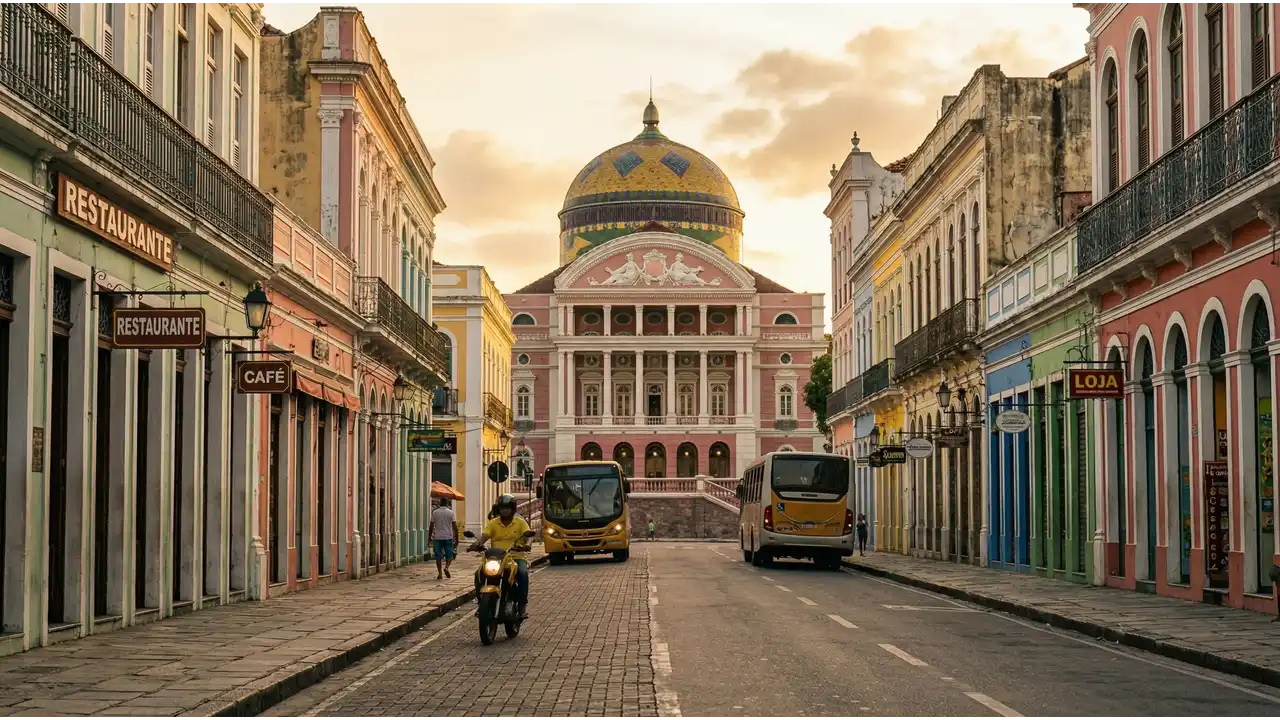
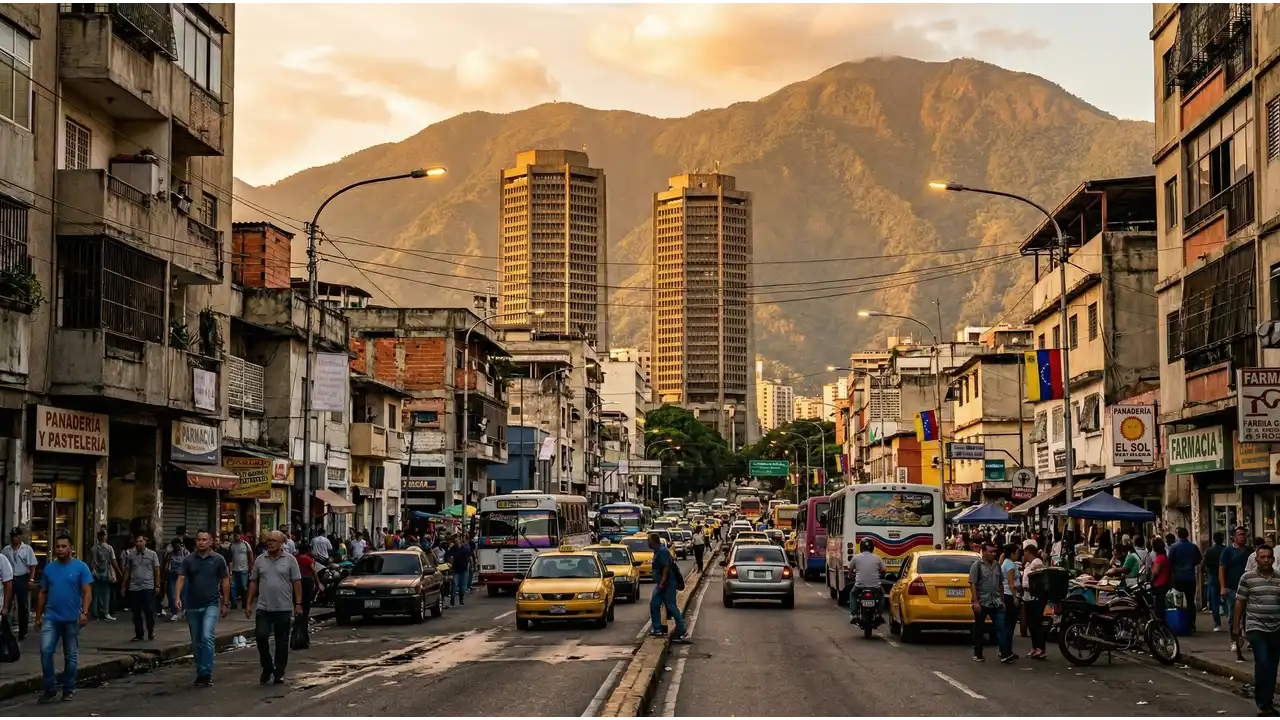
Manaus sits at the confluence of the Negro and Amazon rivers in Brazil's interior, serving as the regional hub for northern Amazonia. The city has roughly 1.4 million residents, a mix of Brazilians, indigenous peoples, and smaller expat communities. Daily life revolves around humid tropical weather, bustling river commerce, and a economy tied to Amazon industries and trade. Streets downtown are crowded and dense. Outside the center, residential neighborhoods spread into less developed areas. The city operates on river time, with boat transport common alongside cars. Power and water infrastructure can be unreliable in some zones.
💡 Local Insights
Manaus · 2026
Manaus is genuinely affordable compared to São Paulo or Rio de Janeiro, but costs are higher than smaller Brazilian cities due to geographic isolation and import dependence. Housing averages $352 per month, though this varies sharply by neighborhood. Central areas like Adrianópolis and Ponta Negra command $400-500 for a one-bedroom apartment, while peripheral neighborhoods drop to $250-350. Everything except locally grown produce must be shipped or flown in, making groceries run $193 monthly for basics. Imported goods cost significantly more. Public transport costs about $1.50 per ride. Expats often pay more for housing by default, especially in foreigner-friendly zones. Local supermarkets are cheaper than tourist-oriented shops. Healthcare, utilities, and dining out are moderate. Power bills can spike during dry season.
Frequently Asked Questions
How much does it cost to live in Manaus per month?
A moderate lifestyle costs $950 per month. Housing runs $352, groceries $193, and the remainder covers transport, utilities, dining out, and entertainment. A budget tier at $570 per month is possible by cutting meals out and living in peripheral neighborhoods. A comfortable lifestyle costs $1,473 per month with more housing choices, frequent dining, and leisure spending. These figures reflect typical local costs, though expats often spend more on imported goods and Western-style services.
What is the average rent in Manaus?
Housing averages $352 per month. One-bedroom apartments in central neighborhoods like Adrianópolis and Ponta Negra range $400-500. Quieter residential areas like Planalto offer one-bedrooms for $300-400. Studio apartments and shared rooms drop to $250-300. Houses with yards rent for $500-800 depending on size and location. Prices are higher in areas popular with expats and lower in peripheral zones. Landlords may ask for deposits and proof of income. Import tariffs on building materials keep prices elevated.
Is Manaus cheap to live in for expats?
Manaus is cheaper than Brazilian coastal cities, but not the cheapest option in Brazil. Rent is reasonable if you avoid foreigner premium neighborhoods. Groceries and transport are economical. The real cost factor is imported goods. Western products, electronics, and specialty foods carry heavy markups due to Manaus's geographic isolation. Expats often spend more than locals on these items. Healthcare is mixed: public options exist but private clinics are better resourced. If you adapt to local eating and living patterns, costs stay moderate. If you replicate a Western lifestyle, expenses rise noticeably.
How much does food cost per month in Manaus?
Groceries average $193 per month. Local markets sell fresh fruit, cassava, and fish cheaply. Bananas cost under $1 per pound, rice is $0.50-0.70 per pound, and fresh fish runs $2-4 per pound at riverside stalls. Imported goods cost more: cheese is $4-6 per unit, packaged snacks $2-4. Eating out ranges from $3-5 for a local lunch plate to $12-20 at tourist restaurants. Açaí bowls run $3-4 at street vendors. Rice, beans, eggs, and local produce keep grocery bills low if you shop at open-air markets instead of supermarkets.
What salary do you need to live comfortably in Manaus?
A comfortable lifestyle costs $1,473 per month. This allows $450-550 for housing in desirable neighborhoods, regular dining out, entertainment, and travel within Brazil. For someone earning in US dollars or euros, this is modest. If earning Brazilian real locally, you need a solid job: teachers at international schools, remote tech workers, or business owners. Most Brazilians in Manaus earn far less and live on tighter budgets. Expats often rely on remote work income or pensions. Budget $1,200-1,500 monthly for a one-person comfortable lifestyle with some leisure spending.
How does the cost of living in Manaus compare to other places?
Manaus runs $950 per month for a moderate lifestyle, with housing at $352 per month. That puts it roughly in line with Cartagena, which costs $1,025 monthly. Both are considerably more expensive than Pune at $650 per month, where housing alone runs $271. São Paulo, Brazil's largest city, is significantly dearer at $1,325 per month with housing at $660.
Within the Amazon region, Manaus remains one of the pricier options. Your money stretches further in smaller Brazilian towns, though less so than in South Asian cities of comparable infrastructure. The housing portion of your budget here is relatively reasonable compared to major metros, meaning daily expenses (food, transport, utilities) account for a larger share of total costs than elsewhere in the region.
Yes, but with significant constraints. $570 per month requires living in peripheral neighborhoods, renting a studio or shared room for $250-300, and sticking to local groceries and street food. Public transport and utilities eat another $80-100. This leaves $140-150 for meals, hygiene, and emergency costs. You cannot eat out regularly or buy imported goods. Internet and phone service cost $15-25 monthly. Utilities fluctuate with season. This budget works for long-term digital nomads accustomed to minimal spending or locals with family support. Unexpected costs like dental work or travel make it tight.