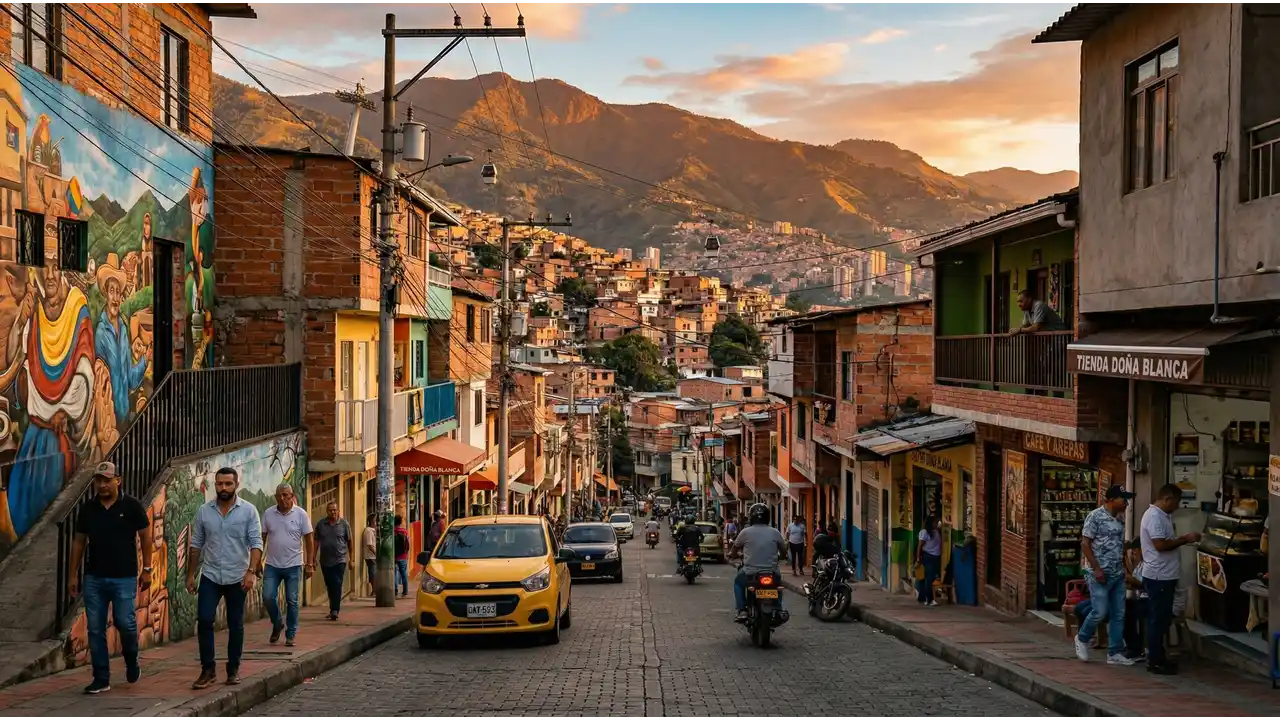
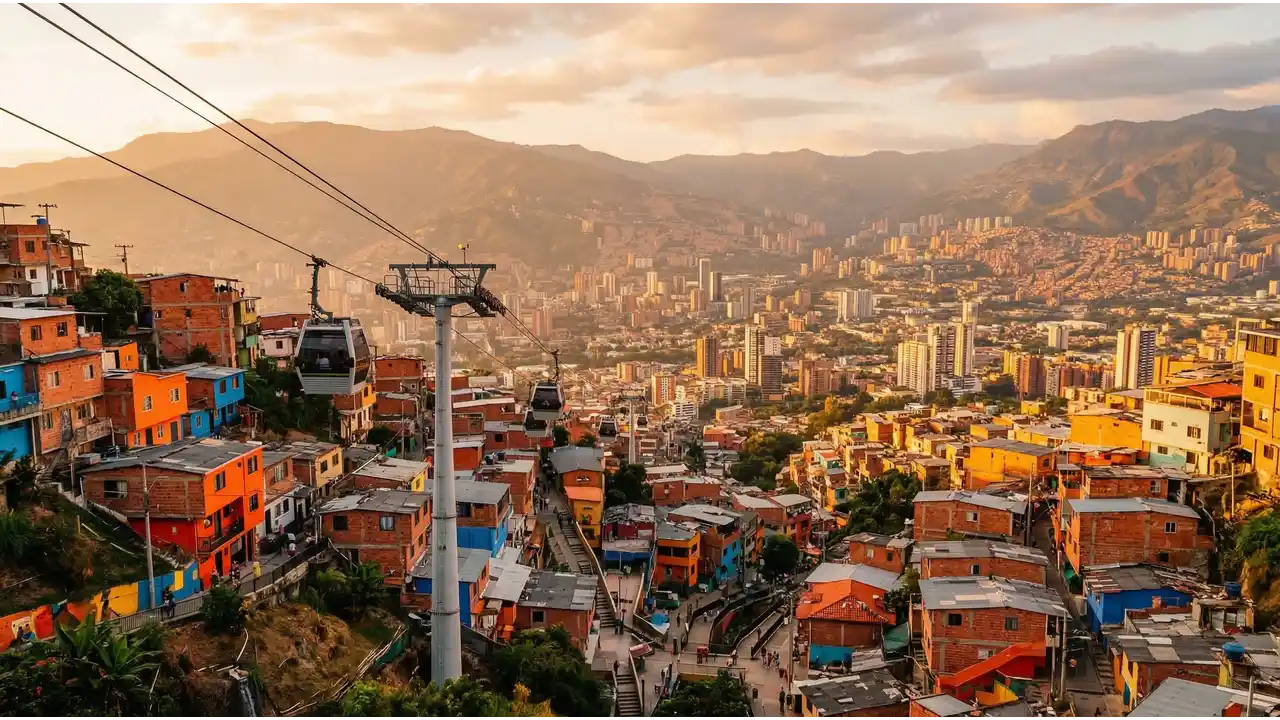
Medellin is Colombia's second-largest city, sitting in a high valley with spring-like weather year-round (60-80 degrees Fahrenheit). It has shifted from a dangerous reputation to a working city with young professionals, expat communities, and students. Daily life involves navigating metro and cable car systems, eating at local markets and restaurants, and dealing with congested traffic during rush hours. The Comuna 13 neighborhood and surrounding hillsides sprawl upward. Most residents speak Spanish; English is not widespread outside tourist zones and corporate offices.
💡 Local Insights
Medellin · 2026
Medellin's cost structure reflects Colombia's broader economy, but local prices vary by neighborhood. The $447/month housing figure is Colombia's national baseline, which Medellin inherits. In practice, expats in popular neighborhoods like Laureles, Sabaneta, or El Poblado typically pay $600-$1,200 for a one-bedroom apartment, depending on size and location. Shared housing or apartments in less central areas run lower. Groceries at local markets cost around $170/month for a single person eating basic Colombian staples and some imported items. Street food, fresh fruit, and local produce are cheap; imported goods (cheese, cereals, protein) cost more. Metro fares are around $0.90 per trip. Transport, healthcare, and utilities are the other major line items. Expats often spend more on restaurants, imported groceries, and private healthcare than locals. Avoiding tourist-zone pricing and shopping at Carrefour or D1 (budget supermarkets) helps control costs.
Frequently Asked Questions
How much does it cost to live in Medellin per month?
A moderate lifestyle in Medellin costs $975/month. This covers housing, food (groceries), utilities, transport, and entertainment. A budget lifestyle runs $585/month, cutting back on dining out and entertainment. A comfortable lifestyle with more restaurant meals, private healthcare, and discretionary spending reaches $1,511/month. These figures assume a single person or couple splitting costs. Actual spending depends heavily on neighborhood choice and how much you use restaurants versus groceries.
What is the average rent in Medellin?
The housing figure shown here ($447/month) is Colombia's national average that Medellin inherits as a country-level data point, not a separate measurement of Medellin's actual rental market. In reality, Medellin rents vary sharply by neighborhood. El Poblado (downtown tourist and expat hub) and Laureles (popular with young professionals) see one-bedroom apartments at $700-$1,200. Sabaneta and Envigado, south of the city, run $600-$900. Outer neighborhoods cost $400-$600. Shared apartments or rooms are cheaper. Local Colombians often pay less than expats for the same space due to language and negotiation differences.
Is Medellin cheap to live in for expats?
Yes, relative to North America or Western Europe, but less so than five years ago. An expat with $1,500/month can live comfortably if they avoid high-end restaurants and tourist pricing. Food, transport, and local entertainment are inexpensive. Healthcare is affordable if you use public or mid-tier private clinics. Expats often spend more than locals because they eat out frequently, buy imported goods, and use private services. Compared to Mexico City or Buenos Aires, Medellin remains cheaper for housing and dining. Compared to Central American capitals like San José, costs are similar.
How much does food cost per month in Medellin?
Groceries run around $170/month for a single person eating locally (rice, beans, plantains, eggs, chicken, local fruit). A carton of eggs costs $2-$3, chicken breast $5-$7 per pound, bananas $0.50 per pound. Imported items (cheese, oats, peanut butter) cost two to three times more. Eating at a local comedor (worker's lunch spot) runs $2-$4. Mid-range restaurants charge $8-$15 for a meal. Supermarket chains like Carrefour and D1 offer middle-ground pricing. Markets like Central de Abastos are cheapest but require Spanish and haggling skills.
What salary do you need to live comfortably in Medellin?
A comfortable lifestyle costs $1,511/month, which assumes regular restaurant meals, private healthcare access, entertainment, and occasional travel within Colombia. If you earn $1,500-$2,000/month (as a remote worker or local professional), you can live well. The local minimum wage is around $320/month, so expat salaries are generally far higher. For true comfort with a nice apartment, frequent dining out, and an active social life, $2,000/month removes financial stress. Local professionals earning $800-$1,200/month live modestly by global standards but adequately by Colombian norms.
How does the cost of living in Medellin compare to other places?
Medellin is moderately priced for Latin America. A moderate lifestyle costs $975 per month, with housing running $447 monthly. This puts it slightly above Curitiba, where a moderate lifestyle is $925 with housing at $377 per month. Managua is cheaper overall at $825 monthly, though still offers similar urban amenities. By contrast, Caracas runs considerably higher at $1,300 for a moderate lifestyle and $541 for housing. Within Colombia, Medellin's costs reflect its status as the country's second-largest city with strong infrastructure and services. Your money stretches further here than in major North American or European cities, but daily expenses (food, transport, utilities) tend to be higher than in smaller regional towns. Budget expectations should account for neighborhood choice, as costs vary noticeably between central commercial areas and outer residential zones.
Yes, but it requires discipline and local knowledge. $585/month is Medellin's budget tier and means shared housing or a small room in an outer neighborhood ($200-$250/month), groceries from markets and budget supermarkets ($150-$170/month), and minimal dining out. You cut entertainment, avoid taxis, use the metro exclusively, and skip private healthcare. Utilities, phone, and internet eat another $50-$80. This budget works for students, digital nomads living very frugally, or expats supplementing with other resources. Most people at this level live alongside locals, speak Spanish, and avoid expat-focused areas.