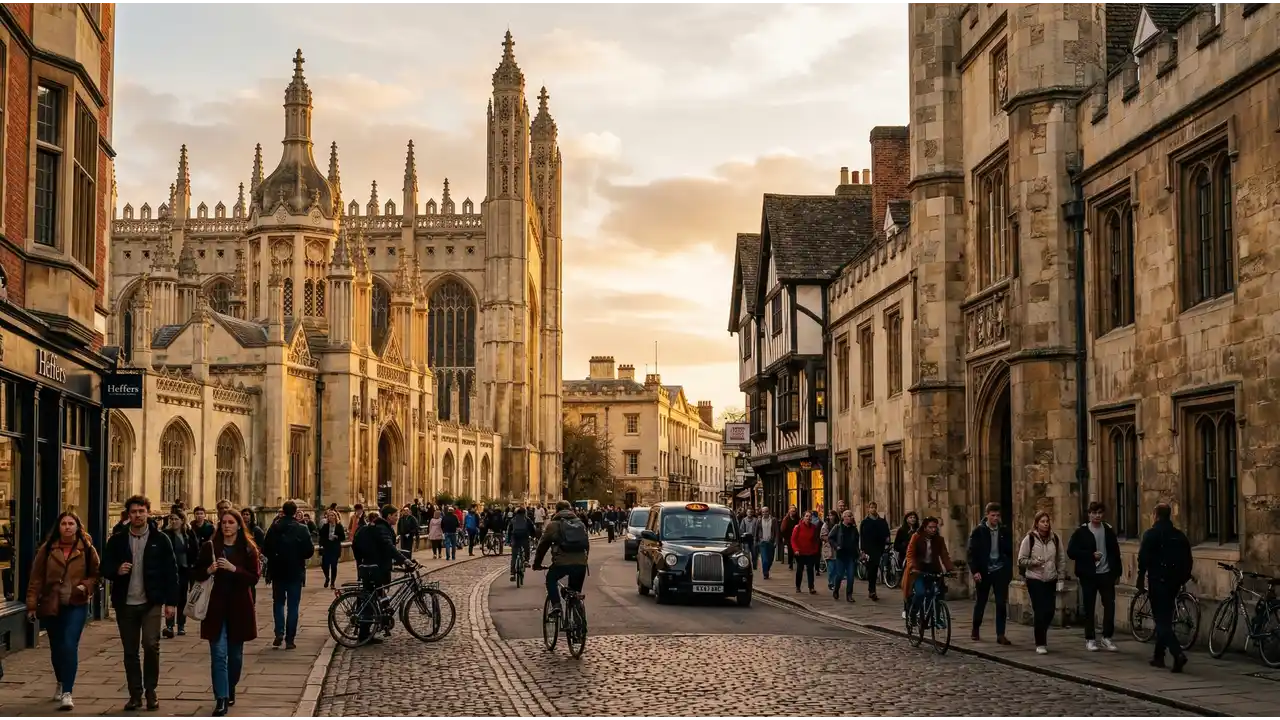
Norwich is a medium-sized city in Norfolk, East England, with a population of around 140,000. It sits at the intersection of history and practicality: a Norman cathedral dominates the skyline, independent shops line the medieval streets, and a genuine local culture persists without the transience of London. The weather is cool and damp year-round. University of East Anglia brings younger residents and academic energy. Daily life revolves around the city center, the River Wensum, and the surrounding Norfolk countryside. Most residents get by without a car, using buses or cycling. It is not a tourist trap despite its historical character.
💡 Local Insights
Norwich · 2026
Norwich costs roughly 30-35% less than London across all categories, and about 15-20% less than UK regional centers like Manchester or Leeds. Housing anchors the budget at $999/month. A one-bedroom flat in the city center runs $850-$1,150, with shared housing closer to $600-$800. Outer neighborhoods like Eaton or Thorpe St. Andrew drop 10-15% lower. Groceries at $428/month assumes supermarket shopping at Tesco, Sainsbury's, or Asda, which dominate here. A pint of local beer costs $4-$5.50 in pubs; eating out at mid-range restaurants averages $12-$16 per person. Bus passes (unlimited monthly) cost around $50. Council tax (municipal property tax) adds $100-$150/month depending on band. Council tax and utilities together often equal or exceed the groceries budget. Expats find Norwich significantly cheaper than London or the Southeast, but not dramatically cheaper than comparable regional UK cities. Local wages lag London by 20-30%, which moderates the cost advantage for relocating professionals.
Frequently Asked Questions
How much does it cost to live in Norwich per month?
A moderate lifestyle costs around $2,325/month. This breaks down to $999/month for housing (rent or mortgage equivalent), $428/month for groceries, $50-$60 for public transport, and the remainder split between utilities, council tax, dining out, entertainment, and personal goods. The budget tier runs $1,395/month; a comfortable lifestyle with more dining out, hobbies, and discretionary spending costs $3,604/month. These figures are consistent with UK regional data and reflect actual housing and food prices in Norwich.
What is the average rent in Norwich?
Average housing costs stand at $999/month. A one-bedroom flat in the city center typically rents for $850-$1,150/month, while shared housing or studio flats run $600-$800. Properties in Eaton, West End, or Thorpe St. Andrew (10-15 minutes from the center) rent 10-15% lower, around $750-$950/month. Terraced houses for a family run $1,200-$1,600/month. Council housing waiting lists are long. Furnished rentals cost more; unfurnished is standard. Most leases are 6 or 12 months. Deposit equals five weeks' rent under current UK law. Agency fees have been banned, but landlord credit checks (typically $25-$50) remain common.
Is Norwich cheap to live in for expats?
Yes, relative to London or the Southeast, but context matters. Expats from London save 30-35% on rent and living costs overall. Compared to European capitals (Berlin, Prague), Norwich is slightly more expensive on housing but cheaper on food and transport. For North American relocators used to major US cities, Norwich feels noticeably less expensive on rent and dining out but potentially more so on utilities and council tax. Expats with UK salaries find it comfortable. Those relying on international income or remote work should confirm their currency position before committing. NHS healthcare (free) is a major advantage versus private systems.
How much does food cost per month in Norwich?
Groceries average $428/month for one person on a moderate diet. A typical weekly shop at Tesco or Sainsbury's runs $90-$110: bread ($1.20), milk ($1.10/liter), eggs ($2.20/dozen), chicken ($8-$10/kg), rice ($0.80/kg), seasonal vegetables ($2-$4 each). Eating out costs more: fish and chips $8-$10, curry or pizza $12-$14, coffee $2.50. Supermarket meal deals (sandwich, snack, drink) are $4-$5. Markets at Norwich Market offer competitive produce prices, especially on Saturdays. Chain restaurants and ethnic food (Indian, Thai, Chinese) on Prince of Wales Road are cheaper than city-center chains.
What salary do you need to live comfortably in Norwich?
A comfortable lifestyle costs $3,604/month, which typically requires a gross annual salary around $50,000-$55,000. After UK income tax and National Insurance, this leaves roughly $2,950-$3,200/month take-home. People earning $40,000-$45,000 annually can live moderately ($2,325/month) with careful budgeting. Those on $30,000-$35,000 manage on the budget tier ($1,395/month) but with cuts to dining out, hobbies, and travel. Norwich has no extreme wealth requirement; most residents earn between $30,000-$50,000. Self-employed or freelance workers with volatile income should budget conservatively and maintain a 3-month emergency fund given the council tax and utility commitments.
How does the cost of living in Norwich compare to other places?
Norwich sits in the middle of the UK regional cost-of-living spectrum. A moderate lifestyle here costs $2,325 per month, with housing at $999 per month.
Leeds, a peer city of similar size and role, runs $2,225 monthly overall with housing at $1,090, making it slightly cheaper on balance despite higher rents. Dundee is noticeably more affordable at $1,825 monthly with housing at $727, reflecting Scotland's generally lower costs. By contrast, Bristol is considerably dearer at $2,750 monthly, with housing alone at $1,574.
Norwich's real advantage lies between these poles. You'll pay less than Bristol for comparable living standards, but spend more than Dundee. Against Leeds, you're trading marginally higher overall costs for lower housing expenses, which matters significantly if you're renting.
Yes, though it requires discipline. This budget tier covers rent ($750-$850 for a one-bed or shared housing), groceries ($350-$380), utilities and council tax ($180-$200), transport ($40-$50), and leaves $40-$100 for phone, Internet, clothes, and social activity. Dining out happens rarely; takeaway is occasional ($1-$2 per week). No discretionary spending on hobbies, streaming services, or travel beyond bus fare. This budget works for students, early-career workers, or those in shared housing. It requires buying own-brand groceries, meal planning, using free entertainment (parks, museums on free days), and cycling instead of taxis. It is sustainable long-term but leaves no buffer for emergencies. A small emergency fund is critical.