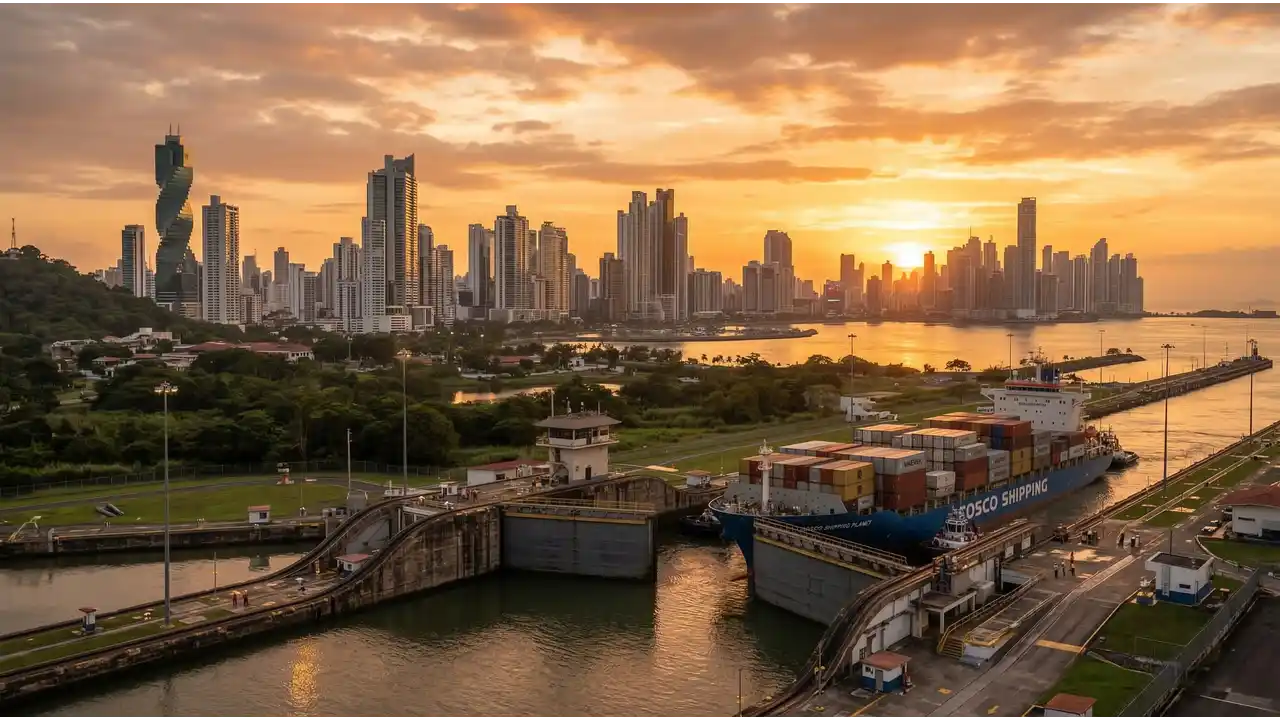
Panama City is Panama's capital and largest urban center, home to around 880,000 people in the city proper. It sits on the Pacific coast at the entrance to the Panama Canal, making it a major commercial and financial hub. The city has a mix of high-rise development, older colonial neighborhoods (Casco Viejo), and sprawling residential zones. Climate is tropical year-round, hot and humid with a rainy season from May through December. Daily life revolves around banking, trade, tourism, and services. Traffic congestion is common during rush hours. Residents range from wealthy Panamanian business owners to middle-class families to expats drawn by work in finance or remote income. Spanish is the primary language; English is widely spoken in business and expat areas.
💡 Local Insights
Panama City · 2026
Panama City's cost of living reflects its role as a regional financial center and dollarized economy (uses US dollars). Housing dominates the budget at $1,144/month and varies sharply by neighborhood and distance from the city center. Modern apartments in high-rise developments (Punta Pacifica, Costa del Este) command higher rents than older residential areas or suburbs. Grocery costs run $260/month for a moderate diet of local and imported goods. Local staples like plantains, rice, and chicken are cheap; imported items carry a markup. Eating out ranges from $3-5 for a local meal to $12-20 at mid-range restaurants. Public transport is inexpensive (buses cost under $1 per ride), though many expats use taxis or ride-sharing. Local workers pay less for services than expats often assume; knowing Spanish and using local vendors helps. Utilities add roughly $80-120/month. Internet is reliable and costs $30-50/month.
Frequently Asked Questions
How much does it cost to live in Panama City per month?
A moderate lifestyle in Panama City costs around $1,950/month. This breaks down to $1,144 for housing (rent for a one-bedroom apartment in a decent neighborhood), $260 for groceries, and the remainder for utilities ($80-120), transport ($30-50 if using public buses), dining out, entertainment, and miscellaneous costs. A tighter budget of $1,170/month is possible by living in outer neighborhoods, cooking at home, and using public transport exclusively. For a comfortable lifestyle with more dining out and flexibility, expect $3,023/month.
What is the average rent in Panama City?
Average rent aligns with $1,144/month for a one-bedroom apartment in a reasonable neighborhood. In established expat and business areas like Punta Pacifica or Costa del Este, rents range $1,200-1,800/month for comparable units. In older residential zones (Bella Vista, El Cangrejo), you'll find one-bedroom apartments for $900-1,200/month. Outer neighborhoods and suburbs drop to $700-950/month. Two-bedroom apartments typically run $1,400-1,700/month in central locations. Furnished vs. unfurnished affects price; furnished units cost 15-25% more. Many landlords ask for deposits equal to one or two months' rent. Short-term rentals are available through Airbnb and local agencies but carry a premium.
Is Panama City cheap to live in for expats?
Panama City is moderately priced for Latin America but not cheap compared to most Central American countries. It is cheaper than most major US or European cities, but pricier than Honduras or Nicaragua. Housing and local services are less expensive than Miami, Mexico City, or Costa Rica's Central Valley. The cost advantage depends on your reference point and lifestyle. Expats earning remote USD income often find good value. Those relying on local salaries may struggle. Import taxes make some goods (electronics, vehicles) expensive. Dining out and entertainment for expats cost more than for locals due to separate pricing at tourist venues. The dollarized economy removes currency fluctuation risk but also means prices track US inflation.
How much does food cost per month in Panama City?
Groceries average $260/month for a moderate diet of local produce, rice, beans, chicken, and some imported goods. Local markets (fruit and vegetable markets, butchers) offer the cheapest prices: plantains and yams at $0.30-0.50/lb, chicken at $2-3/lb, rice at $0.50-0.70/lb. Supermarkets like El Rey or Carrefour are more expensive but offer imported items. Eating out costs $3-5 for a local lunch plate (rice, beans, chicken, salad), $8-12 at casual mid-range restaurants, and $15-30+ at international venues. A coffee runs $1-2. Imported goods and wine carry significant markups due to tariffs. Eating strictly local food keeps costs down; importing dietary preferences (organic, gluten-free, specialty items) raises the monthly total.
What salary do you need to live comfortably in Panama City?
A comfortable lifestyle costs around $3,023/month. This allows for a pleasant one-bedroom apartment $1,200-1,400/month, regular dining out, occasional travel, gym membership, entertainment, and the ability to save. In USD terms, a monthly net income of $3,200-3,500 provides comfortable cushion and discretionary spending. For a couple or family, add $800-1,200/month per additional person. Remote workers with US salaries find $3,000-3,500/month very comfortable. Local professionals earning in Panamanian balboa (1:1 peg to USD) at $2,000-2,500/month can live well but with less discretionary room. Expat retirees on $2,500-3,000/month can manage a modest comfortable life if disciplined. Higher comfort (frequent travel, private schools, premium housing) requires $4,000+/month.
How does the cost of living in Panama City compare to other places?
Panama City's moderate lifestyle costs $1,950 a month, with housing at $1,144 a month. This positions it competitively in Latin America. São Paulo is notably cheaper at $1,325 a month overall, though housing there runs $660 a month. Cancún sits at a similar price point, with a moderate lifestyle at $1,800 a month and housing at $912 a month, making it a close peer. If you're considering a move from a major developed city, Melbourne is considerably more expensive at $2,725 a month. Panama City's costs reflect its status as a regional financial hub with modern infrastructure and expat services, but it remains more affordable than wealthy Australian cities while staying pricier than some other major Latin American centers. Your actual expenses will depend heavily on neighborhood choice and lifestyle preferences.
Yes, but with significant constraints. A budget of $1,170/month requires careful choices: rent an apartment $650-850/month in outer neighborhoods (San Miguelito, Tocumen, or further suburbs) or a room in a shared house; spend $200-250/month on groceries by shopping local markets and cooking almost all meals; use public buses exclusively ($25-35/month); skip dining out, entertainment, and travel. This leaves minimal cushion for emergencies, utilities, or phone. It is doable for disciplined people who speak Spanish, know local areas, and have stable internet (for remote work). Most people on this budget rent rooms rather than full apartments. Medical emergencies, visa renewals, or visa runs drain reserves quickly. This tier works for digital nomads or very frugal expats but offers little comfort or flexibility. A slight increase to $1,400/month adds significantly more livability.