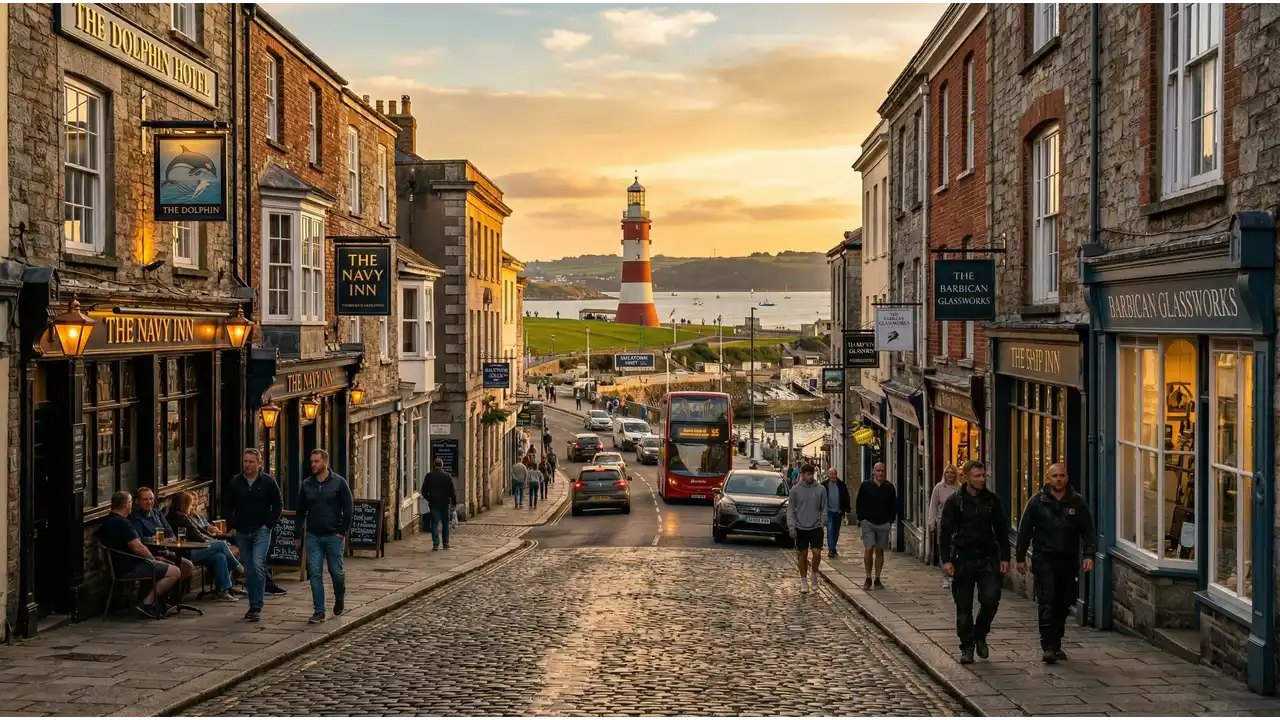
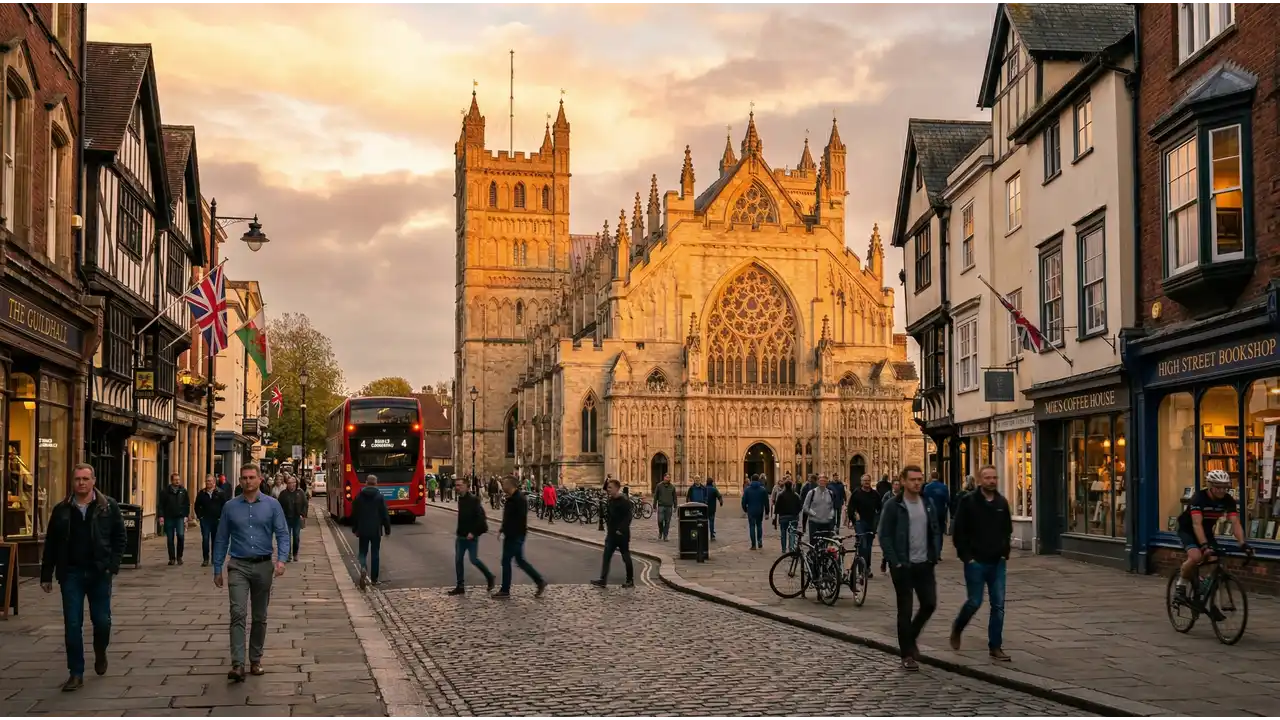
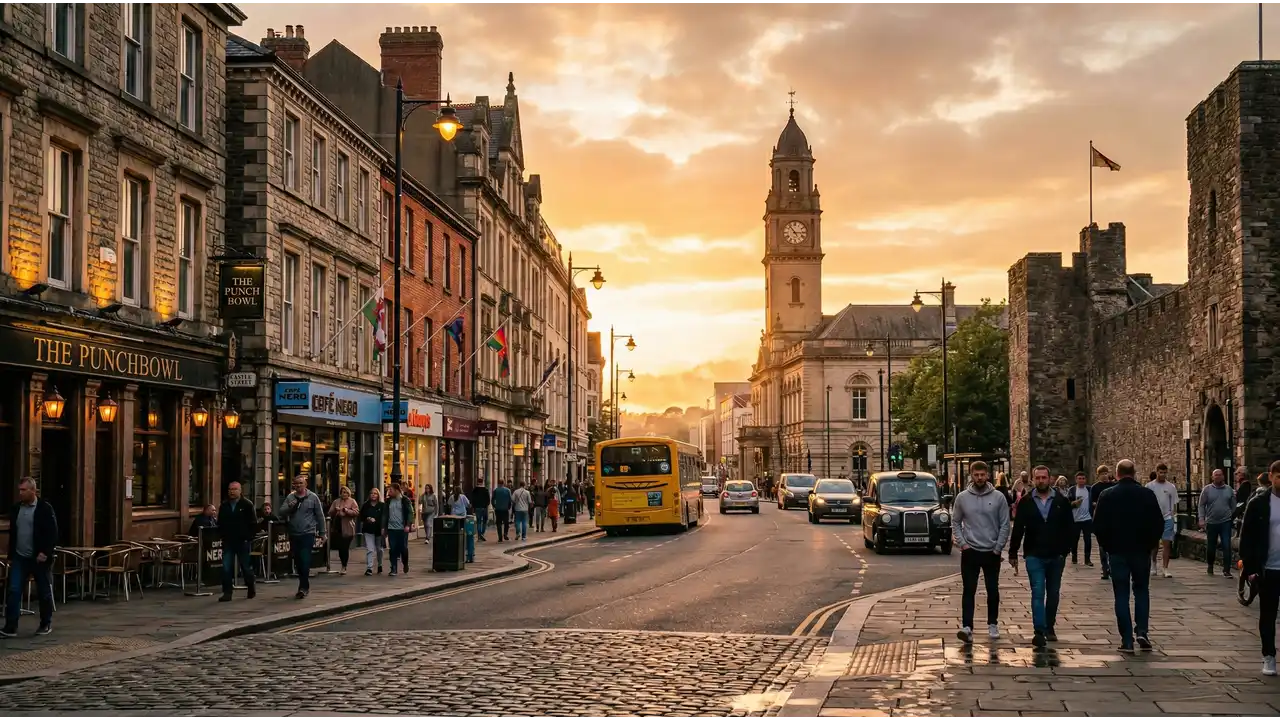
Plymouth is a port city in Devon on England's south coast, home to about 260,000 people. The waterfront remains its defining feature: the Hoe (open grassland where Sir Francis Drake played bowls before fighting the Spanish Armada) overlooks the Sound where the Tamar and Plym rivers meet the sea. The city center rebuilt after World War II bombing, so architecture is mixed. The university brings younger residents. The climate is mild and wet. Most people drive or use the local bus network. The city has less density and profile than Bristol or Exeter, which means cheaper housing but also fewer cultural events and fewer job options outside maritime, defense, healthcare, and education sectors.
💡 Local Insights
Plymouth · 2026
Plymouth costs substantially less than London or the southeast, but more than rural Devon. Housing runs around $1,090/month and drives the overall budget. One-bedroom flats in the city center rent for $700 to $900/month; suburbs like Plympton and Southway pull costs down to $600 to $750/month. Shared housing drops below $500/month. Purchase prices average $325,000 to $380,000 for a two-bedroom semi. Groceries cost about $423/month for one person, consistent with UK national averages. A pint of milk costs roughly $0.70, a loaf of bread $1.20 to $1.60. Eating out is cheaper than London: a restaurant meal runs $15 to $25. Bus passes cost about $60 monthly; many residents drive. Council tax varies by band but averages $120 to $180/month. Expats often overestimate costs because they compare to central London or assume coastal locations are expensive. Plymouth's economy is real but narrow, so job hunting for non-local sectors requires flexibility or remote work.
Frequently Asked Questions
How much does it cost to live in Plymouth per month?
A moderate lifestyle costs around $2,400/month for one person. This breaks down roughly as: housing $1,090/month, groceries $423/month, transport $60 to $80/month, utilities $100 to $130/month, and discretionary spending (dining, entertainment, personal care) $600 to $700/month. The budget tier of $1,440/month is possible if you rent a shared house or studio on the outskirts and cook almost entirely at home. The comfortable tier of $3,720/month allows for a one-bedroom flat in a central neighborhood, regular dining out, and more generous personal spending.
What is the average rent in Plymouth?
Average rent is $1,090/month. A one-bedroom flat in the city center or waterfront areas (Barbican, Hoe side) typically costs $750 to $900/month. Suburbs like Plympton, Southway, and Crownhill run $600 to $750/month for similar space. Shared flats with one or two other tenants drop to $400 to $550/month per person. Two-bedroom houses rent for $1,100 to $1,400/month across the city. Furnished rentals cost 5 to 10 percent more than unfurnished. Most landlords require a deposit equal to five weeks' rent and ask for references. Student housing near the university is competitive and often cheaper per person in shared arrangements.
Is Plymouth cheap to live in for expats?
Yes, compared to London or the southeast, or to equivalent coastal cities in continental Europe. Rent and food are genuine savings if you come from a major metro. However, employment outside marine, defense, and public sector work is limited, so many remote-working expats choose Plymouth for lifestyle over local jobs. Visa-sponsored roles exist in healthcare and education but are competitive. The expat community is smaller than in Bristol or Bath, which means less social infrastructure specifically for newcomers. Travel to London by train takes 4 to 5 hours, so it's not a commutable alternative. Expats report the real cost is lower than expected, but the job market reality matters more than rent savings if you don't have remote income.
How much does food cost per month in Plymouth?
Groceries for one person cost approximately $423/month. A typical weekly shop at Tesco or Sainsbury's runs $30 to $35 for basics: eggs ($1.60/dozen), chicken breast ($6 to $8/pound), ground beef ($5 to $7/pound), pasta ($0.50/box), rice ($0.70/pound), frozen vegetables ($1.20 to $1.80 per bag), and seasonal produce. Organic items add 20 to 30 percent. Budget supermarkets like Aldi and Lidl are slightly cheaper. Eating out costs $15 to $22 for a casual dinner (fish and chips, Indian, pub meal). Coffee shops charge $2.50 to $3.50 per drink. Central Plymouth has fewer high-end restaurants than Bristol, so dining is generally more affordable.
What salary do you need to live comfortably in Plymouth?
A comfortable lifestyle costs $3,720/month, so an annual salary of around $45,000 to $48,000 supports one person. For couples, $55,000 to $60,000 combined gives breathing room. This assumes you're not saving aggressively; add 15 to 20 percent if you want to build savings. Entry-level roles in healthcare, education, and defense contractors pay $28,000 to $35,000. Mid-career positions in marine engineering, project management, and public sector roles pay $40,000 to $55,000. Remote work often pays London or national rates regardless of location, which puts you well above comfortable levels. Mortgage approval typically requires proof of income; most lenders want a salary of $60,000 plus for a $300,000 property.
How does the cost of living in Plymouth compare to other places?
Plymouth sits in the middle of the UK cost spectrum. A moderate lifestyle runs $2,400 per month, with housing at $1,090 per month. This puts it slightly higher than Belfast, where a moderate lifestyle costs $2,225 monthly and housing also runs $1,090 per month. Dundee is noticeably cheaper, at $1,825 for a moderate lifestyle and $727 for housing. If you're comparing to larger cities, Edinburgh is considerably dearer at $2,775 monthly overall and $1,574 for housing alone. Plymouth's pricing reflects its status as a regional center with reasonable access to amenities and transport, but without the premium you'd pay in Scotland's capital. For most people relocating within the UK, Plymouth offers reasonable value while maintaining good connectivity and services.
Yes, but with real constraints. You need shared housing or a studio on the outskirts ($400 to $600/month). Groceries must stay under $300/month, meaning minimal eating out and no organic or convenience foods. Transport by bus ($60/month) is essential; owning a car adds $200 to $300/month. Utilities and phone are tight at $80/month combined. That leaves almost nothing for unexpected costs, clothes, or entertainment. This budget works for students, very careful budgeters, or people with free or heavily subsidized housing (employer, family). It's technically livable but leaves no margin for error. Most people living this way have secondary income, are saving elsewhere, or are passing through rather than settling long-term.