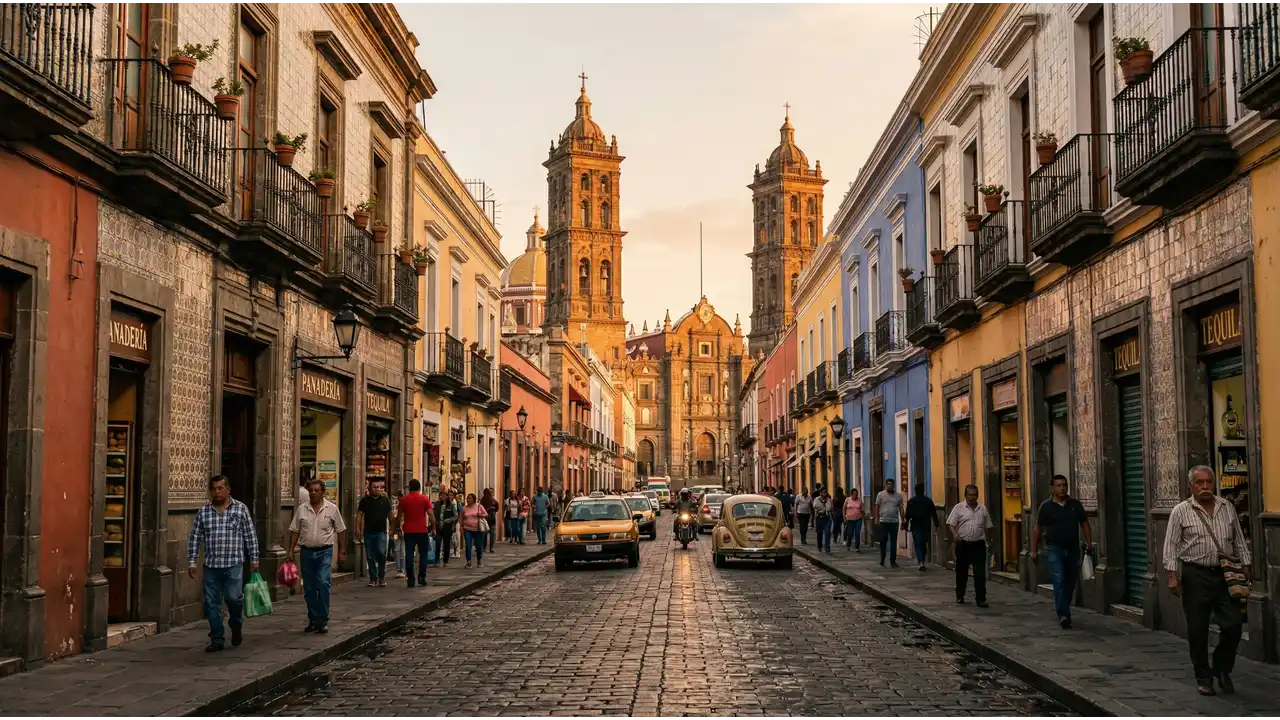
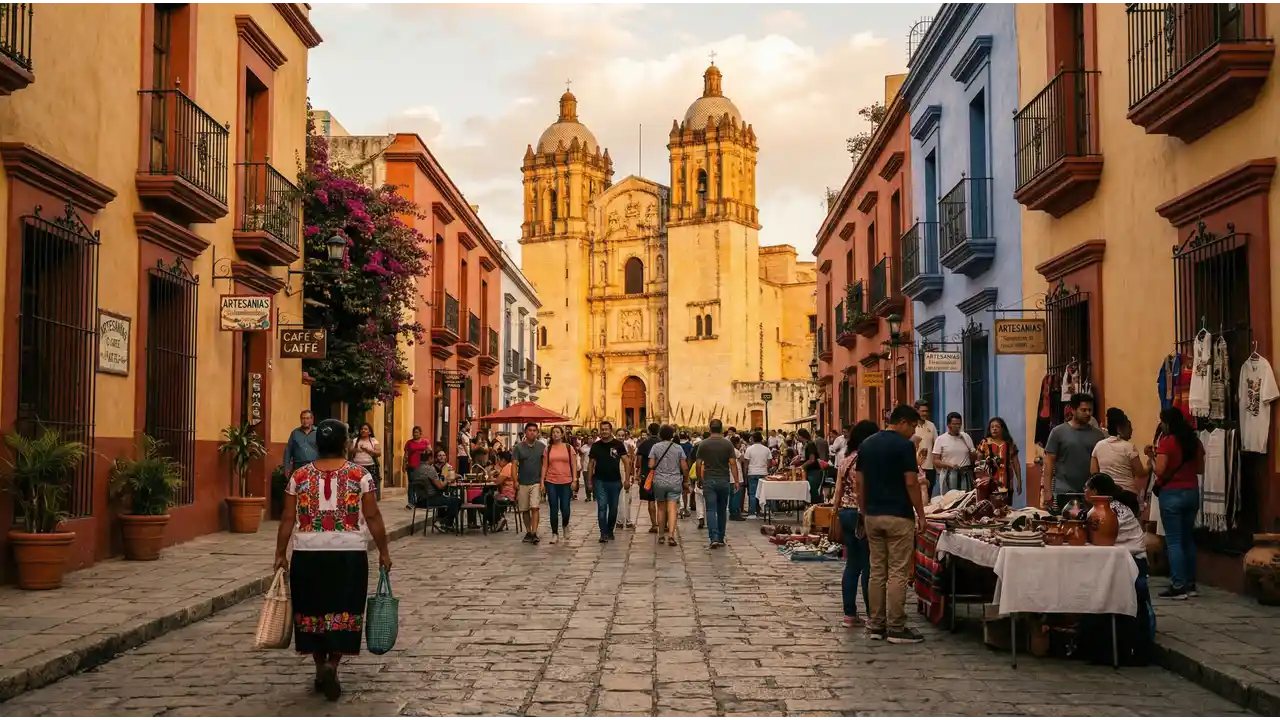
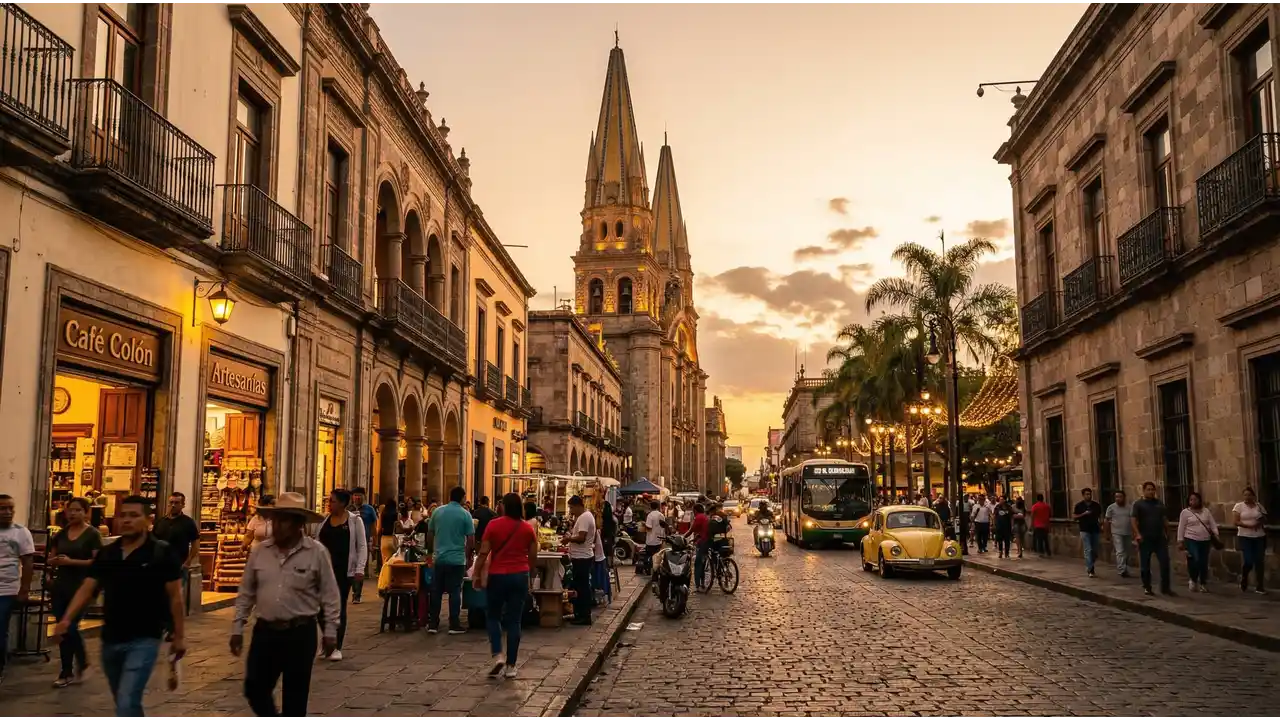
Puebla is a city of roughly 1.3 million people centered on a well-preserved colonial core, about 80 miles southeast of Mexico City. The historic center, with its 16th-century cathedral and blue-and-yellow tile facades, remains the social and commercial heart. Daily life involves navigating a mix of modern shopping districts, traditional markets, and narrow colonial streets. The climate is mild year-round (55-75 degrees Fahrenheit), though December through February can be chilly at night. Most residents are Mexican; expat communities exist but are smaller than in Mexico City or beachside towns. Public transport relies on buses and minivans called combis. The pace is noticeably slower than the capital, with a strong local food culture centered on mole, chile-based dishes, and regional specialties.
💡 Local Insights
Puebla · 2026
Puebla costs roughly 30-35 percent less than Mexico City for comparable housing and food, making it genuinely affordable without feeling like a bargain basement choice. Housing at $693/month covers a one-bedroom apartment in neighborhoods like Xanenetla, San Felipe Hueyotlipan, or the quieter fringes of the historic center, or a shared two-bedroom closer to downtown. New construction and expat-focused rental platforms push prices higher, sometimes $850-1,100/month for modern units. Older colonial properties are often cheaper but may lack heating or modern utilities. Groceries run $285/month if you shop at markets like Central de Abastos (massive, overwhelmingly local) rather than supermarket chains. Chicken, beans, tortillas, and seasonal produce are genuinely cheap; imported goods cost significantly more. Public transport costs roughly $0.50-0.80 per ride, making a monthly pass feasible at $15-20. Restaurants catering to locals charge $2-4 for lunch; expat-oriented cafes charge $6-10. The key cost driver is housing quality and location, not scarcity. A real gap exists between what expats often spend (seeking modern amenities) and what locals spend, so comparison shopping by neighborhood and property age matters.
Frequently Asked Questions
How much does it cost to live in Puebla per month?
A moderate lifestyle costs around $1,575/month. That breaks down to approximately $693/month for housing (one-bedroom apartment), $285/month for groceries, $50-80 for utilities and internet, $20-30 for transport, and $400-500 for dining out, entertainment, and personal expenses. A tighter budget of $945/month is possible if you share housing, cook mostly at home, and use public transport exclusively. A comfortable lifestyle with more dining variety, a newer apartment, and occasional travel runs closer to $2,441/month.
What is the average rent in Puebla?
Average rent is around $693/month for a one-bedroom apartment in accessible neighborhoods. In areas like Xanenetla, San Felipe Hueyotlipan, or Jalatlaco, you can find unfurnished one-bedroom units in the $600-750 range. Closer to the historic center or in newer developments, expect $800-1,000/month. Shared housing or studio apartments run $400-550/month. Colonial properties in the historic zone often cost less ($500-700) but may lack modern conveniences like heating or air conditioning. Prices vary sharply by condition and amenities; a property with recent renovations commands 40-50 percent more than older stock.
Is Puebla cheap to live in for expats?
Yes, substantially cheaper than most North American or Western European cities, and noticeably cheaper than Mexico City. Rent and groceries are well below what expats typically spend in major U.S. cities. However, the real affordability depends on your expectations. If you're comfortable with older colonial housing, local restaurants, and public transport, costs are low. If you prioritize new construction, imported foods, and frequent international flights, you'll spend more. Many expats report covering comfortable living costs on $2,000-2,500/month here, whereas equivalent comfort in the U.S. would cost $3,500-5,000.
How much does food cost per month in Puebla?
Groceries average $285/month if you shop at local markets and cook at home. That includes chicken ($3-4/pound), beans ($0.80/pound), fresh produce (tomatoes, peppers, squash $0.50-1.50 each), eggs ($2.50/dozen), and staples like rice and tortillas. Supermarket shopping costs 30-40 percent more. Eating out varies widely: a comida corrida (set lunch) at a local comedore runs $2.50-4; tacos from a street vendor $0.80-1.50 each; coffee at a local cafe $1-1.50. Expat-oriented restaurants charge $8-15 per entree. Mole, the regional specialty, is typically homemade or bought pre-made from vendors for $5-8/portion.
What salary do you need to live comfortably in Puebla?
A comfortable lifestyle runs approximately $2,441/month. This covers a modern one-bedroom apartment ($800-900), regular restaurant dining, utilities with air conditioning, reliable internet, gym membership, and occasional travel or entertainment. That salary needs to be stable; remote work in USD is common among expats. In Mexican pesos, this translates to roughly $40,000-45,000/month (exchange rates vary). Many expats with pensions or remote income of $2,200-2,800/month live comfortably and save regularly. Local Mexican salaries are significantly lower, averaging $800-1,200/month, so cost of living is calibrated to local income, not expat expectations.
How does the cost of living in Puebla compare to other places?
Puebla sits at $1,575 per month for a moderate lifestyle, making it slightly pricier than Lima at $1,100 but cheaper than Panama City at $1,950. It's nearly on par with Montevideo at $1,525. Housing specifically runs $693 per month in Puebla, which is higher than Lima's $529 but well below Panama City's $1,144. Compared to Montevideo at $586, Puebla's housing costs are marginally steeper. The difference matters most if you're prioritizing rent: a few dollars per month adds up over a year or longer stay. Puebla offers good value for Mexico and compares favorably to many other Latin American cities, though it's not the cheapest option in the region if cost is your primary driver.
Yes, but with real constraints. A budget of $945/month means finding shared housing at $300-400, cooking almost entirely at home with $250-280/month on groceries, minimal dining out, and relying on public transport. Utilities, internet, and basic personal expenses consume the remainder. It's workable if you have stable housing and are comfortable with a modest lifestyle focused on local food and community activities rather than restaurants or entertainment. This budget is common for students and long-term residents on tight finances. Any medical expenses, visa renewal, or travel would require emergency savings. Many people do it, but there's no cushion for unexpected costs.