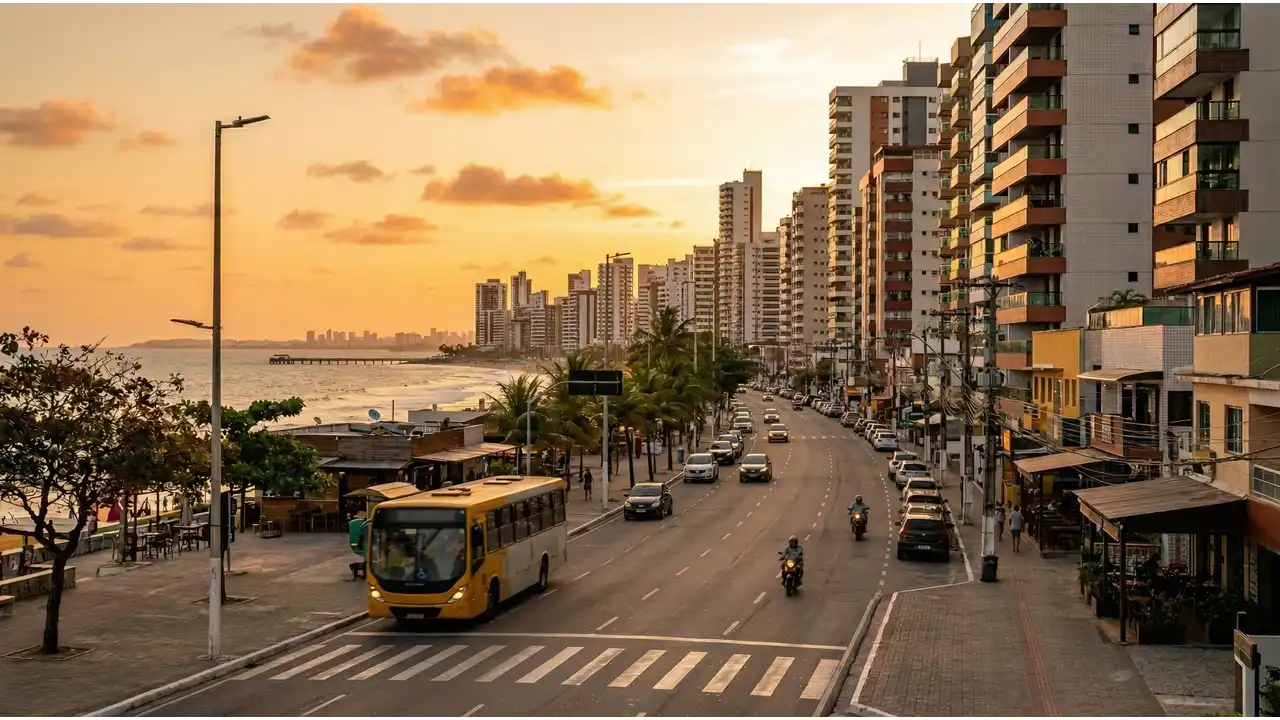
Recife is Brazil's fifth-largest city and capital of Pernambuco state, located on the northeastern coast. The city has a mixed colonial and modern character, with waterfronts, canals, and older neighborhoods alongside newer commercial districts. Daily life centers on beach culture, seafood markets, and a strong local music scene rooted in frevo and maracatu. The climate is tropical and warm year-round, with a rainy season from May through August. Population is roughly 1.6 million in the metropolitan area. Most residents are Brazilian, with growing expat communities concentrated in neighborhoods like Boa Viagem and Recife Antigo. Power outages and water shortages occur but are manageable.
💡 Local Insights
Recife · 2026
Recife is significantly cheaper than Rio or São Paulo, though prices have risen over the past five years. Housing costs around $406/month and varies sharply by neighborhood. Boa Viagem (beachfront, expat-friendly) rents run $450-$650 for a one-bedroom; Recife Antigo (historic center) and Casa Forte (residential, local middle-class area) offer one-bedrooms from $300-$400. Shared apartments are common and cheaper. Groceries average $167/month when shopping at local markets and supermarkets like Carrefour. A kilogram of chicken costs $4-$6; fresh fish is slightly cheaper. Eating local street food (tapioca, caldo de cana, acaraje) keeps food costs very low. Public transport is affordable (bus fare around $0.70), though reliability varies. Expats often pay 10-20 percent premiums on rent in tourist zones. Utilities add $30-$50 monthly. The cost gap between budget ($555/month) and comfortable ($1,434/month) largely reflects housing choice and dining out frequency.
Frequently Asked Questions
How much does it cost to live in Recife per month?
A moderate lifestyle in Recife costs around $925/month. Housing accounts for $406/month, groceries $167/month, and utilities, transport, and discretionary spending make up the remainder. A budget tier lifestyle runs $555/month (minimal housing, no dining out, basic transport). A comfortable tier with larger housing, regular restaurant meals, and entertainment costs $1,434/month. Actual spending depends heavily on neighborhood choice and whether you eat primarily at home or dine out frequently.
What is the average rent in Recife?
Average rent is approximately $406/month across the city. In Boa Viagem (beachfront, popular with expats), one-bedroom apartments rent for $450-$650/month. Recife Antigo (historic center) and Casa Forte (local middle-class residential area) offer one-bedrooms from $300-$400/month. Shared apartments cost $200-$300/month. Furnished short-term rentals run 20-30 percent higher. Neighborhoods farther from the center (Jaboatao, Paulista) offer cheaper options below $300/month. Utility deposits and agency fees (typically one month's rent) are common. Prices have risen steadily but remain well below major Brazilian cities.
Is Recife cheap to live in for expats?
Recife is very affordable compared to Rio, São Paulo, or any US or European city, but it is not the cheapest in Brazil. An expat on $1,200-$1,500/month can live comfortably with modest housing, regular dining out, and local transport. However, expat enclaves like Boa Viagem charge rental premiums. Long-term expats often move to less touristy neighborhoods to reduce costs. Recife offers better value than coastal resort towns but fewer expat services and infrastructure than São Paulo. Budget conscious expats find it reasonable; those wanting high-end services (private healthcare, international schools) will spend significantly more.
How much does food cost per month in Recife?
Groceries average $167/month when shopping at local markets and major supermarkets. Typical prices: chicken $4-$6 per kilogram, fresh fish $3-$5, rice $1.20 per kilogram, beans $1.50 per kilogram, bananas $0.60 per kilogram. Local street food (tapioca, acaraje, caldo de cana) costs $1-$3 per item. Eating out at casual local restaurants runs $5-$10 per meal; mid-range dining $12-$20. Imported goods and groceries in expat-oriented supermarkets cost 30-50 percent more. Shopping at neighborhood markets and feira (open-air markets) on weekends offers the lowest prices and is standard practice.
What salary do you need to live comfortably in Recife?
A comfortable lifestyle costs around $1,434/month. This covers a one-bedroom in a good neighborhood ($450-$550), regular dining out 3-4 times weekly ($250), reliable transport and occasional taxis ($80), utilities ($50), and entertainment and personal care ($100). For a couple or family, add 50-70 percent. Expats with health concerns should budget $200-$400/month for private healthcare. Many expats live well on $1,200-$1,300/month by choosing less touristy neighborhoods and cooking most meals. Remote workers earning $2,000+/month have substantial discretionary income.
How does the cost of living in Recife compare to other places?
Recife costs $925 per month for a moderate lifestyle, with housing running $406 per month. That puts it in the middle range for Latin America.
For direct comparison, Cali runs $975 monthly with housing at $451, making it slightly more expensive overall. Caracas is notably dearer at $1,300 per month, though that figure reflects the region's highest costs. On the other end, Algiers costs $675 monthly with housing at $201, though that's outside Latin America.
Recife's real advantage is housing affordability. At $406 for a moderate apartment, you're paying roughly 44 percent of your total budget there, compared to higher percentages in pricier cities. If you're stretching a tight budget in Latin America, Recife offers decent value, though you won't find it dramatically cheaper than neighboring options like Cali.
Yes, but with significant constraints. A $555/month budget requires renting a small shared apartment or room in a local (non-expat) neighborhood for $200-$250, buying groceries and cooking nearly all meals for $120-$140, and using only public transport ($25/month). Dining out, entertainment, and personal care are minimal. Healthcare, emergency repairs, and travel become stressful. This budget works for students, long-term residents with few expenses, or those supplementing local income. It is not comfortable and leaves no buffer. Realistically, $750-$850/month provides basic comfort with some flexibility for emergencies and occasional treats.