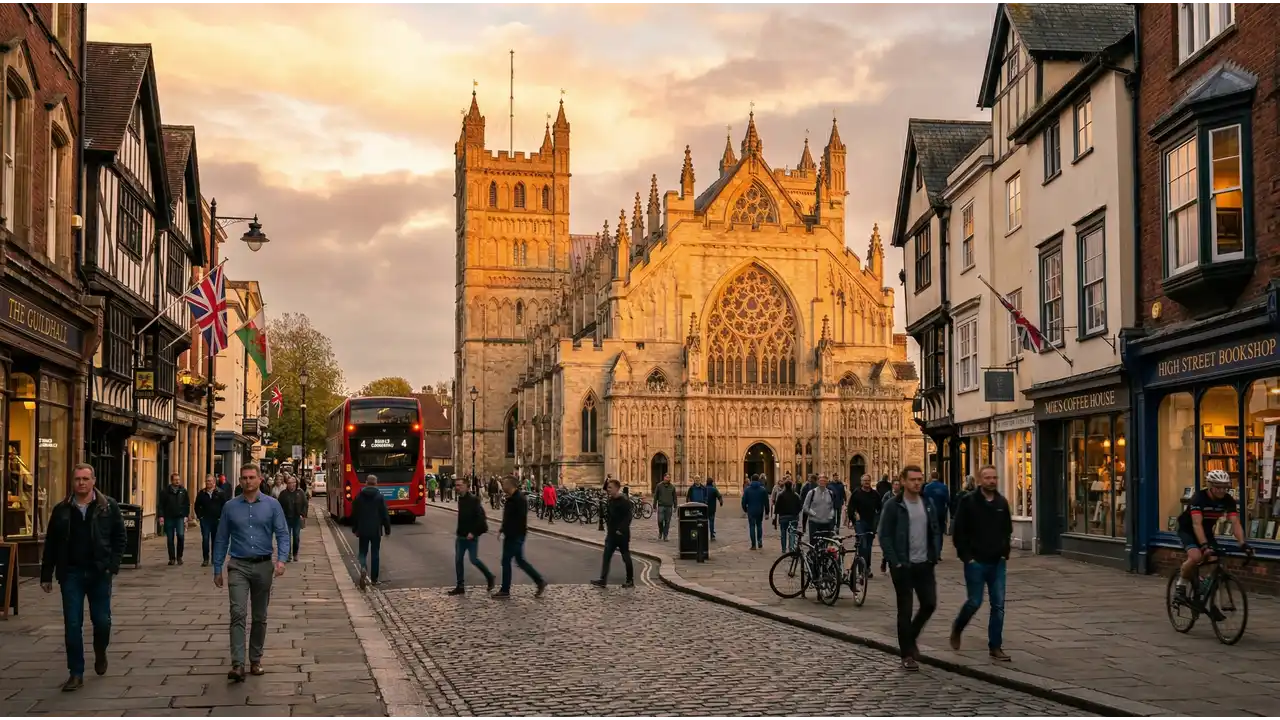
Swansea is a working port city on Wales's south coast with around 240,000 residents. It's industrial heritage coexists with a seafront and university campus. The climate is maritime and wet—expect rain most days. Daily life revolves around local employment (manufacturing, tourism, healthcare, education), shopping on Oxford Street and Swansea Market, and using buses for transport. Housing ranges from terraced streets in Uplands to newer builds near the bay. Most residents are Welsh or British; the expat population is small but growing, particularly around the university. The city center has been redeveloped in recent years but still feels distinctly local rather than cosmopolitan. Cost of living is substantially lower than Cardiff or London.
💡 Local Insights
Swansea · 2026
Swansea's affordability hinges on housing and labor market weakness. Rental properties average $969/month, with terraced houses around $850-$1,100 and modest flats $700-$900. Buying remains cheaper than renting on a per-square-foot basis. Groceries run $421/month for a single person (Tesco and Sainsbury's dominate). Eating out is cheap: fish and chips £5-8, pub meals £10-15. Transport is inexpensive. A monthly bus pass costs around £45 ($57). Car ownership is common because public transit is limited outside the city center. Fuel and insurance are standard UK rates. Utilities (gas, electricity, water) run $150-200/month for a small flat. Council tax varies by band but typically $100-150/month. Expats find no significant price premium compared to locals; haggling or tourist pricing is not a feature of Swansea shopping. The main cost driver is whether you need a car.
Frequently Asked Questions
How much does it cost to live in Swansea per month?
A moderate lifestyle costs around $2,275/month. This covers housing at $969/month, groceries at $421/month, utilities around $175/month, transport $60/month, and discretionary spending on dining, entertainment, and personal care. A tighter budget runs $1,365/month (minimal housing, no car, home cooking). A comfortable lifestyle with more spacious housing, regular dining out, and recreation costs $3,526/month. These figures assume a single person or dual-income household; costs scale with dependents.
What is the average rent in Swansea?
Average rent is $969/month. A one-bedroom flat in the city center or Uplands (popular with young professionals) runs $750-$900/month. Terraced houses outside the center, in areas like Morriston or Sketty, rent for $850-$1,100/month. Newer bay-front apartments command $1,000-$1,200/month. Sharing a house with others can drop rent to $500-$650/month per person. Deposits are typically 5 weeks' rent. Rents have risen slowly compared to UK averages; vacancy rates mean landlords compete on price.
Is Swansea cheap to live in for expats?
Yes, Swansea is inexpensive compared to London, Manchester, or Bristol, and comparable to other Welsh cities. Expats from London, Southeast England, or major European cities find significant relief. US expats accustomed to US city rents find it very cheap. However, it's not a bargain destination like Eastern Europe. Salaries are also lower, so real purchasing power depends on your income source. Expats working remotely on US or London salaries can live very comfortably. Those relying on local employment need to budget realistically around the figures above.
How much does food cost per month in Swansea?
Groceries average $421/month for a single person buying at Tesco, Sainsbury's, or Asda. Bread costs $0.80-$1.20, milk $0.90 per liter, eggs $1.50-$2 per dozen, chicken breast $4-$6 per pound, and rice $0.50 per pound. Eating out is cheap: fish and chips £5-8 ($6-10), chicken curry £7-9 ($9-11), pub meals £10-15 ($13-19). Weekly supermarket shopping for basics runs $70-100 ($88-$125). Alcohol is moderately priced; a pint of beer costs £4-5 ($5-6). Markets offer seasonal produce at lower prices than chains.
What salary do you need to live comfortably in Swansea?
A comfortable lifestyle costs $3,526/month, so an annual gross salary of around $42,300 ($3,526 x 12) supports one person comfortably. For a household, combined income of $50,000-$60,000 annually provides security. This assumes modest homeownership or a spacious rental, occasional dining out, hobbies, and a car. The median salary in Swansea is roughly $28,000-$32,000 annually, so comfortable living typically requires either dual income, remote work from outside, or financial support. For a budget lifestyle ($1,365/month), $16,400 annually suffices.
How does the cost of living in Swansea compare to other places?
Swansea at $2,275 per month for a moderate lifestyle sits squarely in the middle of UK regional costs. Nottingham runs $2,200, making it marginally cheaper overall, though Nottingham's housing costs $1,090 compared to Swansea's $969, so your rent savings depend on other expenses. Move north to Dundee and you'll spend notably less, at $1,825 monthly, with housing there at $727. The bigger difference appears when you compare to Bristol, where a moderate lifestyle costs $2,750. Bristol's housing alone runs $1,574, nearly two-thirds more than Swansea's. For most budgets, Swansea offers genuine affordability against larger UK cities while maintaining decent urban amenities. If you're coming from the south or from Bristol specifically, you'll notice the difference immediately.
Yes, but with tight constraints. Budget rent is $600-$700/month (house share or modest studio), groceries $300-$350/month (cooking at home, minimal eating out), utilities $130/month, transport $40/month (bus pass or walking), leaving $200 for council tax, phone, and emergencies. This works if you don't own a car, avoid leisure spending, and have stable housing. No buffer for medical expenses, travel, or repairs. A single unexpected cost (car repair, dental work) breaks the budget. It's feasible short-term for students or those with additional income, but not sustainable long-term for most people.