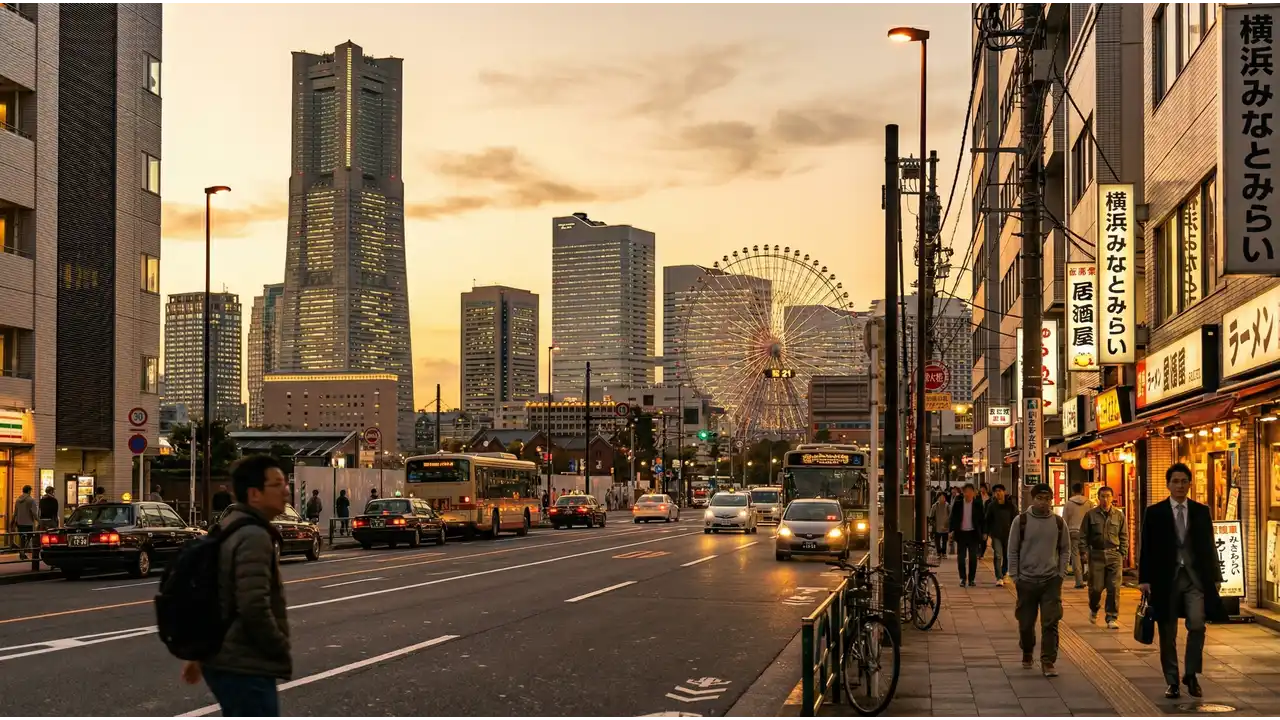
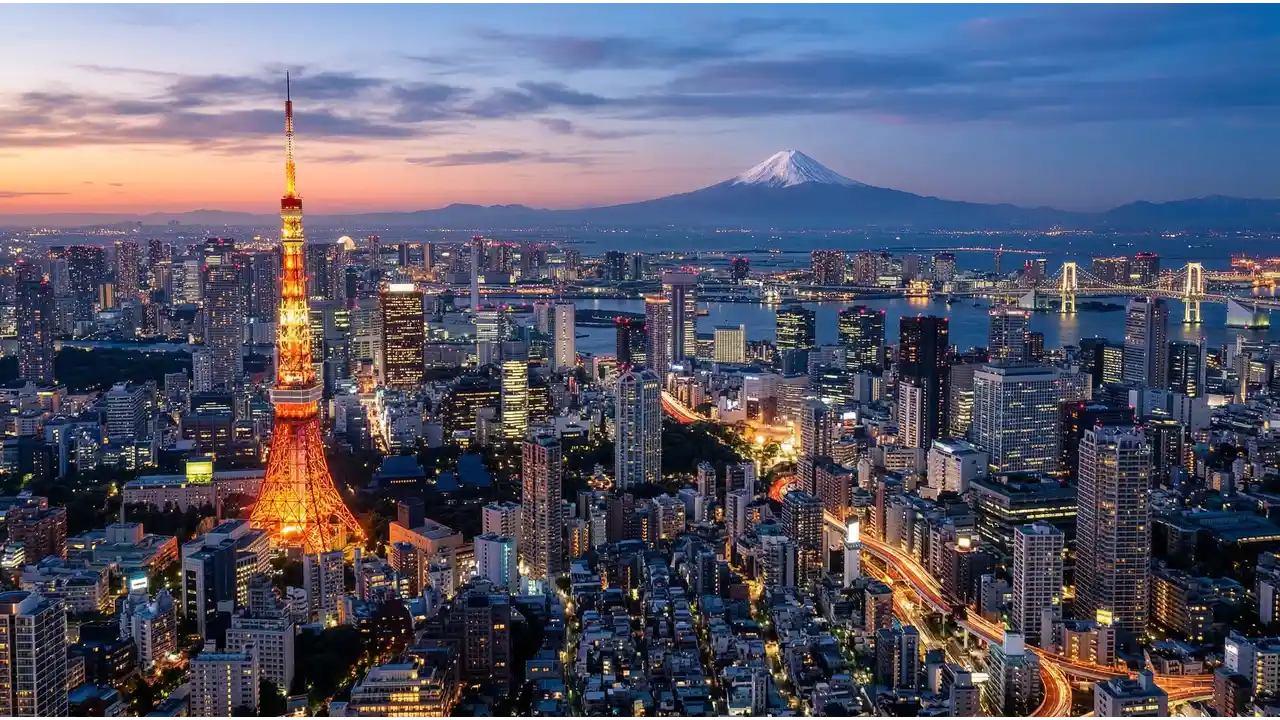
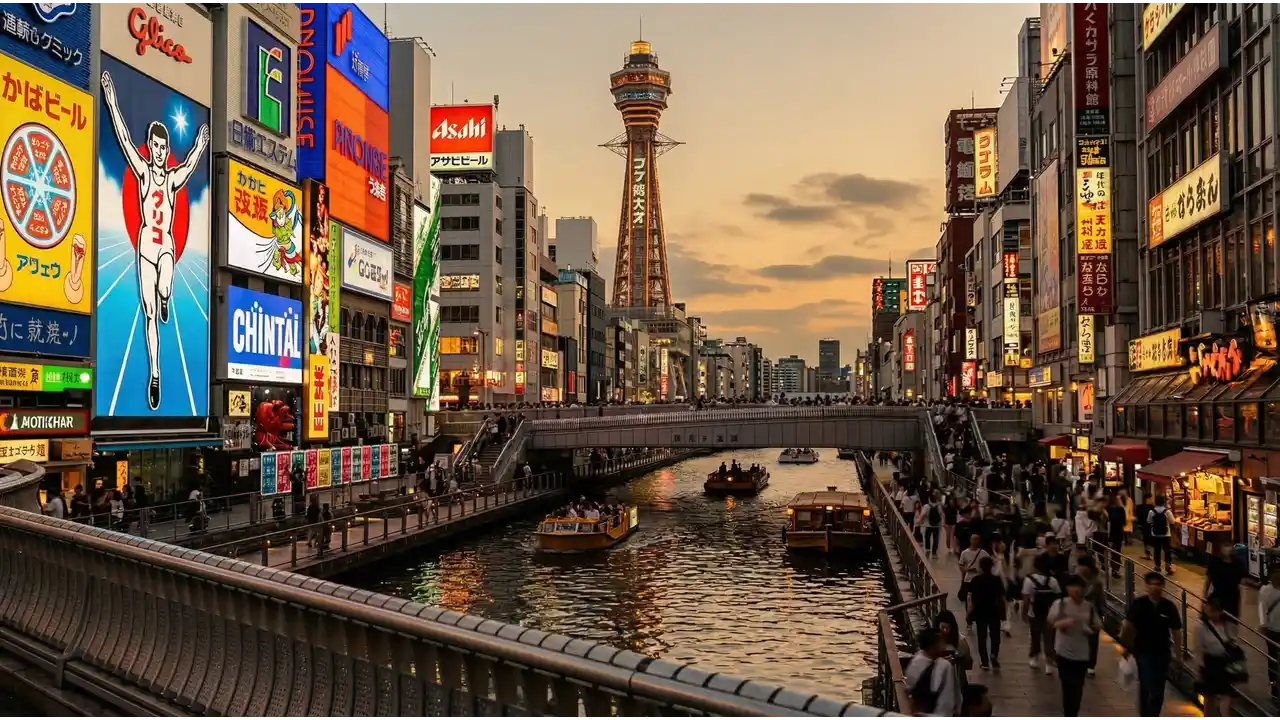
Yokohama is Japan's second-largest city, located 30 kilometers south of Tokyo on the Kanagawa coast. It functions as both a port city and a residential base for Tokyo commuters. The city has a mixed character: industrial waterfront areas around the port, modernist office parks, and residential neighborhoods with older wooden housing stock alongside newer apartments. Winters are mild by Japanese standards, summers humid and warm. The population is about 3.7 million. Daily life centers on compact living, dense public transit (trains and buses), small grocery stores, and restaurants ranging from chain ramen shops to high-end dining. Many residents commute to Tokyo for work, making Yokohama attractive as a lower-cost alternative to central Tokyo.
💡 Local Insights
Yokohama · 2026
Yokohama is materially cheaper than central Tokyo but not a budget destination. Housing costs vary sharply by proximity to stations and distance from the port. The $603/month figure shown is Japan's national average that Yokohama inherits; actual rent depends on neighborhood. Closer to major stations (Yokohama, Sakuragicho, Kannai) rents are higher; peripheral wards like Tsuzuki and Isogo offer older units at lower rates. Expat enclaves like Motomachi command premium prices. Groceries run $346/month for a moderate diet of mix of convenience stores, supermarkets, and markets. A convenience store coffee costs $2, a bowl of ramen $6-9, and a lunch set at a casual restaurant $8-12. Public transport (Yokohama Municipal Subway, commuter rail) is extensive and costs roughly $50-80/month for regular users. The Yokohama Foreign Residents Advisory Center can help non-Japanese speakers navigate housing, labor, and residency logistics.
Frequently Asked Questions
How much does it cost to live in Yokohama per month?
A moderate lifestyle in Yokohama costs around $1,675/month. This breaks down roughly as: housing $603, groceries $346, transport $60-80, utilities $80-100, and discretionary spending (dining out, entertainment, phone) $400-500. A budget tier lifestyle can run $1,005/month if you live in outer wards, cook most meals, and use public transit. A comfortable lifestyle with more flexibility on housing and dining out averages $2,596/month. These figures assume you are not supporting dependents or maintaining a car.
What is the average rent in Yokohama?
The $603/month housing figure shown is Japan's national average that Yokohama inherits as part of country-level data, not a separate measurement of Yokohama's rental market. In practice, Yokohama rents vary significantly. Near central stations and expat areas (Motomachi, Yamashita Park), a one-bedroom apartment rents for $900-1,400/month. In mid-distance wards like Kohoku or Tsuzuki, $600-850/month for a one-bedroom is more typical. Older buildings in outer areas can run $400-600/month. Shared housing or small studios are cheaper. The Suumo and Homes.co.jp listing sites are standard for searches. Most landlords require a guarantor or guarantor service (typically 5-10% of annual rent).
Is Yokohama cheap to live in for expats?
Yokohama is cheaper than central Tokyo but not cheap by global standards. At $1,675/month for a moderate lifestyle, it is more affordable than Singapore, Hong Kong, or central London, but comparable to or costlier than Bangkok, Chiang Mai, or Mexico City. For North American expats, housing is a major saving relative to San Francisco or Toronto, though food and transport feel expensive on smaller budgets. Japanese language ability matters: English-speaking enclaves pay premiums, while knowledge of Japanese neighborhoods unlocks lower-cost options. Yokohama's main advantage over Tokyo is lower rent; otherwise, daily costs are similar. Expat communities exist but are smaller than in Tokyo.
How much does food cost per month in Yokohama?
Groceries average $346/month for a moderate diet mixing convenience stores, supermarkets, and local markets. A typical weekly shop: rice $2, eggs $3, chicken breast $5, seasonal vegetables $8, fish $7, dairy $4, pantry staples $8. Dining out is affordable: ramen $6-9, tonkatsu (pork cutlet) set lunch $10-14, conveyor-belt sushi $2-4 per plate, bowl of gyudon (beef rice) $5-7. Convenience stores are ubiquitous for quick meals ($4-8). Imported Western groceries (cheese, bread, certain vegetables) cost 1.5 to 2 times local alternatives. Seasonal markets in wards like Kanagawa and Kohoku offer cheaper produce than central chains.
What salary do you need to live comfortably in Yokohama?
A comfortable lifestyle in Yokohama costs around $2,596/month. In annual terms, that is roughly $31,000/year. This budget allows for a modern one or two-bedroom apartment in a walkable neighborhood, regular dining out, hobbies, and travel within Japan. If you earn a salary typical for expat professionals in Japan (around $35,000-50,000/year after tax), a comfortable lifestyle is easily achievable. Many foreign professionals earn more and build savings. The moderate lifestyle figure of $1,675/month ($20,000/year) is feasible on lower incomes but requires discipline around housing and entertainment costs.
How does the cost of living in Yokohama compare to other places?
Yokohama sits in the middle tier of Asian cities. A moderate lifestyle runs $1,675 per month, with housing at $603 per month. You'll find it roughly comparable to Riyadh, where a moderate lifestyle costs $1,800 monthly and housing runs $976. Seoul is noticeably more expensive at $1,950 for a moderate lifestyle, with housing at $841 per month. If you're willing to compromise on amenities and neighborhood quality, Phnom Penh offers significantly lower costs at $1,150 per month overall and $525 for housing. Yokohama's advantage over Seoul comes partly from lower housing costs, though both are major metropolitan centers with strong transit and services. Compared to Southeast Asian alternatives like Phnom Penh, you're paying a premium for Japan's infrastructure, food safety standards, and proximity to Tokyo's job market.
Yes, but with significant constraints. The budget tier of $1,005/month works if you rent a small apartment or share housing in outer wards (Tsuzuki, Isogo, Kanagawa), cook almost all meals at home using cheap supermarket ingredients, rely on public transit, and forgo paid entertainment and dining out. Groceries might drop to $250/month (rice, eggs, cheap protein, seasonal vegetables). Rent could be $400-500/month in peripheral neighborhoods. Utilities and transport run $100-150/month combined. This leaves almost no buffer for unexpected costs, medical bills, or leisure. It is possible for single residents without dependents, but uncomfortable. Many budget travelers and long-term budget expats combine this with part-time work or teach English to supplement income.