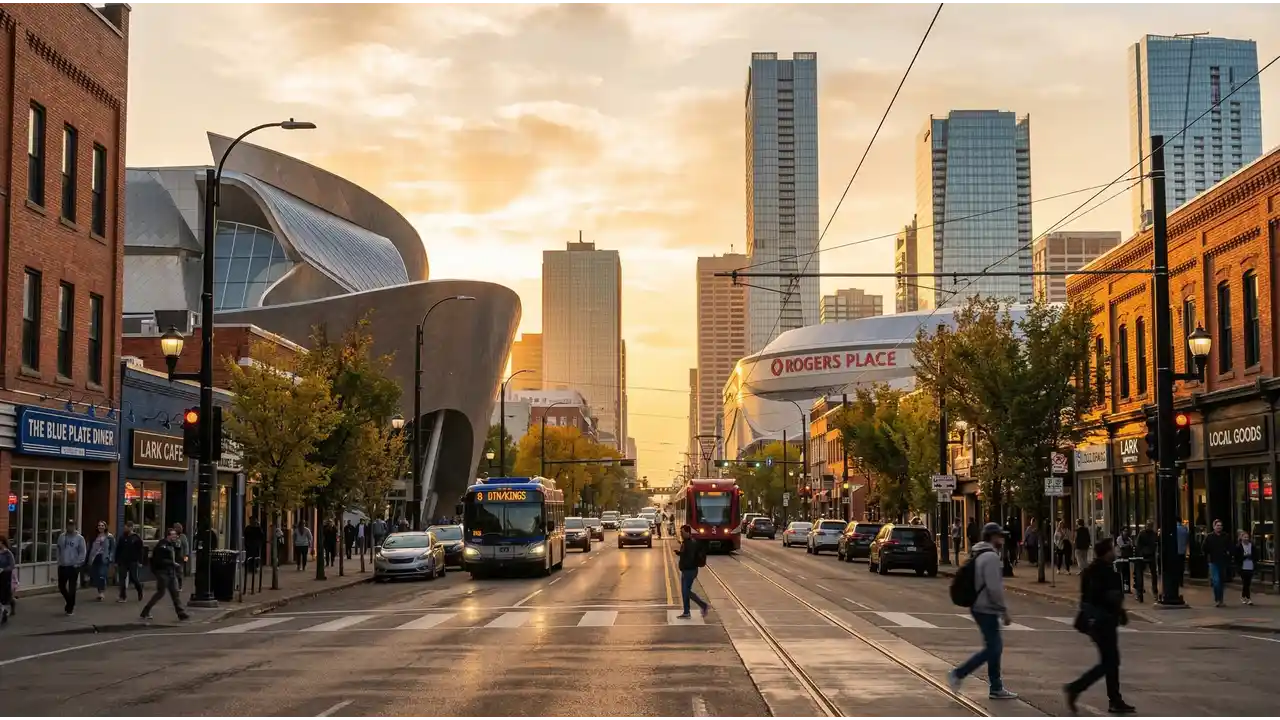
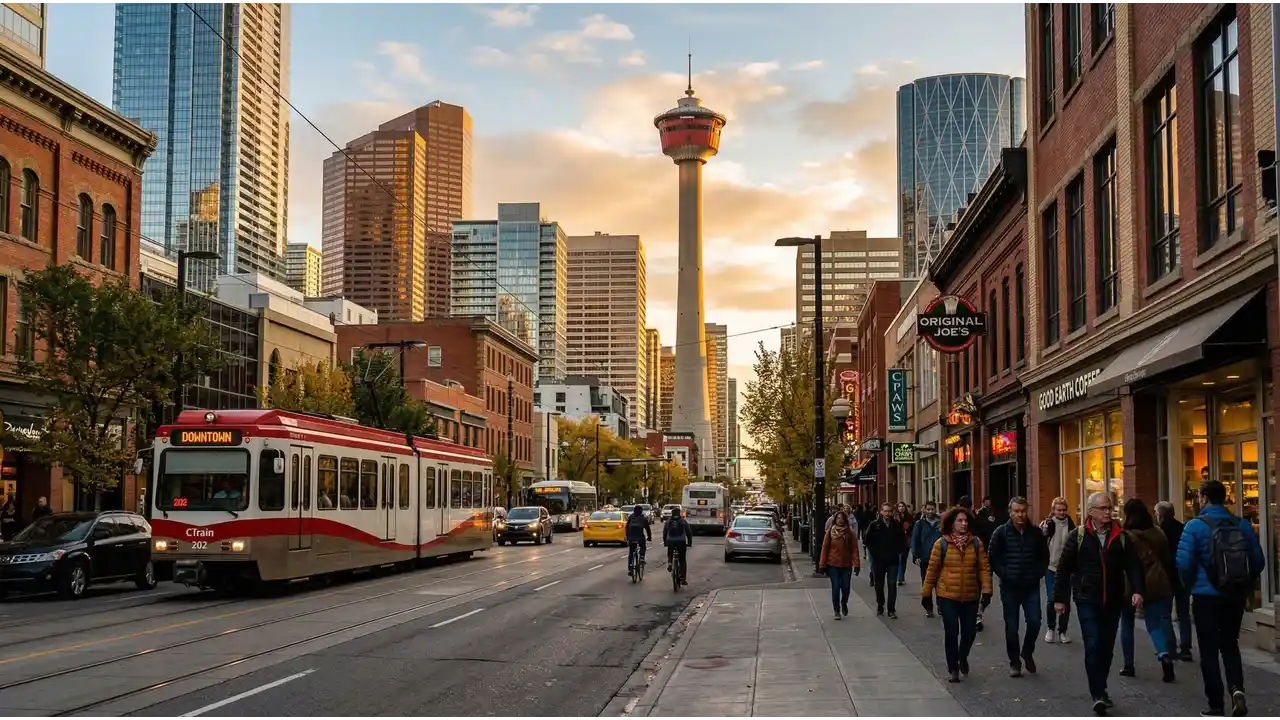
Alberta is Canada's fourth-largest province by population, split between two major centers: Calgary and Edmonton. The region has a diverse economy built on energy, technology, agriculture, and services. Winters are cold and long, especially in the north. Calgary tends toward urban sprawl and car culture; Edmonton feels more compact. Both cities attract interprovincial migrants and international expats seeking work in oil and gas, tech, and healthcare. Daily life is car-dependent outside downtown cores. Recreation centers on outdoor access: provincial parks, hiking, skiing nearby in the Rockies. The culture leans practical and direct.
💡 Local Insights
Alberta · 2026
Alberta's cost of living sits below Canada's major metros like Toronto and Vancouver, partly due to no provincial sales tax, which reduces prices on goods. Housing remains the largest expense at $1,317 per month. In Calgary, suburban rentals run $1,200-$1,400 for a one-bedroom; central neighborhoods like Inglewood or Bridgeland push toward $1,400-$1,500. Edmonton follows similar patterns, with inner-city areas like Oliver or Downtown slightly cheaper. Groceries average $438 monthly for one person, consistent with broader Canadian pricing; a liter of milk costs roughly $2.25, a dozen eggs $3.50-$4. Public transit exists in both cities but is limited outside downtown; car ownership or rideshare is practical for most neighborhoods. Expats often find Alberta friendlier on the wallet than BC or Ontario, though energy sector salaries partly offset this advantage. Utilities, childcare, and vehicle ownership add significantly to budgets in ways that catch newcomers off guard.
Frequently Asked Questions
How much does it cost to live in Alberta per month?
A moderate lifestyle in Alberta costs $2,675 per month. This breaks down to roughly $1,317 for housing, $438 for groceries, and the remainder for utilities, transport, dining out, and entertainment. The budget tier runs $1,605 monthly if you prioritize essentials and avoid discretionary spending. A comfortable lifestyle, including dining out regularly and more flexibility, costs around $4,146 per month. Actual costs vary by city, with Calgary and Edmonton anchoring the data; smaller towns can run slightly cheaper, while premium neighborhoods add 15-25 percent.
What is the average rent in Alberta?
Average rent in Alberta is approximately $1,317 per month. In Calgary, one-bedroom apartments in suburban areas rent for $1,200-$1,400; central neighborhoods like Inglewood, Bridgeland, or Downtown range $1,350-$1,550. Edmonton follows similar patterns, with one-bedrooms in the Oliver or Central areas running $1,300-$1,450, and outer neighborhoods around $1,100-$1,250. Two-bedroom units run 30-40 percent higher. Rental markets vary seasonally; summer sees more competition and slightly higher rates. Both cities have moderate vacancy rates, making negotiation possible. Utilities (heating, electricity, water) typically add $150-$250 monthly and are higher in winter.
Is Alberta cheap to live in for expats?
Alberta is moderately affordable for expats, especially those relocating from high-cost metros like London, Toronto, or Vancouver. No provincial sales tax cuts retail costs compared to other Canadian provinces. Housing and food are stable and predictable. However, Alberta is not cheap by global standards. If you're coming from Southeast Asia, Eastern Europe, or Latin America, costs will feel high. Energy sector salaries often offset housing expense for skilled workers, but service and healthcare roles pay less. Expats relocating within Canada find Alberta an attractive middle ground: cheaper than BC or Ontario, with more job opportunities and less competition than Prairie provinces. Winter can drive utility costs up unexpectedly.
How much does food cost per month in Alberta?
Groceries average $438 per month for one person. A liter of milk runs $2.25, a dozen eggs $3.50-$4, bread $3-$4, chicken breast $10-$14 per kilogram, ground beef $8-$12 per kilogram. Produce is seasonal; imported items cost more in winter. No provincial sales tax helps slightly. Eating out is moderate: casual lunch runs $14-$18, dinner at a mid-range restaurant $20-$35 per person. Coffee costs $3-$4.50. Alcohol is government-controlled in Alberta, making wine and spirits pricier than some provinces. Supermarkets like Save-On-Foods and Costco offer competitive prices; ethnic markets in Calgary and Edmonton provide cheaper produce and proteins if you know where to look.
What salary do you need to live comfortably in Alberta?
A comfortable lifestyle costs around $4,146 per month, or approximately $50,000 annually after tax. This assumes housing at $1,317, food and groceries around $550-$600, utilities $200-$250, transport $300-$400, and discretionary spending of $800-$1,000 for dining, entertainment, and hobbies. For a couple or family, add 60-70 percent more. Alberta's flat tax and no provincial sales tax mean your take-home goes further than in other provinces at the same gross salary. If you own a car (near-essential outside downtown), factor in fuel, insurance, and maintenance totaling $400-$600 monthly. Healthcare is publicly funded, reducing that cost compared to the US or Australia. Renters with modest social lives can live well on $40,000; families should target $60,000-$75,000.
How does the cost of living in Alberta compare to other places?
Alberta's moderate lifestyle costs $2,675 per month, with housing running $1,317 monthly. This puts Alberta roughly on par with Idaho, where a moderate lifestyle is $2,775 per month and housing costs $1,201. Both regions offer similar affordability for North American standards.
If you're coming from Mexico, expect to spend considerably more. Mexico's moderate lifestyle runs $1,600 monthly with housing at $730, so Alberta will feel notably pricier across the board. Conversely, Barbados is substantially dearer. A moderate lifestyle in Barbados costs $3,725 per month with housing at $1,955, making Alberta the more budget-friendly choice.
Within Canada, Alberta remains competitive on housing and overall costs, partly due to no provincial sales tax and lower energy prices than many provinces.
Yes, but with real constraints. The budget tier of $1,605 per month assumes $1,317 on rent and $438 on groceries, leaving roughly $600 for utilities, transport, phone, and everything else. You'll need to cook at home almost entirely, avoid dining out, skip entertainment, and use public transit or have a paid-off car. This budget works for students, recent graduates, or single earners sharing housing costs. Utilities in winter push $200-$250 alone, tightening the margin. Internet and phone are separate and run $80-$120 monthly. Any medical, car repair, or emergency expense breaks this budget. Winter heating costs spike, making the $1,605 target harder to maintain October-March. Shared housing, negotiated rent, and careful shopping can make it work, but it requires discipline and excludes dependents.