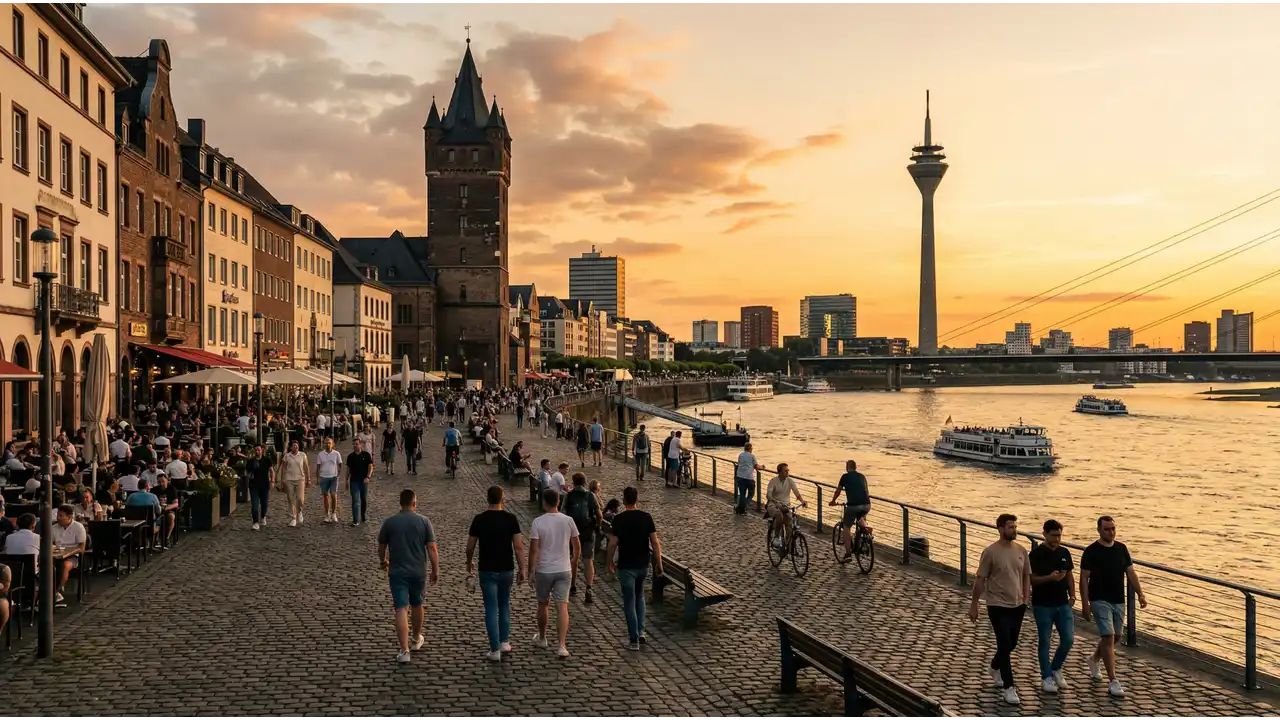
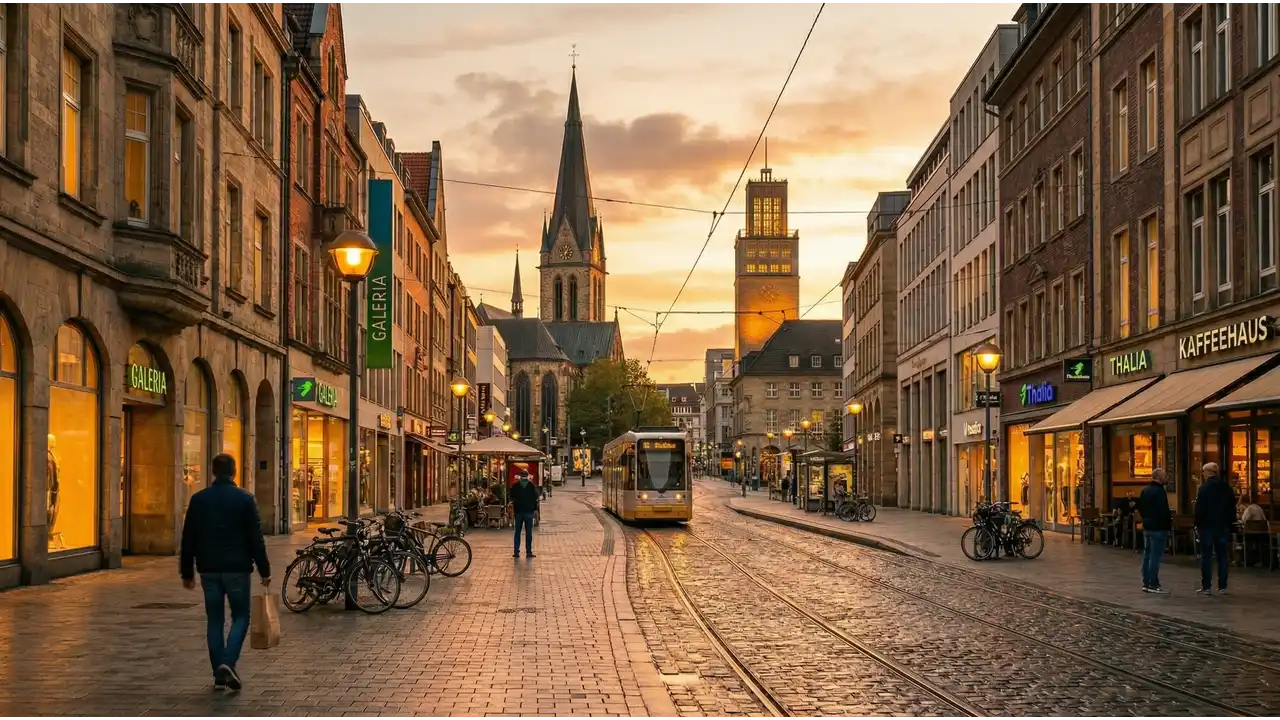
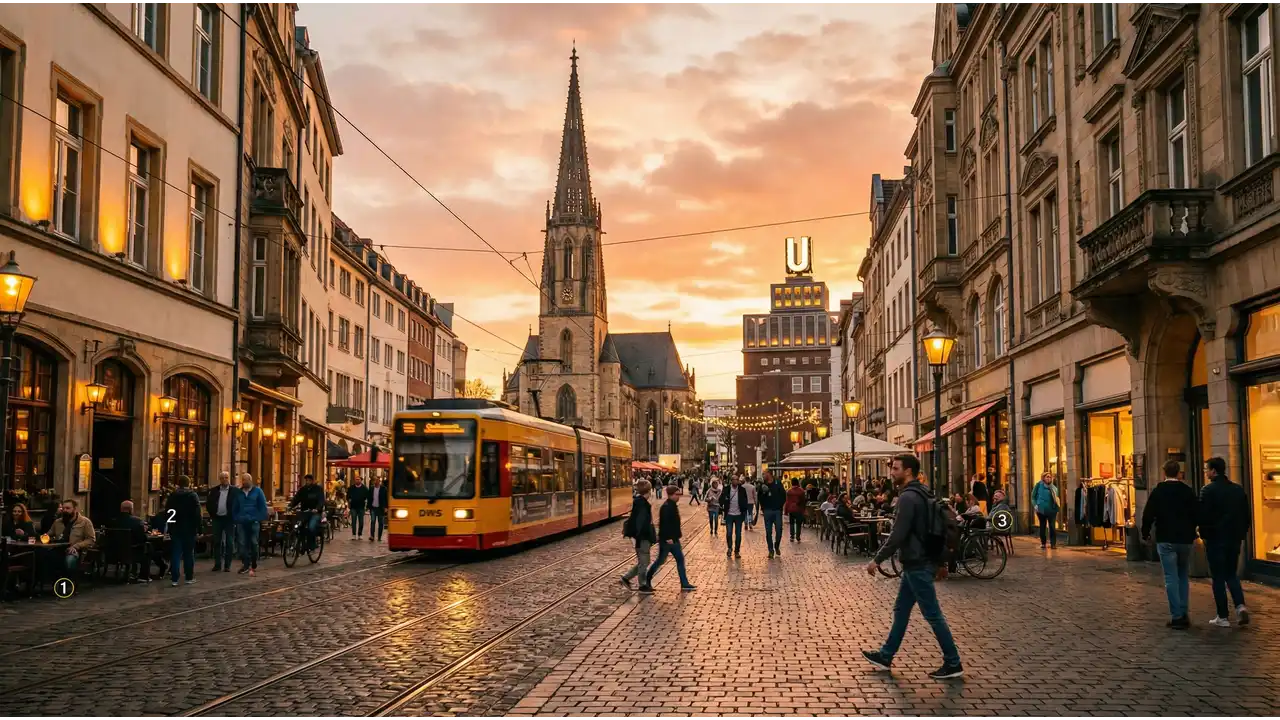
Cologne is a Rhine-side city of roughly 1.1 million people, known for its Gothic cathedral and medieval old town. The population mixes long-term residents, students (two large universities), and expats drawn by tech jobs and creative industries. Daily life involves cycling or public transit on flat terrain, shopping at farmer's markets and supermarket chains, and weekend walks along the river or to nearby towns. Winters are gray and damp; summers are mild. The pace is slower than Berlin or Frankfurt, with strong local traditions around beer culture and Carnival.
💡 Local Insights
Cologne · 2026
Cologne is moderately priced for western Germany. Housing costs around $1,001/month for a one-bedroom apartment in central or near-central neighborhoods like Deutz, Ehrenfeld, or Nippes. Outlying districts like Poll or Kalk run $750-850. Owner-occupied housing is expensive, so renting dominates. Groceries are reasonable at $387/month for a single person, with discounters like Aldi and Lidl dominating. Eating out is affordable by western European standards (a restaurant meal runs $12-18). Public transit is efficient and integrated: a monthly pass costs around $100-110 for zone 1, making a car unnecessary for most residents. Expats often find pricing transparent and standardized, unlike some European cities where locals and outsiders pay differently. The main cost driver is housing; food and transport are stable. Remote workers from outside the EU may face visa complexity, but within the EU movement is straightforward.
Frequently Asked Questions
How much does it cost to live in Cologne per month?
A moderate lifestyle costs $2,200/month. This covers a one-bedroom apartment around $1,001, groceries and occasional dining out at $387, public transit at roughly $105, utilities around $150, and discretionary spending on entertainment and personal services. A budget lifestyle runs $1,320/month if you live on the city edge, cook all meals, and minimize entertainment. A comfortable lifestyle with more spacious housing, dining out regularly, and hobbies runs $3,410/month.
What is the average rent in Cologne?
Average rent for a one-bedroom apartment is around $1,001/month. In popular central neighborhoods like Ehrenfeld or Nippes, expect $950-1,100. Deutz and Südstadt range $1,000-1,150. Cheaper outer districts like Kalk, Mülheim, or Chorweiler run $750-900. Two-bedroom apartments average $1,200-1,450 depending on location. Furnished short-term rentals are 20-30% higher. Most leases require first month, last month, and a deposit (usually one month's rent). Utilities add roughly $150-200/month.
Is Cologne cheap to live in for expats?
Cologne is moderately priced for expats in western Europe. It is cheaper than Munich, Hamburg, or Düsseldorf, and roughly comparable to Stuttgart or Frankfurt. Housing is the main expense at $1,001/month, though this is low compared to Berlin's expat-driven inflation or Paris. Groceries and transport are straightforward and fairly priced. English is widely spoken in international companies and universities, easing integration. Visa costs and health insurance add one-time or ongoing expenses. For expats on EU visas or working for established employers, Cologne offers reasonable costs without the complexity or expense of larger financial hubs.
How much does food cost per month in Cologne?
Groceries for one person average $387/month. Aldi and Lidl basket staples: bread $1-2, milk $0.80-1.20, eggs (dozen) $2-3, chicken breast $6-8/kg, cheese $4-7/kg. Fresh produce at markets is cheaper than supermarkets. Eating out is affordable: a lunch special costs $8-12, a dinner entree at a casual restaurant $12-18, beer $3-5 per 0.5L. Weekly farmers' markets (Markthalle, Wochenmarkt) offer cheaper vegetables and local cheese. Ethnic grocery shops in Ehrenfeld reduce costs for non-German staples.
What salary do you need to live comfortably in Cologne?
A comfortable lifestyle costs $3,410/month, requiring a gross annual salary of roughly $41,000-45,000 (depending on tax bracket and benefits). After German taxes and social contributions, a net income of $2,500-2,800/month is typical for mid-level employees. This covers a nicer two-bedroom apartment, eating out 1-2 times weekly, hobbies, and travel. Households with two earners or remote workers earning in stronger currencies find this comfortable. Single income earners below $2,200/month can live well but sacrifice some discretionary spending or must live on the city edge.
How does the cost of living in Cologne compare to other places?
Cologne sits in the middle tier of European cities. A moderate lifestyle here costs $2,200 per month, with housing running $1,001. That puts it slightly above Moscow, where a moderate lifestyle costs $2,050 and housing $1,238. You'll spend considerably less than Copenhagen, which runs $3,000 monthly with housing at $1,579. If you're coming from southern Europe, Palermo is noticeably cheaper at $1,550 for a moderate lifestyle and $618 for housing. Compared to major western European capitals, Cologne offers good value, especially outside the Rhine waterfront neighborhoods. Your money stretches further here than in Scandinavia or Switzerland, though you'll pay more than in parts of southern or eastern Europe. The Rhineland location and strong job market mean prices reflect demand from both locals and expats.
Yes, but with constraints. The $1,320 budget requires shared housing ($500-650/month room rental), cooking almost all meals ($250-300), minimal entertainment, and using public transit or cycling. Eating out is restricted to occasional budget meals. This works for students, temporary residents, or those with additional income or support. Health insurance adds $110-120/month for students and low-income residents. Unexpected costs (car repair, dental work) break this budget. It is livable but leaves little margin for emergencies or leisure. Most long-term residents find $1,800-2,200 more sustainable.