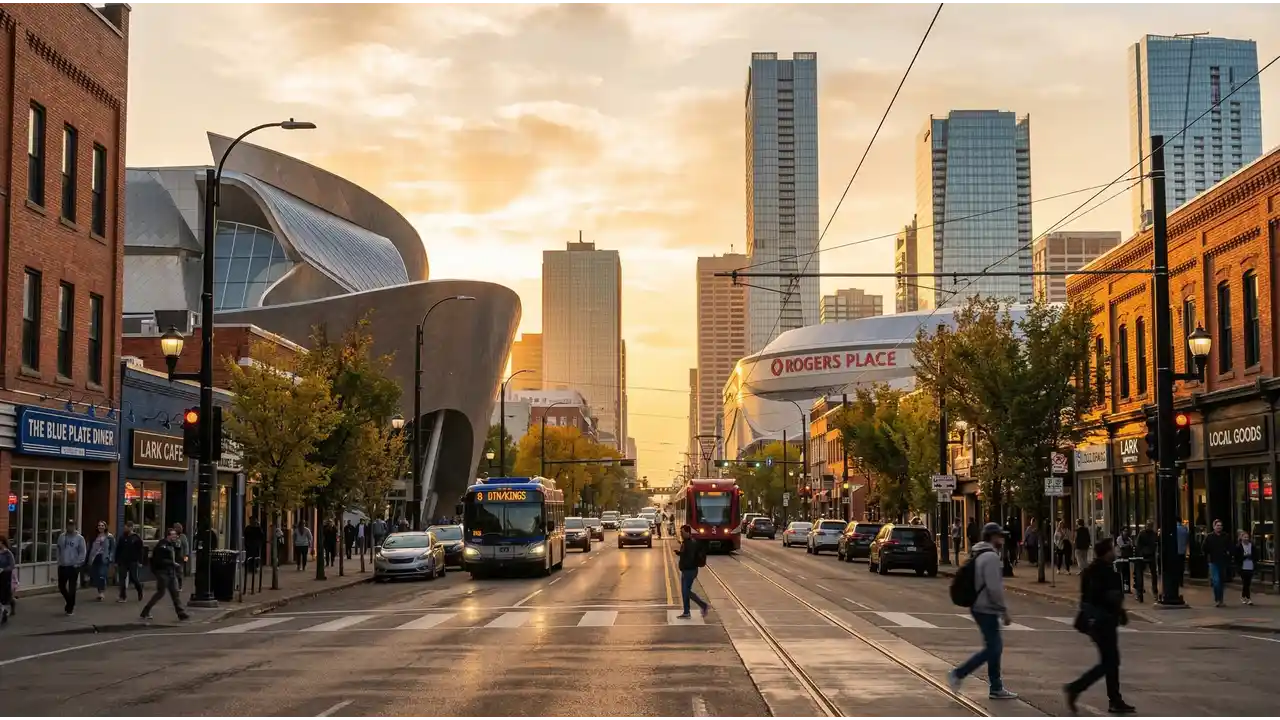
Edmonton is Alberta's capital and a mid-sized city of roughly 1.5 million in the metro area. It sits on the North Saskatchewan River with a continental climate that brings hard winters and short summers. The city has a mix of oil-and-gas workers, young families, students, and immigrants drawn by lower costs than Toronto or Vancouver. Daily life centers on car travel, though downtown and neighborhoods like Whyte Avenue have walkable cores. The food scene includes South Asian and East European communities reflecting the city's immigrant base. Summer festivals and river valley trails are local anchors.
💡 Local Insights
Edmonton · 2026
Edmonton's cost-of-living advantage rests mainly on lower housing costs compared to other major Canadian cities. Rents for a one-bedroom apartment in central areas like downtown or Oliver range from $700 to $950, while outer neighborhoods like Southside or Northeast drop to $600 to $800. Buying property is cheaper than Toronto or Calgary metro areas, though prices have risen since 2020. Groceries are moderate: a basket of staples (milk, bread, chicken, produce) costs around $344 per month for one person eating at home. Eating out runs $12 to $18 for casual lunch, $25 to $40 for dinner. Public transit (ETS bus system) costs $115 monthly for unlimited travel, but most residents drive. Heating bills spike October through April, often adding $150 to $250 monthly to winter utility costs. Expats report lower surprises than Vancouver or Toronto, though recent immigration has tightened rental supply in desirable neighborhoods.
Frequently Asked Questions
How much does it cost to live in Edmonton per month?
A moderate lifestyle costs $1,900 per month. This breaks down to approximately $835 for housing (rent or mortgage equivalent), $344 for groceries, and the remainder for utilities, transport, phone, dining out, and entertainment. This is a realistic budget for a single person or one half of a couple. The budget tier ($1,140/month) cuts back on housing to roommate-shared space and limits dining out heavily. The comfortable tier ($2,945/month) allows larger housing, regular restaurant meals, and discretionary spending like gym memberships or frequent outings.
What is the average rent in Edmonton?
Rent for a one-bedroom apartment averages around $835 monthly, consistent with the broader housing estimate. Central neighborhoods like Downtown and Oliver rent for $700 to $950. Southside and Northeast areas are cheaper, ranging $600 to $800. Whyte Avenue (Old Strathcona) commands $750 to $900 for its walkability and bar scene. A two-bedroom runs $900 to $1,200 depending on location. Room rentals in shared houses drop to $500 to $700. Prices have increased since 2020 as immigration pushed demand, but Edmonton remains well below Toronto and Vancouver rental markets.
Is Edmonton cheap to live in for expats?
Yes, relative to Vancouver, Toronto, and other major North American cities. Expats from the US, UK, and Australia typically find housing, groceries, and dining out are 15 to 25 percent cheaper. However, Edmonton is not cheap compared to mid-size US cities like Indianapolis or Des Moines. Winter heating costs, which can add $150 to $250 monthly, catch some expats off guard. Salaries tend to track the energy sector, so tech, finance, or education workers may earn less than in Vancouver or Toronto despite lower living costs. Expats without a car face more friction than in BC or Toronto due to car-centric sprawl.
How much does food cost per month in Edmonton?
Grocery shopping for one person runs $344 per month. A typical haul includes milk ($4 to $5/liter), bread ($2 to $3), chicken breasts ($7 to $10/lb), eggs ($3 to $4/dozen), canned beans ($1), frozen vegetables ($2 to $3), and seasonal produce (potatoes $2 to $3/lb, apples $1.50 to $2/lb). Eating out is cheaper than coastal cities: a casual lunch is $12 to $18, dinner at a mid-range restaurant $25 to $40. Ethnic groceries (South Asian, Eastern European) in neighborhoods like Millwoods or Chinatown offer better prices on specific items.
What salary do you need to live comfortably in Edmonton?
A comfortable lifestyle costs $2,945 per month, or roughly $35,340 annually before tax. This allows a one-bedroom apartment ($900 to $1,000), regular groceries and dining out, gym membership, and entertainment without cutting corners. After-tax income needed is roughly $40,000 to $42,000 depending on provincial deductions. For a couple or family, the comfortable threshold scales up with more bedrooms and higher groceries. Entry-level jobs in retail or hospitality pay $30,000 to $35,000, making roommate-sharing or the moderate budget ($1,900/month) more realistic. Tech, oil-and-gas, and healthcare jobs typically pay $50,000 to $85,000 and allow the comfortable tier easily.
How does the cost of living in Edmonton compare to other places?
Edmonton sits in the middle tier for Canadian cities. A moderate lifestyle runs $1,900 per month here, with housing at $835 monthly. That puts it slightly cheaper than Quebec City, where a moderate lifestyle costs $1,975 and housing runs $974. Move to the Greater Toronto Area, though, and costs climb notably. Brampton, Ontario runs $2,600 monthly for the same lifestyle, with housing at $1,253. If you're comparing internationally, Edmonton is significantly more expensive than smaller cities in other regions. Conakry, for instance, operates at $1,325 monthly with housing at just $452. For most North American comparisons, Edmonton offers reasonable value, especially if you're coming from major metropolitan areas or other Alberta cities.
Yes, but with real constraints. This budget tier requires shared housing ($400 to $500/month for a room), strict grocery discipline, and almost no dining out. Food budgets drop below $344 by cooking entirely at home with bulk staples and minimal fresh produce. You'll need a transit pass ($115/month) or a car (adds $200 to $400 for insurance, gas, maintenance). No gym membership, minimal entertainment spending, and limited travel. This budget works for students, recent arrivals in shared houses, or people on disability assistance. It's not comfortable, but it is viable in outer neighborhoods or with roommates. Emergency room for unexpected costs can break it immediately.