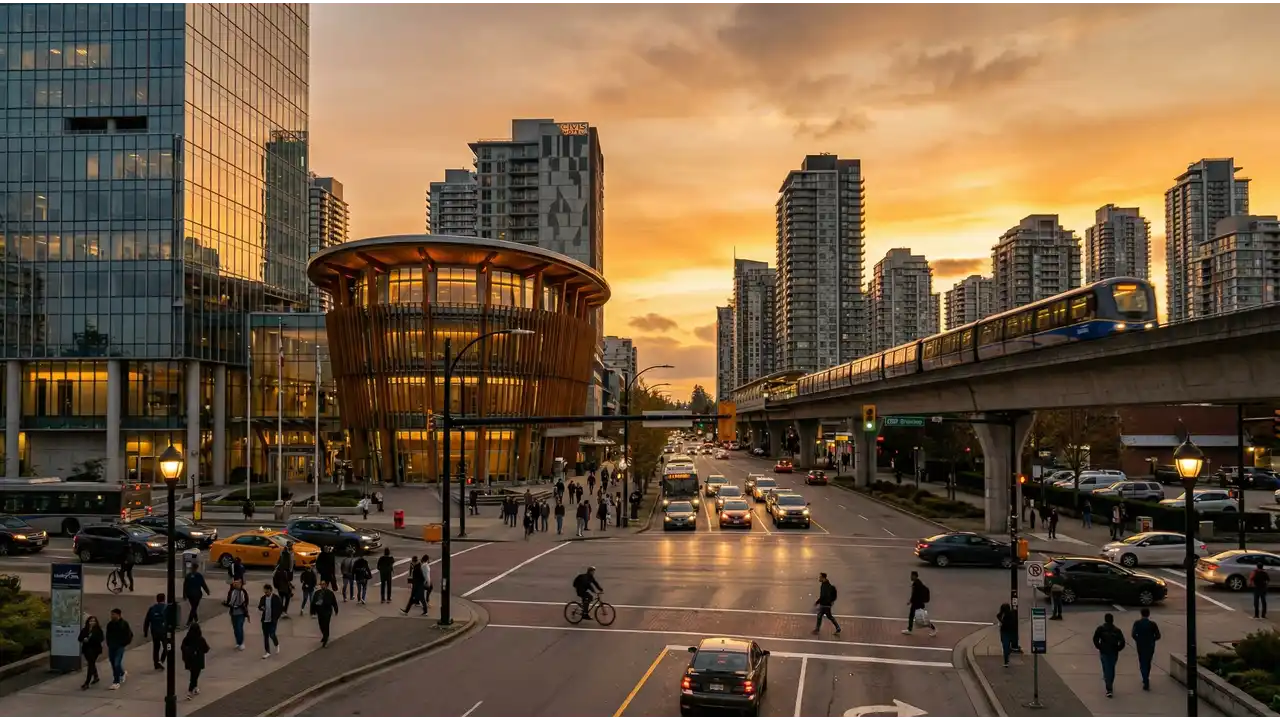
Nanaimo is a port city on Vancouver Island's east coast with roughly 90,000 residents. It functions as a working community rather than a tourist destination, with a mix of retirees, young families, and people priced out of Vancouver. The climate is mild and wet, typical of the Pacific Northwest. Daily life centers on the waterfront, local cafes, and outdoor access to hiking and water sports. The city has visible economic shifts from its forestry past toward tech, healthcare, and service work. Housing stock ranges from older residential neighborhoods near downtown to newer subdivisions inland. Public transit exists but most residents drive.
💡 Local Insights
Nanaimo BC · 2026
Nanaimo's cost of living sits between small BC interior towns and Metro Vancouver, at $2,500/month for a moderate lifestyle. Housing averages $1,149/month, with one-bedroom apartments in central areas renting for $1,000 to $1,300, and family homes or newer units trending toward $1,400 to $1,600. Groceries run $436/month for basic cooking, slightly lower than Vancouver due to less competition but higher than rural BC. Transit is limited; BC Transit serves the city but frequencies are sparse outside core hours, so most households need a vehicle (gas, insurance, parking add $300 to $450/month). Restaurants are cheaper than the Lower Mainland but casual dining averages $15 to $22 per meal. Utilities (heat, power, internet) run $150 to $200/month. Expats often find Nanaimo more affordable than they expect if relocating from the US West Coast, but faster than settling in smaller communities because of job availability. Local rental markets don't charge expat premiums; landlords don't distinguish.
Frequently Asked Questions
How much does it cost to live in Nanaimo BC per month?
A moderate lifestyle in Nanaimo costs around $2,500/month. This breaks down roughly as housing at $1,149/month, groceries at $436/month, utilities and internet at $150 to $200, transport (gas, insurance, or transit) at $300 to $400, dining out and entertainment at $250 to $350, and personal care and miscellaneous at $150 to $200. Those on a tight budget can operate on $1,500/month by renting a studio or one-bedroom, cooking at home, and minimizing car use. A comfortable lifestyle with a larger home, regular dining out, and travel runs closer to $3,875/month.
What is the average rent in Nanaimo BC?
Average rent is $1,149/month across the city. One-bedroom apartments in downtown or near the waterfront rent for $1,000 to $1,300. Two-bedroom units are typically $1,300 to $1,600. Older character homes in neighborhoods like Harewood or The Departure Bay average $1,200 to $1,400. Newer subdivisions inland, like Hammond Bay or Woodgrove, trend toward the higher end. Houses for rent are available but less common than apartments. Vacancy rates have tightened in recent years, making early applications important. No significant price difference exists between expat and local renters.
Is Nanaimo BC cheap to live in for expats?
Nanaimo is moderate, not cheap. For Americans from West Coast cities (Seattle, Portland, San Francisco), it feels affordable. For those from Toronto, Montreal, or smaller US towns, it feels expensive. Rent and food are lower than Metro Vancouver but higher than rural BC or prairie provinces. The trade-off is availability: jobs, schools, and services exist here in ways they don't in cheaper small towns. Expats relocating for work often find the cost reasonable against salary expectations. Those looking for lowest-cost living in BC should consider Kelowna or smaller interior communities instead.
How much does food cost per month in Nanaimo BC?
Groceries average $436/month for one person cooking at home. Staples like milk ($6 to $7/liter), bread ($3 to $4/loaf), chicken ($10 to $13/kg), and eggs ($4 to $5/dozen) are mainstream supermarket prices. Eating out is cheaper than Vancouver but not inexpensive: casual lunch runs $15 to $18, dinner at a mid-range restaurant is $20 to $28. Coffee shops charge $5 to $6 for specialty drinks. Farmers markets operate year-round at the Nanaimo Farmers Market and offer local produce at competitive prices. Costco and Save-on-Foods are the main bulk options.
What salary do you need to live comfortably in Nanaimo BC?
A comfortable lifestyle in Nanaimo requires roughly $3,875/month before tax, or approximately $46,000/year. This covers a two-bedroom rental at $1,400 to $1,500, regular dining out 2 to 3 times weekly, a reliable vehicle, utilities, insurance, and modest savings. After-tax income of $2,800 to $3,000/month makes this feasible for a single person or couple. Households with children or larger homes should budget closer to $50,000 to $60,000/year. Local median household income hovers around $55,000 to $65,000, reflecting a mix of service, healthcare, and tech workers.
How does the cost of living in Nanaimo BC compare to other places?
Nanaimo sits in the middle of the British Columbia cost spectrum. A moderate lifestyle here runs $2,500 per month, with housing at $1,149 per month. That makes it slightly pricier than Montreal, where a moderate lifestyle costs $2,050 monthly with housing at $1,044 per month. Compared to Mississauga, Nanaimo is roughly equivalent, with Mississauga coming in at $2,425 overall and housing at $1,371 per month. Vancouver is noticeably dearer across the board: a moderate lifestyle there costs $2,875 monthly with housing alone at $1,740 per month. If you're relocating from the Lower Mainland, expect meaningful savings on housing. Coming from Montreal or Eastern Canada, Nanaimo will feel more expensive overall, though housing costs are comparable. Your actual spend will depend heavily on whether you're renting or buying and your personal spending habits.
Yes, but with clear trade-offs. A $1,500/month budget requires renting a studio or one-bedroom near $900 to $1,000, cooking almost all meals (leaving groceries at $350 to $400), minimal car use or relying on transit ($50 to $100/month), and zero discretionary spending on dining out or entertainment. This works for students, remote workers with flexible lifestyles, or those supplementing with other income. It cuts out travel, eating out, hobbies, and most social activities. For a comfortable version of that budget (occasional coffee, one dinner out per month), you need closer to $1,800 to $1,900/month.