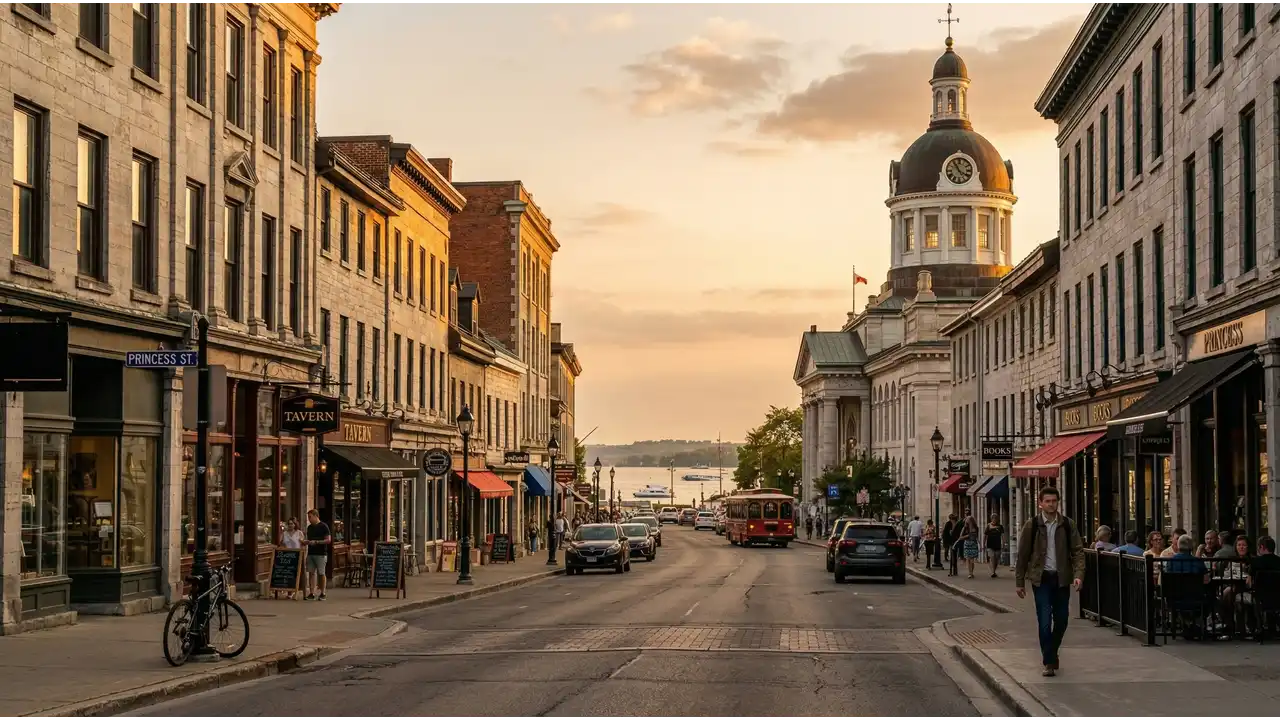
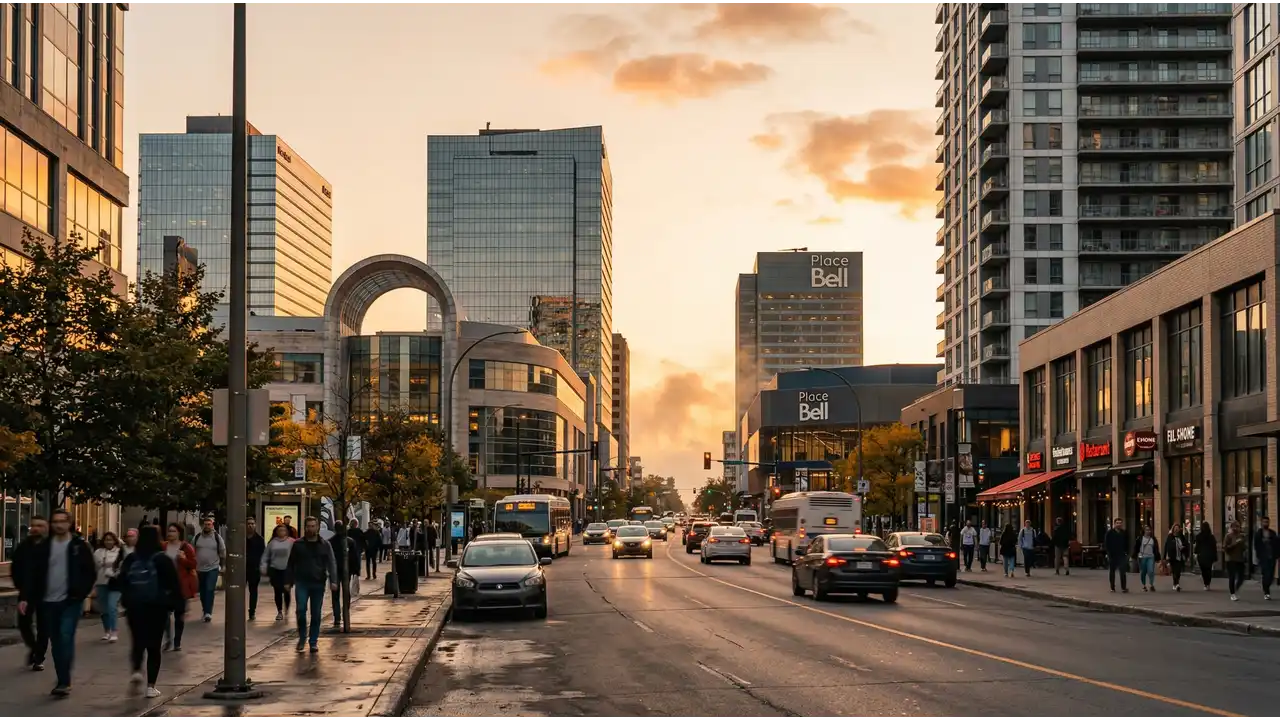
Ottawa is Canada's capital, a mid-sized city of roughly 1.4 million in the greater metro area. The city sits on the Ottawa River with a continental climate: cold winters (often below freezing November through March) and warm summers. It's a government town, with federal employment a major economic driver, alongside tech and healthcare sectors. Daily life involves commuting by car, bus, or bike, navigating neighborhoods from downtown's high-rises to suburban residential areas. Most residents are Canadian-born, though expat communities exist around government institutions and tech companies. The pace is professional but less intense than Toronto or Vancouver.
💡 Local Insights
Ottawa · 2026
Ottawa's cost of living reflects a government-anchored economy with moderate housing pressure compared to Canada's major metros. Housing runs around $1,288/month, covering everything from basement apartments in Vanier or Hintonburg (lower end, $1,100-$1,300) to one-bedroom condos in the Glebe or near Parliament ($1,300-$1,500). Groceries average $343/month for a single person buying at chains like Loblaws, Costco, or Walmart. Transit is reliable but most residents own cars, adding transport costs beyond the city bus system (OC Transpo). Expats often pay slightly more for furnished short-term rentals ($1,500-$1,800 for one-bedroom). Winter heating costs spike November to March, pushing utilities higher than warmer months. Eating out is moderate: casual meals run $12-$18, mid-range dinners $20-$35 per person. The city has lower wage growth than Toronto but also lower rents than Vancouver, making it feasible for remote workers or mid-career professionals.
Frequently Asked Questions
How much does it cost to live in Ottawa per month?
A moderate lifestyle in Ottawa costs around $2,350/month. This breaks down roughly as follows: housing at $1,288/month, groceries at $343/month, and the remainder covering utilities, transport, dining out, and discretionary spending. A budget lifestyle runs closer to $1,410/month (smaller rental, minimal eating out, public transit only), while a comfortable lifestyle with more flexibility and entertainment spending reaches $3,643/month. These figures represent typical single-person households; couples and families have different economies of scale.
What is the average rent in Ottawa?
Rent in Ottawa averages around $1,288/month for moderate-tier housing. One-bedroom apartments in accessible neighborhoods like the Glebe, Sandy Hill, or near downtown run $1,300-$1,500/month. Basement apartments or rooms in Vanier, Hintonburg, or Barrhaven are cheaper, $1,100-$1,250/month. Two-bedroom units range $1,500-$1,800/month depending on location. Expats seeking furnished short-term rentals should expect $1,500-$1,800 for one-bedroom. Rent has climbed steadily, but Ottawa remains more affordable than Toronto or Vancouver. Landlords typically require first and last month upfront, plus a credit check.
Is Ottawa cheap to live in for expats?
Ottawa is moderately priced for an expat coming from a major North American city. Compared to Toronto or Vancouver, rent is noticeably lower. Compared to smaller US cities or European capitals like Berlin or Prague, Ottawa is more expensive. For expats relocating from the UK or Australia, costs feel reasonable; from US tech hubs like San Francisco, they feel very cheap. The trade-off is the climate: winters are harsh and long, which increases heating costs and requires winter gear. Professional expats working in government or tech often find salaries adequate to cover $2,350/month comfortably, though furnished rental premiums and one-time setup costs matter early on.
How much does food cost per month in Ottawa?
Groceries for one person average $343/month, assuming shopping at major chains like Loblaws, Metro, or Costco. A week of basics (milk $5, bread $3.50, eggs $3.50, chicken $10-$12/lb, ground beef $7-$8/lb, vegetables $20-$25, pasta/rice/beans $15) runs roughly $75-$90. Eating out is moderate: casual lunch or dinner $12-$18, mid-range restaurant $20-$35 per person, coffee $3-$5. Alcohol is pricier than the US due to Canadian taxes (beer $8-$12 per six-pack, wine $15-$25 per bottle). Farmer's markets operate seasonally (May through October) and offer cheaper seasonal produce. Overall food costs are stable; little seasonal variation except for fresh produce in winter.
What salary do you need to live comfortably in Ottawa?
A comfortable lifestyle in Ottawa requires around $3,643/month, translating to roughly $44,000/year gross income before tax. This supports a one-bedroom apartment, regular dining out, hobbies, savings, and flexibility for unexpected costs. In real terms, a household earning $50,000-$55,000 gross can live comfortably with modest debt management. Couples where both earn $40,000+ each have significant room for savings or travel. Government and tech salaries in Ottawa often start $45,000-$55,000 and climb to $65,000-$85,000+ with experience, making that comfortable tier achievable for mid-career professionals. Single-income households on $35,000-$40,000 require strict budgeting and typically live at the $2,350/month moderate level.
How does the cost of living in Ottawa compare to other places?
Ottawa sits in the middle of the regional cost-of-living spectrum. A moderate lifestyle runs $2,350 per month here, with housing at $1,288 per month. That makes it slightly cheaper than Mississauga, where a moderate lifestyle costs $2,425 monthly and housing runs $1,371. Quebec City is noticeably more affordable, with a moderate lifestyle at $1,975 per month and housing at $974. On the other end, Vancouver is significantly dearer at $2,875 for a moderate lifestyle and $1,740 for housing alone. If you're moving from Toronto or elsewhere in the Greater Toronto Area, Ottawa will feel like a modest step down in cost. If you're coming from Vancouver, you'll notice a real difference. Quebec City remains the budget option in this part of Canada, while Ottawa offers middle-ground pricing.
Yes, but with significant trade-offs. The $1,410/month budget tier requires finding a shared apartment or basement room for $900-$1,050/month, leaving $360/month for all other expenses: food, transport, phone, utilities, and personal care. Groceries must stay tight, around $200/month, meaning minimal eating out and careful shopping. Transit costs about $120/month (monthly OC Transpo pass), or bike commuting is free. No vehicle is feasible. Entertainment, clothes, and healthcare (beyond covered provincial services) are luxuries. This budget works for students, early-career workers, or those in temporary situations but is stressful for long-term living. Single individuals with roommates or couples splitting costs find it more sustainable.