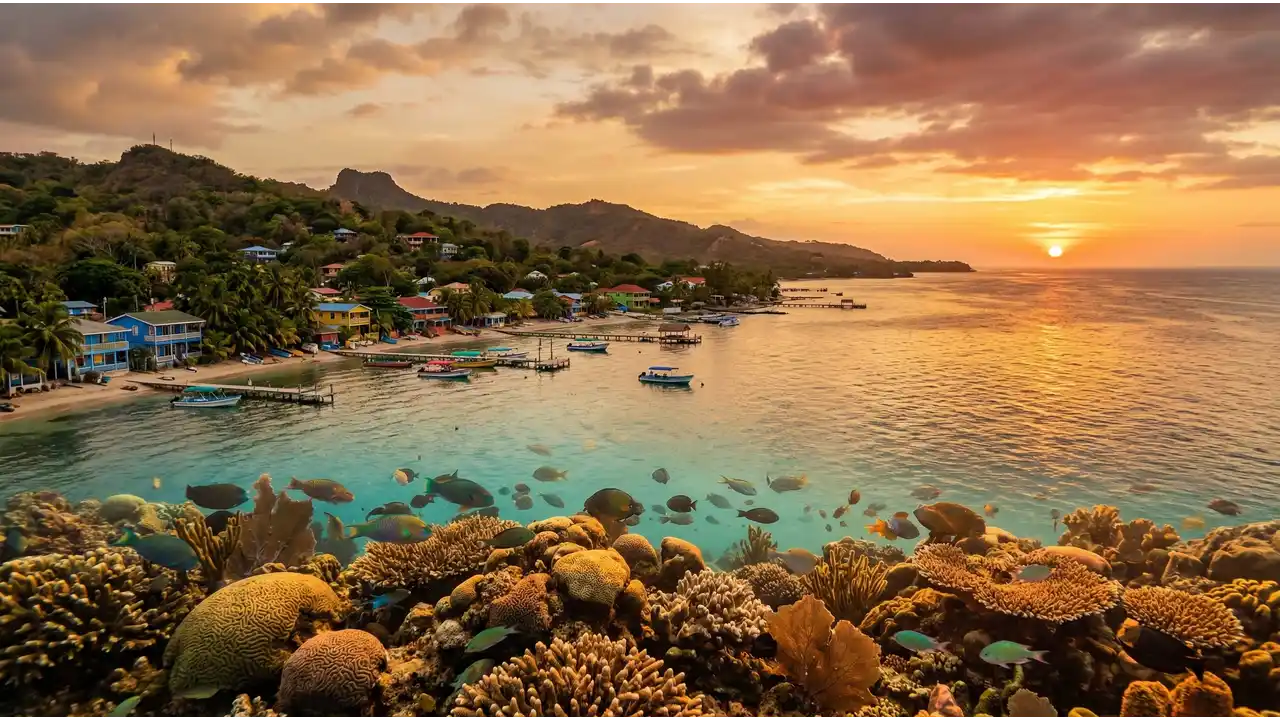
Roatan is a Bay Island off Honduras with roughly 5,000 residents spread across three towns: West End, West Bay, and Coxen Hole. It functions as an expat and tourism hub rather than a local community for most arrivals. Daily life centers on the water; diving and snorkeling are routine activities, not luxuries. The climate is tropical and humid, hurricane season runs June through November. Internet can be slow and unreliable. Most residents are either tourists, expat business owners, or service workers supporting the tourism economy. Groceries come by weekly boat shipment from the mainland, which affects both availability and price. The island has a frontier feel: infrastructure is basic, bureaucracy is slow, and you solve problems by asking neighbors rather than calling an agency.
💡 Local Insights
Roatan · 2026
Roatan costs $1,325 per month for a moderate lifestyle, but the island's economics work differently than mainland cities. Housing averages $605 per month, but prices diverge sharply by location and whether you're renting from locals or expats. West Bay commands higher prices (often $800 to $1,200 for a one-bedroom with ocean views), while inland or older properties in Coxen Hole run $400 to $600. Groceries cost $232 monthly if you cook at home, but this assumes buying local produce and staples. Imported goods (cheese, processed foods, non-local brands) cost 30 to 50 percent more than mainland Honduras. Eating out is expensive relative to income: dinner at a tourist restaurant runs $12 to $20 per person. Transportation is minimal if you live near town; water taxis between communities cost $2 to $5. Gasoline is expensive, and car ownership is rarely necessary. Expats typically pay higher rent than locals for the same property. Utilities (electricity, water, internet) add $80 to $150 monthly. The budget tier ($795/month) requires cooking all meals, minimal utilities, and a cheap rental away from tourist zones. Most expats settle into the $1,325 to $2,054 range.
Frequently Asked Questions
How much does it cost to live in Roatan per month?
A moderate lifestyle in Roatan costs $1,325 per month. This covers housing at $605 monthly, groceries at $232, utilities around $100, and modest dining and transport. A budget tier costs $795 monthly (bare minimum, inland rental, home cooking), while a comfortable lifestyle runs $2,054 (beachfront property, more dining out, regular activities). Most expats spend between $1,200 and $1,800 depending on where they live and how often they eat at restaurants versus cooking.
What is the average rent in Roatan?
Average rent is $605 per month. This figure holds across the island but with significant variation by location. West Bay properties with ocean views or beachfront access run $900 to $1,200. West End rentals, popular with expats, typically fall between $600 and $900. Inland Coxen Hole and Sandy Bay offer older properties for $400 to $550. Expats typically pay more than locals for equivalent housing. Short-term rentals (tourist season, less than a year) cost 20 to 30 percent above long-term rates. Utilities and water are not always included.
Is Roatan cheap to live in for expats?
Roatan is moderately cheap compared to North America or Europe, but expensive relative to Central American mainland. Monthly costs of $1,325 for a moderate lifestyle place it below Caribbean tourist islands (Belize, Cayman Islands) but above Nicaragua or Guatemala. The island economy is tourism-driven, which inflates prices for expat-facing housing and restaurants. Local Honduran wages are far lower, so islanders subsidize cost through lower rents when not dealing with expat landlords. Food costs are high because of weekly boat shipments. Expats find genuine savings only if they live inland, cook consistently, and avoid tourist restaurants.
How much does food cost per month in Roatan?
Groceries average $232 monthly per person for basic home cooking. This includes local produce (plantains, yuca, tropical fruit), rice, beans, eggs, and chicken. Imported goods cost significantly more: cheese is $8 to $12 per pound, butter $5 to $7, canned goods 30 to 50 percent above US mainland prices. Fresh fish is cheap ($3 to $6 per pound) when available. Eating out runs $10 to $20 for casual meals, $15 to $25 at tourist restaurants. A grocery trip to the main market in Coxen Hole or the small West End stores is routine; expats typically shop twice weekly due to limited refrigeration and boat schedules.
What salary do you need to live comfortably in Roatan?
A comfortable lifestyle costs $2,054 per month. This supports a better rental ($800 to $1,000), regular dining out, frequent activities, and reliable utilities and internet. Most expats targeting comfort aim for $2,000 to $2,500 monthly income or savings. This range accommodates occasional travel, higher food choices, and a buffer for unexpected costs (boat delays, medical needs, property repairs). Remote workers earning US or European salaries find this threshold easily met. Those on fixed income or relying on local Honduran wages would stretch significantly. A couple needs roughly $3,000 to $3,500 monthly to avoid financial stress on the island.
How does the cost of living in Roatan compare to other places?
Roatan's moderate lifestyle costs $1,325 per month, with housing running $605 monthly. This puts it slightly cheaper than Trinidad, where a moderate lifestyle runs $1,425 with housing at $590. You'll spend noticeably more in Jamaica, where the same moderate tier reaches $1,750 and housing costs $787. If you're flexible on location, Morocco offers the lowest entry point at $950 monthly for a moderate lifestyle and $340 for housing, though the Caribbean experience differs significantly. Roatan's cost falls in the middle-to-affordable range for the region. Your actual spend depends heavily on whether you're renting or own, your proximity to the tourist corridor, and whether you eat local or import heavily. Expats report that housing deals exist if you're willing to commit long-term, while eating at tourist restaurants pushes budgets considerably higher.
Yes, but with significant constraints. The $795 budget requires renting inland or in Coxen Hole ($400 to $500), cooking nearly all meals, minimizing utilities (high AC use is expensive), and cutting out tourist activities and dining. You would need a reliable remote income or substantial savings, since local employment is tourism-dependent and pays in Honduran lempiras. Medical emergencies or boat delays (affecting food supply) could stress the budget quickly. This tier is viable for very frugal long-term expats who have adapted to island life and built local relationships. Most people on this budget would supplement with part-time remote work.