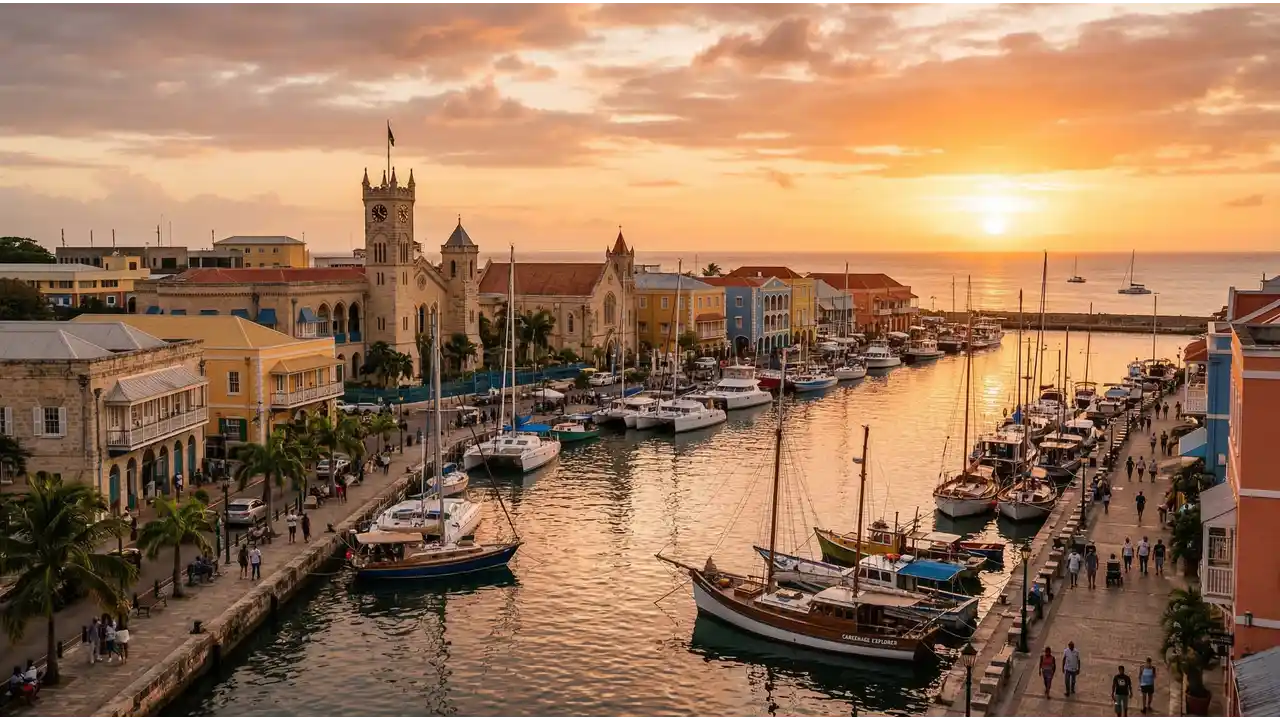
Trinidad & Tobago is a twin-island nation off Venezuela's coast with a population of roughly 1.4 million. The economy relies on oil and natural gas, which shapes the character of cities like Port of Spain (the capital) and San Fernando. Daily life involves navigating traffic on narrow roads, shopping at markets for fresh produce, and dealing with a tropical climate (hot, humid, occasional hurricanes). The islands draw expats working in energy, finance, and education. English is the official language. Infrastructure is functional but aging in places. Cost of living is moderate for the Caribbean, though pricier than mainland Latin America.
💡 Local Insights
Trinidad & Tobago · 2026
Trinidad & Tobago's costs reflect its oil-dependent economy and Caribbean location. Housing represents a major expense, averaging $590 per month for modest one-bedroom apartments in central areas like Woodbrook or St. Clair in Port of Spain, with less central options running lower. Food costs $269 monthly for groceries if you buy local produce at markets rather than supermarkets, where imported goods push prices higher. Transportation relies on maxi taxis (shared minibuses, about $1-2 per ride) and private cars. Expats often pay 20-30 percent more for housing than locals, especially in expat-preferred areas. Energy bills are relatively low due to subsidized electricity. Eating out at local restaurants costs $8-15 per meal; Western chains are more expensive. The dual-island setup means ferry costs ($5-10 each way) if traveling between Trinidad and Tobago. Medical care is affordable for routine visits but serious cases may require travel to Jamaica or the US.
Frequently Asked Questions
How much does it cost to live in Trinidad & Tobago per month?
A moderate lifestyle costs $1,425 per month. This covers housing ($590), groceries ($269), utilities, transport, and dining out occasionally. On a tighter budget, you can live on $855 monthly by sharing housing, cooking at home, and using public transport. For a comfortable lifestyle with better housing, dining out more, and entertainment, plan on $2,209 per month. Costs vary by island (Tobago is slightly cheaper outside tourist areas) and whether you shop at supermarkets or local markets.
What is the average rent in Trinidad & Tobago?
Average rent is $590 per month for a one-bedroom apartment in moderate neighborhoods of Port of Spain like Woodbrook or Cascade. Studio apartments or shared housing run $400-500 monthly. Two-bedroom apartments range $700-900. Expat-preferred areas (St. Clair, Maraval) command $700-1,000 for one-bedroom units. Outside Port of Spain, particularly in Tobago or San Fernando, rent drops to $450-600. Utilities (electricity, water, internet) add $100-150 monthly. Most leases require advance payment and deposits equivalent to one month's rent.
Is Trinidad & Tobago cheap to live in for expats?
It is moderately priced for the Caribbean but not particularly cheap compared to Central America or South America. Expats typically pay 20-30 percent more than locals for identical housing and sometimes face discrimination in rental markets. A $1,425 monthly budget is feasible if you accept local conditions (aging infrastructure, traffic, limited entertainment options). Expats from Europe or North America will find it affordable; those from Mexico or Colombia may find it pricier. The real cost advantage lies in energy and some food items if you shop locally. Medical care and schooling can be expensive if you require private services.
How much does food cost per month in Trinidad & Tobago?
Groceries for one person cost approximately $269 per month if you shop at local markets and cook at home. Local produce (plantains, cassava, dasheen, callaloo) is inexpensive at $0.50-2 per pound. Imported goods (cheese, butter, cereals) are 40-60 percent pricier than US prices. Eggs run $2-3 per dozen, rice $1.50-2 per pound. Eating out at local spots costs $8-15 per meal; fast food is $6-10. Supermarkets are more expensive; Malls have Western chains. Fish is affordable ($6-8 per pound) given the coastal location. Street food and doubles (chickpea sandwich) cost $2-3.
What salary do you need to live comfortably in Trinidad & Tobago?
A comfortable lifestyle requires $2,209 per month, which supports better housing ($800-1,000), dining out regularly, private transport or car ownership, and entertainment. This equates to roughly $26,500 annually before tax. For a couple, $3,500-4,000 monthly provides good quality of life with discretionary spending. If employed locally, professional salaries range $2,500-4,500 monthly before tax. Expats on work permits often earn more but face higher tax brackets. Cost of living compounds if you have dependents or require private schooling (tuition runs $5,000-12,000 annually per child).
How does the cost of living in Trinidad & Tobago compare to other places?
Trinidad & Tobago runs $1,425 per month for a moderate lifestyle, positioning it as one of the more affordable Caribbean destinations. For comparison, Cuba is notably cheaper at $1,175 per month, while Grenada is slightly dearer at $1,600 per month. Jamaica costs considerably more at $1,750 per month. Housing specifically in Trinidad & Tobago averages $590 monthly at the moderate tier, making it cheaper than both Grenada at $648 and Jamaica at $787, though pricier than Cuba at $467. If you're coming from North America or Europe, Trinidad & Tobago will feel genuinely affordable. The real savings kick in on food, transportation, and services. However, imported goods carry a premium due to island logistics, so groceries and certain manufactured items cost more than you might expect compared to mainland alternatives.
Yes, but with strict discipline. Budget $400-450 for housing (shared apartment or studio outside central Port of Spain), $200 for groceries (buying only local produce and rice/beans), $50-60 for transport (maxi taxis), and $100-150 for utilities and phone. This leaves virtually no margin for healthcare, entertainment, or emergencies. You'll need to cook almost every meal, avoid restaurants, and use public transport exclusively. This budget works for locals with established networks and lower expectations but is uncomfortable for most expats. It's doable in Tobago's smaller towns rather than Port of Spain. Keep an emergency fund separate.