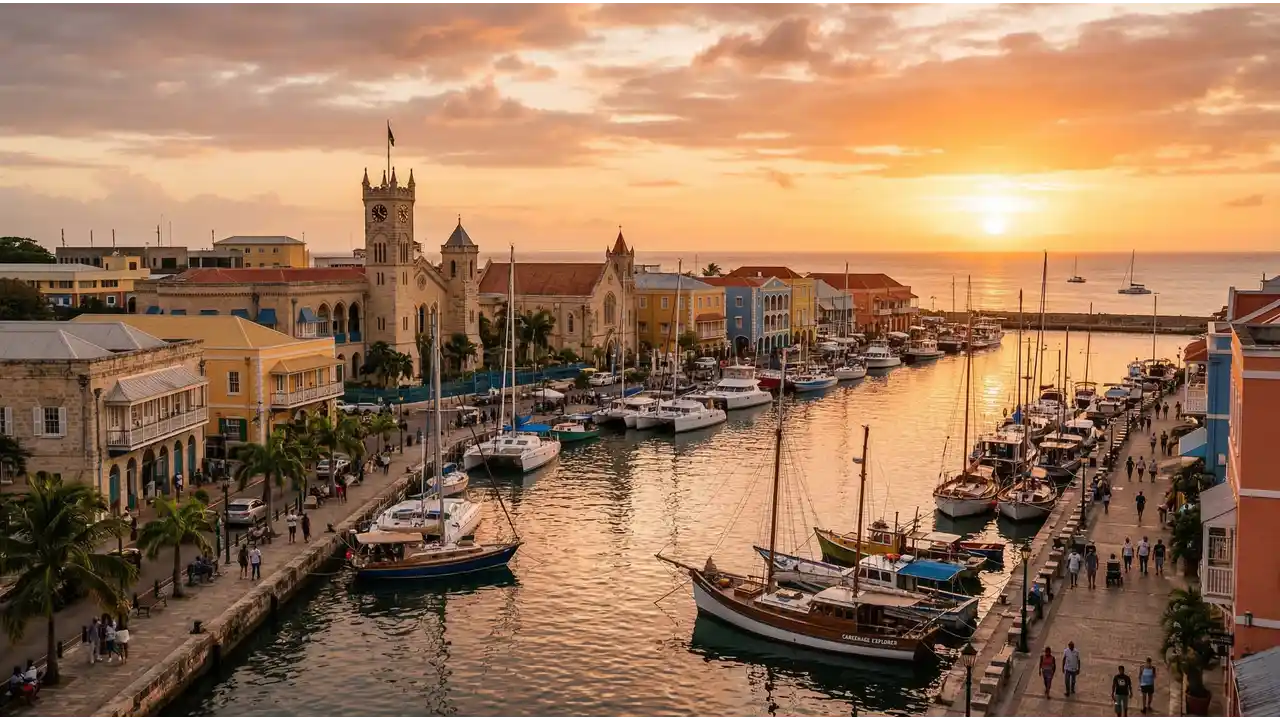
Trinidad is the larger island of the Trinidad and Tobago twin-island nation, located just off Venezuela's coast. It is densely populated, industrialized, and culturally diverse, with a strong energy sector economy. Daily life centers on Port of Spain, the capital, though many residents live in suburban towns like San Fernando and Chaguanas. The climate is tropical and humid year-round, with a rainy season from June to December. Public transport relies on shared minibuses and maxi taxis rather than formal bus systems. English is the official language, though Trinidadian English Creole dominates casual speech. The pace is faster and more urban than typical Caribbean islands.
💡 Local Insights
Trinidad · 2026
Trinidad's cost of living reflects its oil-based economy and higher development level compared to many Caribbean neighbors. A moderate lifestyle costs $1,425/month. Housing costs are indexed at $590/month for Trinidad and Tobago as a whole, as Trinidad does not have a separate rental measurement. Actual rental prices in Port of Spain and suburbs vary widely; indicatively, a one-bedroom apartment in central areas may run $400-$700/month depending on condition and neighborhood, while suburban options can be cheaper. Groceries run $269/month, which is reasonable for a household shopping at supermarkets like Massy and SaveU. Local produce at markets is cheaper than imported goods. Eating out at casual restaurants costs $4-$8 per meal; upscale dining doubles that. Maxi taxis are the main transport, costing around $1-$2 per ride. Expats typically pay more for housing and imported foods; locals shopping strategically pay less. Utilities, including water and electricity, add $80-$120/month and can spike during air-conditioning season.
Frequently Asked Questions
How much does it cost to live in Trinidad per month?
A moderate lifestyle in Trinidad costs $1,425/month. This breaks down roughly as: housing $590, groceries $269, utilities around $100, transport $40-$60, and the remainder for dining out, entertainment, and personal expenses. A budget tier lifestyle runs $855/month, cutting back on dining out and entertainment. A comfortable tier, allowing for more frequent dining out and leisure, costs $2,209/month. These figures are realistic for someone living independently, not in shared housing or earning local wages.
What is the average rent in Trinidad?
The $590/month housing figure is the Trinidad and Tobago level that Trinidad inherits as a measurement, not a separate Trinidad-only market rate. Actual rental prices vary significantly by location. In Port of Spain and nearby suburbs like St. Anns and Cascade, furnished one-bedroom apartments typically rent for $450-$700/month; unfurnished units may be cheaper. Outside the capital, towns like San Fernando and Chaguanas offer rentals in the $350-$500 range. Landlords often prefer long-term tenants and may negotiate for cash payments. Expats generally pay at the higher end. Most leases require deposits equivalent to one or two months' rent.
Is Trinidad cheap to live in for expats?
Trinidad is moderately priced for expats, but not particularly cheap. Compared to North America or Western Europe, yes; compared to other Caribbean islands or Latin America, it is middle-range. Expats face higher housing costs than locals, as landlords price for foreign tenants. Imported goods at supermarkets are expensive; eating local food at markets is much cheaper. Utilities and transport are inexpensive by developed-country standards. Your purchasing power depends heavily on whether you are earning in USD, EUR, or local TT dollars. Expats earning foreign income find Trinidad affordable; those on local salaries may struggle.
How much does food cost per month in Trinidad?
Groceries average $269/month, purchasing mainly from supermarkets. Local staples like rice, flour, canned goods, and imported meats are reasonably priced. Chicken costs around $3-$4/lb; ground beef $4-$5/lb. Fresh produce from local markets is significantly cheaper than supermarket versions. Eating out at casual restaurants and street vendors costs $4-$8 per meal; Trinidadian roti and doubles are popular cheap options at $2-$4. A meal at a mid-range restaurant runs $12-$18. Alcohol and imported specialty foods are notably expensive. Shopping at discount supermarkets like SaveU stretches grocery budgets further.
What salary do you need to live comfortably in Trinidad?
A comfortable lifestyle costs $2,209/month. This assumes you can dine out several times weekly, enjoy occasional travel or entertainment, and live in a decent neighborhood without extreme frugality. To maintain this lifestyle independently (not as part of a household), a salary of around $2,500-$2,800/month in USD provides a safety margin for unexpected expenses and saving. If earning in TT dollars, the equivalent is roughly $16,500-$18,000 TT per month, though currency fluctuations matter. Remote workers earning foreign currency have considerably more comfort. Local salaries in professional fields range from $3,000-$6,000 TT/month, making a USD-based income a significant advantage.
How does the cost of living in Trinidad compare to other places?
Trinidad sits in the mid-range for the Caribbean. A moderate lifestyle costs $1,425 per month here, with housing running $590. That puts it cheaper than Jamaica, where the same moderate lifestyle runs $1,750 and housing costs $787. It's also noticeably more expensive than Cuba, where you can live moderately for $1,175 with housing at $467. Grenada is the closest peer, at $1,600 for a moderate lifestyle and $648 for housing, so you're looking at fairly similar costs between the two islands. Compared to North American or Western European cities, Trinidad remains affordable. Your money stretches further here than in developed nations, though prices have climbed in recent years due to inflation and currency fluctuations. Food, utilities, and transportation costs vary significantly depending on whether you buy local or imported goods.
Yes, but with significant constraints. $855/month is the budget tier and requires careful spending. This allows for basic housing (likely shared accommodation or a room in a suburban area), groceries at discount markets, minimal dining out, and local transport via maxi taxi. You cannot afford frequent eating out, entertainment, travel, or any luxuries. Healthcare costs are manageable with the public system, but private care quickly exceeds this budget. This tier works for students, long-term travelers, or those with minimal expenses. It leaves little margin for emergencies or unexpected costs. Those earning only local wages often operate at this level or below, so it is possible but demanding.