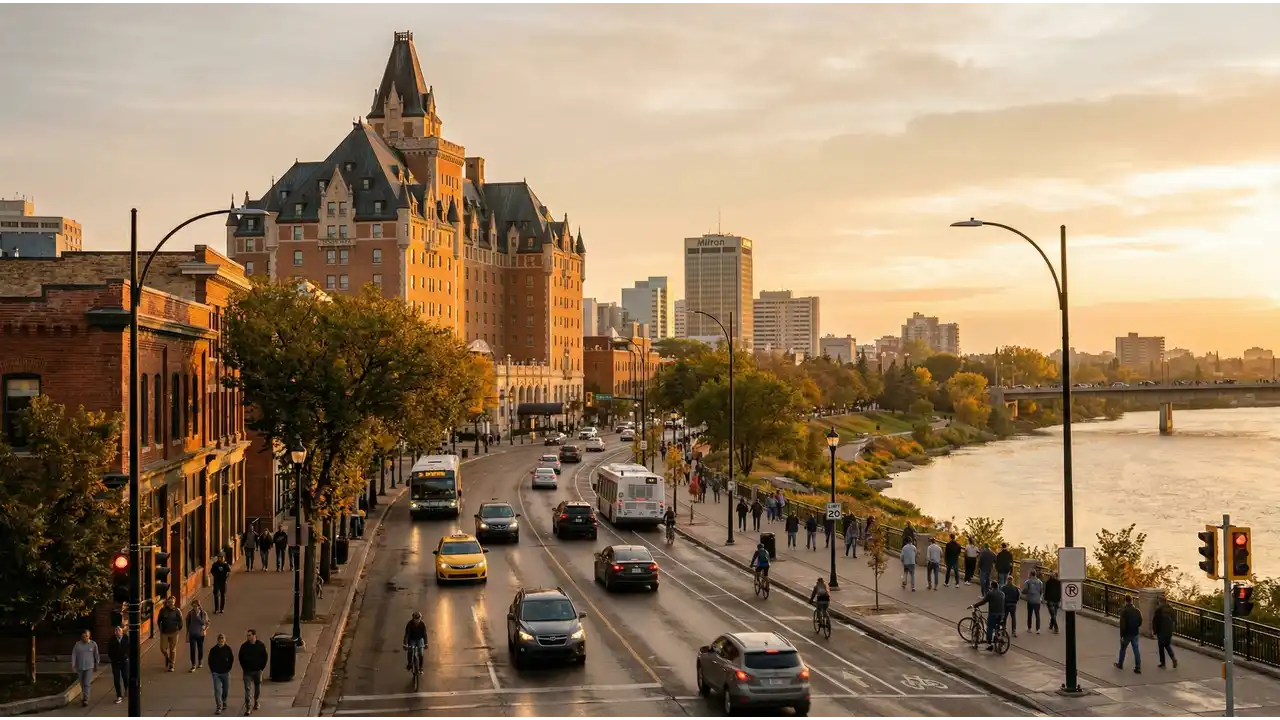
Winnipeg is Manitoba's capital and the largest city on the Canadian prairies, with about 850,000 people in the metro area. The city has a mix of established neighborhoods, a downtown arts and culture scene, and a strong job market in healthcare, manufacturing, and services. Winters are severe (temperatures dropping to minus 30 Fahrenheit are common), which shapes how people live and what they spend money on. Summer is brief but warm. Most residents are Canadian-born, though immigrant communities from Eastern Europe, Southeast Asia, and Africa have grown. Daily life revolves around car ownership due to sprawl, though transit exists. People tend to be practical about spending and skeptical of hype.
💡 Local Insights
Winnipeg · 2026
Winnipeg's cost of living sits well below major Canadian cities like Toronto and Vancouver, making it genuinely affordable for North America. Housing at $957/month reflects a healthy rental market with vacancy rates that keep landlords honest. You can find one-bedroom apartments in central neighborhoods like Osborne Village or The Exchange for $850 to $1,050/month, with older stock slightly cheaper. Homeownership is accessible compared to coastal Canada. Groceries at $320/month are reasonable if you shop sales and avoid premium chains. Winters drive up utility bills (heating can add $150-200/month in January) and vehicle maintenance costs (winter tires, salt damage). Transit exists but remains limited; most households budget for vehicle ownership. Expats often find Winnipeg shockingly affordable after Asian or European cities, though the climate shock matters more than cost shock. Food prices track national averages with no local premium. Entertainment and dining out are genuinely cheap compared to Vancouver or Montreal.
Frequently Asked Questions
How much does it cost to live in Winnipeg per month?
A moderate lifestyle costs $1,950/month. This covers rent at $957/month, groceries at $320/month, utilities around $150-180/month (higher in winter), local transit or vehicle operating costs at $200-250/month, and discretionary spending including restaurants, entertainment, and personal care. A tighter budget of $1,170/month is possible by renting a bachelor apartment, cooking exclusively at home, and using transit. At the comfortable end, $3,023/month allows for larger housing, regular dining out, memberships, and travel. These figures assume a single person; couples and families have economies of scale on housing.
What is the average rent in Winnipeg?
Average rent is $957/month. One-bedroom apartments in walkable neighborhoods like Osborne Village, The Exchange, or River Heights run $900 to $1,050/month. Older buildings in North End or St. Boniface offer units from $800/month. Two-bedroom apartments typically rent for $1,100 to $1,300/month depending on condition and location. Newer buildings downtown command $1,200-plus for one-bedrooms. Bachelor units and shared rentals can drop to $650-750/month. Vacancy rates have hovered around 3-4 percent, meaning landlords have some pricing power but tenants still have options. Most leases run 12 months.
Is Winnipeg cheap to live in for expats?
Winnipeg is genuinely cheap compared to major expat hubs in North America. Rent is 40-50 percent lower than Toronto or Vancouver. Groceries and restaurants cost less than European capitals. However, expats often underestimate the climate cost: winter driving, home heating, and seasonal depression management add real expenses. Expats from Asia, the UK, or continental Europe typically find Winnipeg shockingly affordable. Those relocating from smaller North American cities or rural areas may see little difference. The trade-off is social isolation (Winnipeg is not a major expat destination) and extreme weather that some find genuinely difficult to sustain year-round.
How much does food cost per month in Winnipeg?
Groceries average $320/month for one person buying basics. A week of staples (chicken, beef, eggs, milk, bread, rice, vegetables, fruit, cheese) runs $60-75 at Sobeys, Safeway, or Walmart. Organic or specialty food costs 20-30 percent more. Eating out is inexpensive: casual restaurants charge $12-16 for a main, pubs $10-14 for burgers. Winnipeg has no premium dining surcharge compared to major cities. Coffee shops charge $2.50-3.50 for regular coffee. Ethnic grocery stores (Vietnamese, Eastern European, South Asian) in specific neighborhoods offer cheaper produce and proteins if you know where to shop. Food inflation has been moderate.
What salary do you need to live comfortably in Winnipeg?
A comfortable lifestyle costs $3,023/month, suggesting a gross annual salary around $45,000-50,000 for a single person (accounting for taxes). This allows a one-bedroom or small two-bedroom apartment, regular restaurant visits, gym memberships, and modest entertainment spending. Couples can live comfortably on a combined $70,000-80,000/year. Homeownership is possible on a single $50,000 salary if you have a down payment, as mortgage rates are competitive and property prices remain far below Toronto or Vancouver. Take-home after Canadian federal and provincial taxes is roughly 70-75 percent of gross income.
How does the cost of living in Winnipeg compare to other places?
Winnipeg is cheaper than Toronto (rent roughly 35 percent lower, $1,950 vs $2,600/month moderate), Montreal (15-20 percent cheaper), and significantly cheaper than Vancouver. Compared to smaller prairie cities like Regina or Saskatoon, Winnipeg is 5-10 percent more expensive but offers more amenities and job options. Compared to US cities like Minneapolis or Chicago, Winnipeg is similar in rent but lower in US taxes offset higher Canadian provincial taxes. For expats, Winnipeg undercuts most European and Asian capitals substantially, though lacks their density and transit.
Can you live in Winnipeg on $1,170/month?
Yes, but tightly. A budget of $1,170/month means renting a bachelor apartment or shared room for $650-750, spending $320 on groceries (cooking all meals at home), and budgeting $100-120 for utilities and essentials. This leaves almost nothing for transit, phone, internet, or entertainment. You would need to walk, bike, or use the bus system (monthly pass $55). Unexpected costs (dental, car repair, clothing) create stress. This budget works if you are young, have no dependents, live in a low-rent building, and avoid social spending. Many students and recent immigrants do this, but it requires discipline and leaves no buffer.