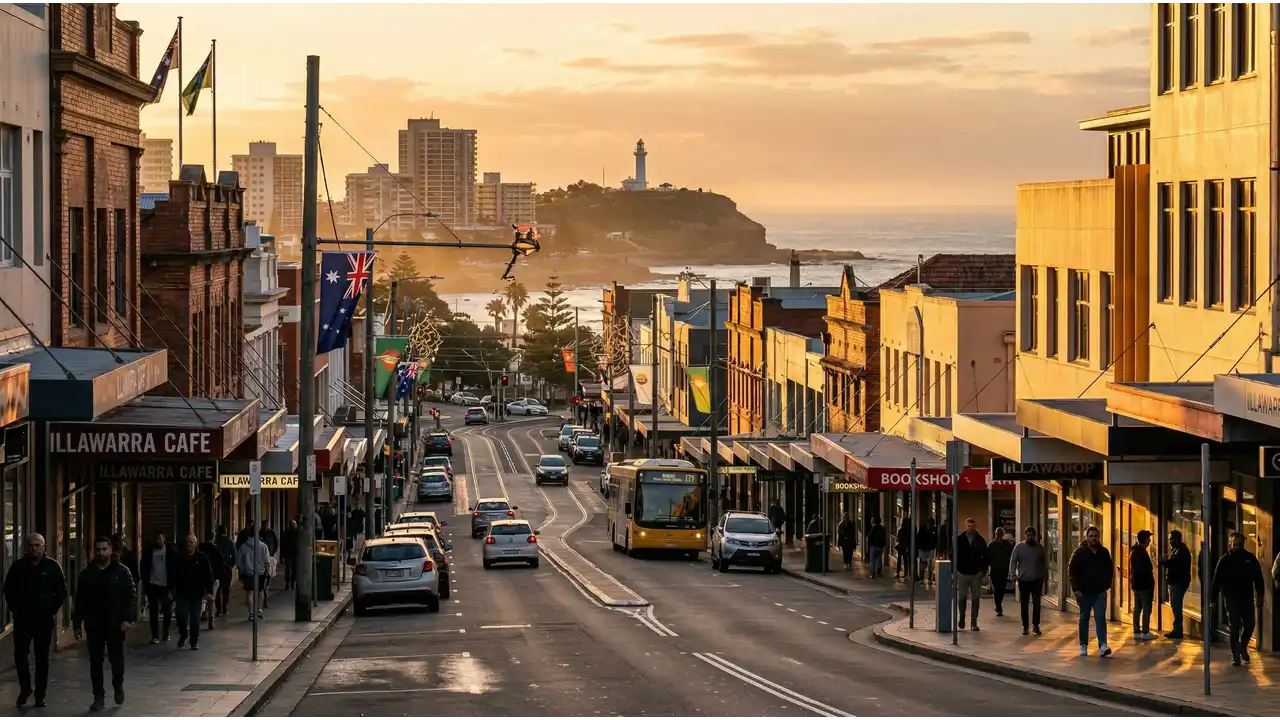
Adelaide is South Australia's capital and Australia's fifth-largest city, home to about 1.4 million people across the metro area. The city sits on a Mediterranean-style coastline with beaches 20 minutes from the center. Daily life centers around the compact CBD, leafy neighborhoods like North Adelaide and Unley, and the beachside suburbs of Glenelg and Brighton. The climate is hot and dry in summer (December-February, often 30+ degrees Celsius) and mild in winter. The population is mixed: young professionals, families drawn by affordability relative to Sydney and Melbourne, and retirees. Most residents drive, though public transport covers central areas and the beachfront. The pace is slower than Australia's east coast capitals.
💡 Local Insights
Adelaide · 2026
Adelaide costs roughly 15-20 percent less than Sydney or Melbourne for housing and daily expenses, which explains its appeal to Australian relocators and international expats. Housing dominates the budget at $1,312/month. Suburbs 5-10 kilometers from the CBD, such as Norwood, Parkside, and Wayville, sit at the lower end of the range. Inner suburbs like Unley and North Adelaide run toward the middle. Beachside properties in Glenelg or Brighton are at the top. Groceries run $391/month for moderate eating, lower than major Eastern cities due to less competitive retail markets. Public transport is affordable but limited outside the center; most households budget for a car. Eating out is cheaper than Sydney. Expats often find the cost adjustment easier than expected, though the isolation and smaller job market surprise some. Tradies and blue-collar workers report less wage premium than the coasts.
Frequently Asked Questions
How much does it cost to live in Adelaide per month?
A moderate lifestyle in Adelaide costs $2,525/month. This covers housing at $1,312/month, groceries at $391/month, transport, utilities, and discretionary spending. A tighter budget of $1,515/month is possible if you share accommodation and cook most meals. A comfortable lifestyle with more dining out and flexibility costs around $3,914/month. These figures assume you're renting, not buying. Exchange rates matter for visa holders converting from other currencies.
What is the average rent in Adelaide?
Average rent across Adelaide is around $1,312/month, which anchors the housing component of the moderate budget. A one-bedroom apartment in the CBD or close inner suburbs (Norwood, Parkside) runs $1,200 to $1,450/month. Shared housing or rooms further out (Wayville, Keswick) drop to $600 to $800/month. Beachside suburbs like Glenelg push higher, $1,400 to $1,800/month for similar space. Three-bedroom family homes in established suburbs range from $1,500 to $2,000/month. Rental prices have risen steadily, but Adelaide remains significantly cheaper than Sydney or Melbourne.
Is Adelaide cheap to live in for expats?
Yes, Adelaide is cheaper than Sydney, Melbourne, or Brisbane. Housing costs roughly 20-30 percent less than the east coast. For expats relocating from the UK, Canada, or Northern Europe, the cost difference is modest but real. The trade-off is a smaller job market and fewer global networks, which affects career progression for some. Expats from higher-cost countries find it affordable; those from Southeast Asia may find it expensive. Healthcare and education are competitively priced. The main financial advantage comes from lower housing. Utilities and groceries are middle-range for Australian cities.
How much does food cost per month in Adelaide?
Groceries cost roughly $391/month for one person eating a moderate diet (mix of prepared and fresh meals, some international ingredients). A basic diet of staples, rice, vegetables, and local meat runs $250 to $300/month. Eating out is cheaper than Sydney. A cafe lunch costs $12 to $18. A mid-range dinner for two is $50 to $80. Supermarkets dominate retail, limiting some specialty options. Farmers markets in the CBD (Saturdays) offer fresh produce at competitive prices. Asian groceries are available but pricier than Melbourne or Sydney due to smaller communities.
What salary do you need to live comfortably in Adelaide?
A comfortable lifestyle requires around $3,914/month, or roughly $47,000/year gross (before tax). This covers housing at the middle-to-upper end, eating out regularly, entertainment, and transport. For a couple or family, add proportionally. After Australian income tax and Medicare levy, a gross salary of $55,000 to $60,000 provides comfortable disposable income for one person. Most professional jobs in Adelaide pay $50,000 to $75,000 starting. The cost of living doesn't require a high salary by global standards, but Adelaide's wages are also lower than Sydney or Melbourne, so real purchasing power is similar.
How does the cost of living in Adelaide compare to other places?
Adelaide sits in the middle tier of Australian cities. A moderate lifestyle in Adelaide runs $2,525 per month, with housing at $1,312 per month. That makes it noticeably cheaper than Sydney, where a moderate lifestyle costs $3,050 per month and housing alone reaches $1,709 per month.
Regionally, Adelaide is slightly more affordable than its peer city Hobart, which runs $2,675 per month overall with similar housing costs at $1,259 per month. If you're comparing across the Tasman, Christchurch in New Zealand is genuinely cheaper at $2,050 per month for a moderate lifestyle, with housing at $1,050 per month.
The difference matters most in rent and property. Adelaide's housing component is well below Sydney's but sit higher than Christchurch's, making it competitive for Australian standards without the premium of a major capital.
Yes, but tightly. The budget tier of $1,515/month requires discipline. Rent must stay at $700 to $850/month (shared housing or outer suburbs like Wayville). Groceries drop to $250/month (basic staples, minimal eating out). Transport costs $60 to $80/month via public transit. This leaves $200 to $300 for utilities, phone, and minimal discretionary spending. No car, no regular dining out, no travel. It's doable for students or those in temporary situations, but leaves little buffer for emergencies. Adding $1,000/month brings real comfort and flexibility.