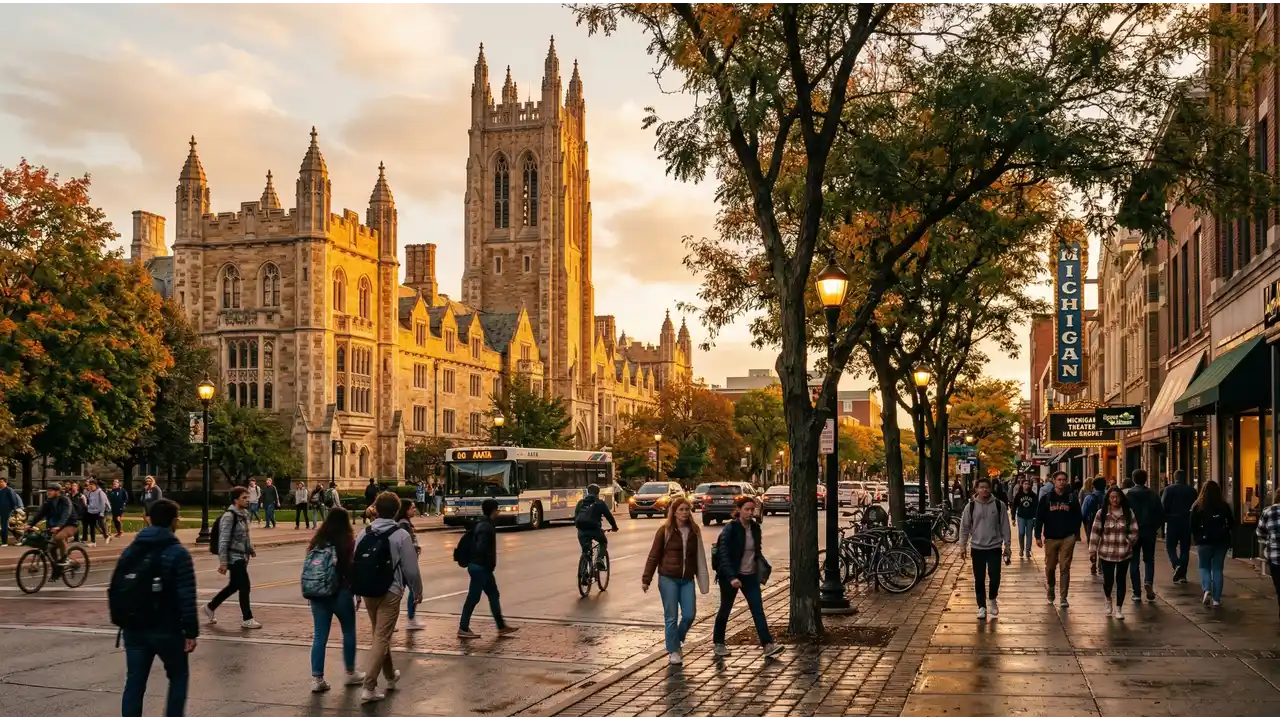
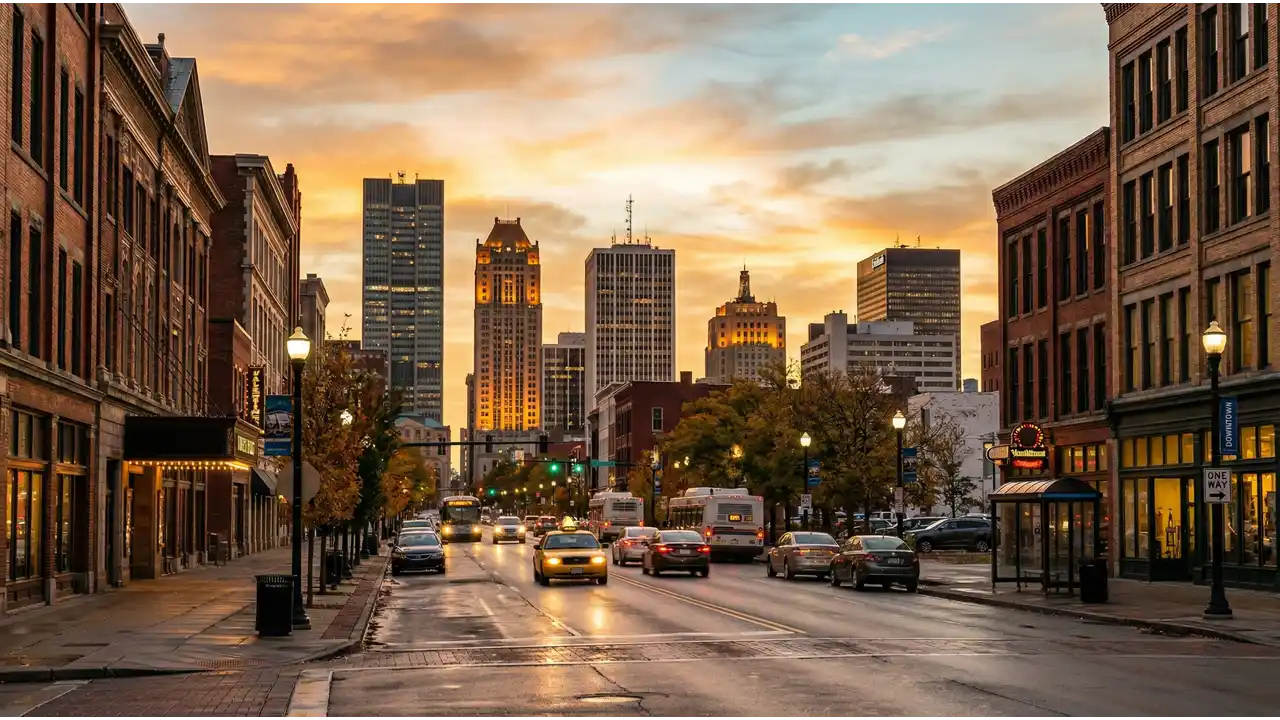
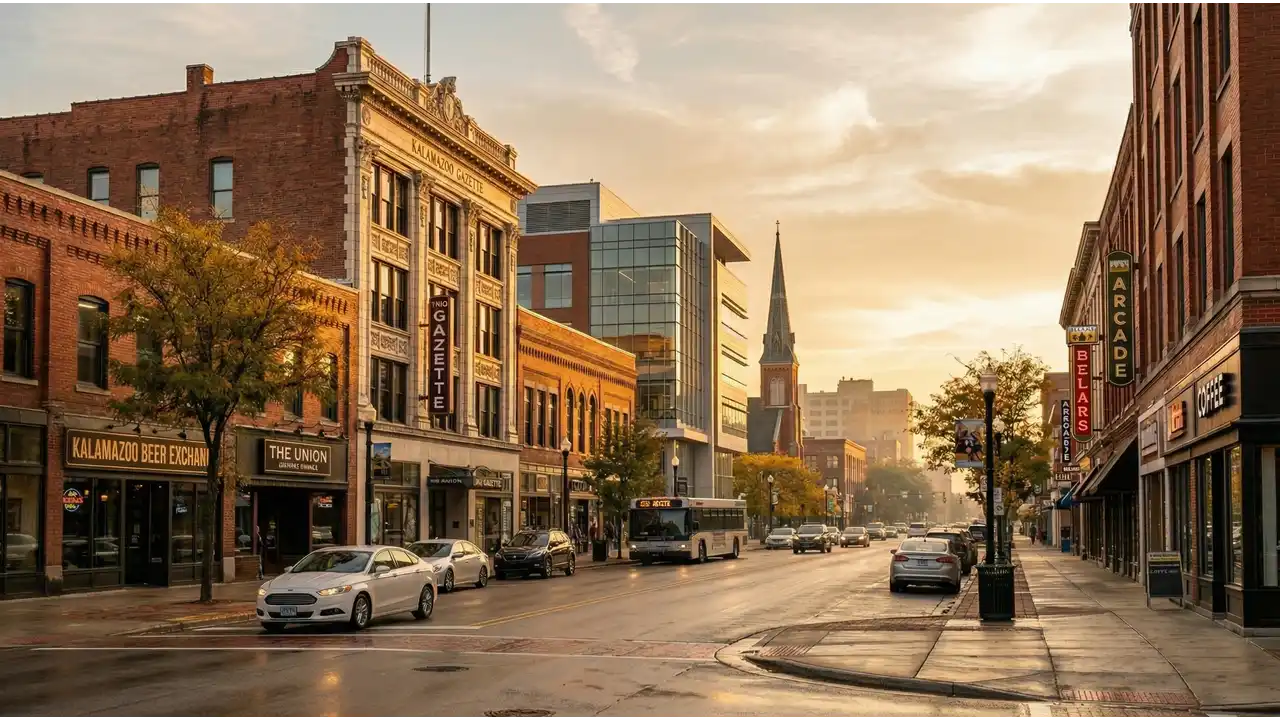
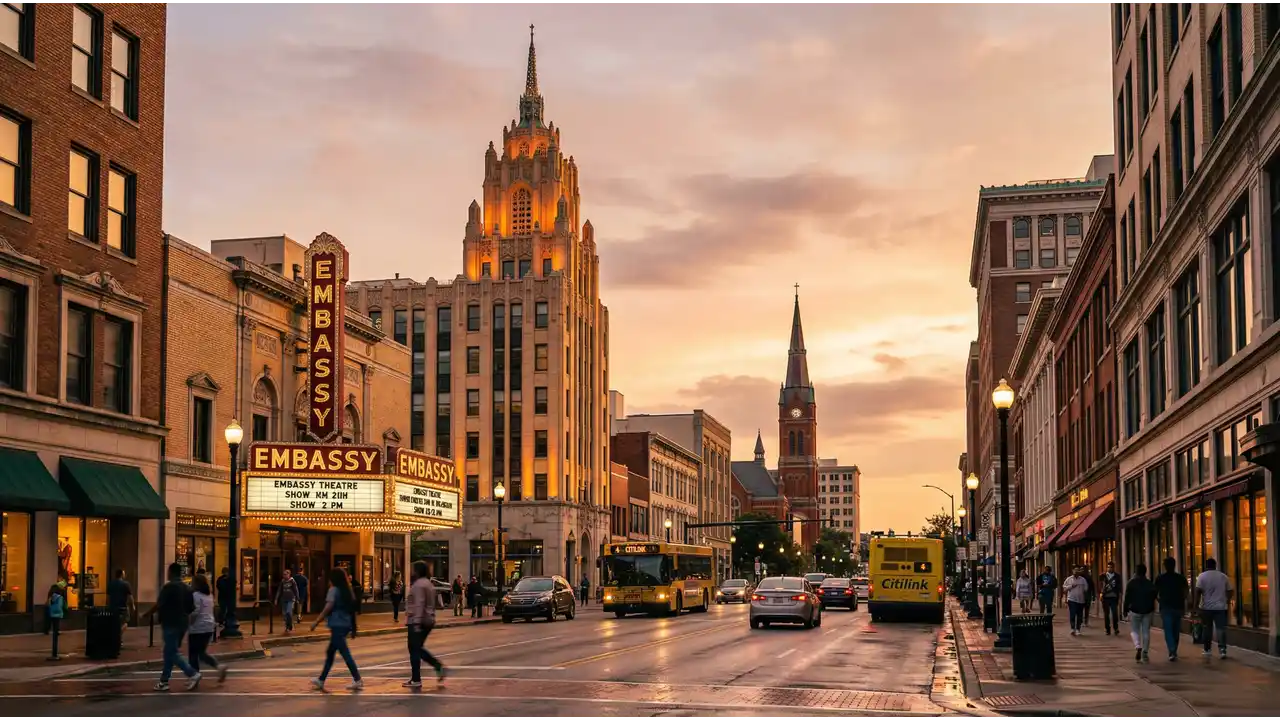
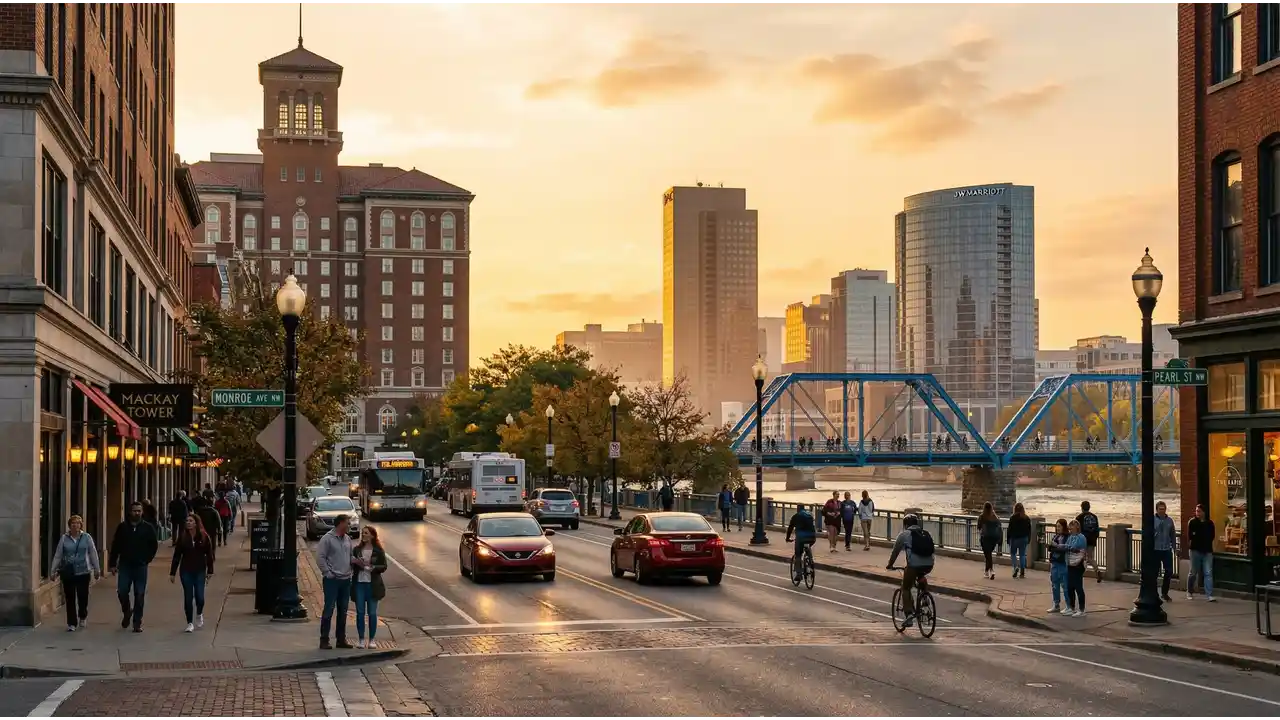
Ann Arbor is a college town built around the University of Michigan, with about 123,000 residents. The economy centers on the university, research institutions, and tech companies. Winters are cold and snowy (December through March regularly hit below freezing). Downtown has walkable restaurants, bookstores, and bars. Most residents are university employees, students, or professionals working in tech and healthcare. Daily life involves heavy bike and bus use in good weather, car dependence in winter. The town has distinct neighborhoods: central areas near campus, quieter residential zones north of town, and suburban sprawl toward I-94.
💡 Local Insights
Ann Arbor · 2026
Ann Arbor's cost of living tracks moderate Midwestern levels, with housing as the primary expense. Rent averages $1,556 per month, driven up by university demand and limited rental stock. A one-bedroom in central areas (near State Street or downtown) runs $1,200 to $1,600; further out, toward north Ann Arbor or Ypsilanti, you find $900 to $1,200 units. Ownership is expensive relative to rent. Groceries cost about $506 monthly for a single person buying at Kroger, Meijer, or Trader Joe's. Restaurant meals are university-inflated: casual lunch $12 to $16, dinner $18 to $35. Bus transit (local AATA) costs $73 per month unlimited; most residents own cars. Expats should budget for winter heating and seasonal clothing. No major expat price gaps exist; landlords charge everyone the same. The biggest cost variable is whether you live walking distance to campus or in car-dependent suburbs.
Frequently Asked Questions
How much does it cost to live in Ann Arbor per month?
A moderate lifestyle in Ann Arbor costs about $3,125 per month. Housing runs $1,556, food (groceries) around $506, utilities $120 to $160, local transit $73, and the remainder covers phone, insurance, and discretionary spending. On a tighter budget, $1,875 per month is possible if you share housing, cook all meals, and avoid entertainment expenses. For comfortable living with dining out, entertainment, and regular travel, expect $4,844 per month.
What is the average rent in Ann Arbor?
Average rent is $1,556 per month across Ann Arbor. A one-bedroom apartment near downtown or the university campus (State Street, East University) typically rents for $1,200 to $1,600 per month. Shared two-bedroom units average $1,100 to $1,400 per person. Rentals in north Ann Arbor or the Kerrytown neighborhood run $900 to $1,250. The adjacent city of Ypsilanti, 10 miles south, offers slightly lower rents ($800 to $1,100) but requires a car. Most leases require first month, last month, and a security deposit upfront.
Is Ann Arbor cheap to live in for expats?
Ann Arbor is moderately priced for expats, neither expensive nor cheap. Housing ($1,556/month average) is lower than major coastal cities but higher than rural Midwest towns. International students and academics find it accessible on university stipends ($30,000 to $50,000 annually), though tight. European expats accustomed to Dublin or Amsterdam find it affordable; those from Eastern Europe may find it costly. Healthcare through university employment is excellent. No major expat enclaves exist, though the university brings international staff. Expat communities form around specific employers (University of Michigan, Google, Huron Consulting) rather than neighborhoods.
How much does food cost per month in Ann Arbor?
Groceries average $506 per month for one person. A week of basics at Kroger or Meijer runs $30 to $50 (bread $3, milk $4, chicken $8 per pound, eggs $4 per dozen, apples $2 per pound). Trader Joe's is popular and slightly pricier. Eating out is university-inflated: lunch sandwiches $12 to $16, dinner entrees $18 to $35, coffee $5 to $6. Happy hour specials downtown run $5 to $7 for drinks. Weekend groceries for a couple, eating simply, cost about $100 to $120 per week. Farmers markets operate May through November.
What salary do you need to live comfortably in Ann Arbor?
Comfortable living in Ann Arbor requires about $4,844 per month, or roughly $58,000 annually (assuming no major debt or dependents). This allows for a one-bedroom apartment or shared house, regular dining out, entertainment, and modest travel. University jobs (lecturer, researcher) typically start at $45,000 to $55,000; tech roles at Google, Huron Consulting, or startups offer $70,000 to $120,000. Healthcare professionals earn $65,000 to $90,000. Most employed residents fall into the comfortable range. The budget tier of $1,875 per month requires roommates and strict spending.
How does the cost of living in Ann Arbor compare to other places?
Ann Arbor sits in the middle-to-upper range for Midwestern college towns. A moderate lifestyle runs $3,125 per month, with housing at $1,556 monthly. That's slightly pricier than Richmond, Virginia, which costs $3,000 overall and $1,406 for housing, making Richmond a near peer. You'll pay significantly less in Tucson, where a moderate lifestyle totals $2,550 and housing runs $930 monthly. Los Angeles is substantially dearer at $4,350 for a moderate lifestyle and $2,446 for housing alone. The difference mainly reflects Ann Arbor's university-driven demand, particularly for rental housing. If you're coming from a major coastal city, Ann Arbor will feel affordable. From smaller metros or the South, it'll read as noticeably more expensive, especially once you factor in student housing competition.
Yes, but with real constraints. A budget of $1,875 per month requires housing at $950 to $1,050 (shared rental or outlying studio), groceries at $400 (cooking all meals, minimal waste), utilities and transit $150, and leaves $300 to $400 for phone, insurance, and emergencies. This works for students, graduate fellows, or disciplined remote workers. It cuts out dining, entertainment, and car ownership (bus-only). Winter is difficult; heating and seasonal clothing strain the budget. Unexpected costs (car repair, medical) break it immediately. One roommate or part-time income ($400 to $600 monthly) makes it sustainable.